Artwork
Untitled
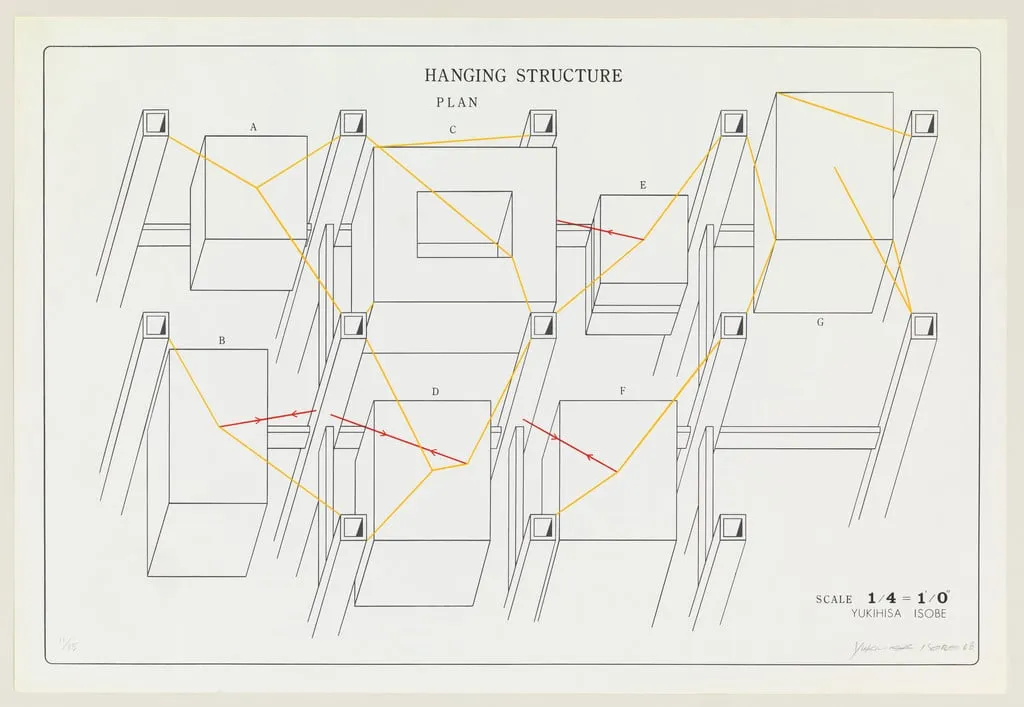
Untitled is an ink print by Yukihisa Isobe. It dates from 1968 and is held in the collection of the Museum of Modern Art.
About this work
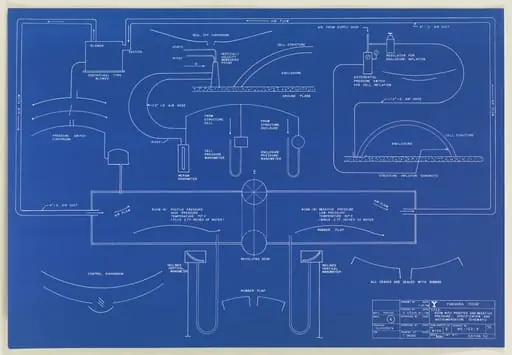
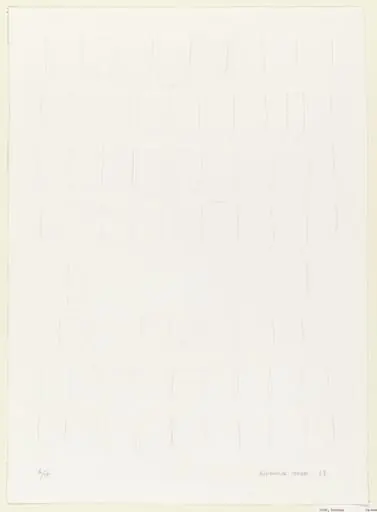
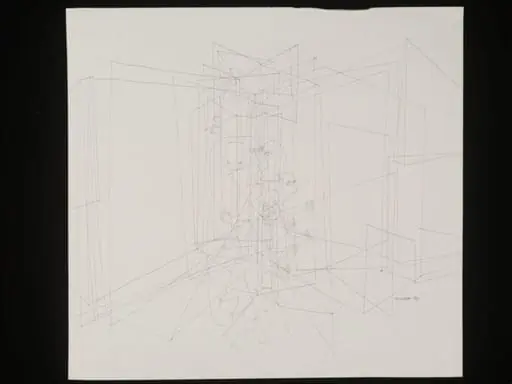
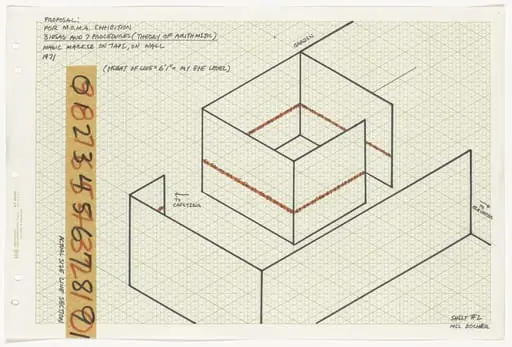
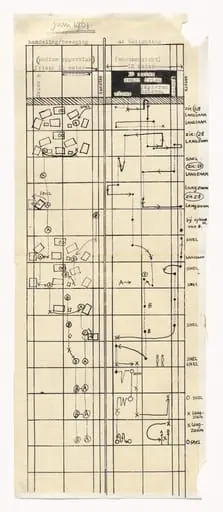
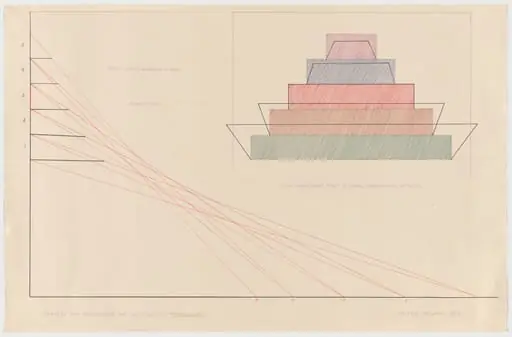
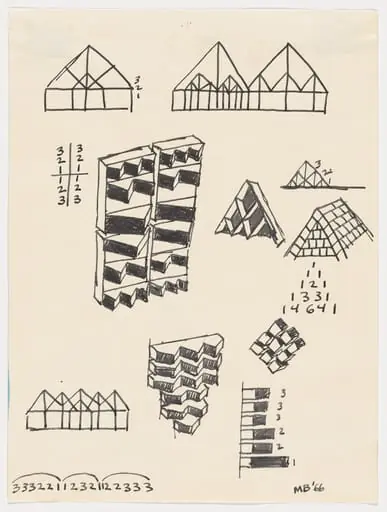
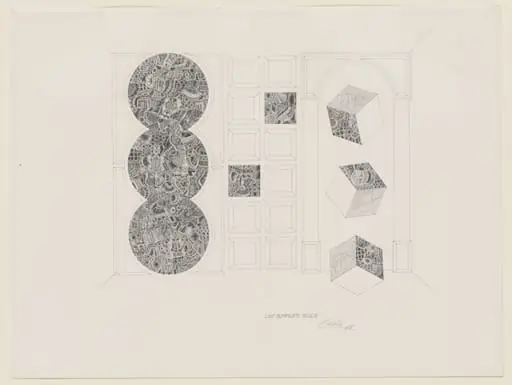
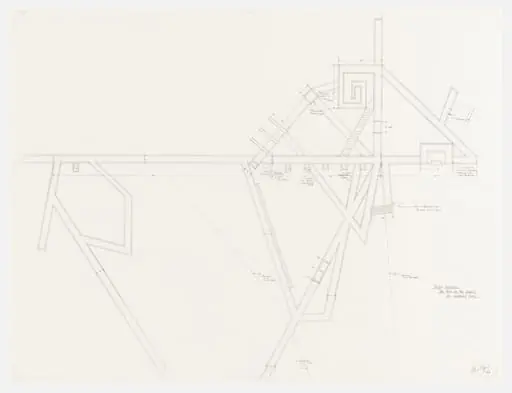
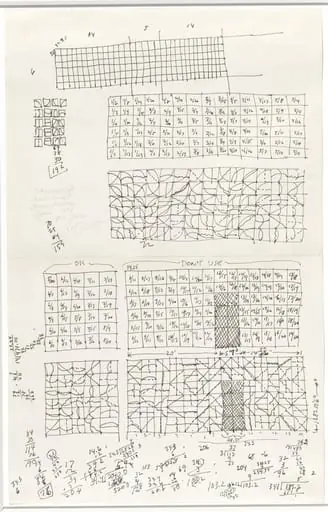
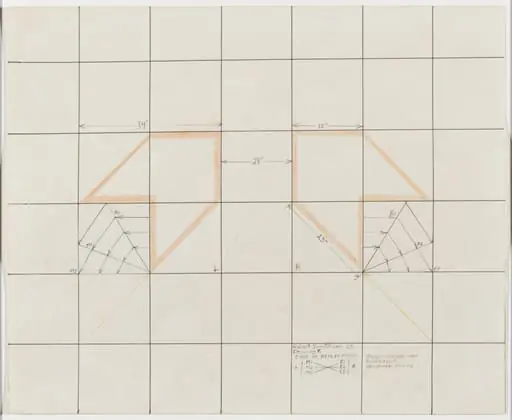
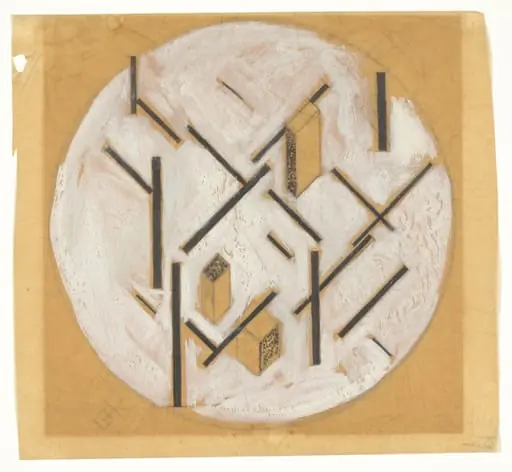
This is a black-and-white diagram of how to hang seven rectangular artworks on a wall.
This is a black-and-white diagram of how to hang seven rectangular artworks on a wall. You see boxes labeled A through G, each with lines showing where they should go. Some lines are orange, others red, and there are little brackets marking hooks. The scale at the bottom says it’s a quarter-size version of the real setup.
The artist, Yukihisa Isobe, made this in 1968. It’s not a painting but a screenprint—like a detailed instruction sheet for a gallery.
If you like this, check out The Museum of Modern Art to see how they display art.
Overview
Yukihisa Isobe, a Japanese artist born in 1935, produced this 1968 screenprint during a period of transition in his practice. After moving to New York in 1965 to engage with urban and ecological planning, he shifted away from painting toward conceptual, diagrammatic works. This piece is part of a brief but significant phase in which he explored systems of display and spatial organization, returning to two-dimensional formats in the 1990s with a focus on scientific and graphic forms.
Subject & Meaning
The work presents a precise, scaled diagram for hanging seven rectangular artworks on a wall. Labeled A through G, each panel is annotated with lines indicating hanging points, hook placements, and color-coded instructions. Rather than depicting imagery, it functions as a procedural guide, questioning assumptions about how art is presented and who determines its arrangement. The piece reframes the gallery as a site of institutional protocol rather than aesthetic autonomy.
Technique & Style
Executed as a screenprint, the work employs flat, high-contrast black-and-white fields with selective use of red and orange ink to distinguish hanging instructions. The composition is methodical and technical, resembling architectural or engineering schematics. Its clarity and lack of ornamentation reflect Isobe’s interest in systems thinking, aligning with post-war conceptual practices that prioritized process over expression.
History & Provenance
Created in 1968, the screenprint emerged from Isobe’s time in New York, where he was immersed in discussions around urban design and ecological awareness. It entered the collection of The Museum of Modern Art, where it remains as part of its holdings of conceptual and experimental prints from the late 1960s. The work’s institutional preservation underscores its role in redefining the boundaries of printmaking and curatorial practice.
Context
This piece aligns with broader 1960s movements that challenged traditional art forms, including Fluxus and Conceptual Art, which emphasized ideas over objects. Isobe’s focus on display mechanics reflects a growing interest in institutional critique and the material conditions of exhibition. His background in ecological planning informed a view of art spaces as systems subject to human intervention and ethical consideration.
Legacy
Isobe’s screenprint contributes to a lineage of works that treat the gallery as a subject rather than a neutral container. Its influence can be seen in later artists who examine curatorial frameworks, institutional power, and the politics of display. Though modest in scale and appearance, the work remains a quiet but persistent inquiry into how meaning is constructed through presentation.
Artist & collection
Artist
Yukihisa Isobe (磯辺行久, Isobe Yukihisa) (born 1935) is a Japanese artist whose practice has been shaped by his professional interest for ethical ecology.