Artwork
Madonna and Child Enthroned, Saint Jerome and Saint Francis
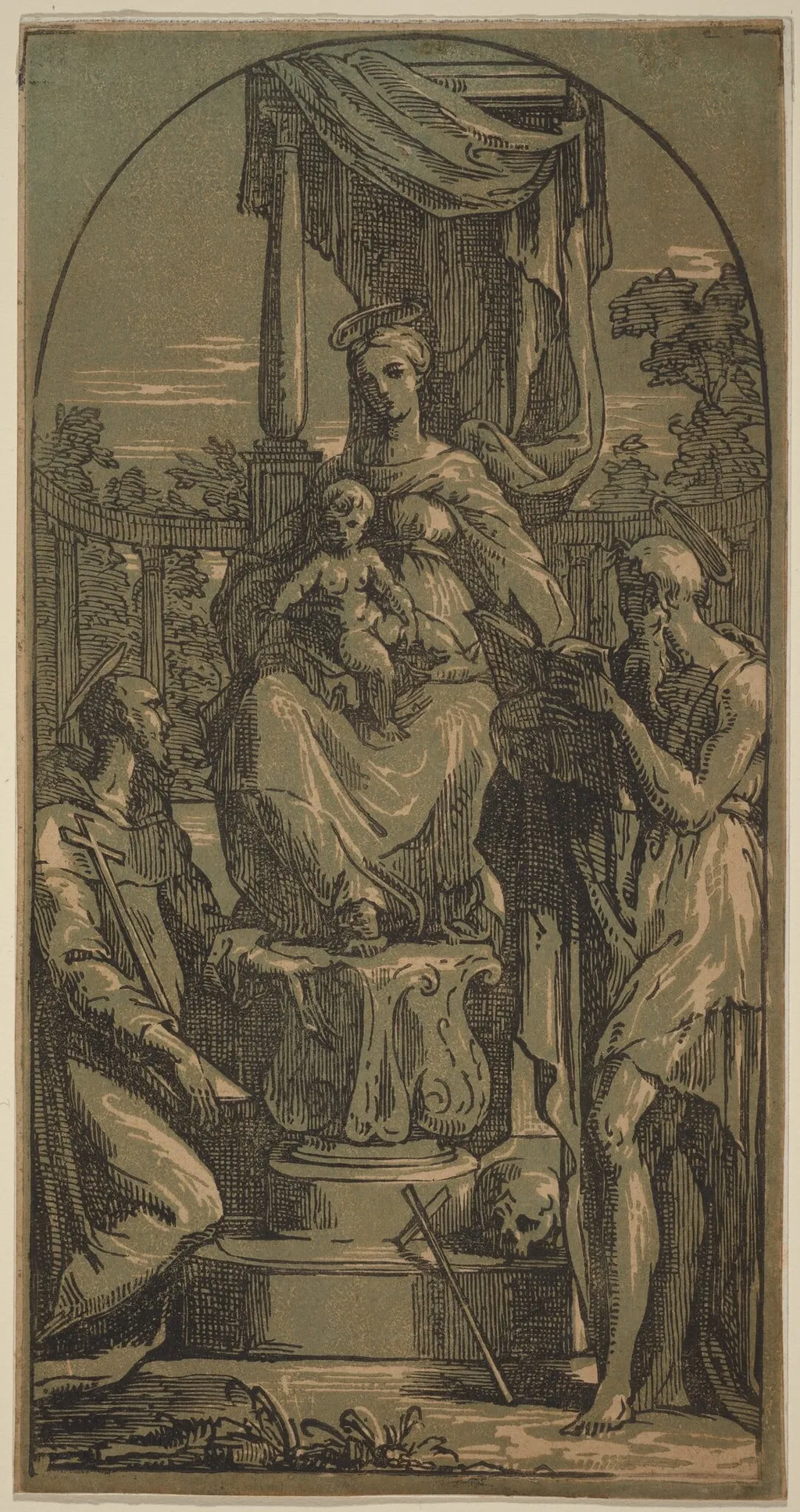
Madonna and Child Enthroned, Saint Jerome and Saint Francis is an ink print by the Baroque artist Anton Maria Zanetti I. It is held in the collection of the National Gallery of Art.
About this work
Overview
Anton Maria Zanetti I’s 1730 woodcut presents a devotional grouping: the Virgin seated on a throne with the infant Christ, flanked by Saint Jerome on the left and Saint Francis on the right. Executed in color chiaroscuro on laid paper, the image combines religious symbolism with the dramatic light‑dark contrasts typical of the period.
Subject & Meaning
The central figure of the Madonna holding the naked Child underscores the theme of divine motherhood, while the accompanying saints embody scholarly and ascetic virtues. Saint Jerome, identifiable by his book, represents erudition and biblical translation, whereas Saint Francis, shown in simple attire and barefoot, signals humility and devotion to poverty.
Technique & Style
Zanetti employed a multi‑block woodcut process, layering colored inks to achieve subtle tonal variations. The chiaroscuro effect creates a deep, shadowed background that isolates the figures, while the muted browns and grays lend a restrained, almost meditative atmosphere. The composition adheres to a formal, classical arrangement, emphasizing balanced proportions and detailed texture.
History & Provenance
Created in the early eighteenth century, the print reflects Zanetti’s broader output of religious imagery for devotional use. Though specific ownership records are scarce, the work has been catalogued among Zanetti’s prints in several European collections, illustrating the artist’s reputation for producing high‑quality, color woodcuts for both private and ecclesiastical patrons.
Context
The print belongs to the Baroque period’s fascination with dramatic lighting and emotional intensity, yet its palette remains subdued compared to contemporary oil paintings. Zanetti’s choice of woodcut—a medium more accessible than painting—allowed wider dissemination of sacred subjects, aligning with the era’s efforts to promote piety through visual means.
Artist & collection


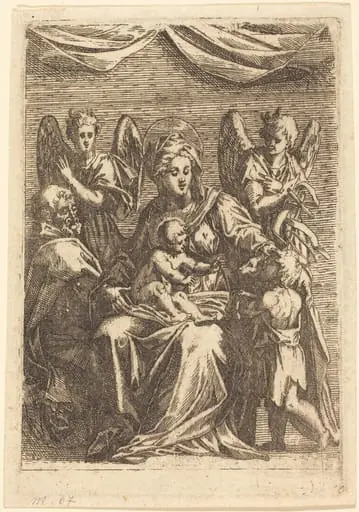 The Holy Family with Two Angels
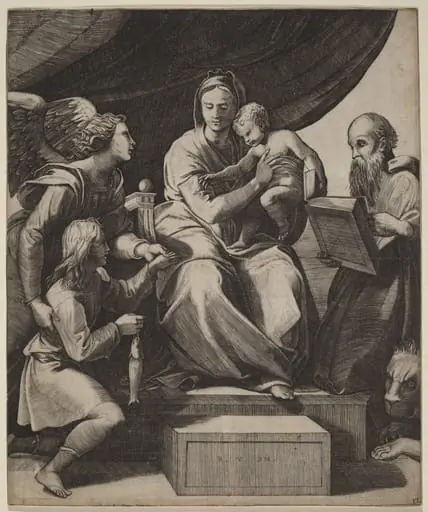 The Virgin with a Fish
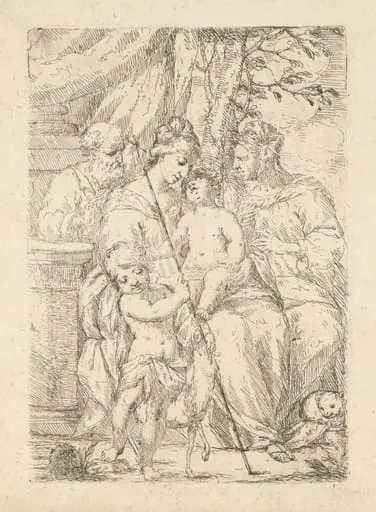 Holy Family with Saint Elizabeth
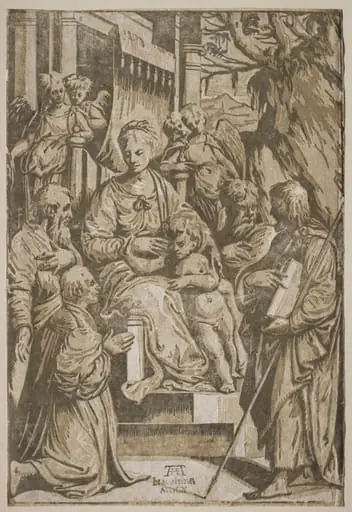 The Virgin and Child with Saints and a Donor (after a drawing by Girolamo da Treviso)
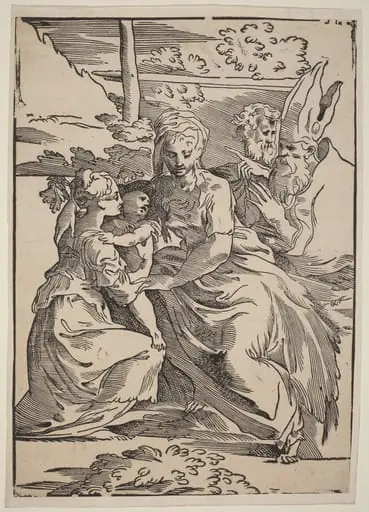 The Holy Family with Two Saints
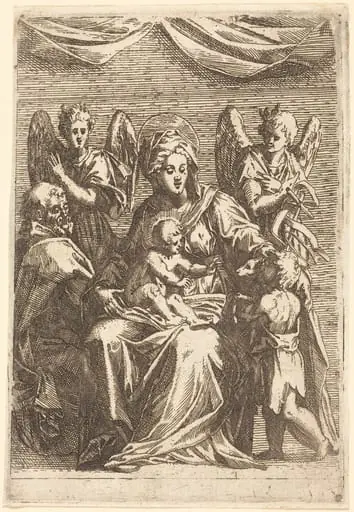 The Holy Family with Two Angels
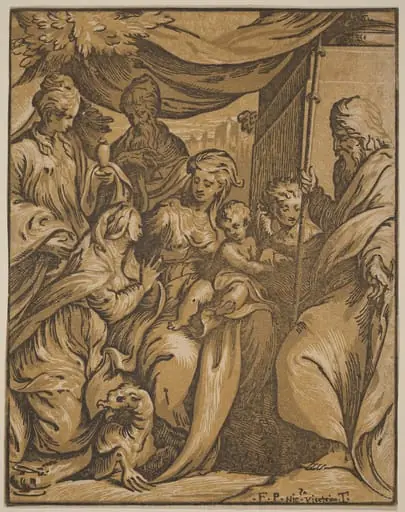 The Virgin and Child with Saints
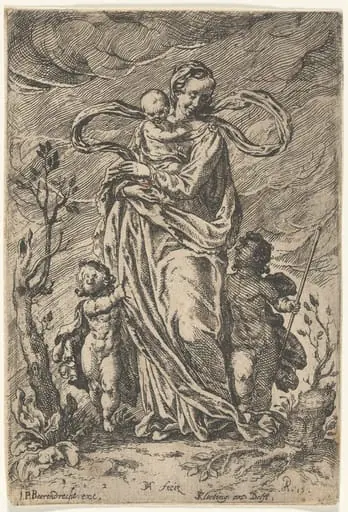 Love
Love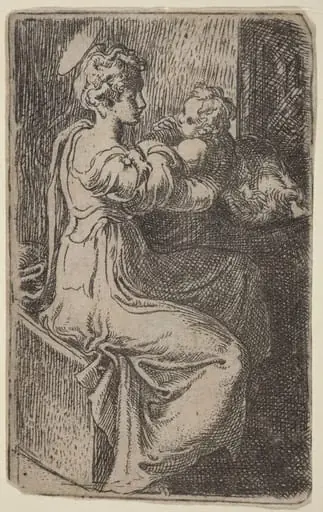 Virgin and Child
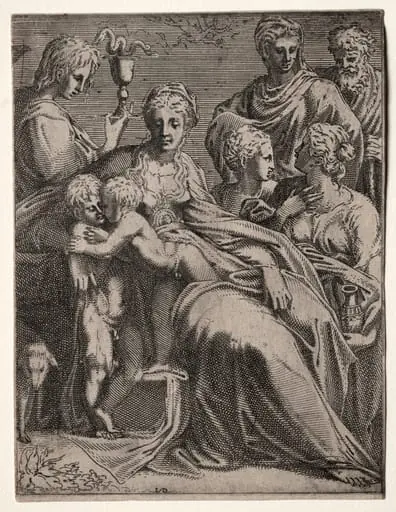 Sacred Conversation
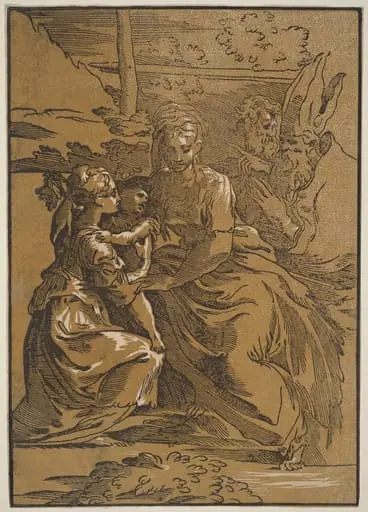 The Holy Family with Two Saints
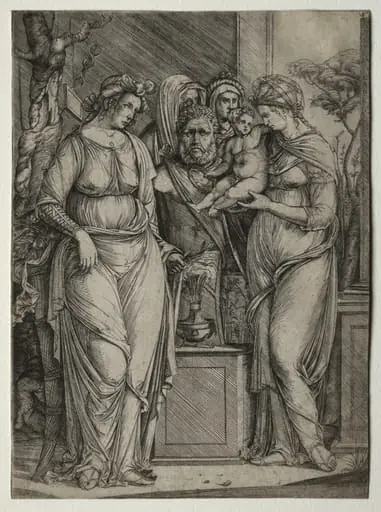 Sacrifice of Priapus