Artwork
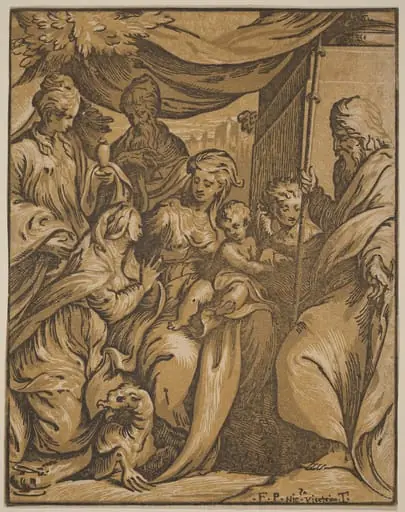
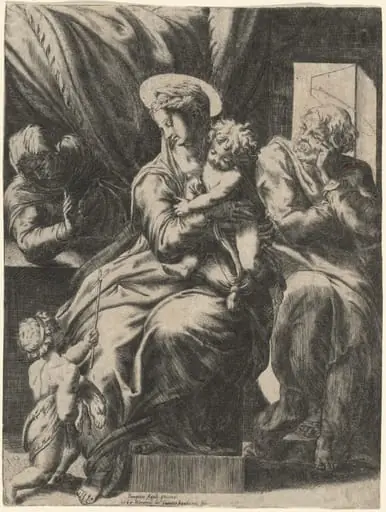
The Virgin and Child with Saints and a Donor (after a drawing by Girolamo da Treviso)
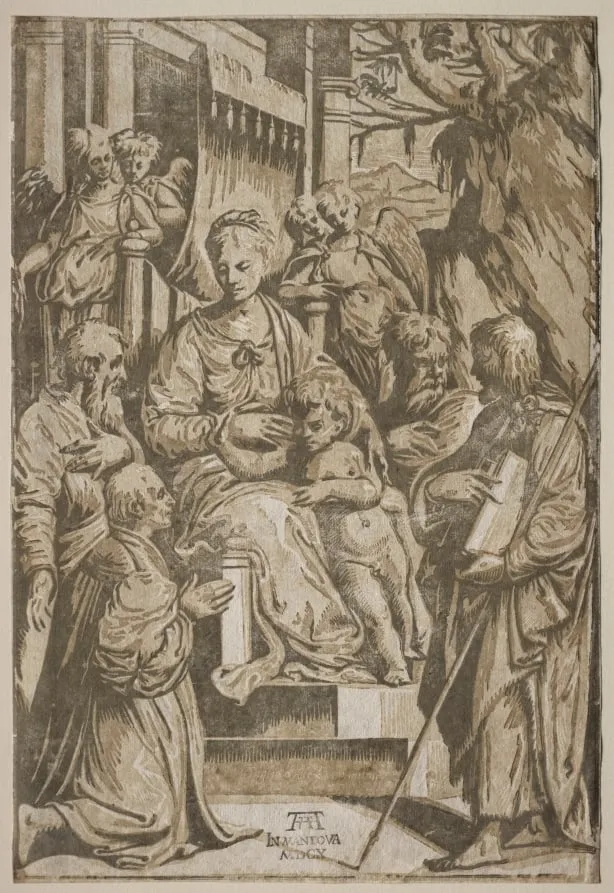
The Virgin and Child with Saints and a Donor (after a drawing by Girolamo da Treviso) is a print by the Renaissance artist Andrea Andreani. It dates from 1610 and is held in the collection of the Cleveland Museum of Art.
About this work
Overview
This print is a chiaroscuro woodcut produced from three separately carved blocks, using tones of ochre and brown to simulate gradations of light and shadow.
This print is a chiaroscuro woodcut produced from three separately carved blocks, using tones of ochre and brown to simulate gradations of light and shadow. It reproduces a lost monochrome drawing by Girolamo da Treviso, originally intended as a preparatory study for an altarpiece. The technique mimics the tonal depth of painted compositions, translating three-dimensional form into a flat, ink-based medium without color.
Subject & Meaning
The composition centers on the Virgin Mary holding the Christ Child, flanked by saints and a kneeling donor figure in contemporary attire. The donor’s presence signals a devotional commission, likely made to honor a patron’s spiritual or familial legacy. The grouping reflects traditional sacred iconography, reinforcing the connection between earthly devotion and celestial intercession within a religious context.
Technique & Style
Chiaroscuro woodcut relies on multiple blocks to layer tones, creating volume through contrast rather than line. Here, the artist used two shades of brown and one ochre to model forms with subtle gradations, evoking the soft modeling of drawn studies. The absence of outline and reliance on tone aligns the print with Renaissance drawing practices, prioritizing atmospheric depth over graphic definition.
History & Provenance
The original drawing by Girolamo da Treviso was commissioned for the Boccaferri family chapel in San Domenico, Bologna, around the early 16th century. This print, likely made shortly after, served as a reproductive medium to disseminate the design. No record of the final painted altarpiece survives, leaving the woodcut as the primary surviving evidence of the intended composition.
Context
In early 16th-century Italy, chiaroscuro woodcuts emerged as a way to replicate the tonal effects of drawings and paintings for wider audiences. Girolamo’s work reflects the intersection of devotional art and print culture, where preparatory studies were transformed into accessible images for private devotion or institutional use, bridging the gap between painterly ideals and mechanical reproduction.
Legacy
Though the original altarpiece is lost, this print preserves the visual language of Girolamo’s design and demonstrates the adaptability of Renaissance drawing techniques in print. It stands as an example of how artists and patrons used reproductive media to extend the reach of sacred imagery, influencing later developments in tonal printmaking across Europe.
Artist & collection

Artist
Andrea Andreani (1540–1623) was an Italian engraver on wood, who was among the first printmakers in Italy to use chiaroscuro, which required multiple colours.

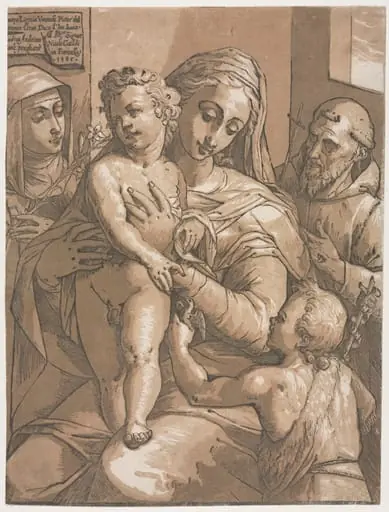 Virgin and Child with St. John, St. Catherine of Siena and St. Francis
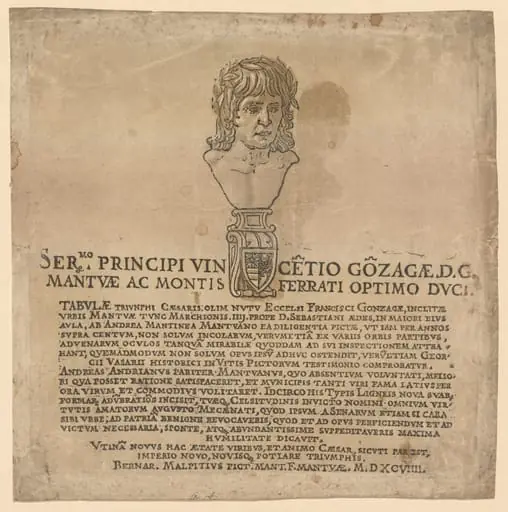 The Triumph of Julius Caesar
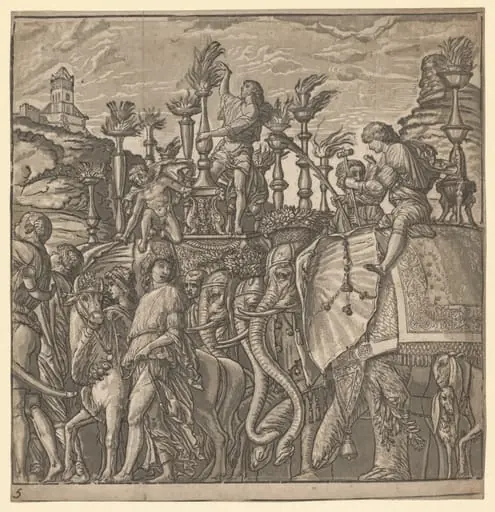 The Triumph of Julius Caesar: Elephants Carrying Torches
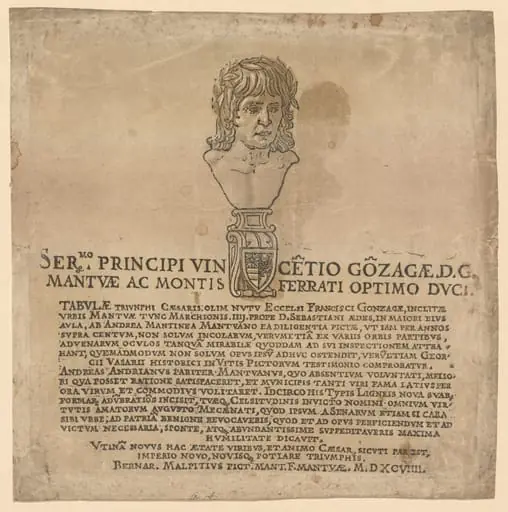 The Triumph of Julius Caesar: Frontispiece
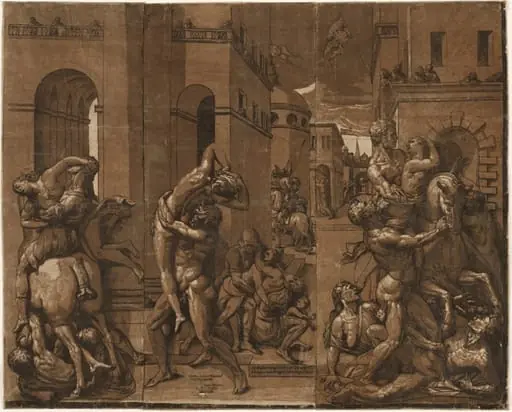 The Abduction of the Sabine Women
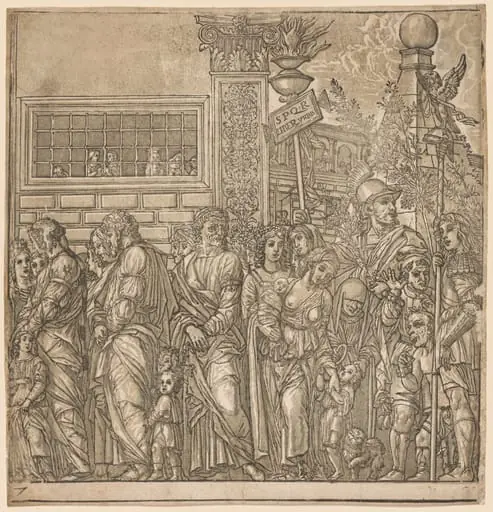 The Triumph of Julius Caesar: Procession of Men, Women and Children
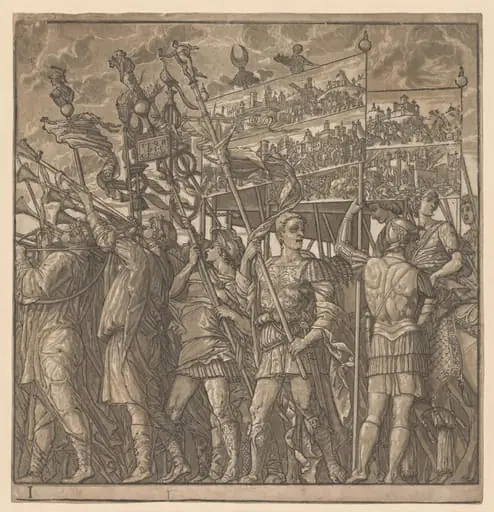 The Triumph of Julius Caesar: Soldiers Carrying the Pictures of War
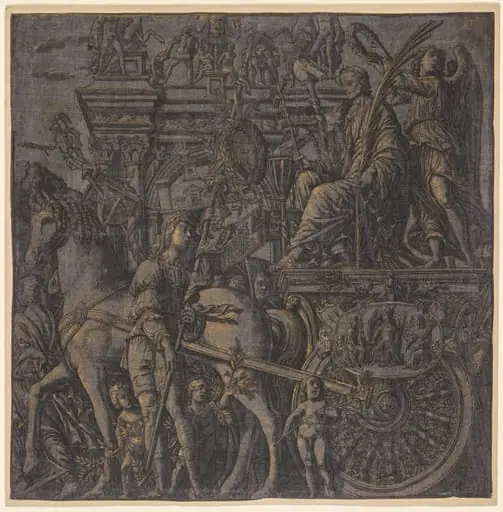 The Triumph of Julius Caesar: Caesar Triumphant
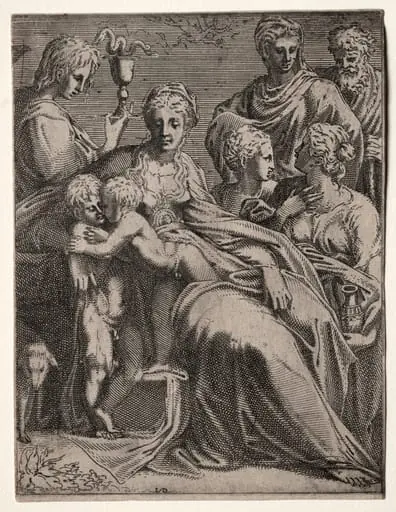 Sacred Conversation
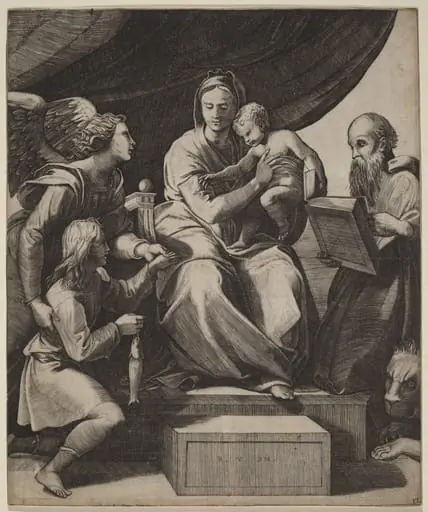 The Virgin with a Fish
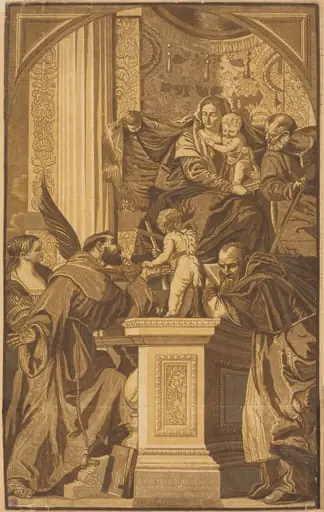 Holy Family and Four Saints
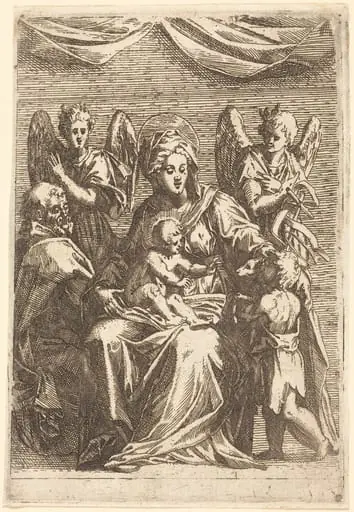 The Holy Family with Two Angels
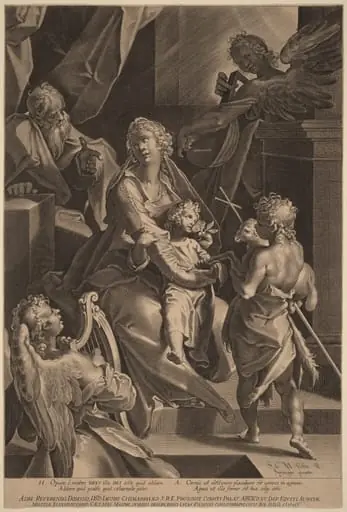 The Holy Family and Two Angels
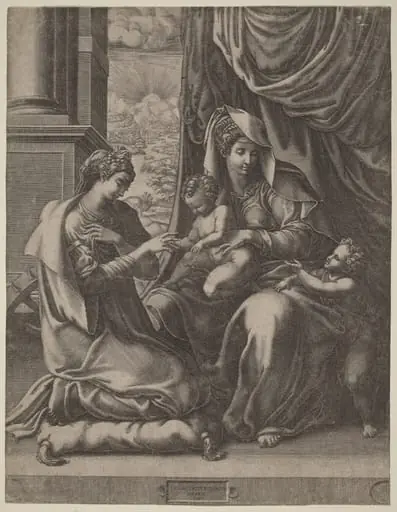 The Mystic Marriage of Saint Catherine
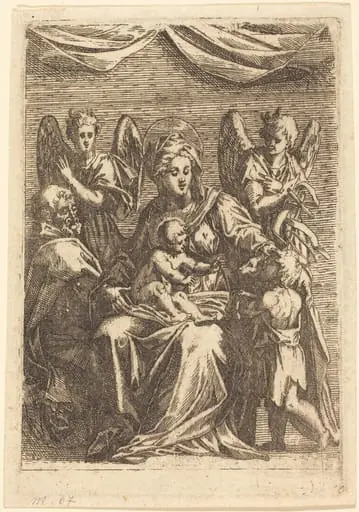 The Holy Family with Two Angels
 The Virgin and Child with Saints
 Mystic Marriage of St. Catherine
 Mystic Marriage of St. Catherine
 Untitled
 Holy Family with Saint Elizabeth and the Young John the Baptist