Artwork
Two Children Petting a Lamb
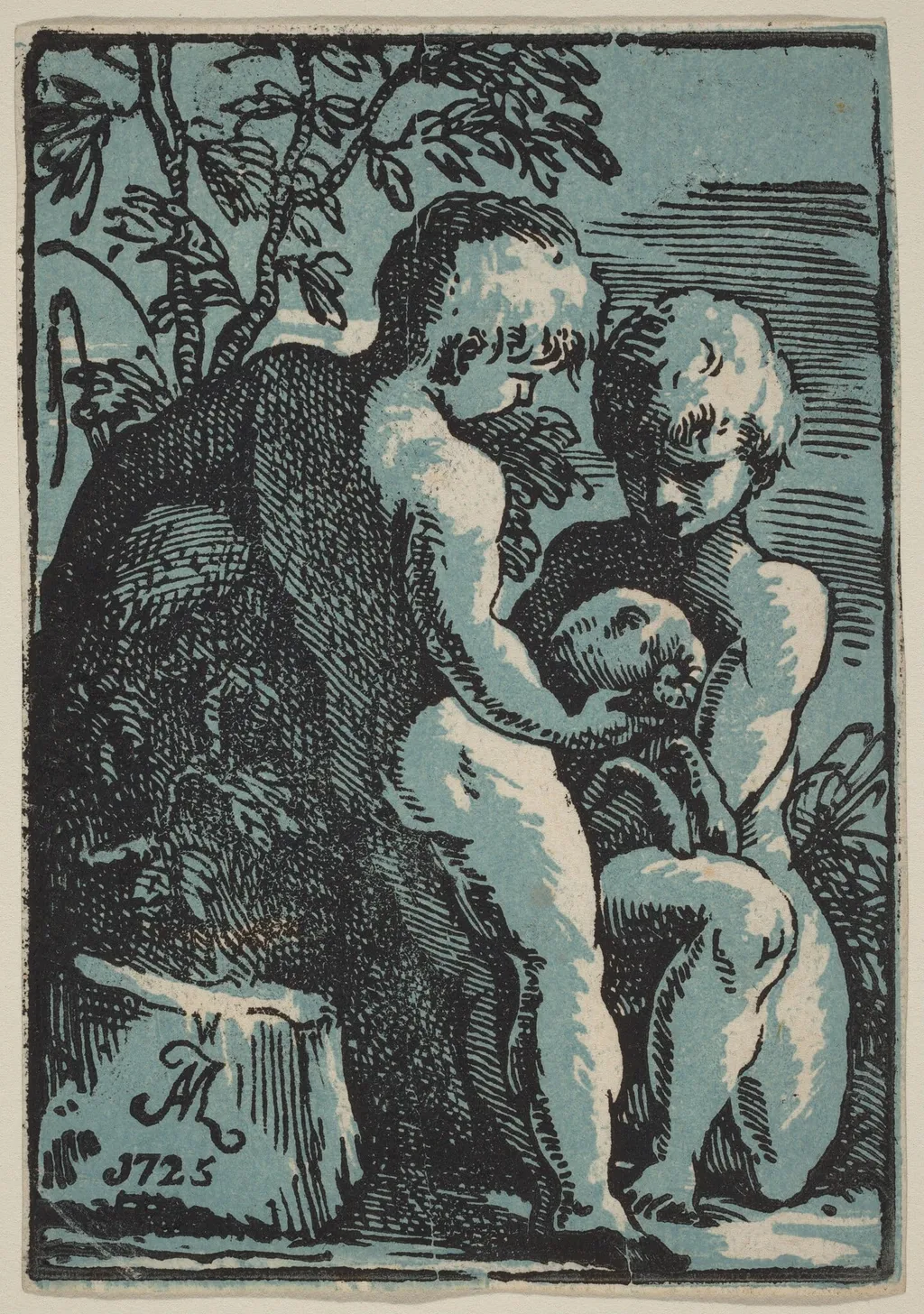
Two Children Petting a Lamb is an ink print by the Baroque artist Anton Maria Zanetti I. It dates from 1725 and is held in the collection of the National Gallery of Art.
About this work
Overview
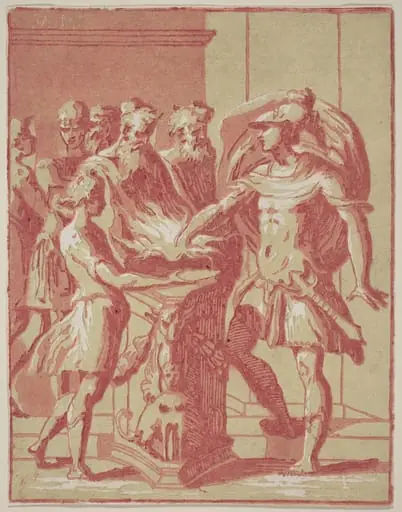
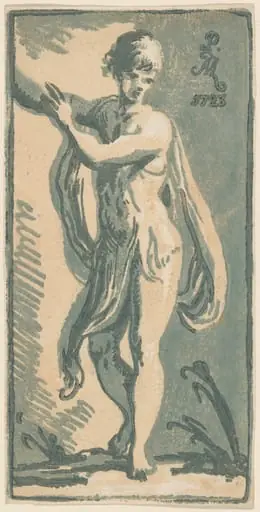
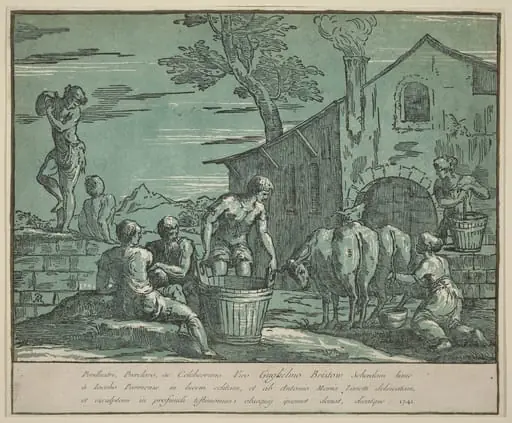
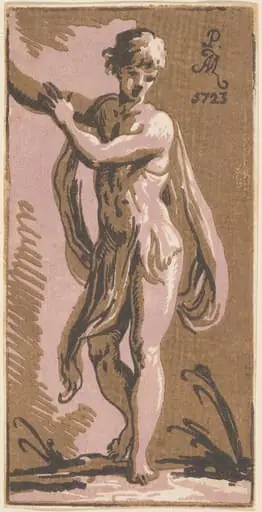
Anton Maria Zanetti I’s woodcut, *Two Children Petting a Lamb*, dates from 1725 and exemplifies the Venetian chiaroscuro print tradition. Executed on laid paper, the image presents a pair of children in contemporary dress gently handling a lamb, rendered with a delicate balance of line and tone that conveys a serene domestic scene.
Technique & Style
The work employs a two‑block chiaroscuro method: a black line block defines contours, while a second block applies a muted blue wash to model form and atmosphere. This dual‑block process, typical of early 18th‑century Venetian printmaking, allows subtle gradations of light that give the lamb’s fleece a luminous quality despite the passage of three centuries.
Subject & Meaning
The composition captures a moment of tender interaction between youth and animal, reflecting Enlightenment ideals of innocence and pastoral virtue. The children’s attire situates the scene within the early 1700s, while the lamb, a traditional symbol of purity, reinforces the theme of gentle, everyday kindness.
History & Provenance
Created in Venice, the print belongs to a limited series of early chiaroscuro woodcuts by Zanetti, a notable collector and connoisseur of the arts. Surviving copies have remained on laid paper, and the piece is documented in several European print collections, attesting to its circulation among connoisseurs of the period.
Legacy
Zanetti’s use of the two‑block technique anticipated later developments in color woodcutting, influencing subsequent Venetian printmakers who adopted similar tonal strategies. The enduring clarity of the lines and the subtle blue wash continue to be cited in studies of early modern printmaking as a benchmark of technical skill and aesthetic restraint.
Artist & collection