Artwork
An Elderly Shepherd Seen from Behind
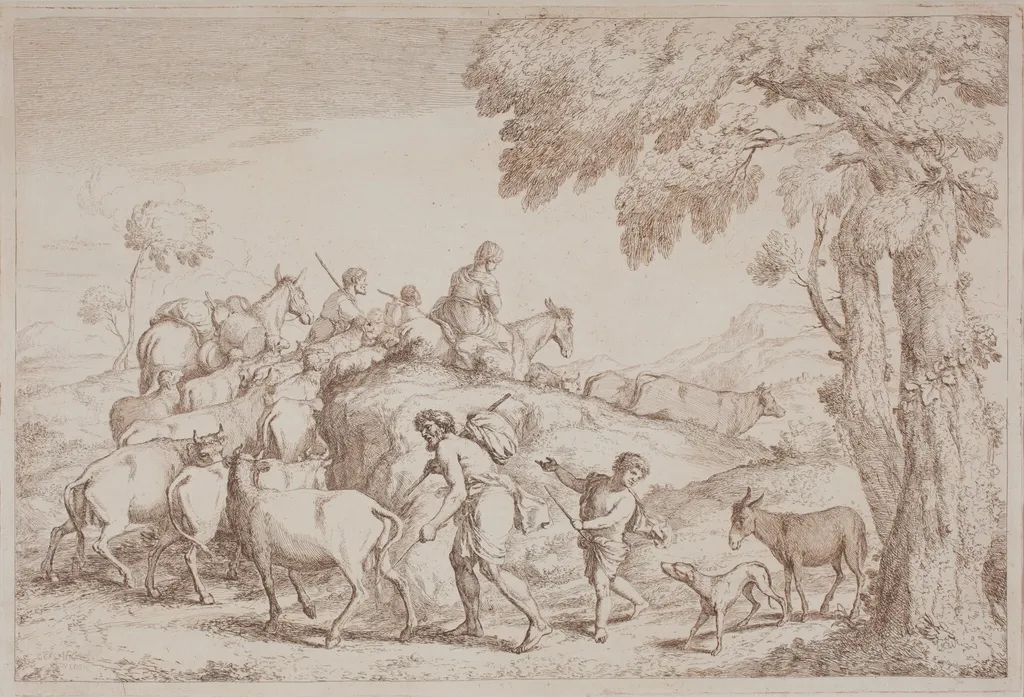
An Elderly Shepherd Seen from Behind is an ink print by the Baroque artist Gaetano Zompini. It dates from 1758 and is held in the collection of the National Gallery of Art.
About this work
Overview
Executed on laid paper, the work captures a quiet moment of pastoral labor, rendered with fine, incised lines characteristic of the etching technique.
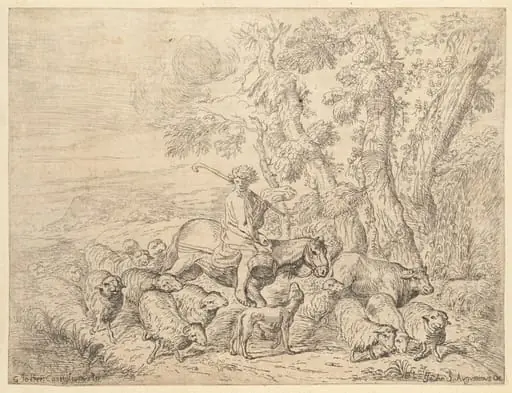
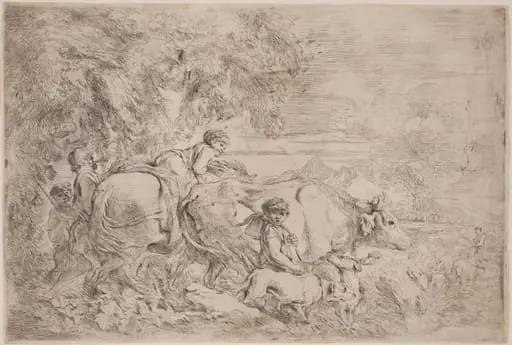
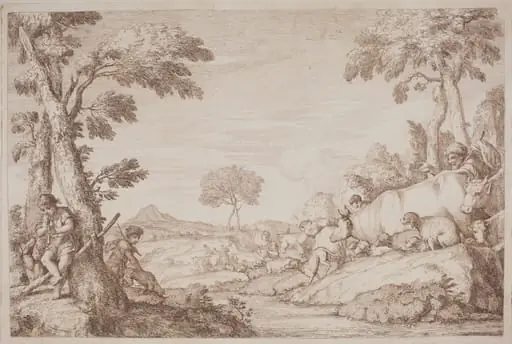
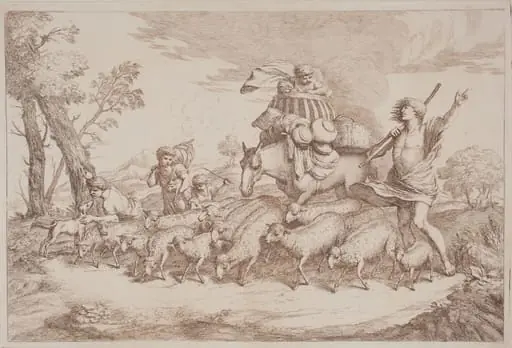
Created in 1758 by Gaetano Zompini, this etching in sanguine depicts a rural scene of shepherds moving livestock across a rugged terrain. Executed on laid paper, the work captures a quiet moment of pastoral labor, rendered with fine, incised lines characteristic of the etching technique. The composition emphasizes movement and texture rather than narrative detail, focusing on the interaction between figures, animals, and landscape.
Subject & Meaning
The scene portrays a group of shepherds guiding sheep and goats, some on donkeys, others on foot, with sticks in hand to direct the herd. No individual is singled out; the emphasis lies in collective labor and the rhythm of daily rural life. The absence of facial features and the view from behind suggest anonymity, reinforcing the dignity of ordinary work rather than heroic or idealized figures.
Technique & Style
Zompini employed etching with sanguine ink, using a scratchy, dense network of lines to build form and texture. The method, involving acid-bitten metal plates, allowed for fine, irregular strokes that mimic the roughness of stone, wool, and earth. The resulting surface feels tactile and uneven, enhancing the sense of a weathered, working landscape without idealized smoothness.
History & Provenance
The print originates from Zompini’s broader documentation of Venetian rural life in the mid-18th century. While specific ownership history is not widely recorded, it aligns with his known interest in recording regional customs and laborers. As part of a series of prints, it likely served as ethnographic observation rather than commercial art, reflecting the scholarly curiosity of its time.
Context
In 18th-century Venice, Zompini was among artists documenting the lives of common people amid rising interest in social realism. This work reflects a shift away from mythological or aristocratic subjects toward the observation of everyday rural existence. The etching format was accessible and repeatable, making it suitable for disseminating visual records of regional customs to a wider audience.
Legacy
Though not widely exhibited today, the print contributes to the historical record of Venetian rural life and the use of printmaking for ethnographic study. Zompini’s approach influenced later artists who sought to depict labor without romanticism, preserving the quiet authenticity of working landscapes through precise, unembellished line work.
Own this work as a print
Artist & collection

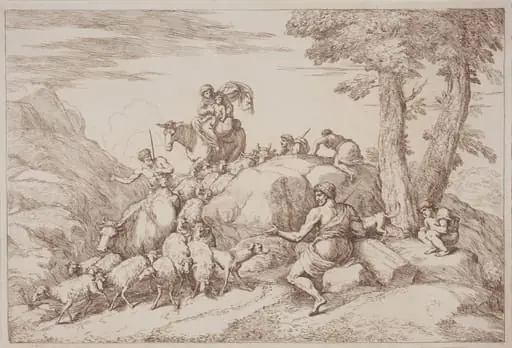 A Pastoral Journey with a Mother and Child on Horesback and an Elderly Shepherd Seated
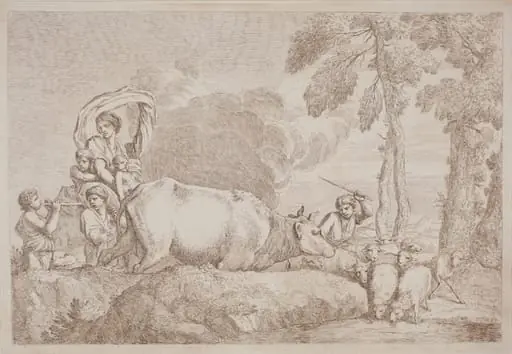 A Woman with Two Children on Horseback
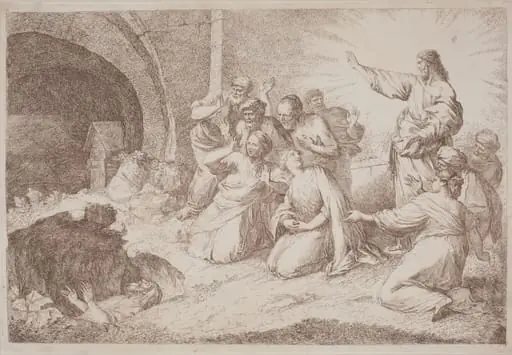 The Raising of Lazarus
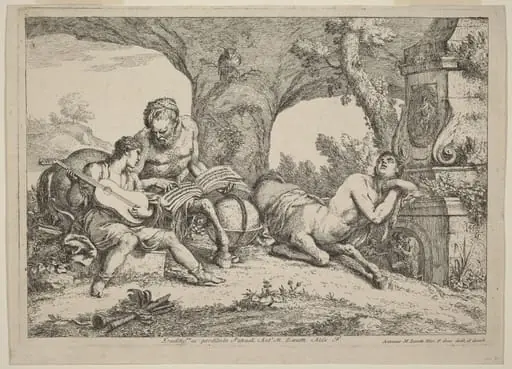 Chiron Teaching Music to Achilles
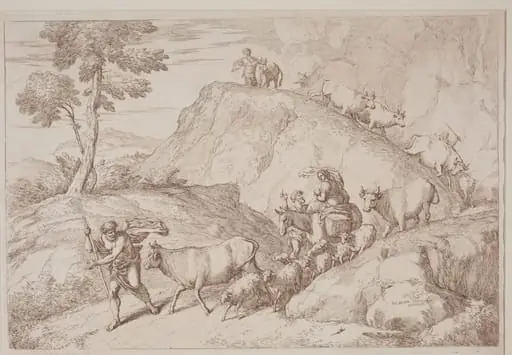 An Elderly Shepherd Leading the Flock
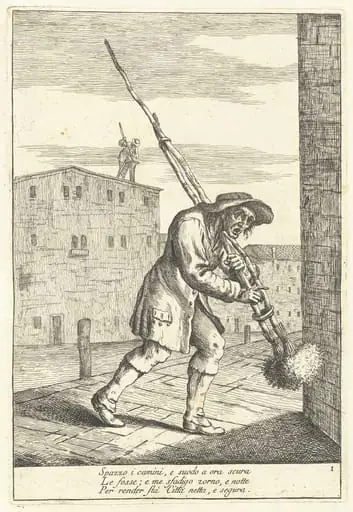 Scoa Camin (Chimney Sweep)
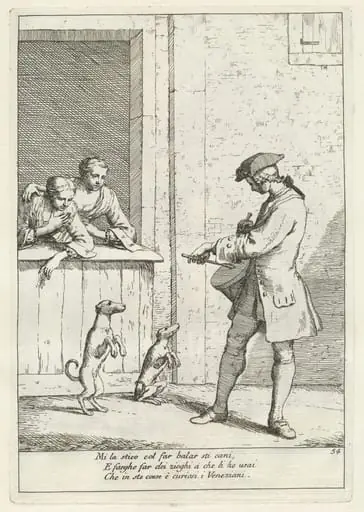 Marcer (Draper)
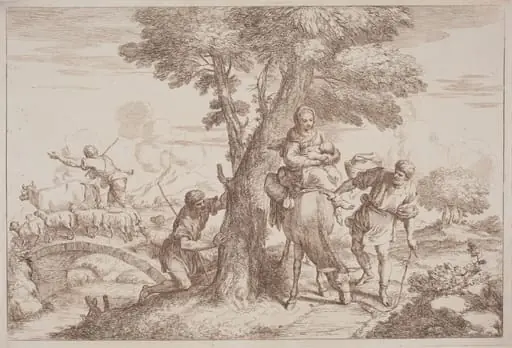 The Flight into Egypt with a Shepherd Watching from Behind a Tree