Artwork
Scoa Camin (Chimney Sweep)
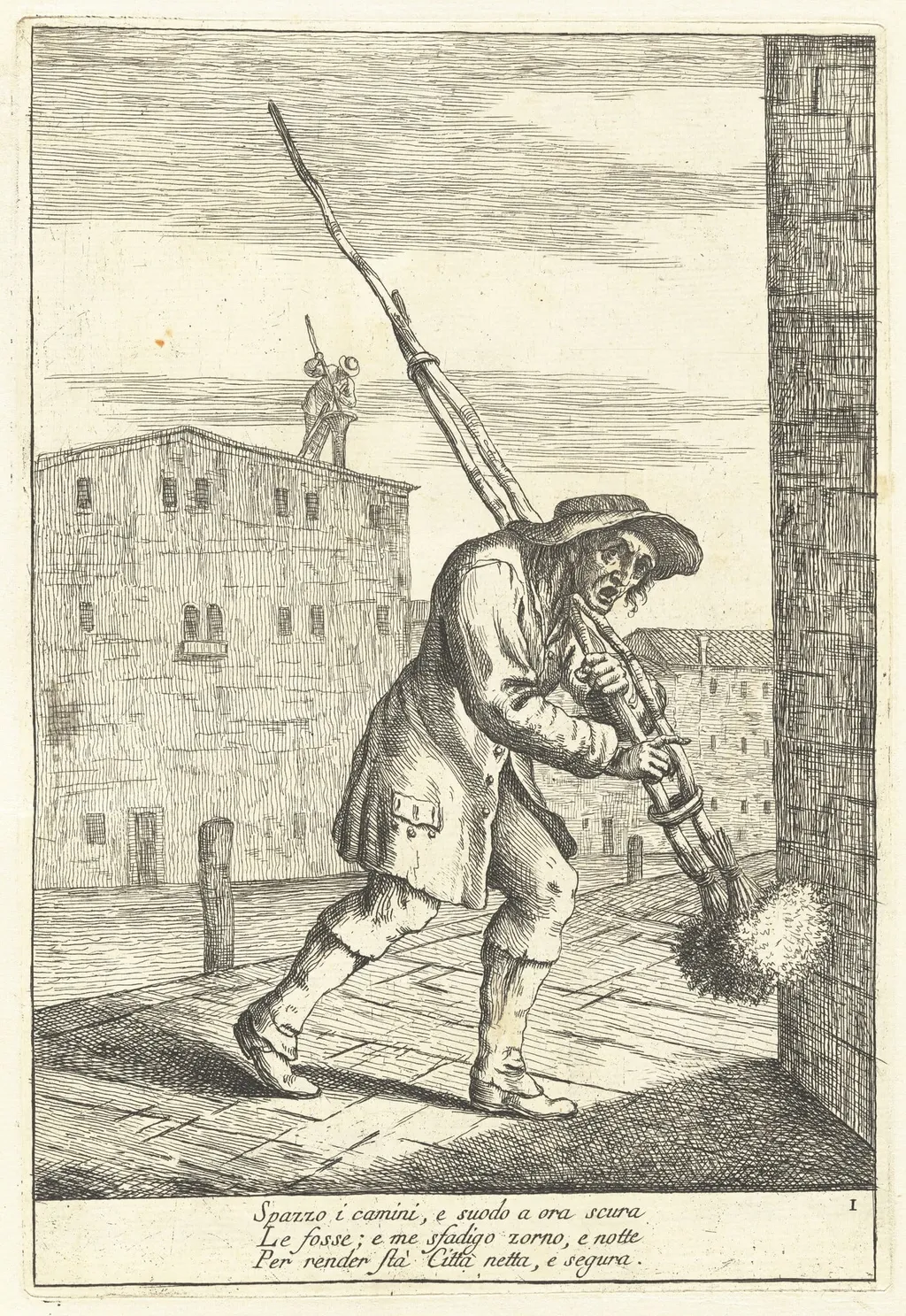
Scoa Camin (Chimney Sweep) is an ink print by the Romanticist artist Gaetano Zompini. It dates from 1753 and is held in the collection of the National Gallery of Art.
About this work
Overview
Scoa Camin (Chimney Sweep), an etching by Gaetano Zompini from 1753, depicts a laborer engaged in the arduous task of cleaning chimneys. Rendered on laid paper, the work belongs to a series documenting Venetian tradespeople. The image captures a moment of physical strain, emphasizing the worker’s exhaustion through posture and expression, without idealization or ornamentation.
Subject & Meaning
The Italian text beneath reinforces the theme of relentless toil, framing the image as a quiet testament to the unseen labor sustaining city life.
The figure is a chimney sweep, bent under the weight of his broom, face contorted with effort. Behind him, a towering building suggests the urban environment that demands his labor. The soot-covered ground and his worn attire convey the grim reality of his profession. The Italian text beneath reinforces the theme of relentless toil, framing the image as a quiet testament to the unseen labor sustaining city life.
Technique & Style
Zompini employed fine, precise etching lines to render texture and motion: the bristles of the broom, the folds of the sweep’s clothing, and the grit on the pavement are all meticulously detailed. The contrast between the dark, smudged ground and the lighter, angular forms of the figure and building enhances the sense of depth and fatigue. The technique avoids dramatic lighting, favoring observational clarity over theatrical effect.
History & Provenance
Created in Venice during the mid-18th century, the print was part of Zompini’s broader project recording the city’s occupational classes. It likely circulated among collectors and scholars interested in social documentation. The work’s survival in institutional collections today reflects its value as a historical record rather than as decorative art, preserving a glimpse into the lives of Venice’s working poor.
Context
In 18th-century Venice, chimney sweeps were often marginalized laborers, frequently children or immigrants, working in dangerous, soot-filled conditions. Zompini’s series emerged during a period of growing civic interest in documenting everyday life, distinct from religious or aristocratic themes. His focus on laborers aligns with emerging Enlightenment values that valued observation and social realism over myth or grandeur.
Legacy
Scoa Camin contributes to a small but significant body of early modern prints that humanize laborers without sentimentality. Zompini’s work influenced later artists and ethnographers interested in social documentation. Today, it remains a primary visual source for understanding the material conditions of urban labor in 18th-century Italy, valued for its unembellished honesty and attention to detail.
Artist & collection

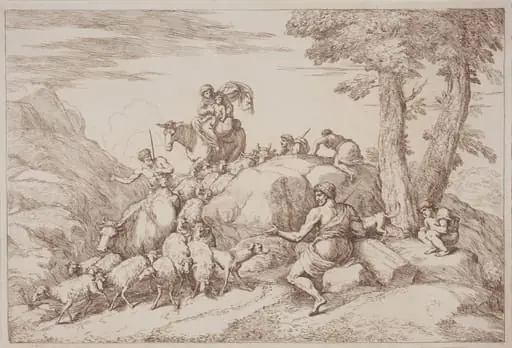 A Pastoral Journey with a Mother and Child on Horesback and an Elderly Shepherd Seated
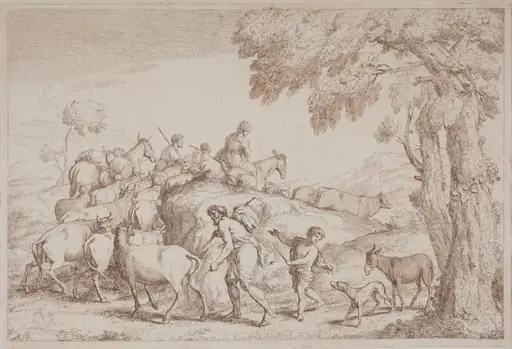 An Elderly Shepherd Seen from Behind
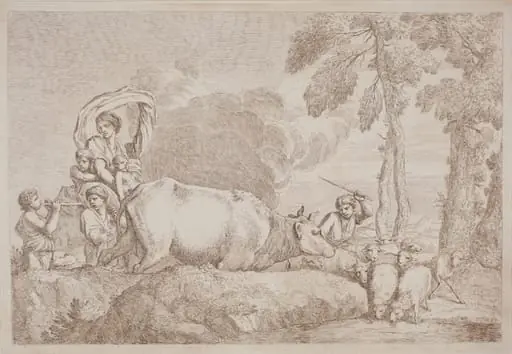 A Woman with Two Children on Horseback
 The Raising of Lazarus
 Chiron Teaching Music to Achilles
 An Elderly Shepherd Leading the Flock
 Marcer (Draper)
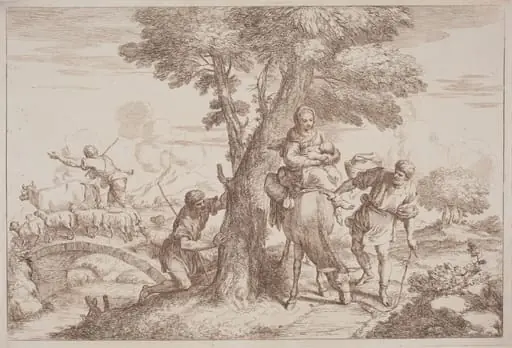 The Flight into Egypt with a Shepherd Watching from Behind a Tree