Artwork
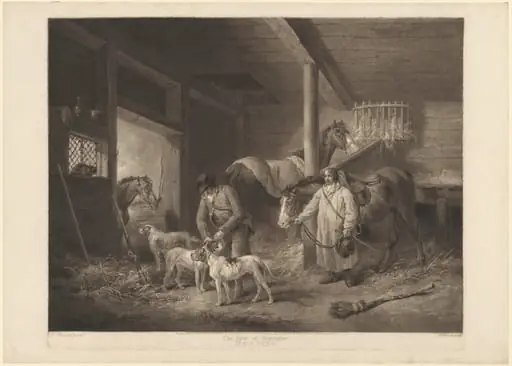
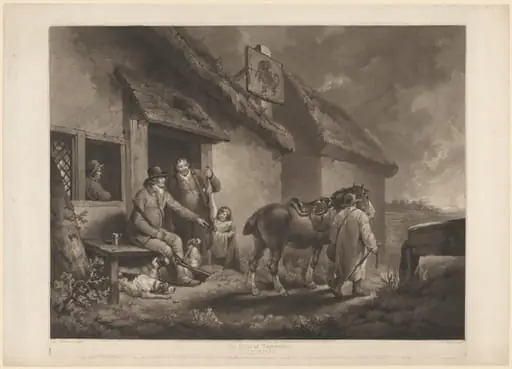
The First of September, Morning
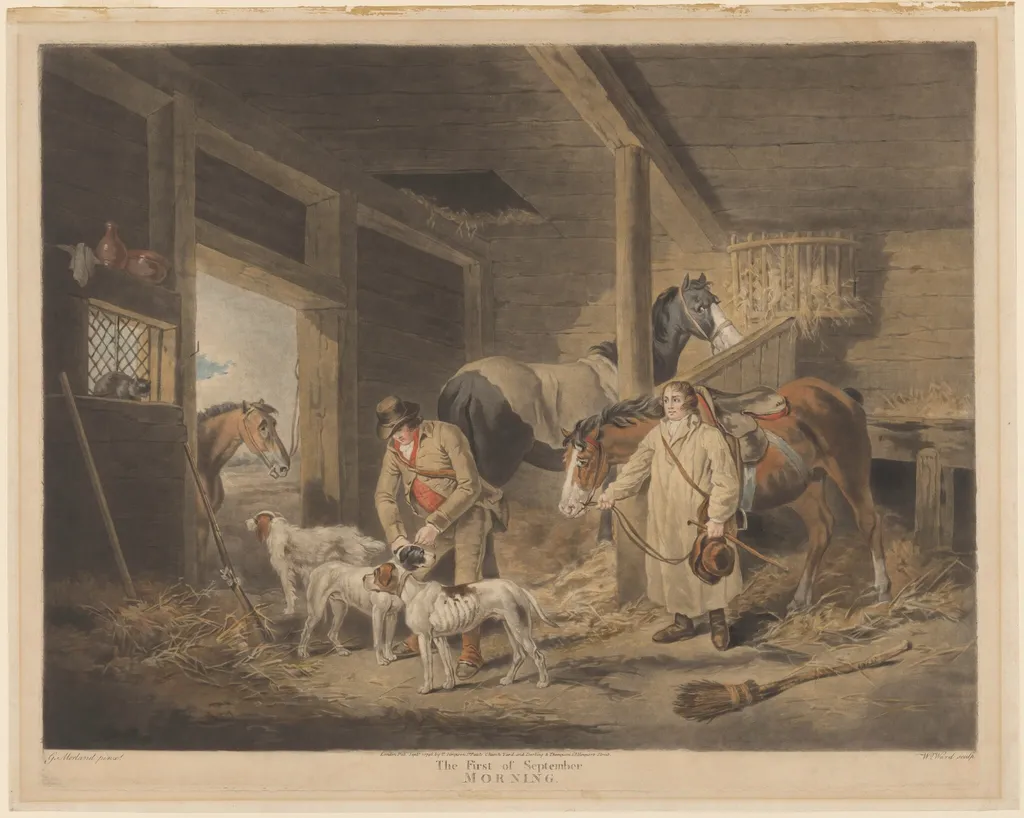
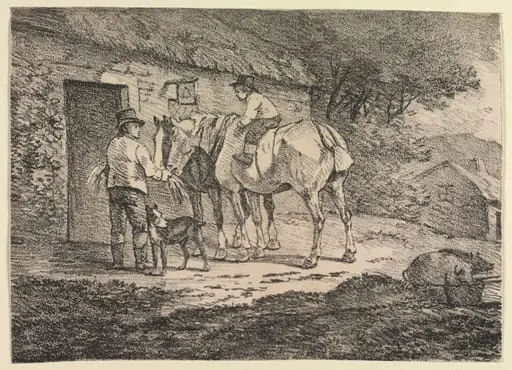
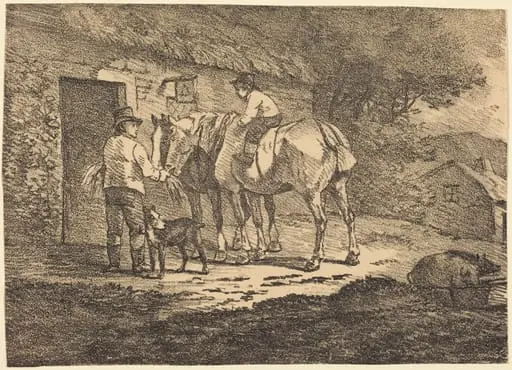
The First of September, Morning is an ink print by the Romanticist artist William Ward. It dates from 1796 and is held in the collection of the National Gallery of Art.
About this work
Overview
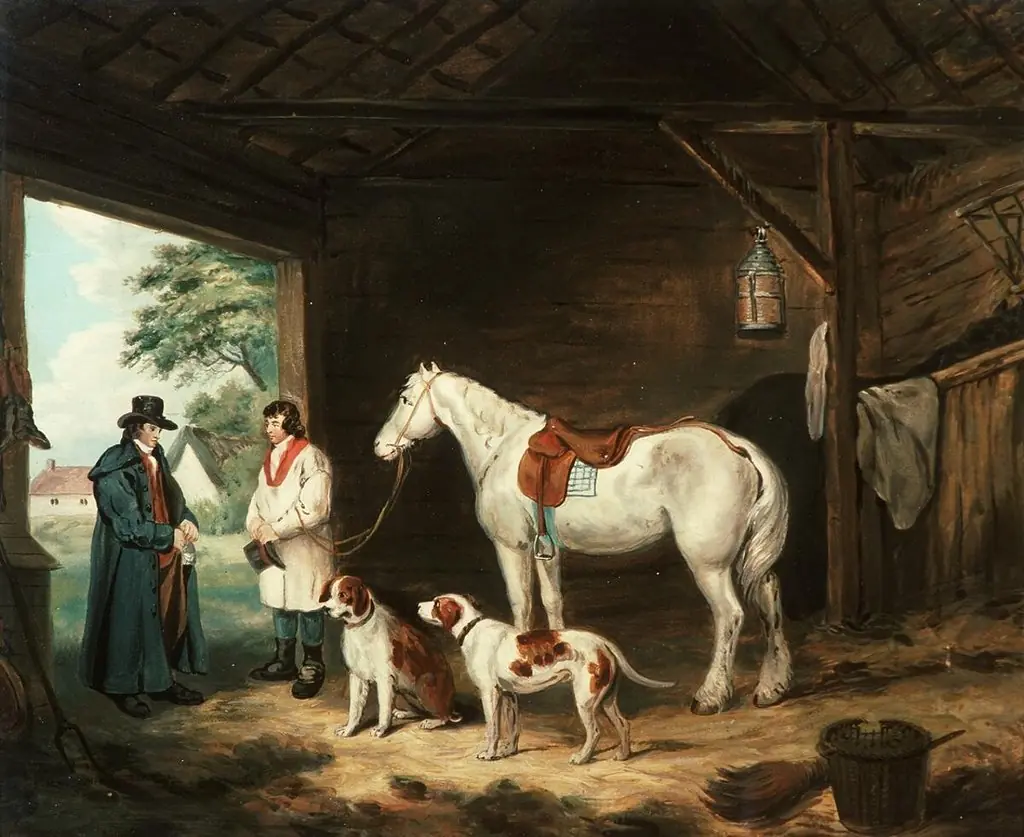
The print captures a quiet moment of morning labor, focusing on two figures—a man and a boy—alongside animals and tools.
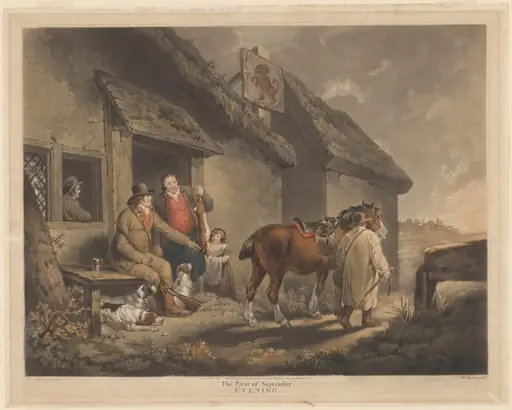
Created in 1796 by William Ward, The First of September, Morning is a color mezzotint depicting a rural barn interior. The print captures a quiet moment of morning labor, focusing on two figures—a man and a boy—alongside animals and tools. Unlike oil paintings of the period, this work uses the mezzotint technique to achieve subtle tonal gradations, enhanced by hand-coloring to suggest natural light and texture.
Subject & Meaning
The scene portrays ordinary farm life with no dramatic narrative. The man and boy, dressed in practical clothing, appear engaged in routine tasks—perhaps preparing for the day’s work. A broom on the floor and a basket of hay overhead suggest domestic order. The presence of horses and dogs implies a working farm, while the stillness of the figures conveys dignity in labor rather than spectacle.
Technique & Style
Ward employed mezzotint, a printmaking method known for its rich tonal range, to render soft shadows and delicate light. Hand-applied color adds warmth to the wooden beams, animal hides, and clothing, enhancing the sense of atmosphere without overwhelming detail. The composition is tightly framed, focusing attention on the central figures and the quiet interplay between human and animal space.
History & Provenance
The print was produced in 1796, during a period when mezzotint was favored for reproducing paintings and capturing domestic scenes. Ward, primarily known as an engraver, likely created this work for a private or local audience rather than public exhibition. No documented early ownership records survive, but its survival suggests it was valued within regional collecting circles.
Context
In late 18th-century England, rural life was increasingly idealized in art as industrialization reshaped society. Ward’s print aligns with this trend, presenting farm labor as orderly and serene. Unlike grand historical or aristocratic subjects, this work reflects a growing interest in everyday scenes, particularly those tied to the land and seasonal rhythms.
Legacy
The First of September, Morning remains a modest but representative example of late Georgian printmaking. It illustrates how mezzotint, often used for portraiture or landscapes, was adapted to intimate domestic subjects. While not widely reproduced or studied today, it contributes to understanding the visual culture of rural England beyond elite artistic traditions.
Artist & collection