Artwork
King Christian II in Prison
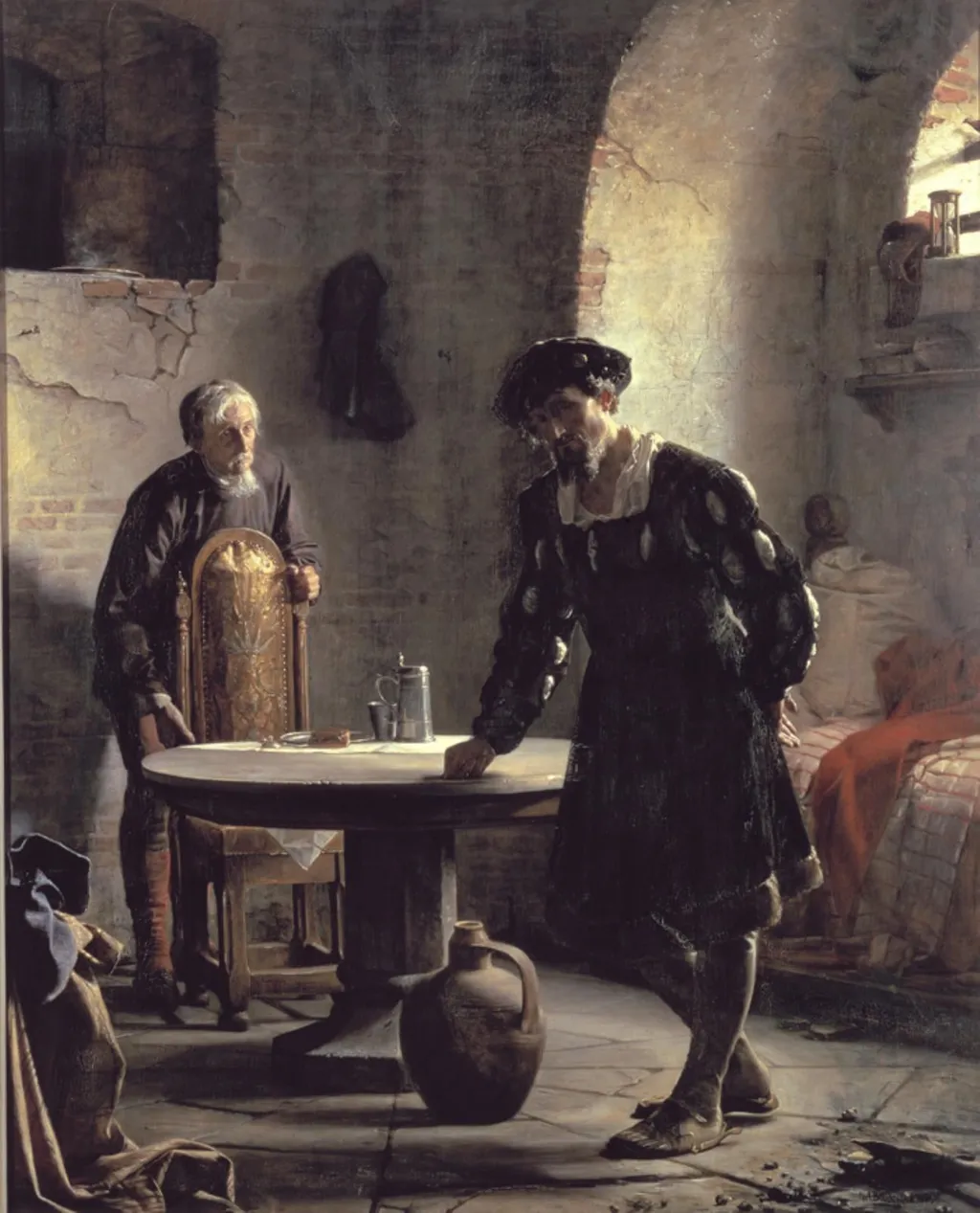
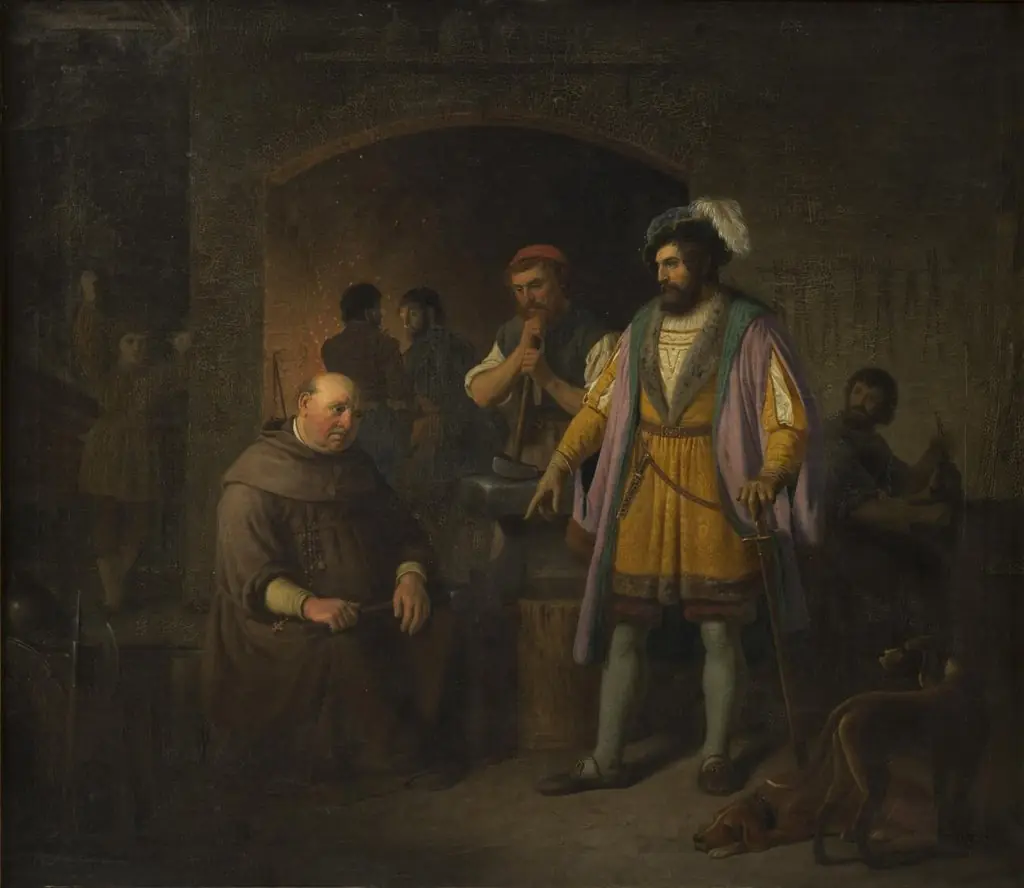
King Christian II in Prison is a photography by the Impressionist artist Unknown. It dates from 1871 and is held in the collection of the Statens Museum for Kunst. Created in 1871, this image depicts King Christian II of Denmark and Norway during his imprisonment.
About this work
Overview
The work resides in the Museum of Ethnography, where it functions as a visual document of political confinement rather than a literal record.
Created in 1871, this image depicts King Christian II of Denmark and Norway during his imprisonment. The scene is rendered with careful attention to spatial tension and emotional restraint. Though labeled as a photograph, it is in fact a painted composition designed to evoke historical memory. The work resides in the Museum of Ethnography, where it functions as a visual document of political confinement rather than a literal record.
Subject & Meaning
The painting portrays King Christian II, deposed and imprisoned, seated with a book, while a companion stands nearby, tense and alert. The king’s calm demeanor contrasts with the guard’s rigid posture, suggesting inner resolve amid captivity. The book, its cover intricately carved, implies intellectual endurance. The confined space and sparse furnishings underscore isolation, framing the king not as a fallen monarch but as a man enduring silence and solitude.
Technique & Style
The artist employs chiaroscuro to heighten the psychological weight of the scene. Harsh contrasts between shadow and dim light carve out the figures against the rough stone walls, emphasizing texture and depth. Brushwork is controlled yet expressive, particularly in the rendering of fabric folds and the grain of the wooden table. The composition avoids dramatic gesture, instead relying on stillness and spatial compression to convey psychological gravity.
History & Provenance
Commissioned in the late 19th century, the work was not created as a contemporary portrait but as a historical reconstruction. It entered the Museum of Ethnography’s collection shortly after completion, likely chosen for its anthropological resonance rather than its royal subject. Its classification within an ethnographic context reflects 19th-century curatorial practices that treated political figures as cultural specimens of power and suffering.
Context
In the 1870s, European artists increasingly revisited historical figures to explore themes of authority, loss, and resilience. Christian II, deposed in 1523 and held for over two decades, became a symbol of fallen sovereignty. This image aligns with a broader trend of romanticizing political prisoners, using intimate settings to humanize figures otherwise remembered through battles and decrees.
Legacy
Though not widely exhibited outside its home institution, the work remains a quiet example of 19th-century historical painting that prioritizes psychological realism over spectacle. Its placement in an ethnographic museum invites reflection on how power is visually encoded and how confinement is rendered as a universal human condition, beyond the specifics of monarchy or era.
Artist & collection

 Domestic Scene
 Giacomo and Cardinal Marco, investing Andrea, Abbot of San Zeno, with his Benefice
 The Nymph of Fontainebleau
 Portrait of a Woman
 Madonna and Child with Saints in the Enclosed Garden
 Venus and Minerva
 Family Group of Four on Sofa
 Wall painting from Room H of the Villa of P. Fannius Synistor at Boscoreale
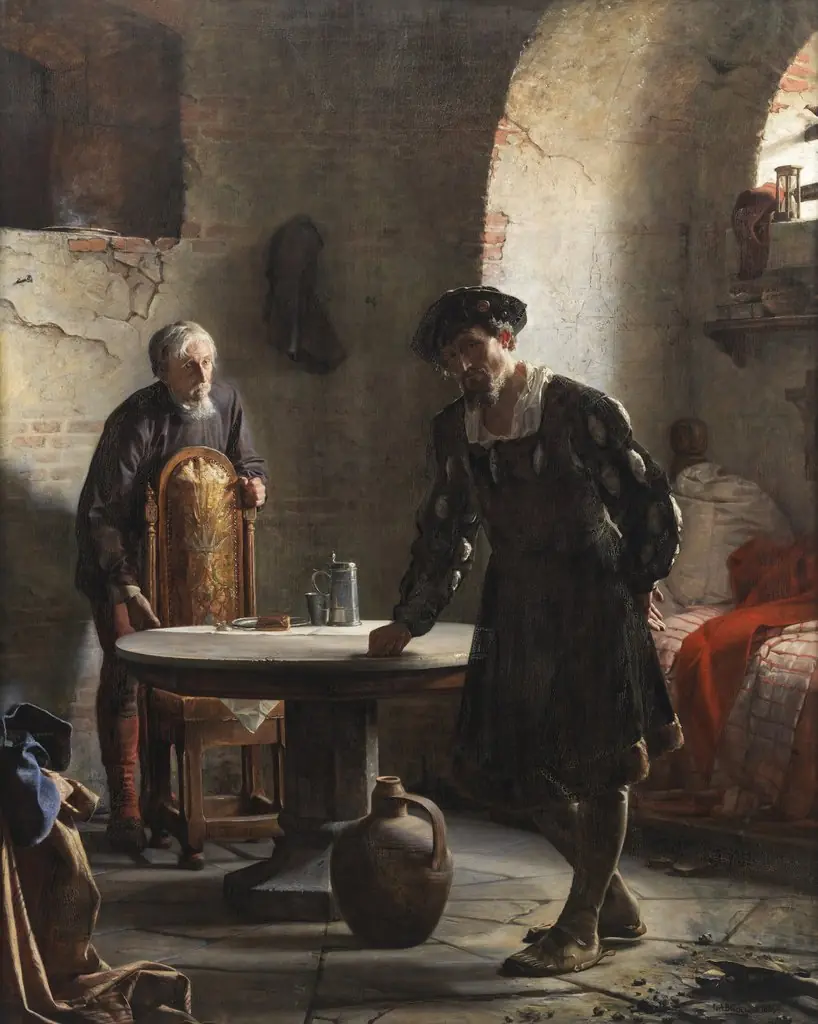 Christian II i fængslet på Sønderborg Slot
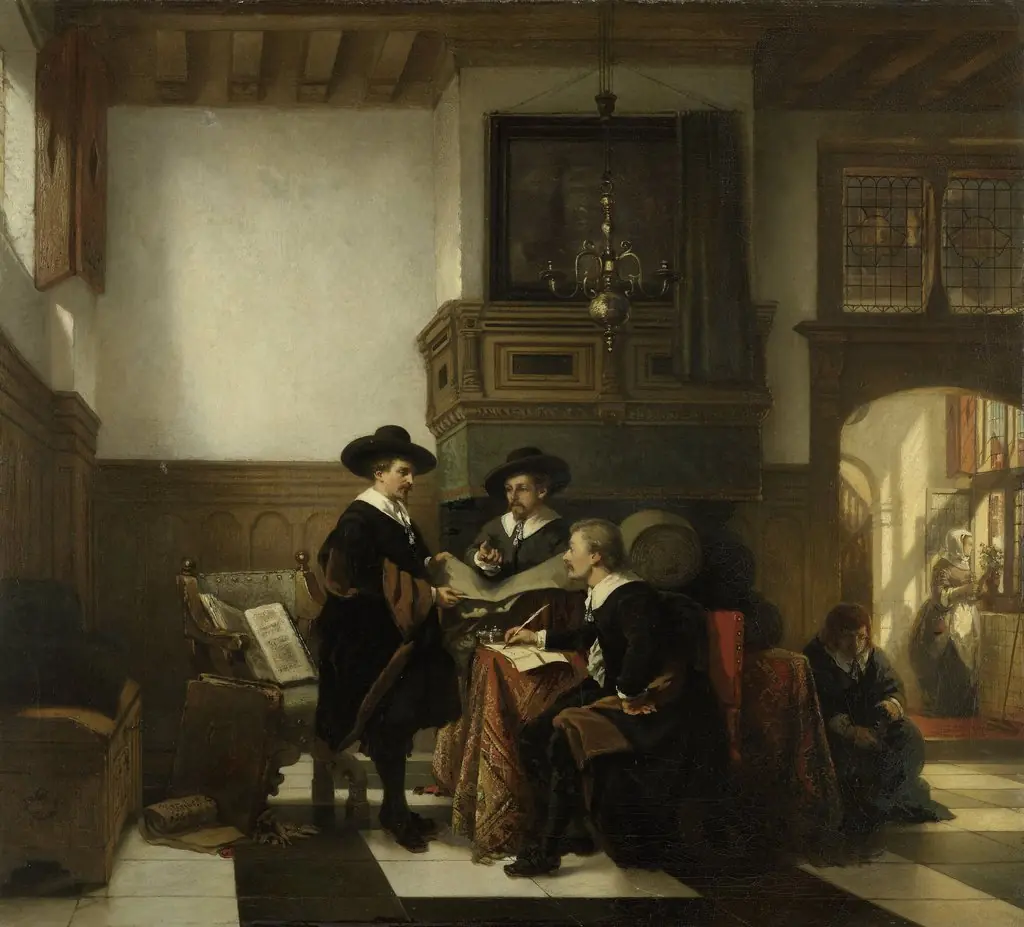 Syndics of the Leiden
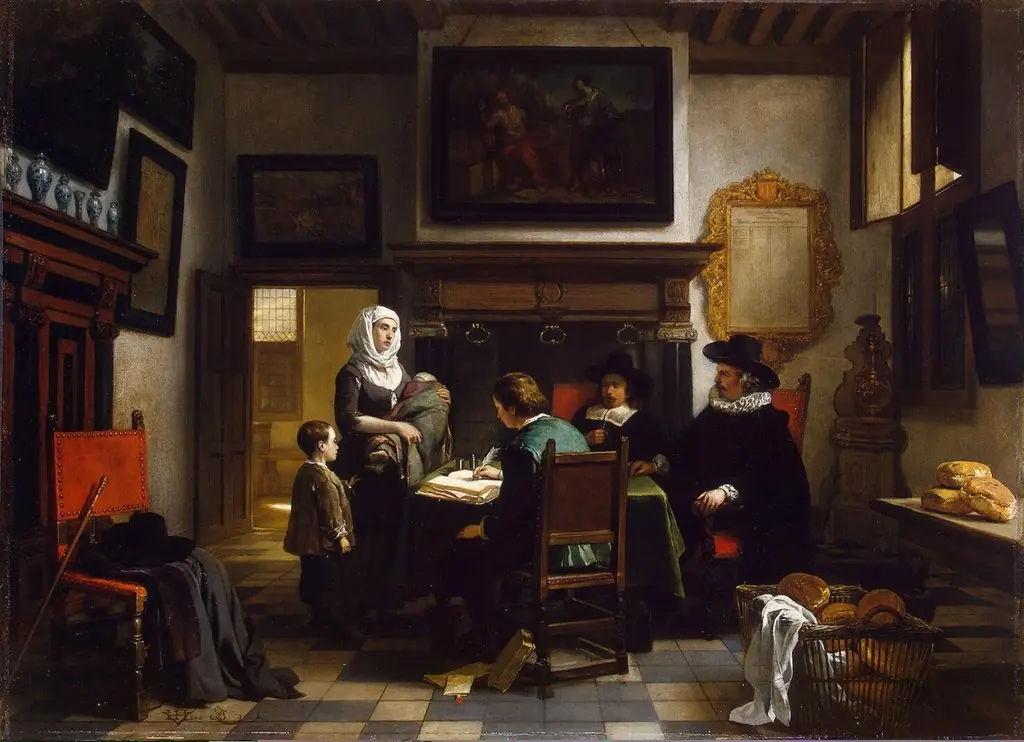 Distribution of Charity in the Alms-House
 Untitled
 Parable of the Lost Drachma
 Soldiers Beside a Fireplace
 Geographers at Work
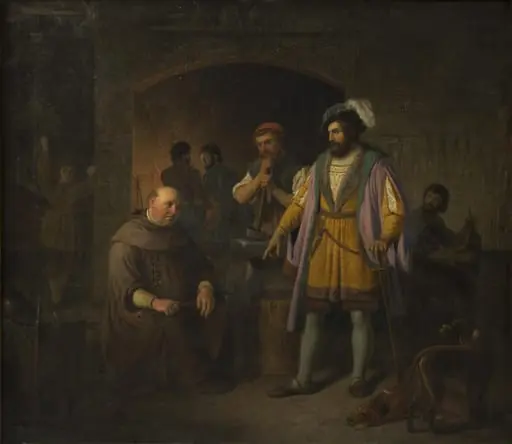 Jens Holgersen Ulfstand kurerer abbeden til Bækkeskov for hans fedme ved at tvinge ham til at arbejde i sin smedie
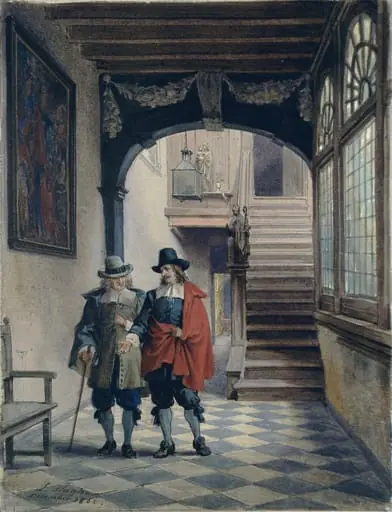 The Corridor, Brewer's Hall, Antwerp
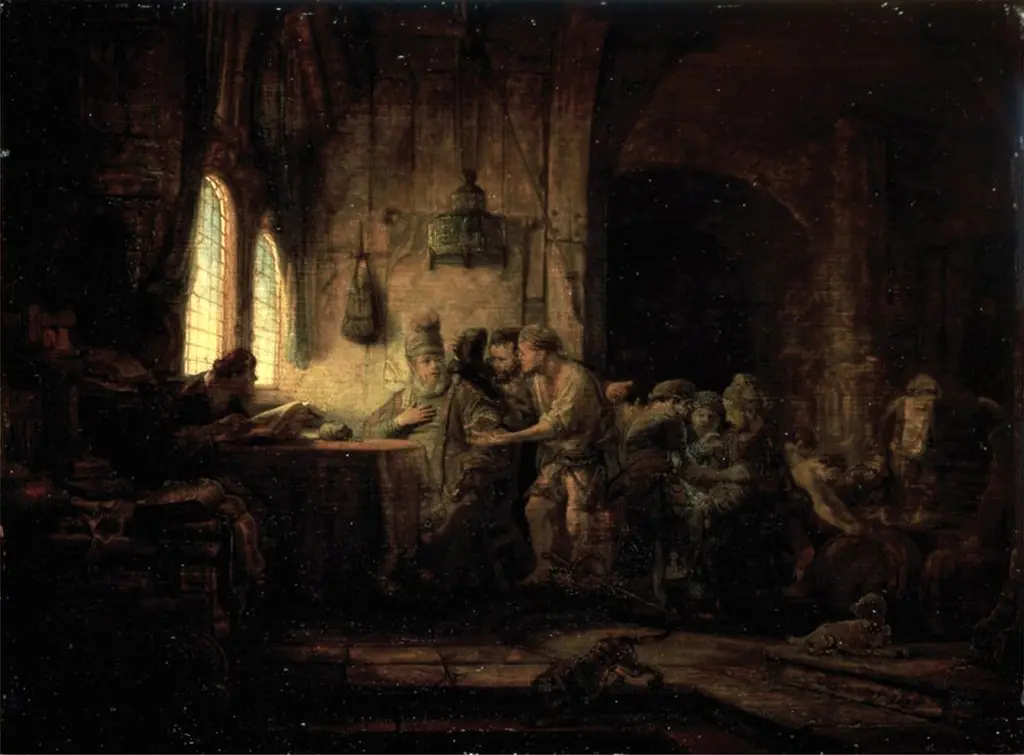 Parable of the Laborers in the Vineyard
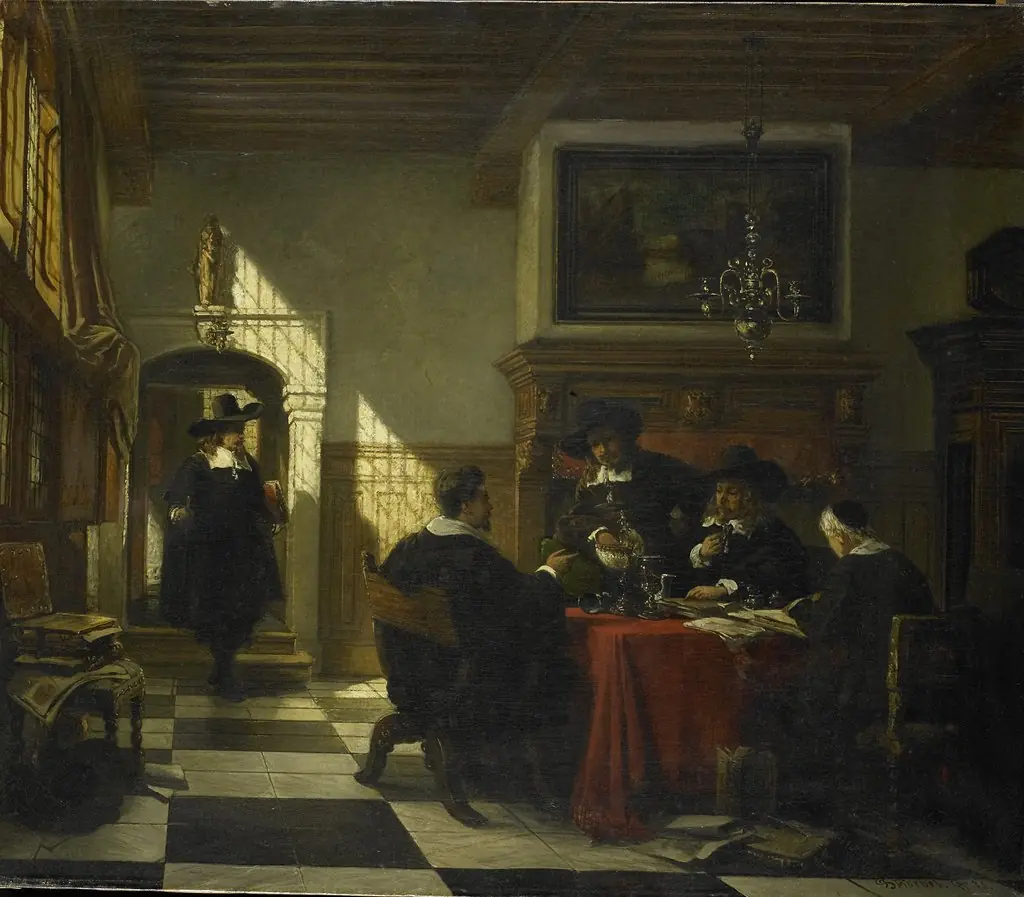 Gezelschap in 17e-eeuwse dracht bij een tafel waarop een Nautilusbeker
 Jens Holgersen Ulfstand kurerer abbeden til Bækkeskov for hans fedme ved at tvinge ham til at arbejde i sin smedie