Artwork
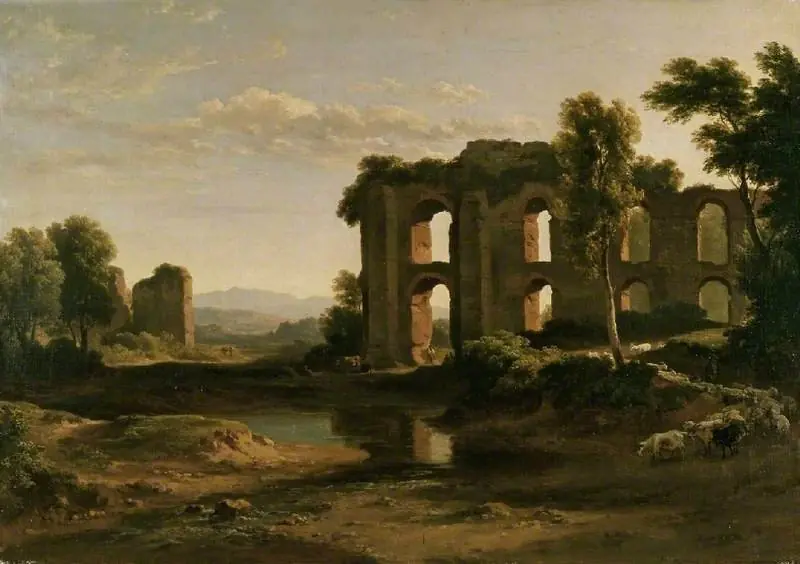
The Ruins of the Aqueduct Aniene Nuovo near Tivoli
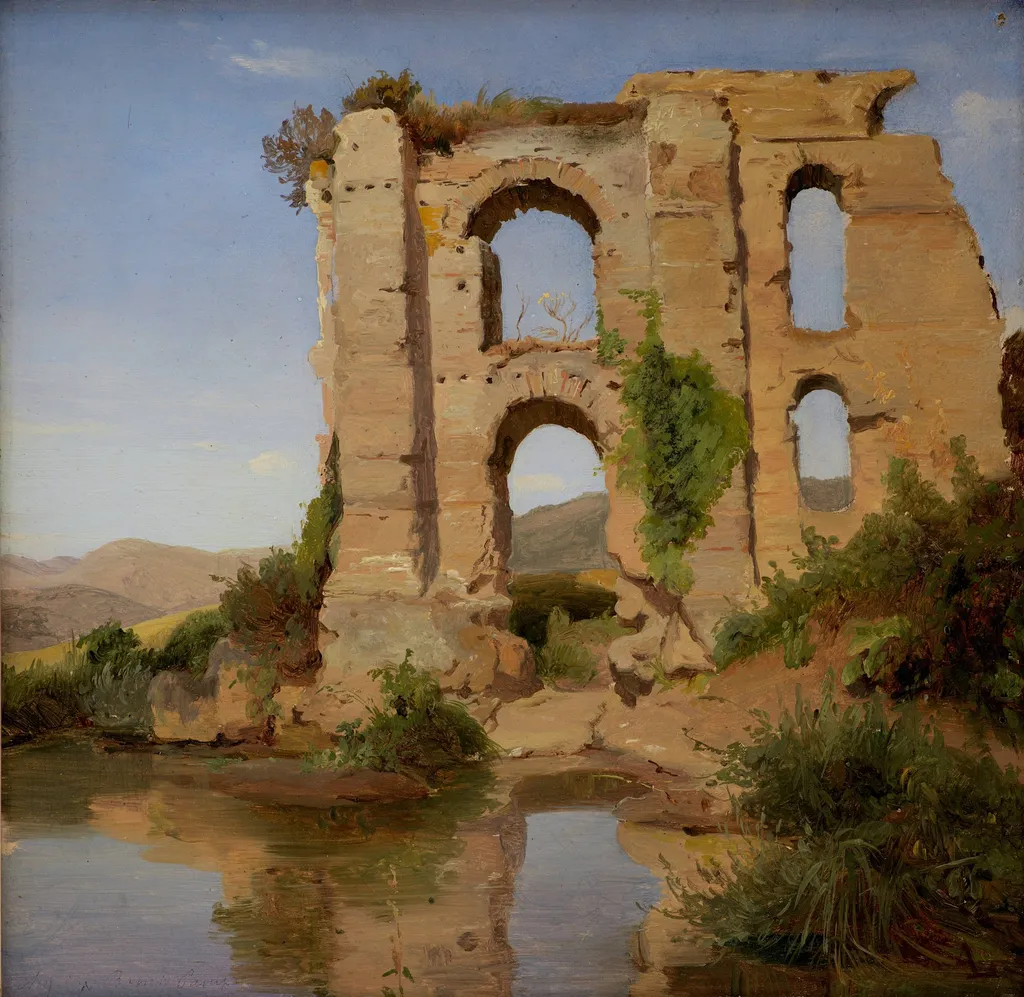
The Ruins of the Aqueduct Aniene Nuovo near Tivoli is a photography by Unknown. It dates from 1850 and is held in the collection of the Statens Museum for Kunst. Painted around 1850, this work depicts the remnants of the Aniene Nuovo aqueduct near Tivoli.
About this work
Overview
Painted around 1850, this work depicts the remnants of the Aniene Nuovo aqueduct near Tivoli. Executed in oil, the scene captures the quiet decay of ancient infrastructure amid natural reclamation. The painting resides in the Museum of Ethnography, where it is valued for its atmospheric rendering of ruins rather than its historical documentation.
Subject & Meaning
The subject is a fragment of Roman engineering, its three arches half-consumed by vegetation and time. The still river mirrors the structure, reinforcing themes of endurance and erosion. No human figures are present, emphasizing solitude and the slow passage of centuries. The ruin becomes a silent witness to impermanence, not a monument to glory.
Technique & Style
The artist employs impasto to build texture across the stone surfaces, giving the ruins a tactile, weathered quality. Thick, visible brushstrokes suggest the roughness of aged masonry. Earth tones dominate—ochres, umbers, and mossy greens—while a pale blue sky provides subtle contrast. The composition favors quiet observation over dramatic effect.
History & Provenance
The painting was likely made during a period of growing interest in classical ruins among 19th-century European artists. It entered the Museum of Ethnography’s collection in the late 19th century, possibly through a donation or acquisition linked to ethnographic travel. Its provenance remains largely undocumented beyond its institutional ownership.
Context
In mid-19th-century Italy, artists frequently visited Tivoli to sketch ancient aqueducts and water systems. These sites were studied not only for their architecture but as symbols of lost civic order. This work aligns with a broader trend of romanticizing decay, where nature’s reclamation of human structures evoked contemplation rather than nostalgia.
Legacy
Though not widely exhibited, the painting contributes to a visual record of Roman infrastructure in a state of quiet decline. Its emphasis on texture and atmosphere influenced later landscape painters interested in material decay. It remains a quiet example of how ruins were perceived—not as relics to be restored, but as living elements of the natural world.
Artist & collection

 Domestic Scene
 Giacomo and Cardinal Marco, investing Andrea, Abbot of San Zeno, with his Benefice
 The Nymph of Fontainebleau
 Portrait of a Woman
 Madonna and Child with Saints in the Enclosed Garden
 Venus and Minerva
 Family Group of Four on Sofa
 Wall painting from Room H of the Villa of P. Fannius Synistor at Boscoreale
 View of the Ponte Nomentano (Roman Campagna)
 A Building near Tor di Quinto outside Rome
 The Temple of Hera at Paestum, Italy
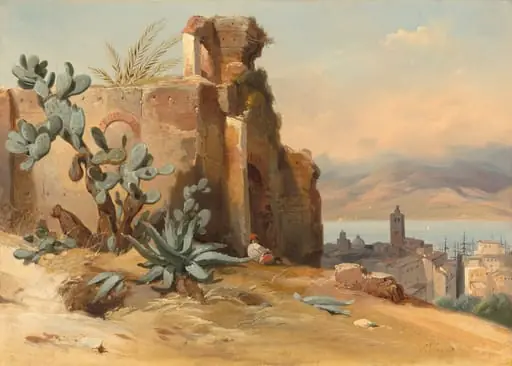 Ancient Ruins near Messina, Sicily
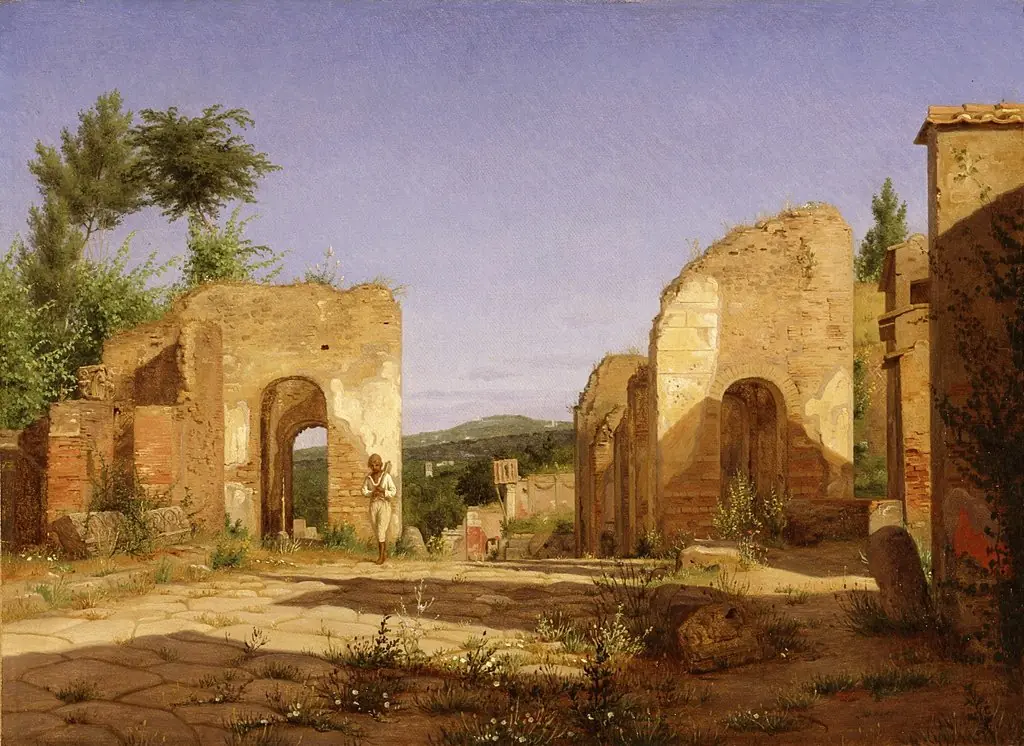 Gateway in the Via Sepulcralis in Pompeii
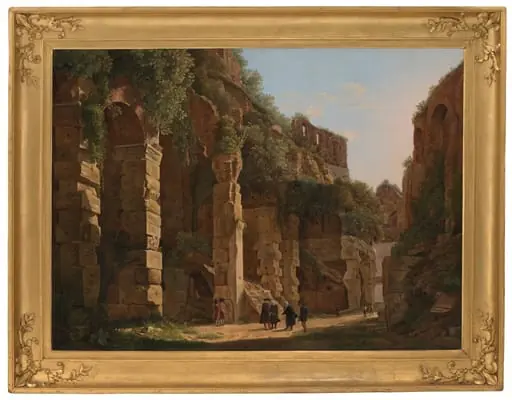 Inside the Colosseum
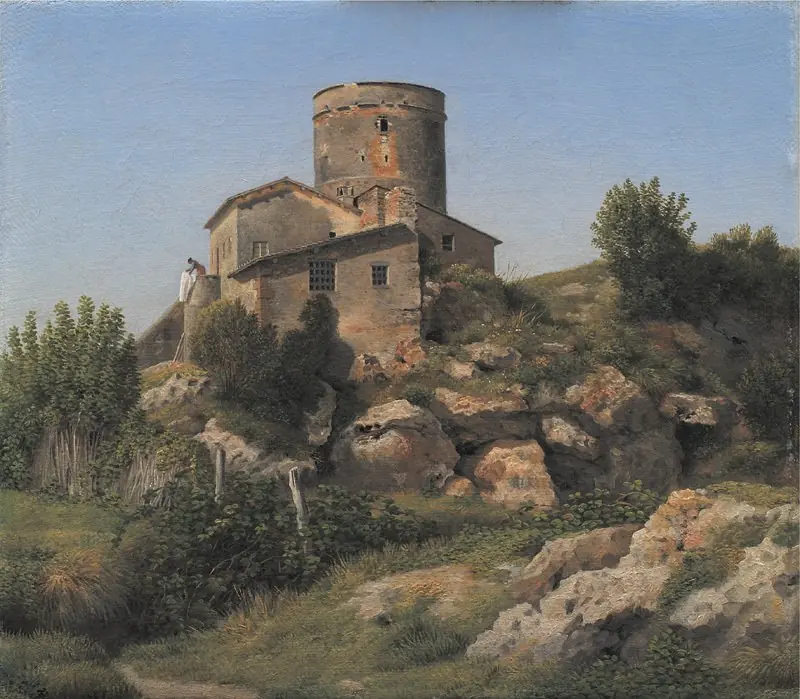 A Building near Tor di Quinto outside Rome
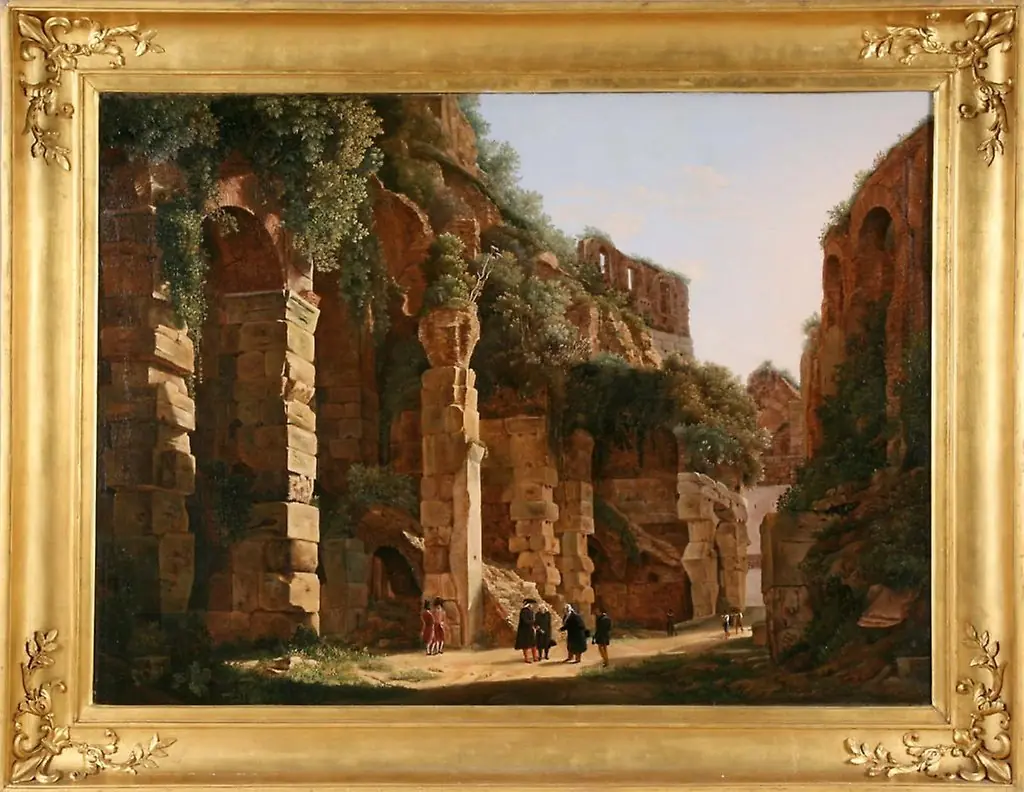 Inside the Colosseum
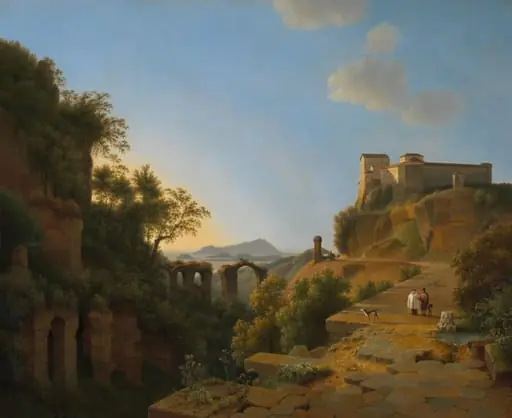 De golf van Napels met op de achtergrond het eiland Ischia
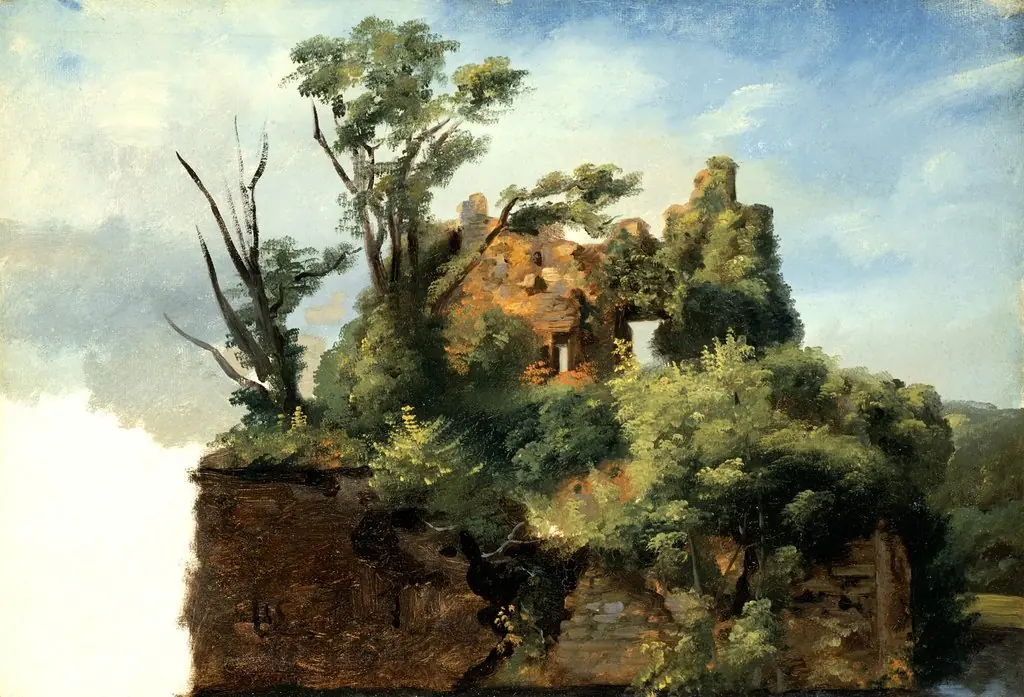 Landscape with Ruins
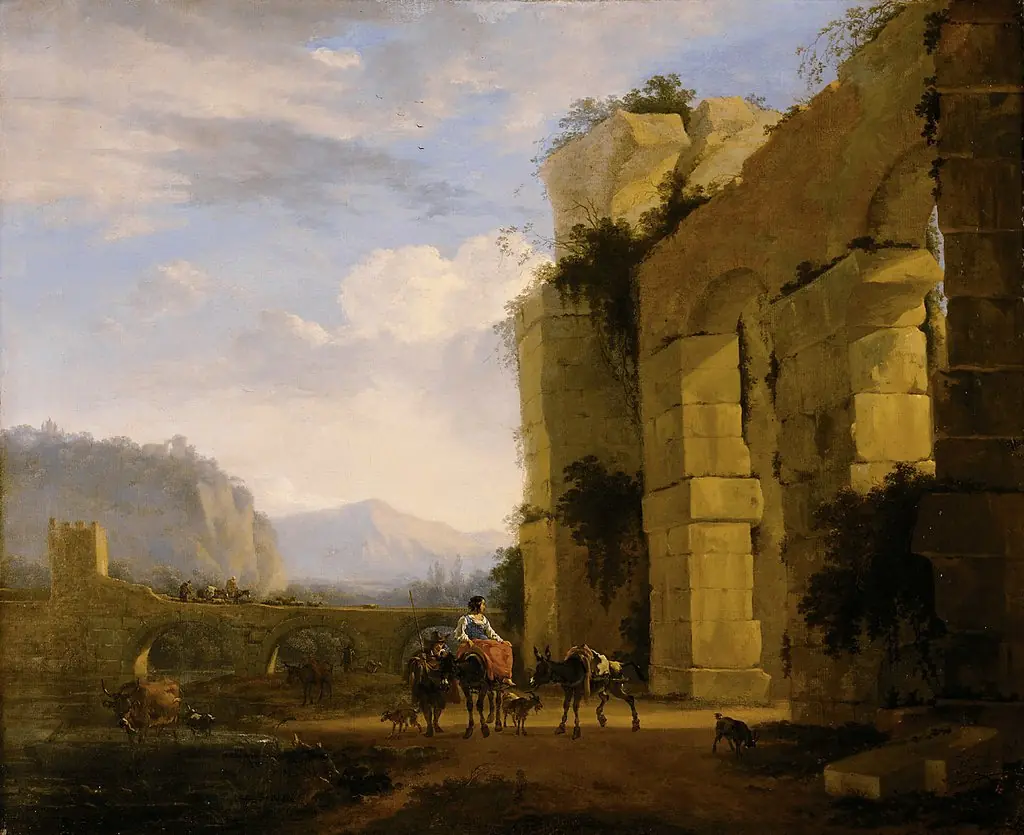 Landscape with the ruin of an aquaduct
 Landscape near Tivoli, with part of the Claudian Aqueduct