Artwork
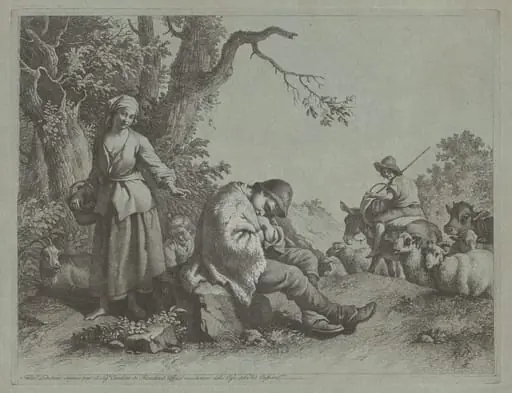
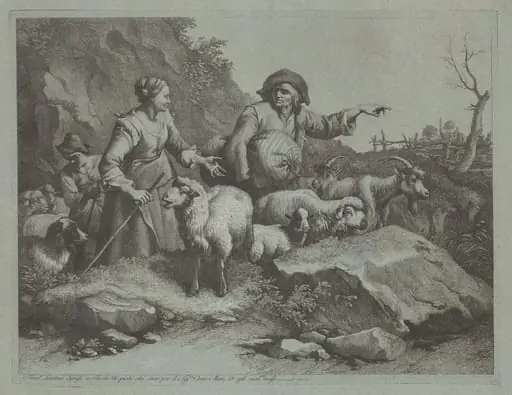
Shepherd Wearing a Cape Driving a Flock
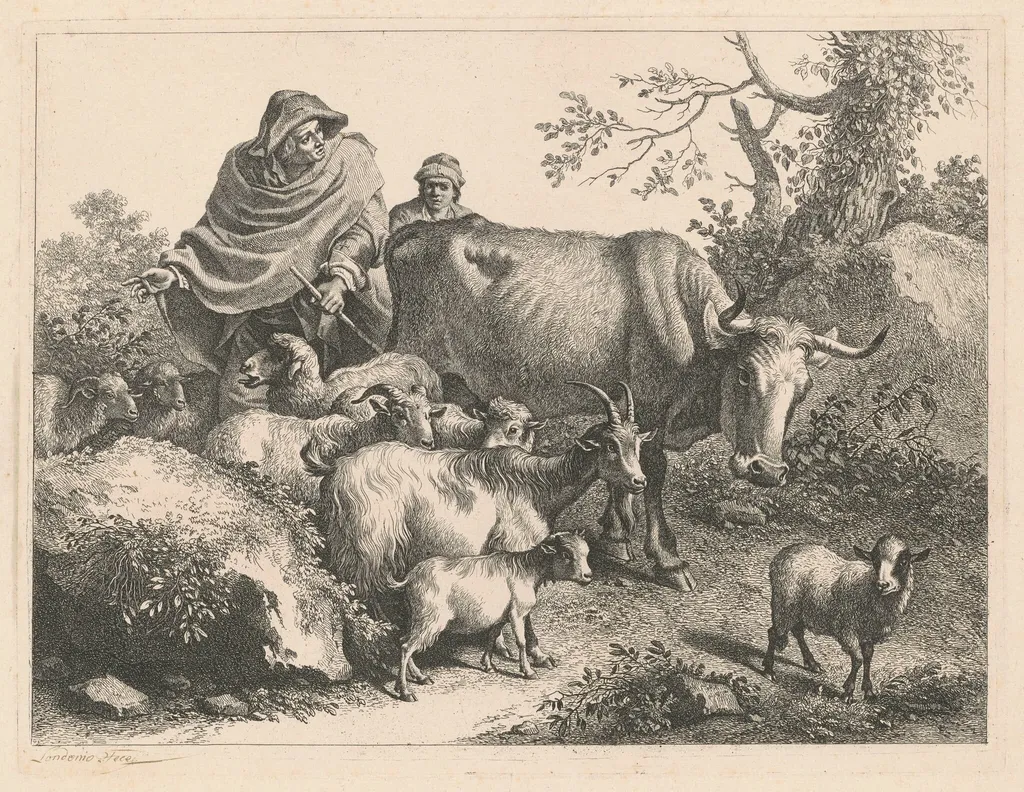
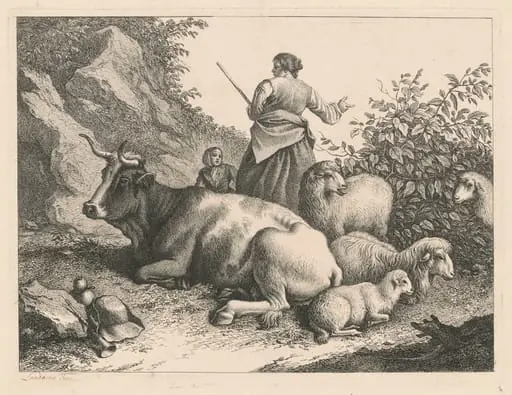
Shepherd Wearing a Cape Driving a Flock is an ink print by the Romanticist artist Francesco Londonio. It dates from 1776 and is held in the collection of the National Gallery of Art.
About this work
Overview
Created in 1776, this etching on laid paper by Francesco Londonio captures a quiet moment of rural labor in the Lombard countryside.
Created in 1776, this etching on laid paper by Francesco Londonio captures a quiet moment of rural labor in the Lombard countryside. As a Milan-based artist active in the late Baroque and Rococo eras, Londonio specialized in prints that depicted pastoral life. The work belongs to a broader tradition of genre scenes favored by Northern Italian collectors, who sought imagery of the countryside as both observation and idealization.
Subject & Meaning
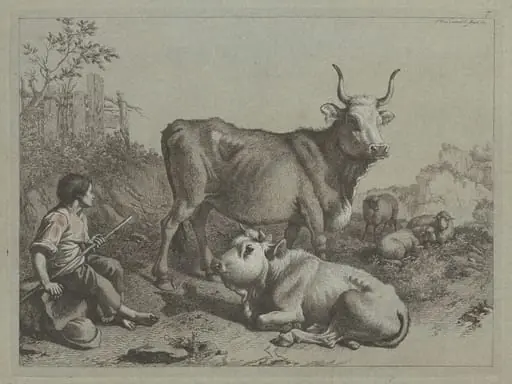
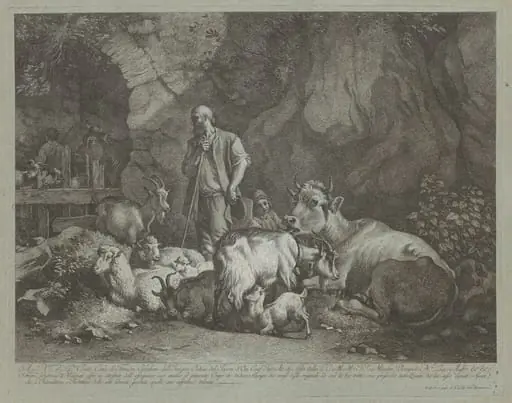
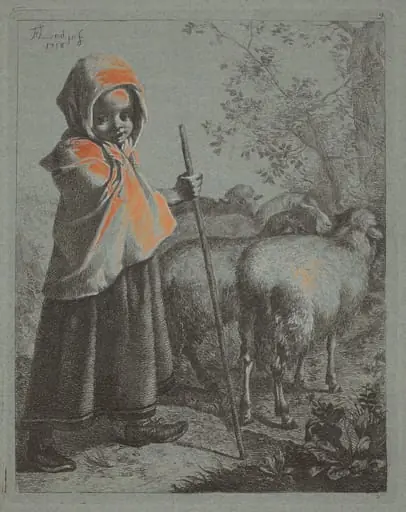
The scene portrays a shepherd in a striped cape and wide-brimmed hat guiding a mixed flock of sheep and goats along a rocky trail. Animals are shown in varied postures—some grazing, others following closely—suggesting a moment of calm movement rather than urgency. The figure’s quiet demeanor and the natural setting emphasize dignity in everyday rural work, reflecting a cultural interest in authentic, unidealized peasant life during the 18th century.
Technique & Style
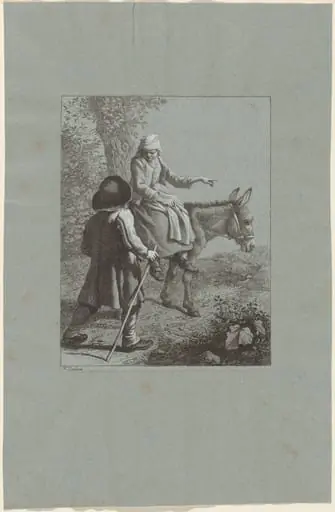
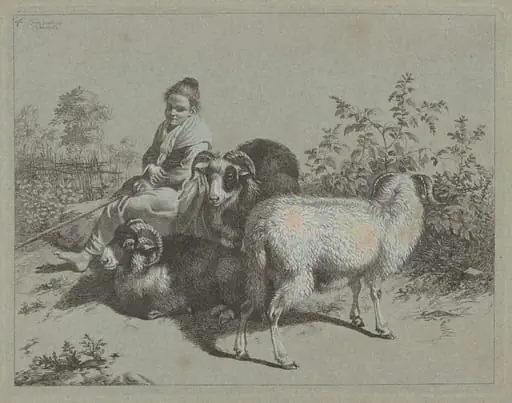
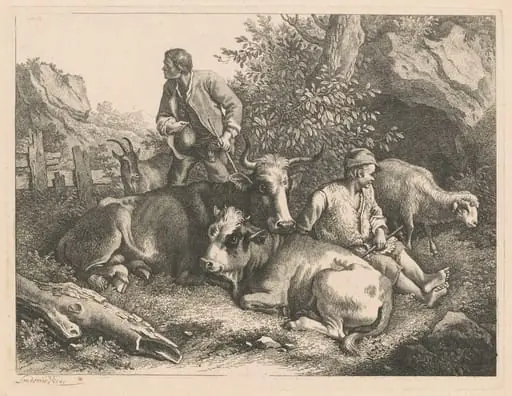
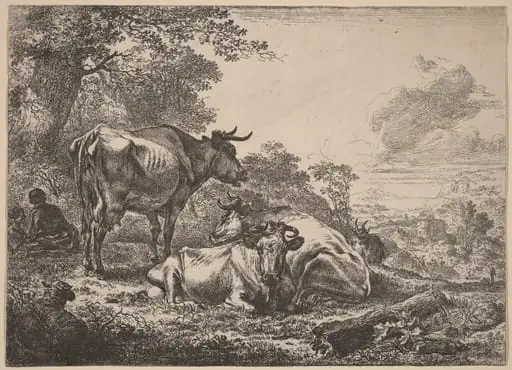
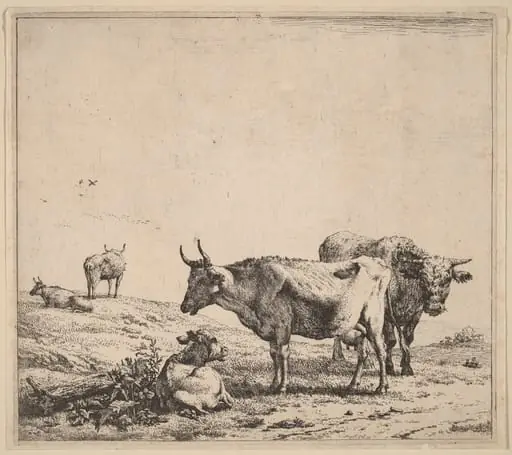
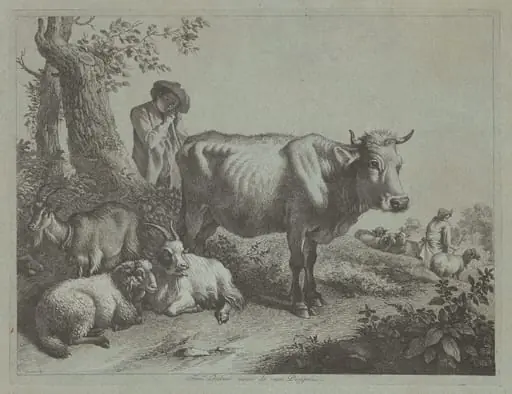
Londonio employed etching to render fine, controlled lines that define texture and form. The folds of the shepherd’s cape, the coarse fur of the animals, and the sparse vegetation are articulated with delicate hatching and cross-contouring. The use of laid paper, with its subtle watermark texture, enhances the tactile quality of the print. The composition avoids dramatic lighting, favoring a muted tonal range that supports the scene’s understated realism.
History & Provenance
Londonio trained in Milan under Ferdinando Porta and Giovanni Battista Sassi, later studying engraving with Benigno Bossi. His travels to Rome and Naples exposed him to classical and Neapolitan landscape traditions, which subtly informed his approach to rural subjects. While specific ownership records for this print are not widely documented, it aligns with the output of his mature period, when his pastoral etchings circulated among private collectors in Lombardy and beyond.
Context
In late 18th-century Northern Italy, there was growing patronage for images of rural life, not as romanticized idylls but as grounded depictions of labor and nature. Londonio’s work responded to this trend, distinguishing itself from grand historical or religious subjects. His focus on shepherds, livestock, and modest landscapes mirrored broader Enlightenment interests in observation, nature, and the social fabric outside urban centers.
Legacy
Londonio’s etchings, including this one, contributed to the documentation of rural Italy during a period of social and economic transition. Though not widely celebrated in major art historical narratives, his prints remain valuable for their precise observation of animal behavior and landscape detail. They offer insight into the visual culture of provincial collectors and the quiet persistence of genre subjects in an era dominated by academic ideals.
Own this work as a print
Artist & collection

Artist
Francesco Londonio (1723–1783) was an Italian painter, engraver, and scenographer, active mainly in his native Milan in a late-Baroque or Rococo style.