Artwork
Dianthus plumarius (fjer-nellike)
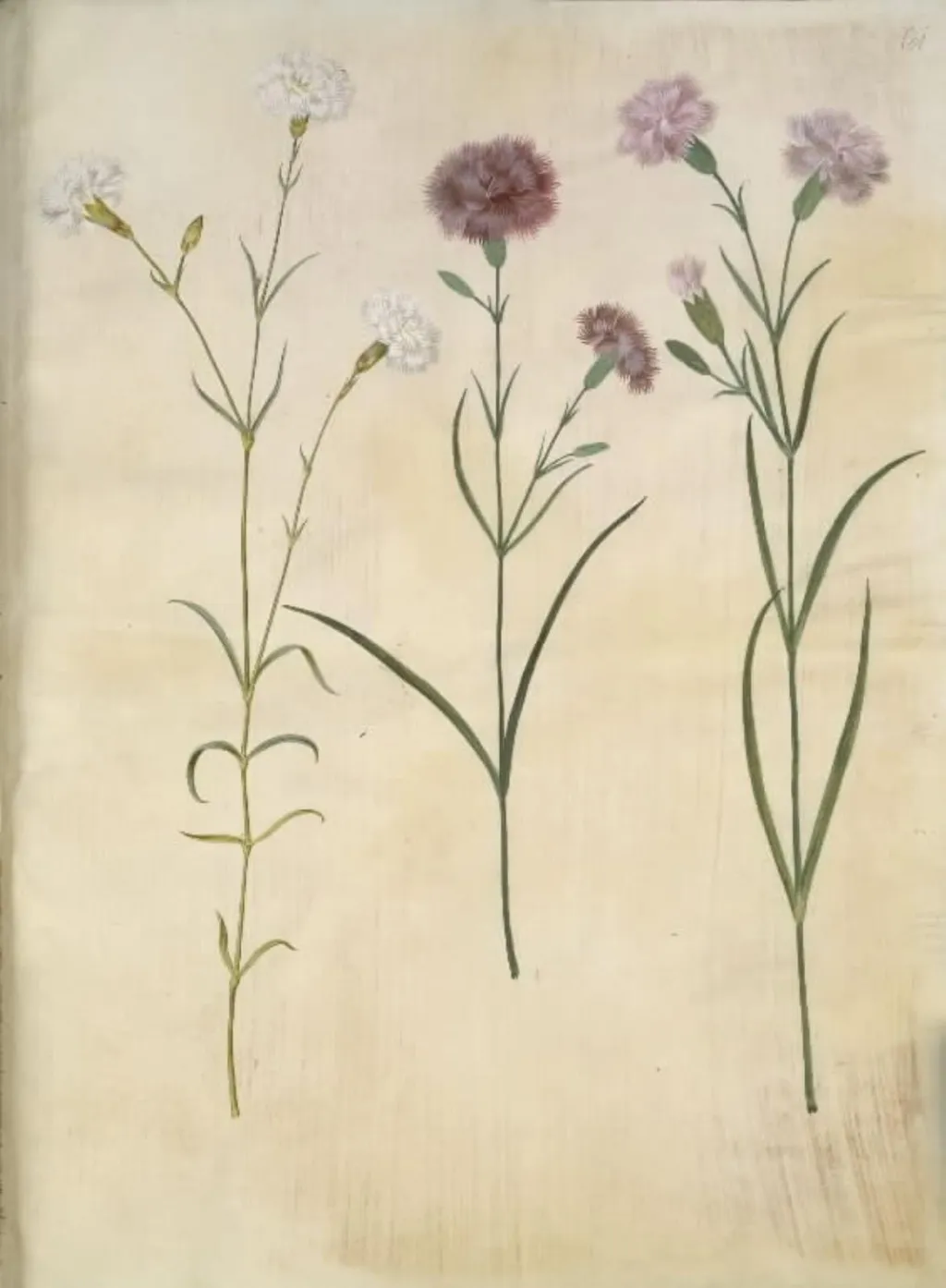
Dianthus plumarius (fjer-nellike) is an unspecified work on paper by Unknown. It dates from 1654 and is held in the collection of the Statens Museum for Kunst. This watercolor painting, dated around 1654, depicts four specimens of Dianthus plumarius, commonly known as feathered pink.
About this work
Overview
The work belongs to the collection of the Museum of Ethnography, where it is preserved as an example of early botanical observation.
This watercolor painting, dated around 1654, depicts four specimens of Dianthus plumarius, commonly known as feathered pink. Rendered on a pale, unadorned ground, the composition is minimal yet precise. The flowers are arranged with subtle variation in height and angle, suggesting natural growth rather than formal arrangement. The work belongs to the collection of the Museum of Ethnography, where it is preserved as an example of early botanical observation.
Subject & Meaning
The painting presents a quiet study of a common garden flower, valued in early modern Europe for its fragrance and ornamental use. By isolating the blooms without context, the artist emphasizes their structural details rather than symbolic meaning. The focus on botanical accuracy suggests an interest in classification, aligning with broader scientific efforts of the period to document and systematize plant life.
Technique & Style
Executed in watercolor, the work employs delicate washes to capture the soft textures of petals and leaves. The white flowers are rendered with faint, feathery strokes to suggest fuzziness, while the purple blooms show subtle gradations to indicate rounded form and velvety centers. Thin, fluid lines define the stems, slightly curved to imply natural movement. The restrained palette enhances the sense of quiet observation.
History & Provenance
The painting is attributed to an artist identified only as 35199_person, whose full identity remains unverified. It entered the Museum of Ethnography’s collection through documented acquisition, though its earlier ownership is not recorded. Its survival suggests it was valued as a specimen of natural study, possibly used for educational or archival purposes in the 17th or 18th century.
Context
Created during a period of growing interest in natural history, this work reflects the influence of emerging scientific illustration practices. Artists and collectors across Europe were documenting flora with increasing precision, often for use in herbaria or botanical texts. This painting, though unattributed to a major figure, aligns with the quiet, methodical tradition of amateur naturalists who recorded plants for personal or scholarly study.
Legacy
As a modest but carefully observed watercolor, the painting contributes to a broader archive of pre-modern botanical records. It stands as a quiet testament to the practice of close looking, where aesthetic restraint served scientific curiosity. Though not widely known, it remains a representative example of how ordinary flowers were rendered with care in an age before photography.
Artist & collection

 Domestic Scene
 Giacomo and Cardinal Marco, investing Andrea, Abbot of San Zeno, with his Benefice
 The Nymph of Fontainebleau
 Portrait of a Woman
 Madonna and Child with Saints in the Enclosed Garden
 Venus and Minerva
 Family Group of Four on Sofa
 Wall painting from Room H of the Villa of P. Fannius Synistor at Boscoreale
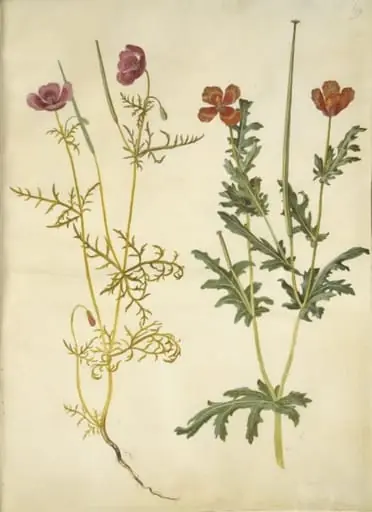 Roemeria hybrida (violet hornvalmue); Glaucium corniculatum (rød hornskulpe)
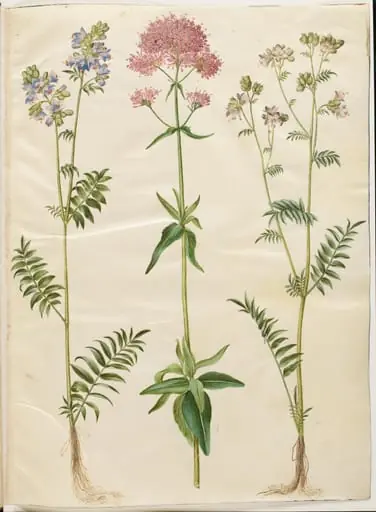 Polemonium caeruleum (almindelig jakobsstige); Centranthus ruber (rød sporebaldrian)
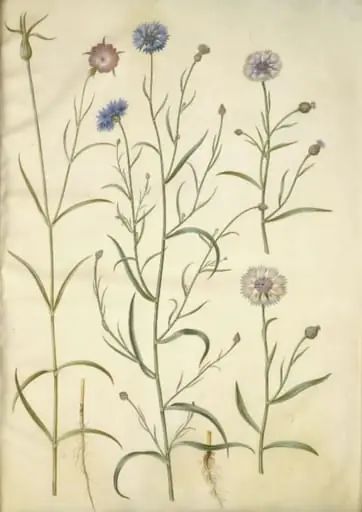 Agrostemma githago (almindelig klinte); Centaurea cyanus (kornblomst)
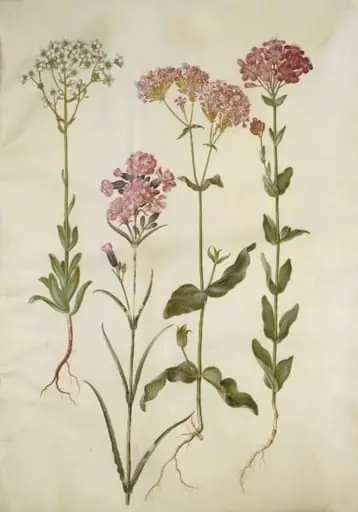 Saxifraga paniculata (klippe-stenbræk); Silene viscaria (almindelig tjærenellike); Silene armeria (knippe-limurt);
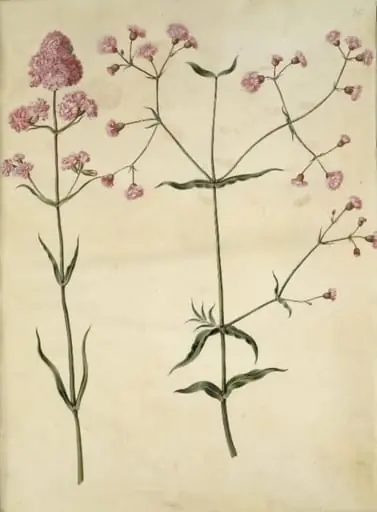 Silene viscaria (almindelig tjærenellike); Silene (trævlekrone)
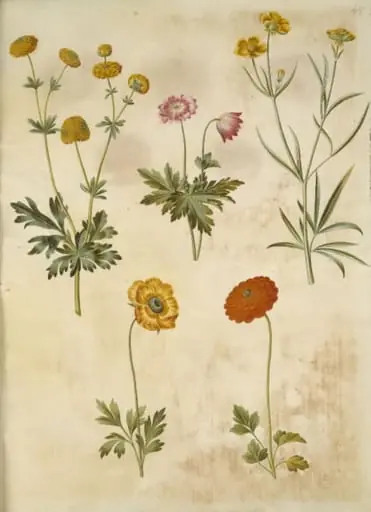 Ranunculus acris (guldknap-ranunkel); Anemone nemorosa (hvid anemone); Ranunculus illyricus (steppe-ranunkel); Ranunculus asiaticus (have-ranunkel)
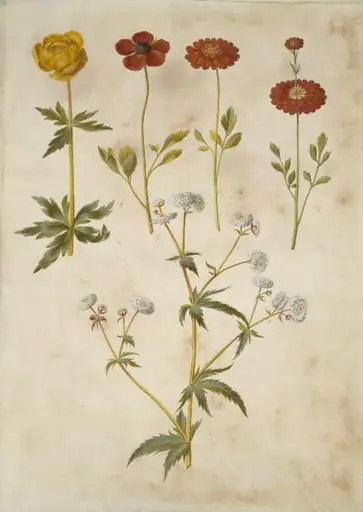 Trollius europaeus (europæisk engblomme); Ranunculus asiaticus (have-ranunkel); Ranunculus aconitifolius (sølvknap-ranunkel)
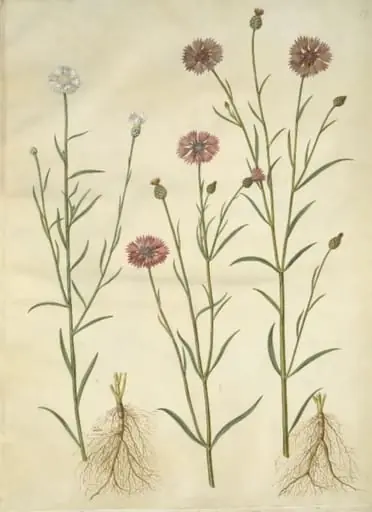 Centaurea cyanus (kornblomst)