Artwork
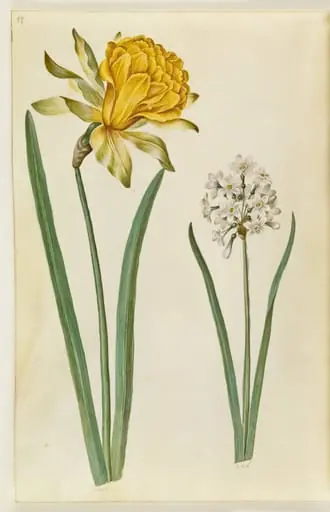
Narcissus tazetta (tazet); Narcissus ×medioluteus (toblomstret narcis); Narcissus bulbocodium (krinoline-narcis)
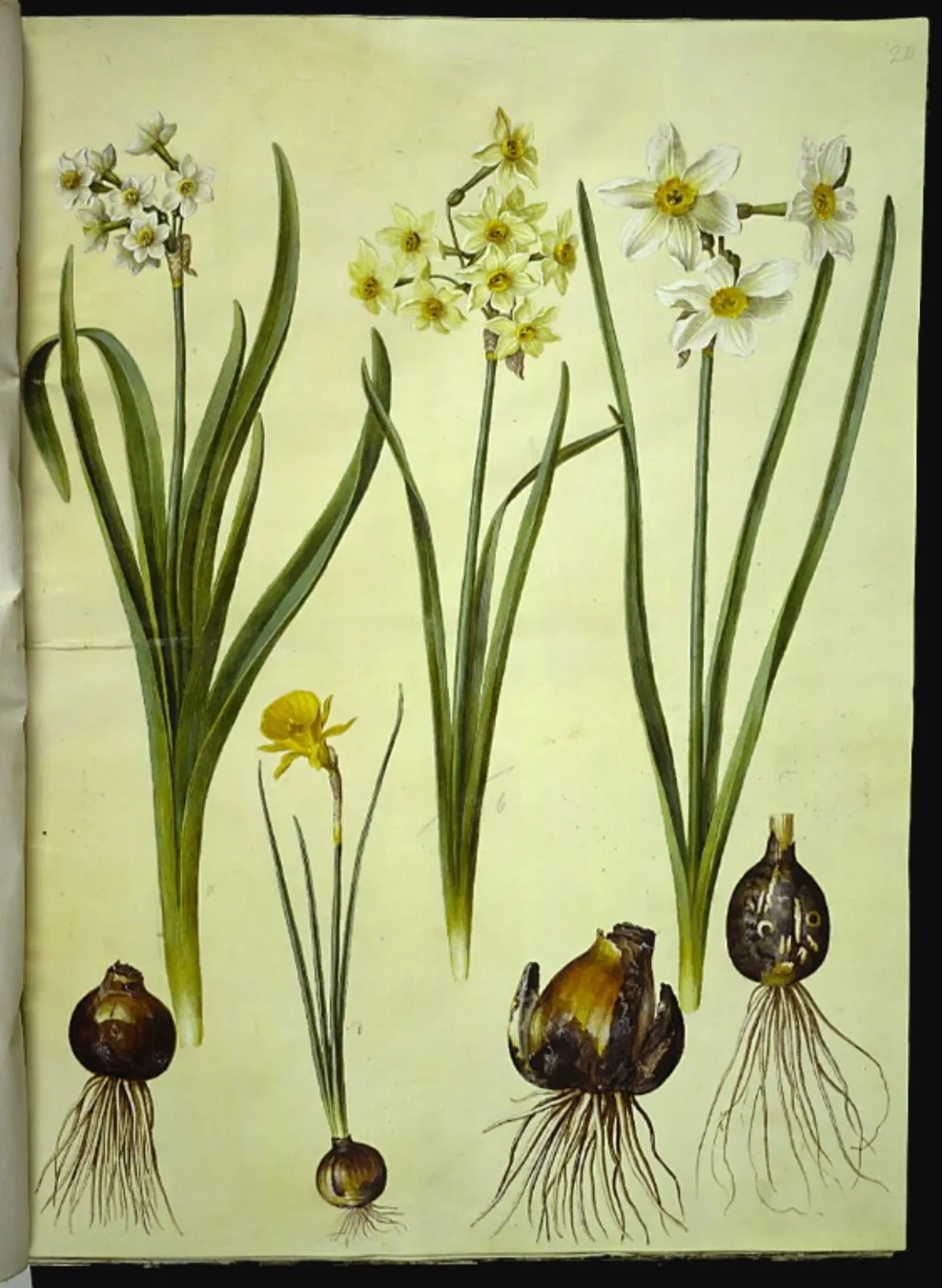
Narcissus tazetta (tazet); Narcissus ×medioluteus (toblomstret narcis); Narcissus bulbocodium (krinoline-narcis) is an unspecified work on paper by Unknown. It dates from 1654 and is held in the collection of the Statens Museum for Kunst. Created around 1654 by the artist catalogued as 35199_person, this botanical illustration is part of the Museum of Ethnography’s collection.
About this work
Overview
Created around 1654 by the artist catalogued as 35199_person, this botanical illustration is part of the Museum of Ethnography’s collection. The work depicts three varieties of narcissus—Narcissus tazetta, Narcissus × medioluteus, and Narcissus bulbocodium—rendered in a single image that combines flower, stem, bud, and root elements in a unified composition.
Subject & Meaning
The illustration presents the narcissus plants in various stages of growth: open blossoms with white petals surrounding yellow coronas, elongated green stems, unopened buds, and, at the lower edge, brown bulbs from which roots descend. By showing the full life cycle, the image serves both as a visual study of the species and as a reference for their identification and cultivation.
Technique & Style
Executed in a detailed, naturalistic manner typical of 17th‑century botanical books, the artist employs fine line work and subtle shading to convey texture across petals, foliage, and root structures. The rendering emphasizes accuracy over decorative flourish, reflecting the scientific intent of early modern plant illustration, where each morphological feature is recorded with precision.
History & Provenance
The piece dates to the mid‑17th century, a period when European scholars increasingly compiled illustrated herbals. It entered the Museum of Ethnography’s holdings at an unspecified date, where it now contributes to the institution’s documentation of historical scientific illustration practices.
Artist & collection

 Domestic Scene
 Giacomo and Cardinal Marco, investing Andrea, Abbot of San Zeno, with his Benefice
 The Nymph of Fontainebleau
 Portrait of a Woman
 Madonna and Child with Saints in the Enclosed Garden
 Venus and Minerva
 Family Group of Four on Sofa
 Wall painting from Room H of the Villa of P. Fannius Synistor at Boscoreale
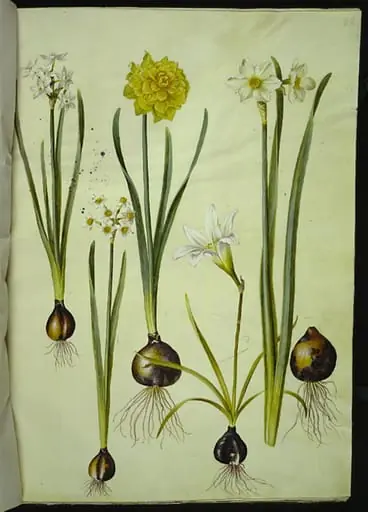 Narcissus tazetta (tazet); Narcissus pseudonarcissus (påskelilje); Zephyranthes atamasca (zefyrblomst); Narcissus ? ×incomparabilis (have-narcis)
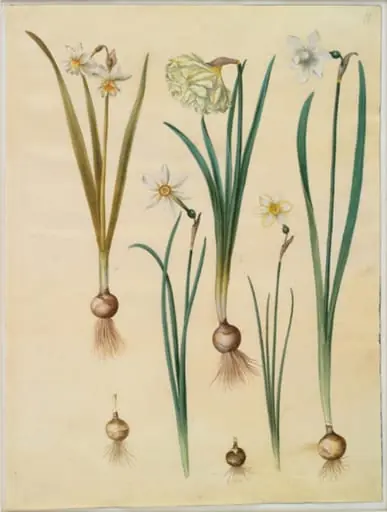 Narcissus ×medioluteus (toblomstret narcis); Narcissus pseudonarcissus; Narcissus (narcis); Narcissus poeticus (pinselilje); Narcissus ×tenuior
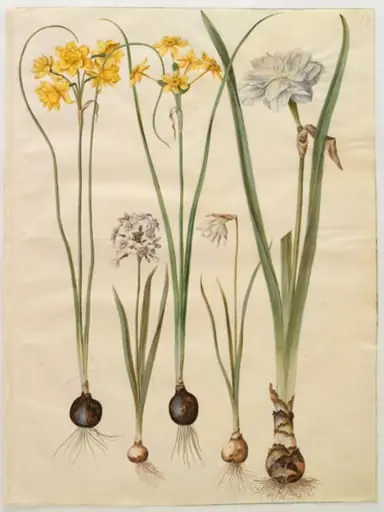 Narcissus jonquilla (siv-narcis); Narcissus tazetta (tazet); Narcissus pseudonarcissus moschatus (moskus-narcis); Narcissus poeticus (pinselilje)
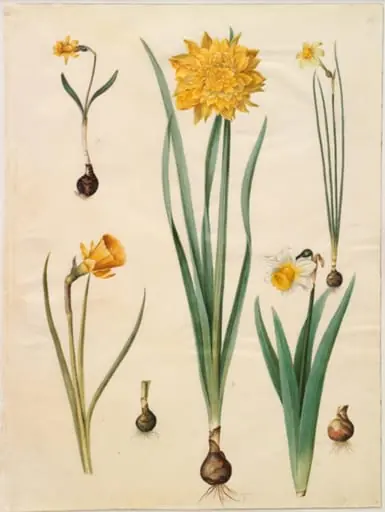 Narcissus pseudonarcissus minor; Narcissus pseudonarcissus (påskelilje); Narcissus ×tenuior; Narcissus bulbocodium (krinoline-narcis); Narcissus pseudonarcissus bicolor (tofarvet påskelilje)
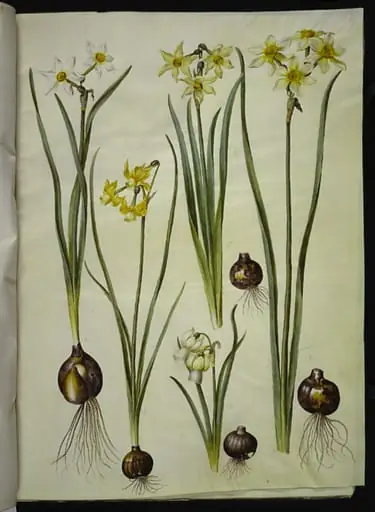 Narcissus poeticus (pinselilje); Narcissus triandrus (orkide-narcis); Narcissus ×medioluteus (toblomstret narcis)
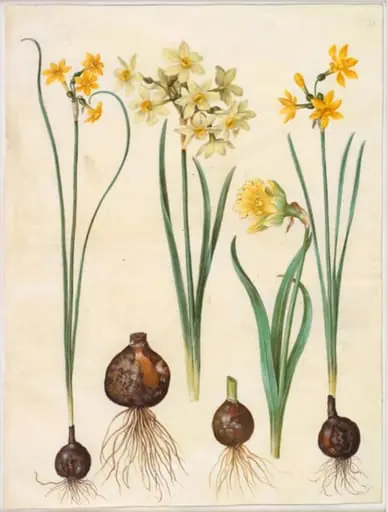 Narcissus jonquilla (siv-narcis); Narcissus tazetta aureus (guld-tazet); Narcissus pseudonarcissus bicolor (tofarvet påskelilje)
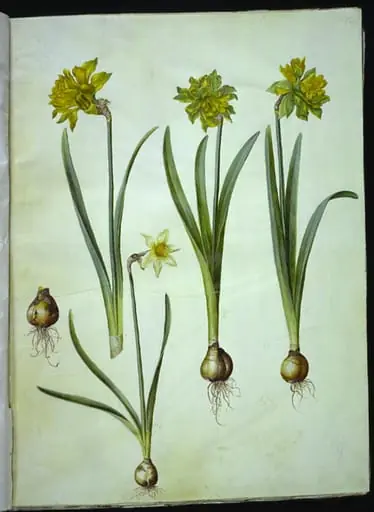 Narcissus pseudonarcissus; Narcissus ? ×incomparabilis (have-narcis)
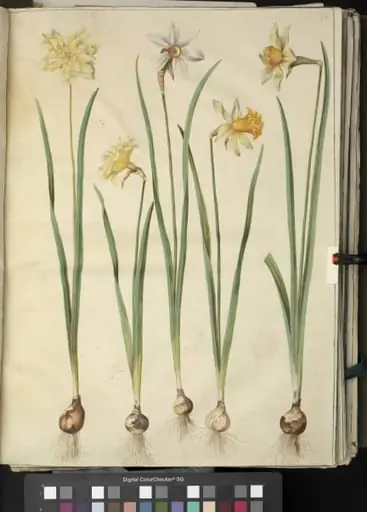 Narcissus pseudonarcissus; Narcissus poeticus (pinselilje); Narcissus ×incomparabilis (have-narcis)
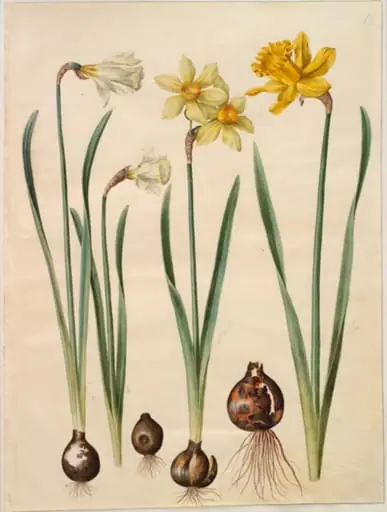 Narcissus pseudonarcissus moschatus (moskus-narcis); Narcissus ×medioluteus (toblomstret narcis); Narcissus pseudonarcissus major (stor påskelilje)
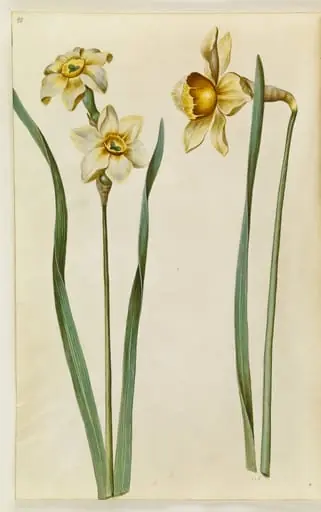 Narcissus ×medioluteus (toblomstret narcis); Narcissus ×incomparabilis (have-narcis)
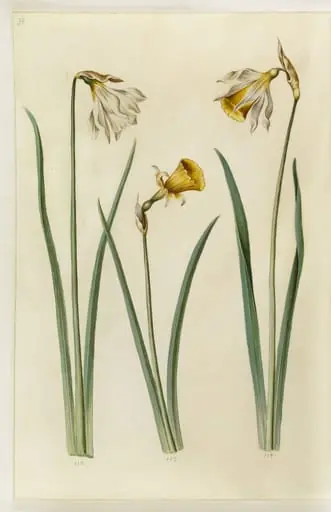 Narcissus pseudonarcissus moschatus (moskus-narcis); Narcissus bulbocodium (krinoline-narcis); Narcissus pseudonarcissus (påskelilje)
 Narcissus pseudonarcissus (påskelilje); Narcissus tazetta (tazet)