Artwork
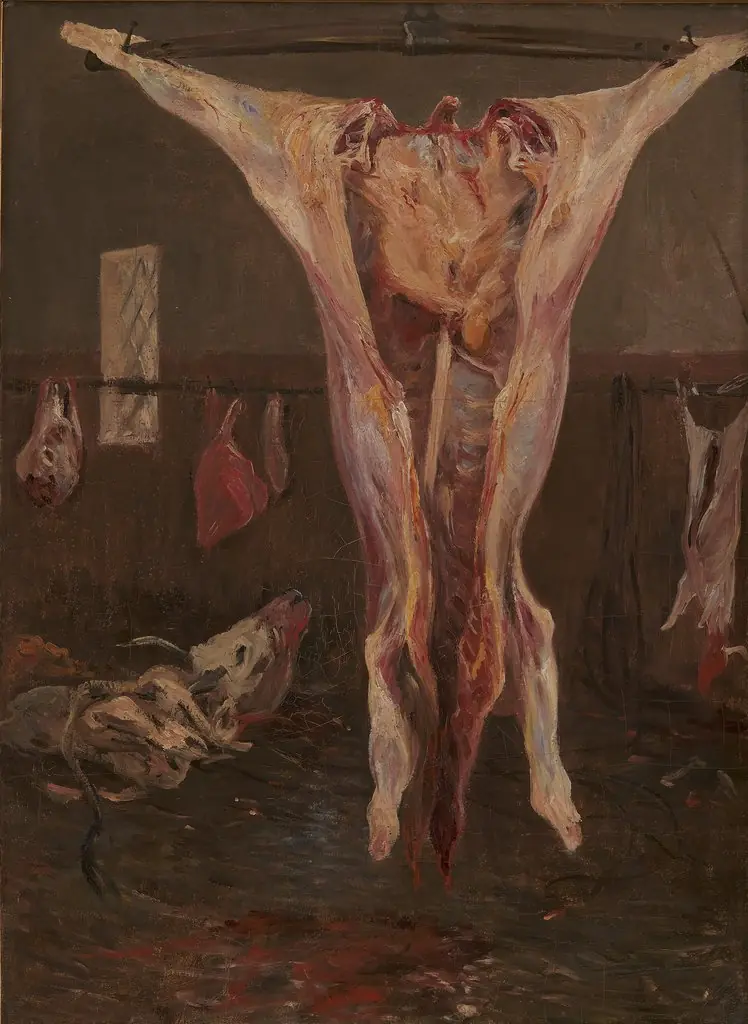
A Calf's Carcase in a Kitchen
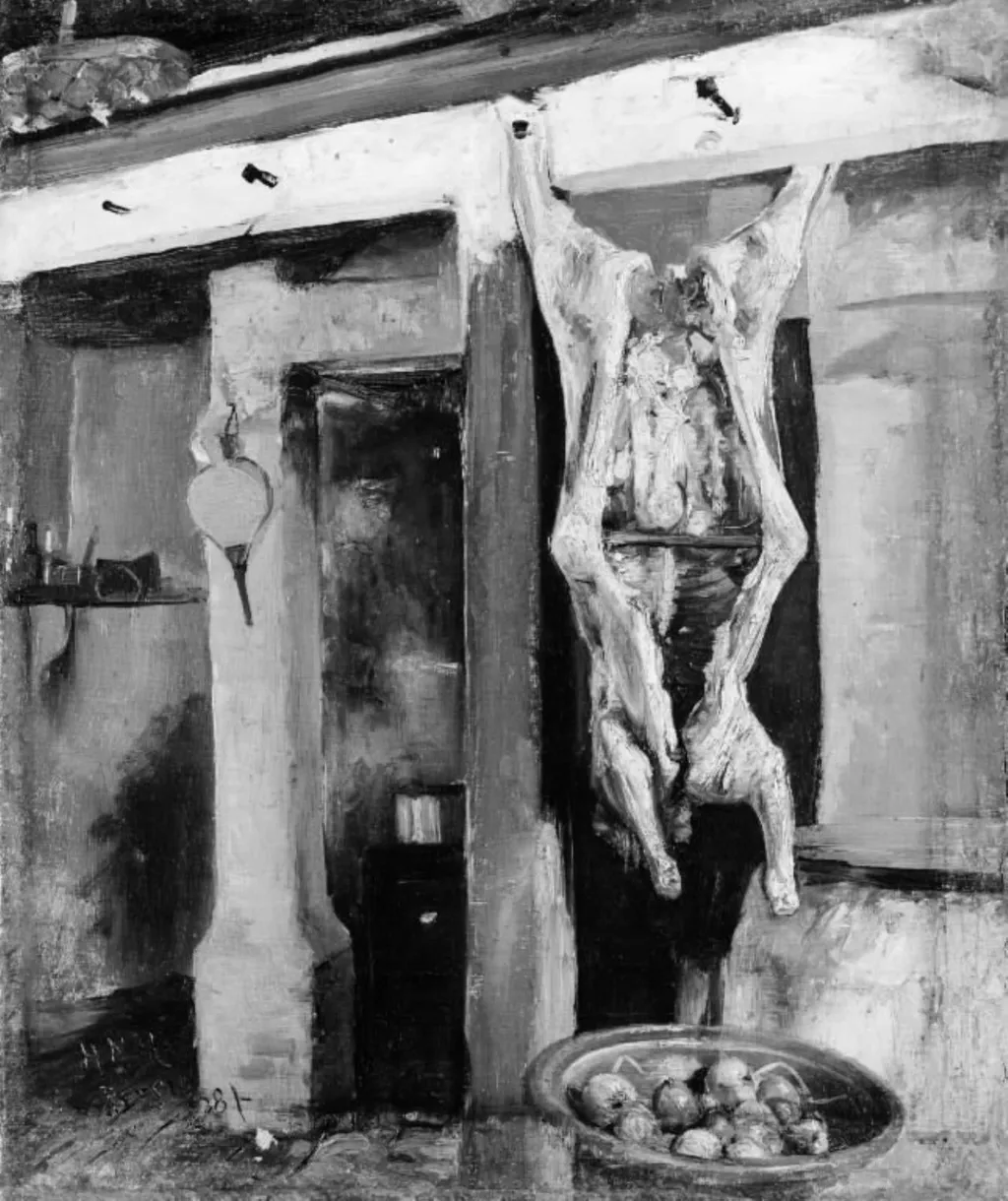
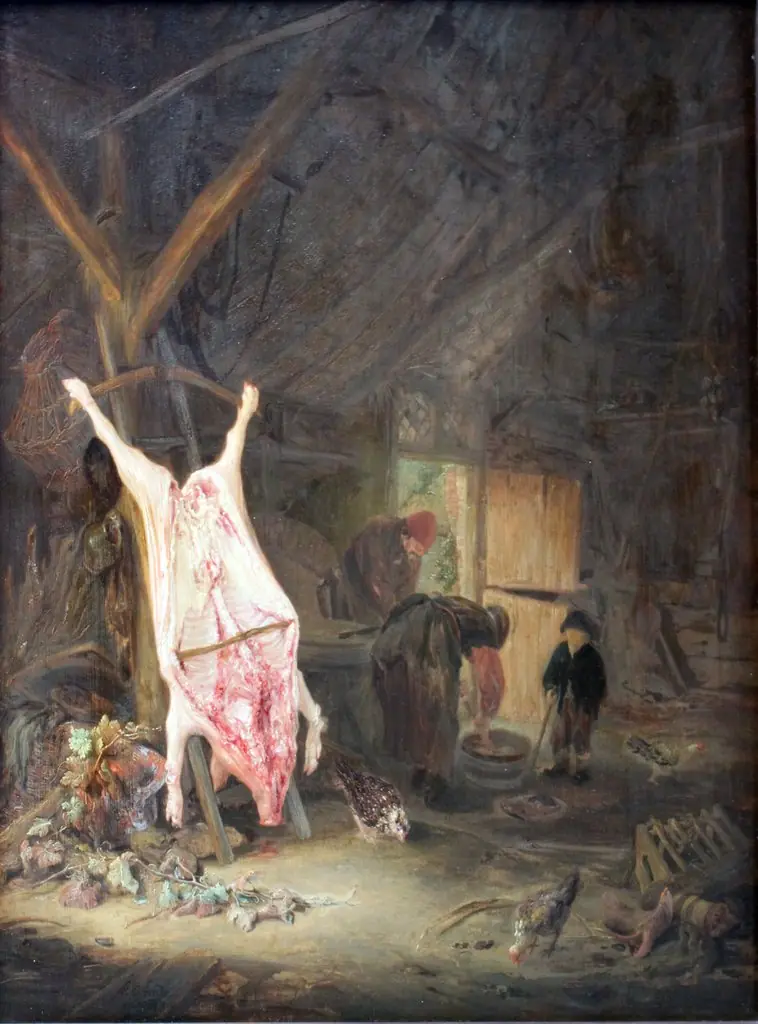
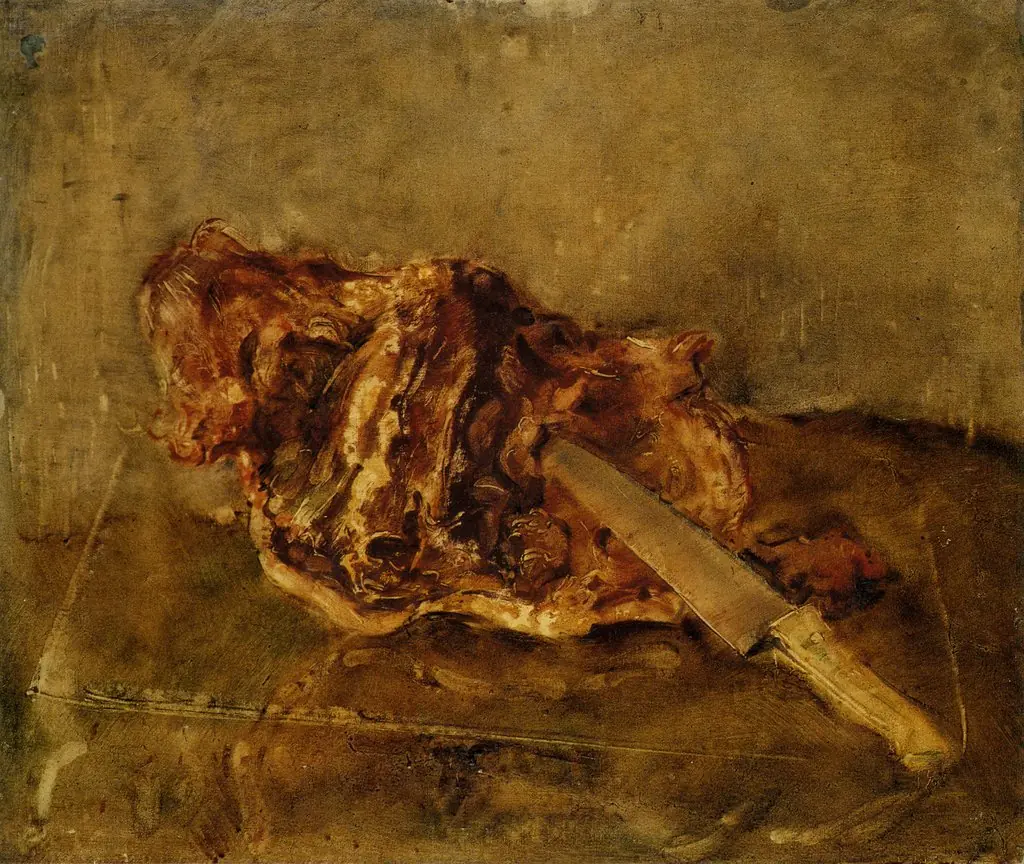
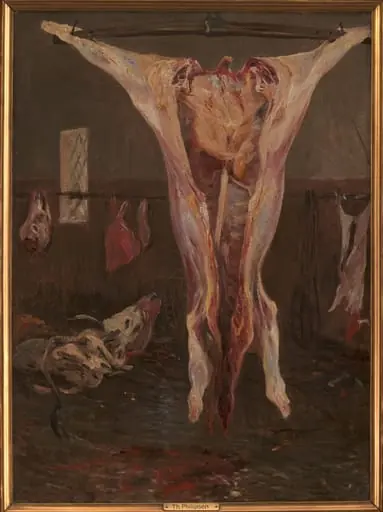
A Calf's Carcase in a Kitchen is a photography by the Impressionist artist Unknown. It dates from 1881 and is held in the collection of the Statens Museum for Kunst. This black-and-white photograph, dated 1881, depicts a butchered calf suspended in a modest kitchen.
About this work
Overview
It is held in the collection of the Museum of Ethnography, where it serves as a document of labor and sustenance in late 19th-century life.
This black-and-white photograph, dated 1881, depicts a butchered calf suspended in a modest kitchen. Taken by 650_person, the image captures the unadorned reality of meat preparation in a domestic setting. Unlike painted representations, the photograph’s sharp focus and lack of embellishment emphasize physical detail and spatial authenticity. It is held in the collection of the Museum of Ethnography, where it serves as a document of labor and sustenance in late 19th-century life.
Subject & Meaning
The carcass, hung by its hind legs with a metal hook through the spine, is presented without sentiment or concealment. Below it, a bowl of root vegetables and a solitary pitcher on a worn shelf suggest the kitchen’s function as a place of both preparation and daily survival. The image conveys no moral judgment—only the matter-of-fact process of transforming animal into food, reflecting the unglamorous routines of rural or working-class households.
Technique & Style
The photograph employs natural light and a static composition to heighten its documentary quality. The dim interior, scrubbed but weathered walls, and dark doorway frame the carcass as the central, unyielding form. The absence of artistic manipulation—no brushwork, no staging—enhances the sense of immediacy. The sharp tonal contrasts and fine detail are characteristic of early photographic realism, prioritizing observation over interpretation.
History & Provenance
Created in 1881, the photograph entered the Museum of Ethnography’s collection as part of a broader effort to record domestic and economic practices of the time. Its preservation reflects an interest in vernacular life rather than elite culture. While the photographer’s full identity remains tied to the catalog number 650_person, the image’s provenance is rooted in ethnographic documentation, not artistic exhibition.
Context
In the late 19th century, photography increasingly served as a tool for recording everyday labor, especially in rural and working-class communities. This image aligns with broader movements in visual culture that sought to depict life without romanticization. Similar subjects appeared in regional studies and anthropological surveys, where the kitchen was understood not as a domestic sanctuary but as a site of practical necessity.
Legacy
The photograph endures as a quiet testament to the material conditions of food production before industrialization. It contributes to historical understandings of domestic economies and the visibility of labor in private spaces. Though not widely exhibited as art, it remains a significant reference in studies of photographic realism and the ethnographic gaze, valued for its unembellished testimony.
Artist & collection

 Domestic Scene
 Giacomo and Cardinal Marco, investing Andrea, Abbot of San Zeno, with his Benefice
 The Nymph of Fontainebleau
 Portrait of a Woman
 Madonna and Child with Saints in the Enclosed Garden
 Venus and Minerva
 Family Group of Four on Sofa
 Wall painting from Room H of the Villa of P. Fannius Synistor at Boscoreale