Artwork
Carcasses
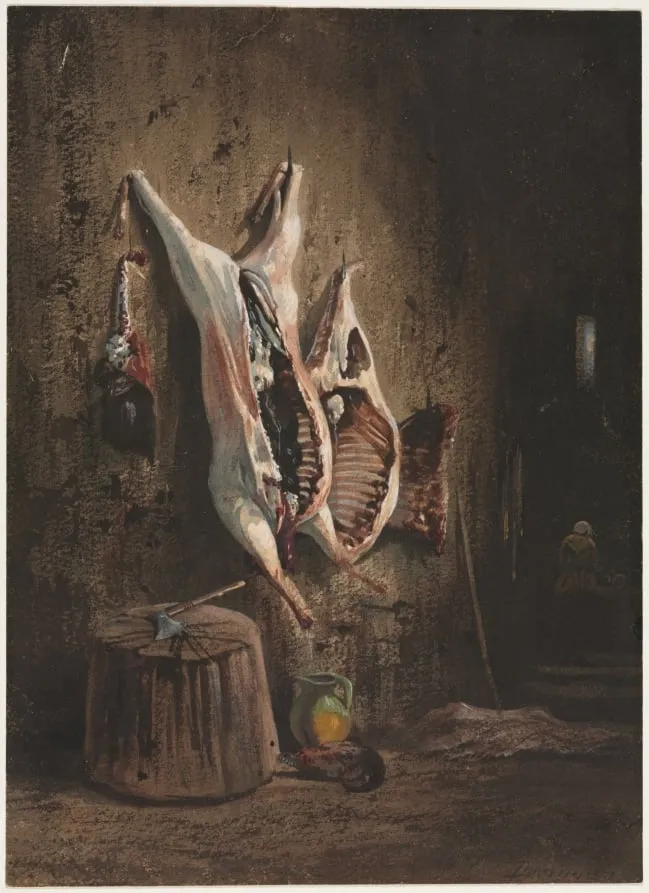
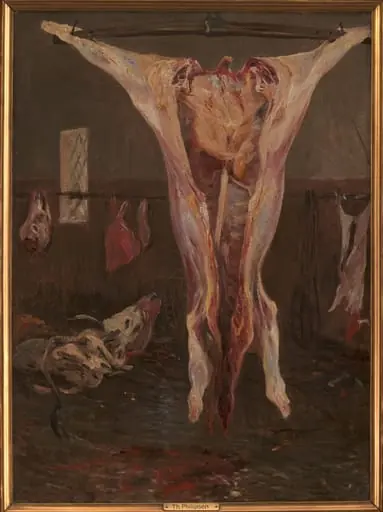
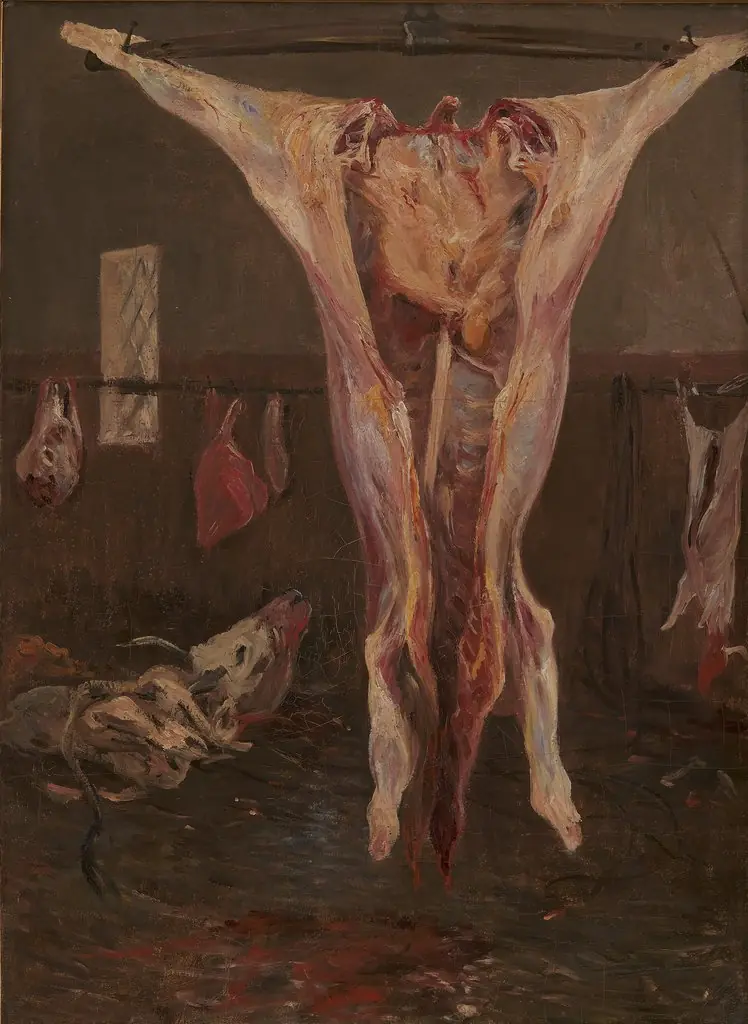
Carcasses is a drawing by the Romanticist artist Alexandre Gabriel Decamps. It dates from 1850 and is held in the collection of the Cleveland Museum of Art.
About this work
Overview
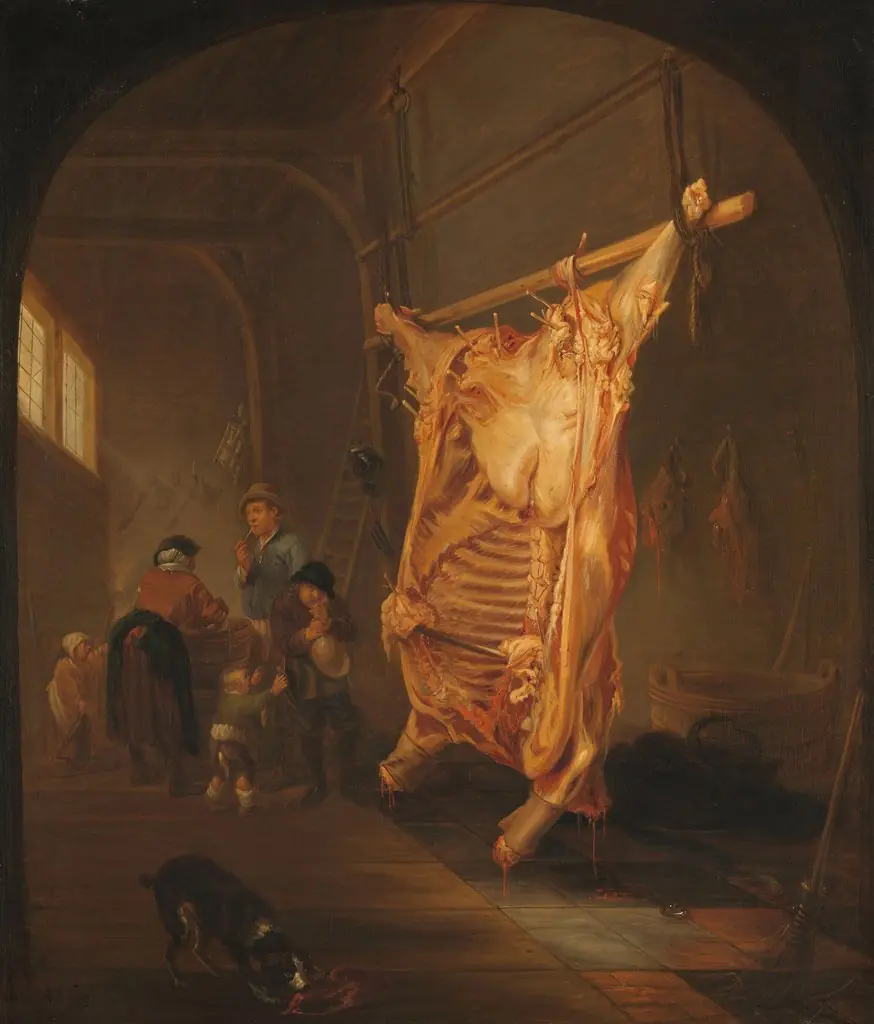
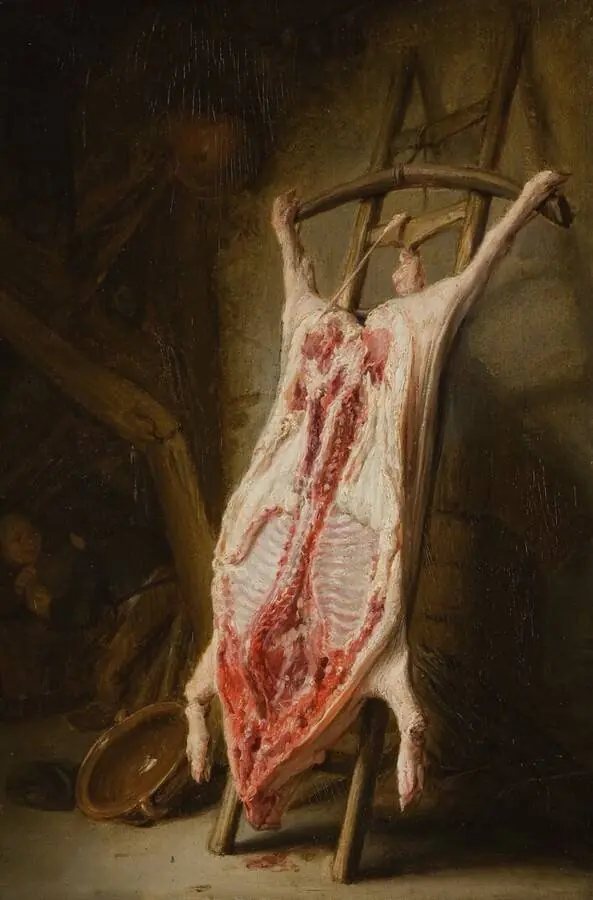
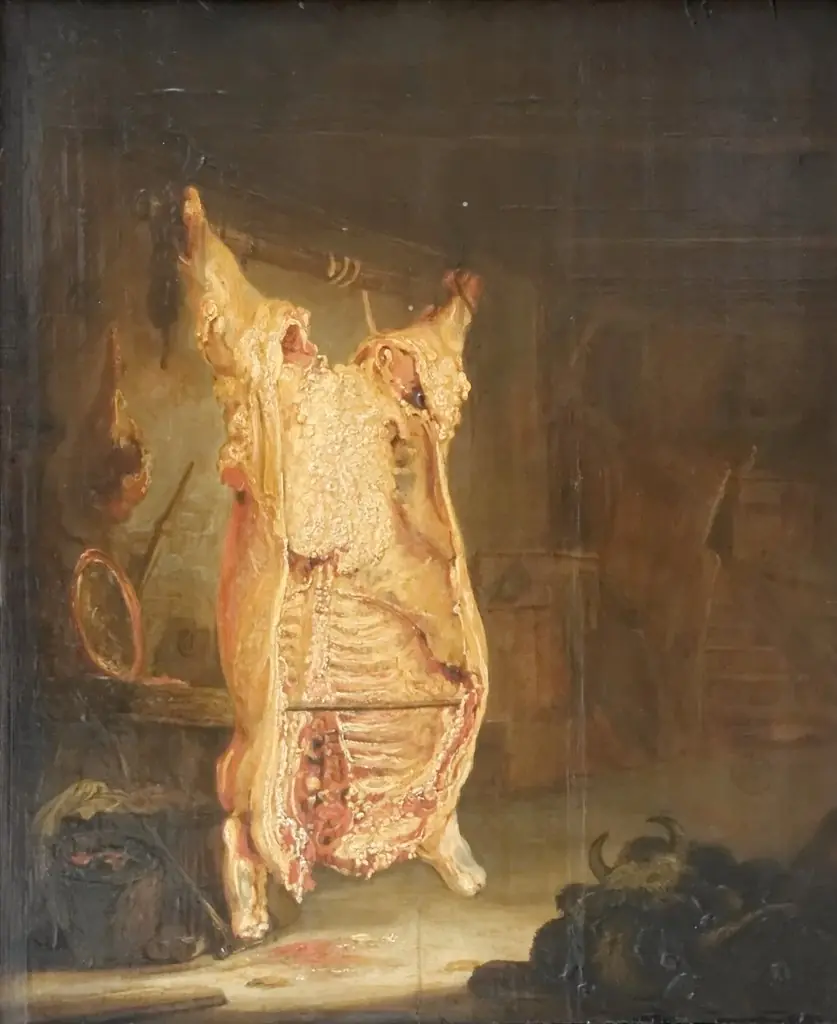
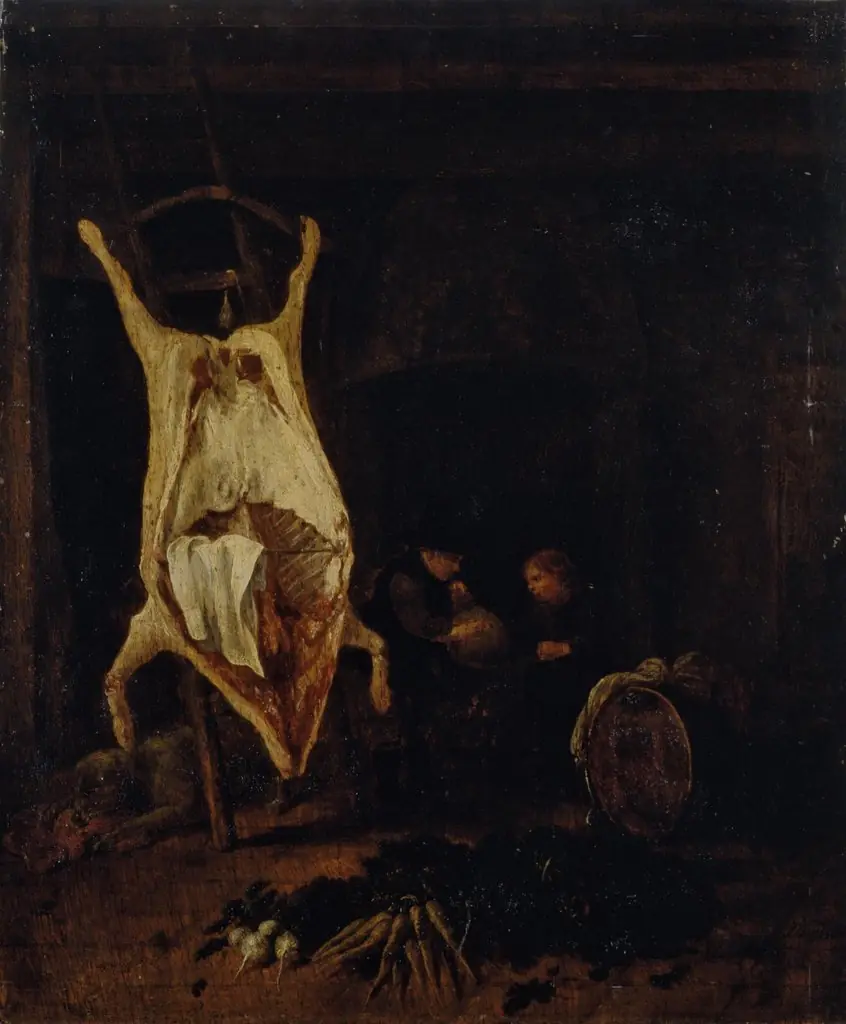
Alexandre-Gabriel Decamps created a watercolor depicting hanging animal carcasses, drawing from a longstanding European tradition of depicting slaughtered meat.
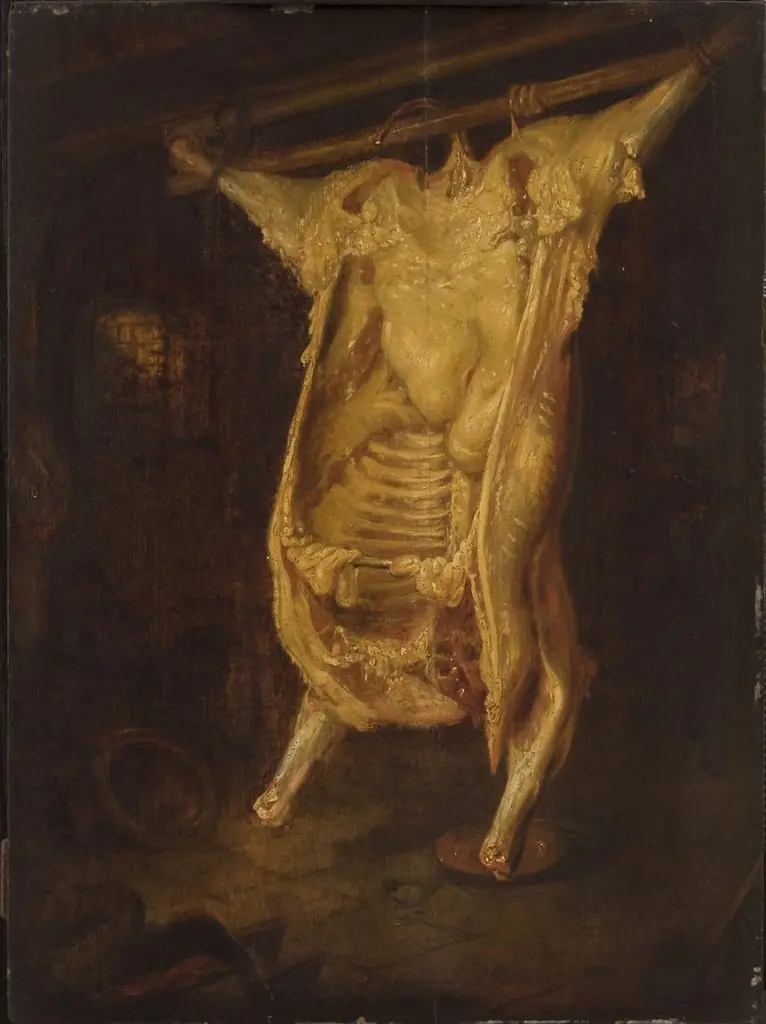
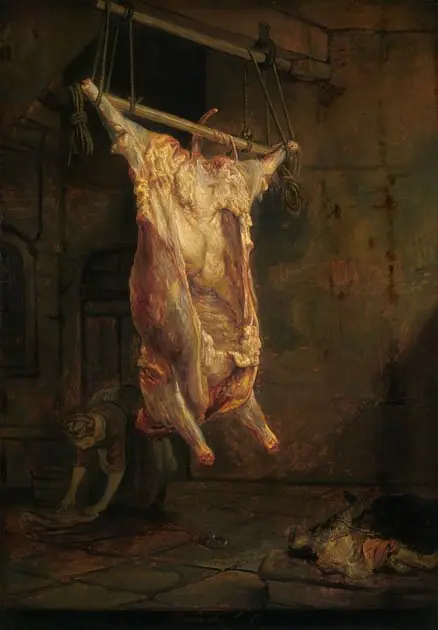
Alexandre-Gabriel Decamps created a watercolor depicting hanging animal carcasses, drawing from a longstanding European tradition of depicting slaughtered meat. Though influenced by Rembrandt’s earlier treatment of the subject, Decamps shifted focus from dramatic intensity to quiet observation. His composition avoids theatricality, presenting the scene as an unembellished glimpse into a working space rather than a symbolic meditation on mortality.
Subject & Meaning
The drawing shows two pale, suspended carcasses—likely sheep—in a sparse interior. Unlike Rembrandt’s solitary, monumental ox, Decamps includes domestic elements: a table, a standing figure, and ordinary tools. These details ground the scene in daily routine, suggesting not death as spectacle but meat as a mundane part of labor and sustenance. The absence of blood or violence softens the subject into an everyday still life.
Technique & Style
Decamps employed watercolor with restrained washes to render soft, diffused light across the carcasses and walls. The muted palette and gentle modeling avoid the stark contrasts of chiaroscuro favored by Rembrandt. His brushwork is delicate, emphasizing texture over drama—flesh appears cool and lifeless, not muscular or monumental. The composition’s spatial depth and quiet lighting reflect a preference for atmospheric realism over emotional intensity.
History & Provenance
Decamps, an admirer of Dutch Golden Age painting, owned multiple works by Rembrandt and studied them closely at the Louvre. His watercolor dates to the early 19th century, roughly two centuries after Rembrandt’s Slaughtered Ox. While indebted to the earlier artist’s subject matter, Decamps’s version reflects evolving 19th-century tastes toward observational realism and domestic quietude, aligning with broader shifts in French academic and genre painting.
Context
In early 19th-century France, artists increasingly turned to ordinary life as worthy subject matter, moving away from mythological or heroic themes. Decamps’s depiction of butchered meat fits within this trend, echoing the growing interest in truthful, unidealized scenes. His inclusion of a background figure suggests a working environment, reinforcing the link between art and the material conditions of daily existence.
Legacy
Decamps’s Carcasses exemplifies a quiet reimagining of a traditional motif, influencing later realist painters who sought dignity in the commonplace. By replacing grandeur with subtlety, he helped redefine how death and labor could be represented without sentiment or shock. The work stands as a quiet bridge between Baroque drama and 19th-century naturalism, valued for its restraint rather than its force.
Artist & collection
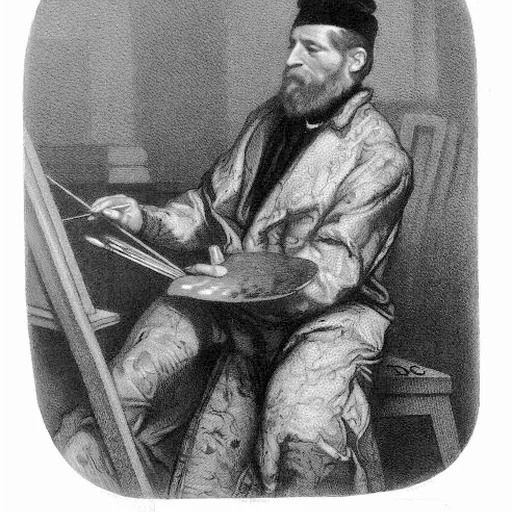
Artist
Alexandre-Gabriel Decamps was a French painter noted for his Orientalist works.