Artwork
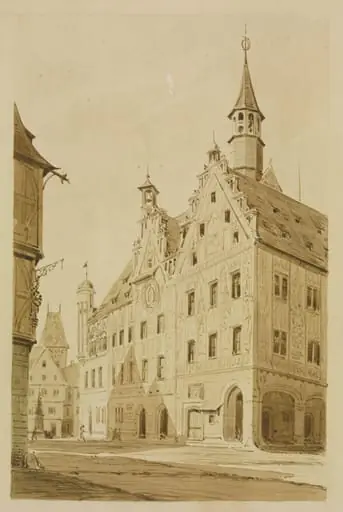
The east front of the Gewandhaus, Brunswick
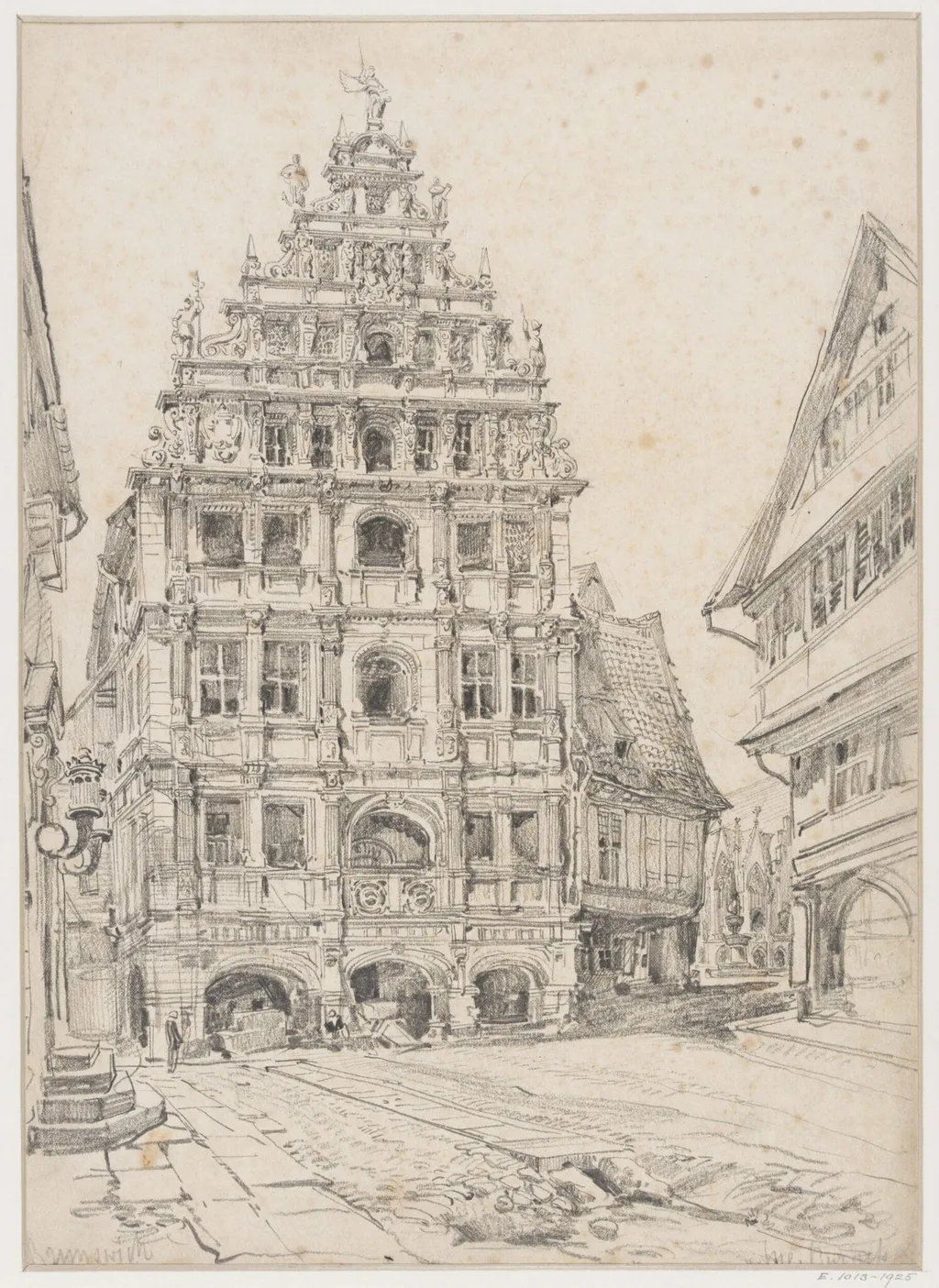
The east front of the Gewandhaus, Brunswick is a drawing by the Romanticist artist John Junior Burgess. It dates from 1833 and is held in the collection of the Victoria and Albert Museum. This drawing captures the east facade of the Gewandhaus in Braunschweig, a building originally constructed as the drapers' guildhall.
About this work
Overview
The artist emphasizes verticality and rhythmic window patterns, conveying the structure’s civic importance through careful observation rather than idealization.
This drawing captures the east facade of the Gewandhaus in Braunschweig, a building originally constructed as the drapers' guildhall. Rendered in ink and wash, it presents a precise architectural study focused on symmetry and ornamentation. The artist emphasizes verticality and rhythmic window patterns, conveying the structure’s civic importance through careful observation rather than idealization.
Subject & Meaning
The Gewandhaus served as a center of trade and civic identity for Brunswick’s textile merchants. Its depiction here reflects the building’s role as a symbol of guild prosperity and urban order. The inclusion of elaborate stonework and a prominent arched entrance underscores its ceremonial function, while the absence of figures directs attention to the architecture itself as a testament to communal achievement.
Technique & Style
The artist employs fine linear precision and graded washes to model surfaces and suggest depth. Cross-hatching defines shadowed recesses in carvings and window surrounds, while lighter strokes indicate sunlit stone. The handling avoids theatricality, favoring clarity and structural accuracy—characteristic of 18th-century architectural draftsmanship aimed at documentation rather than artistic flourish.
History & Provenance
The Gewandhaus was built in the late medieval period and later remodeled in the Renaissance style. This drawing likely dates to the 18th century, when such architectural records were commonly made for civic or academic purposes. Its survival suggests it was preserved within a local collection, possibly linked to the guild or municipal archives, though its exact origin remains undocumented.
Context
In 18th-century German cities, detailed architectural drawings were produced to record historic buildings undergoing change or to support restoration efforts. The Gewandhaus, as a prominent guildhall, would have been a natural subject. Such works reflect a growing interest in preserving civic heritage amid urban modernization, aligning with broader Enlightenment-era documentation practices.
Legacy
Though the original Gewandhaus was demolished in the 19th century, this drawing remains a valuable record of its appearance and detailing. It contributes to the historical understanding of regional civic architecture and the visual culture of German guilds. As a surviving example of precise architectural draftsmanship, it informs current studies of pre-industrial urban design.
Artist & collection
Artist
John Junior Burgess drew the architectural bones of 19th-century Europe—church facades, grand hotels, ducal homes, and concert halls—all in precise line.

 Topographical drawing
 Topographical drawings
 House
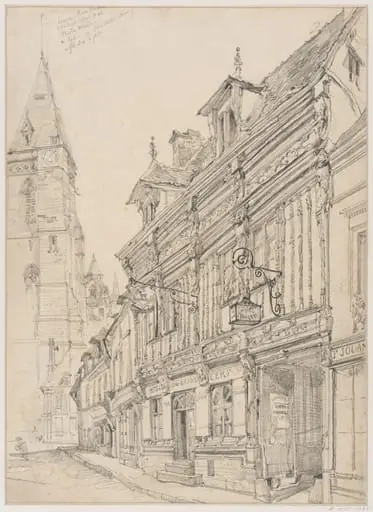
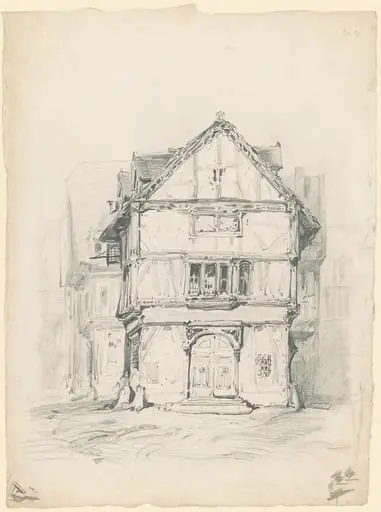
House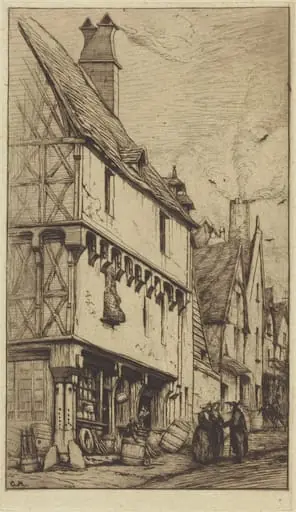 Ancienne habitation à Bourges, dite "La Maison du Musicien" (An Old House at Bourges, Sometimes Called the "Musician's House")
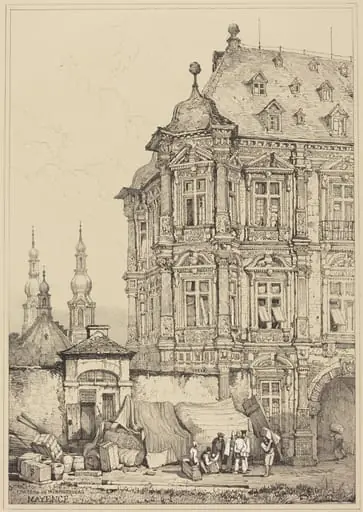 Chateau de Martinsbourg, Mayence
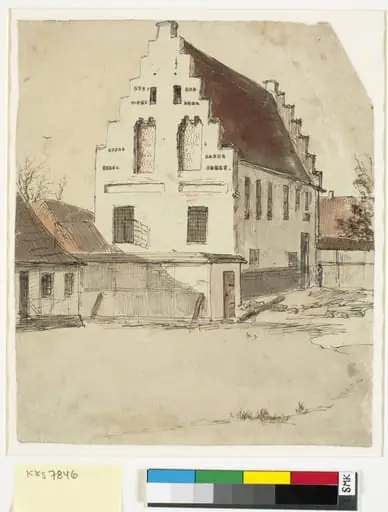 Ligkapellet ved Frue Kirke i Odense
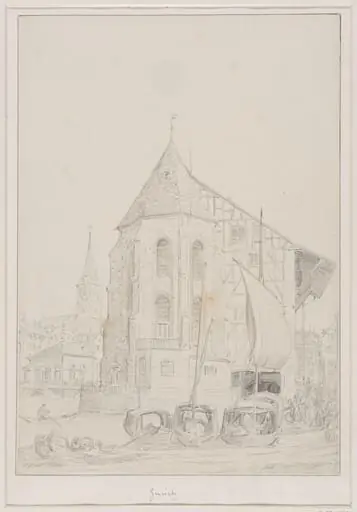 The Wasserkirche, Zurich
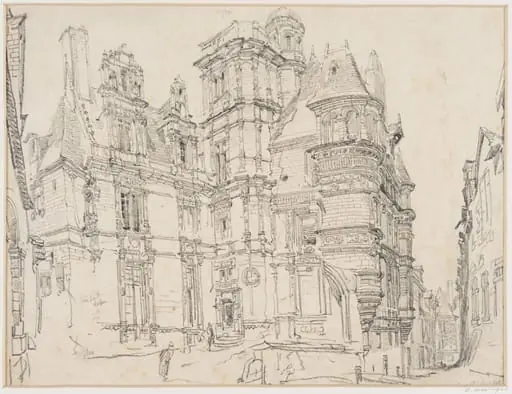
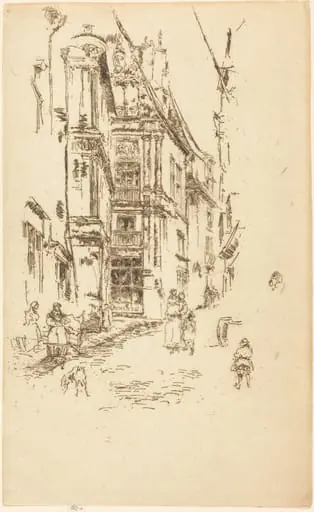 Chancellerie, Loches
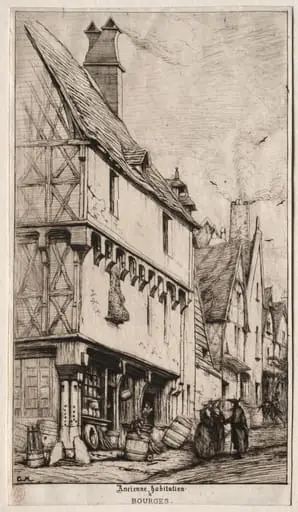 An Old House at Bourges, sometimes called the Musician's House
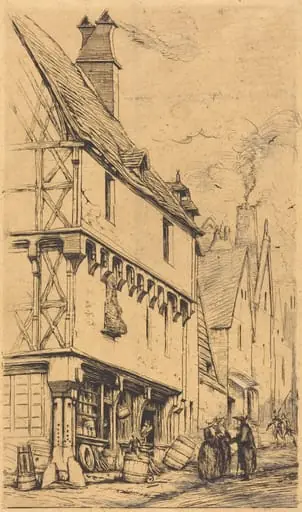 Ancienne habitation à Bourges, dite "La Maison du Musicien" (An Old House at Bourges, Sometimes Called the "Musician's House")