Artwork
Judith and Holofernes
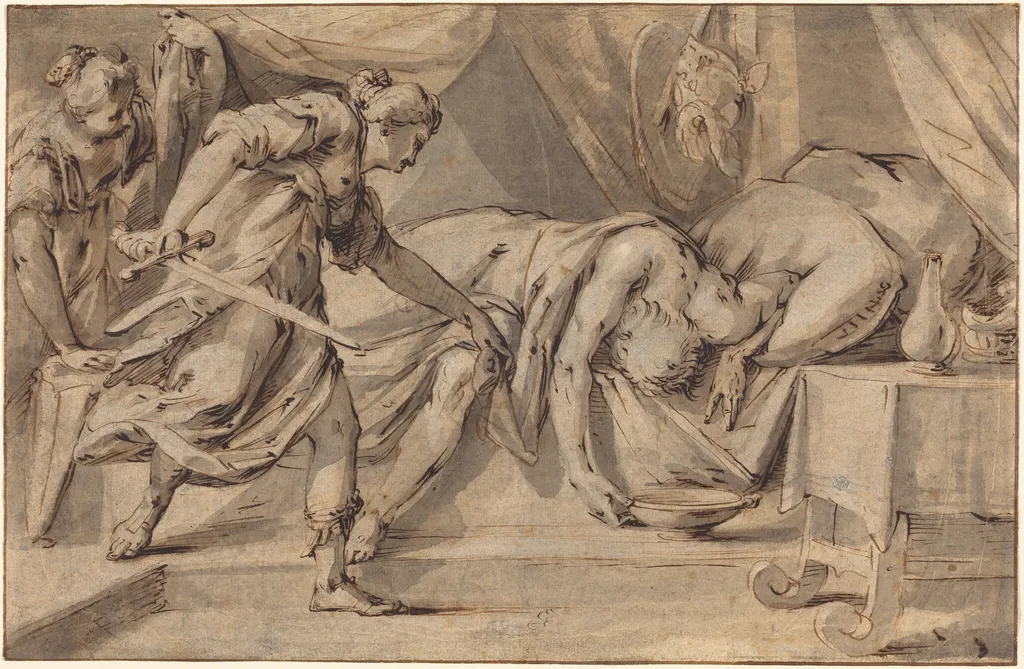
Judith and Holofernes is an ink drawing by the Renaissance artist Hans von Aachen. It dates from 1584 and is held in the collection of the National Gallery of Art.
About this work
Overview
Created in 1584, this drawing by Hans von Aachen presents the biblical episode in which Judith decapitates the Assyrian general Holofernes. Executed with pen and brown ink, enhanced by brown and gray washes on laid paper, the work captures a moment of violent climax rendered in the refined, mannered aesthetic typical of Northern Mannerism.
Subject & Meaning
The composition centers on a reclining male figure, his body swathed in cloth, while three women attend him. One woman raises a sword poised for the fatal blow, another watches, and a third kneels beside the corpse, suggesting a narrative of triumph and moral vindication that was frequently employed to illustrate virtues such as courage and divine justice.
Technique & Style
Von Aachen employed a delicate pen line to define forms, then built atmospheric depth through layered brown and gray washes. The laid paper surface contributes a subtle texture, while the restrained palette emphasizes chiaroscuro modeling. The drawing’s elegant contours and exaggerated poses reflect the courtly sophistication of late‑Renaissance Mannerist drawing.
History & Provenance
A noted court artist, von Aachen produced works for patrons such as Emperor Rudolf II, and his drawings often circulated among aristocratic collections. This particular piece, dated to the mid‑1580s, remains documented within the artist’s oeuvre as an example of his skill in rendering complex biblical narratives for elite audiences.
Artist & collection
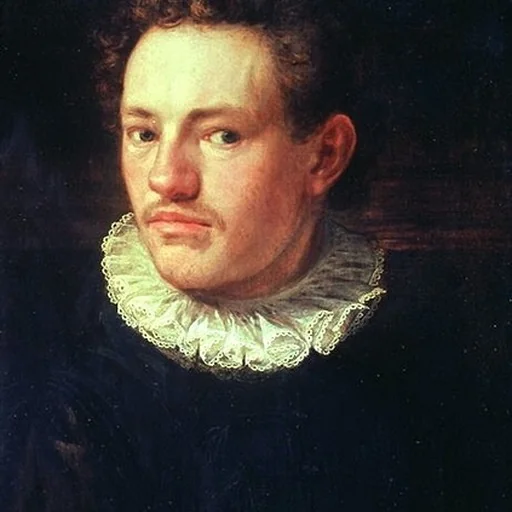
Artist
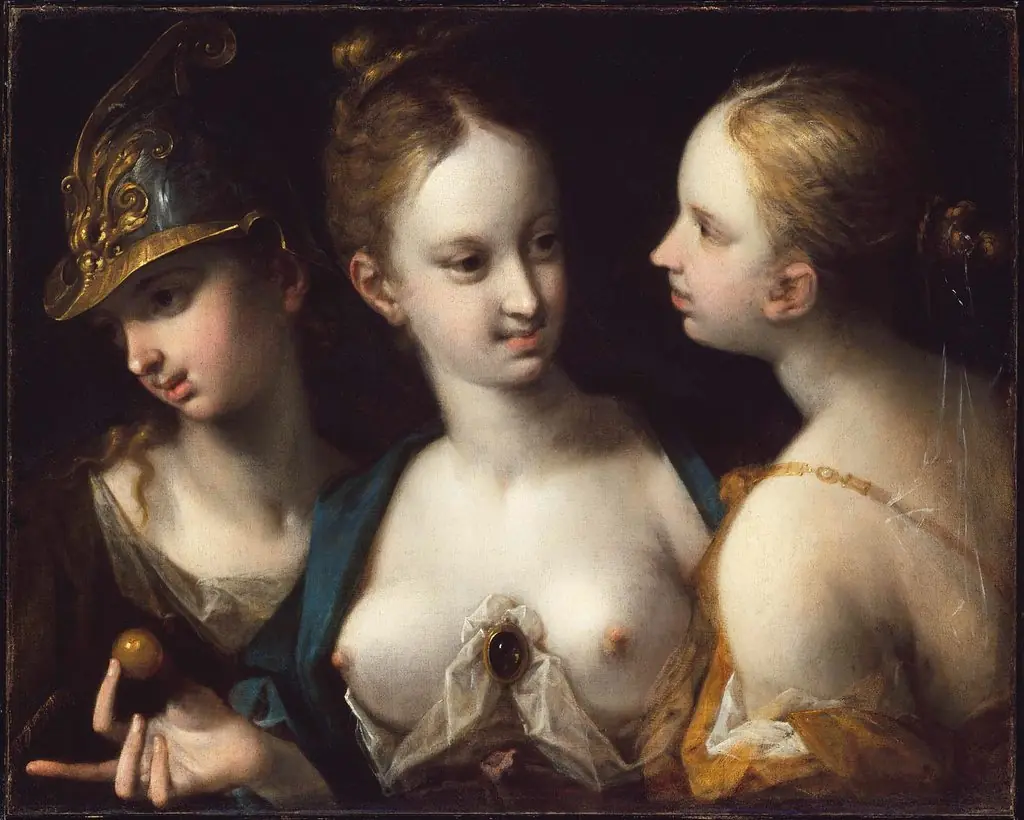
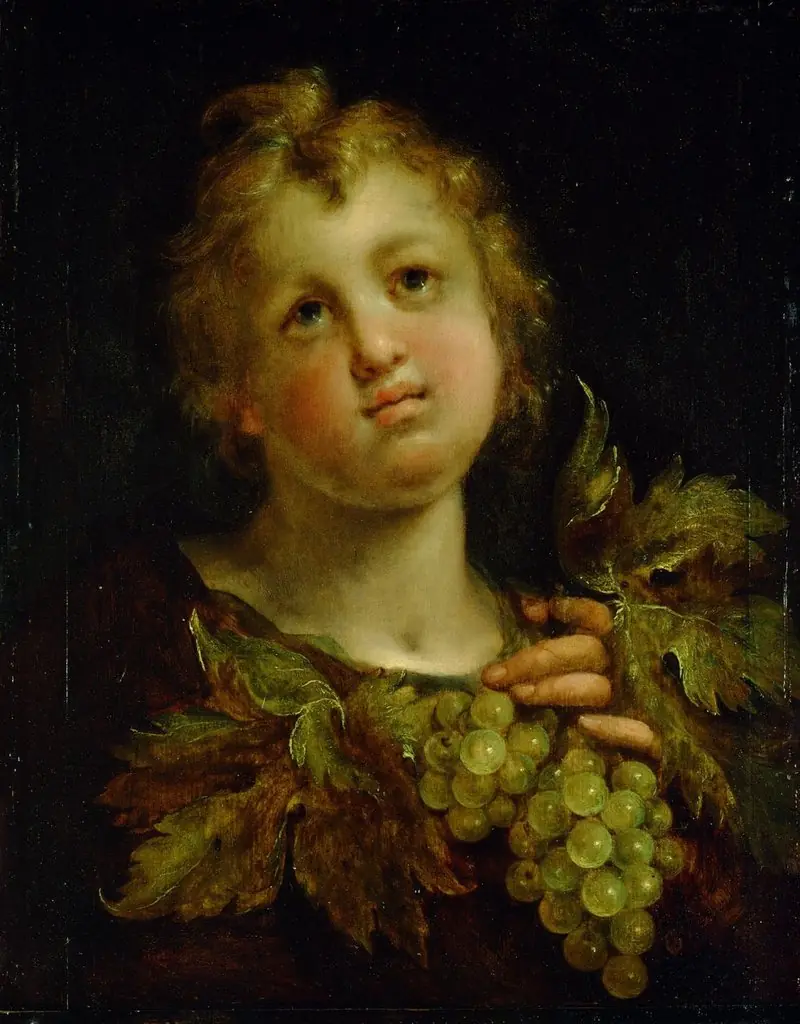
Hans von Aachen (1552 – 4 March 1615) was a German painter who was one of the leading representatives of Northern Mannerism.

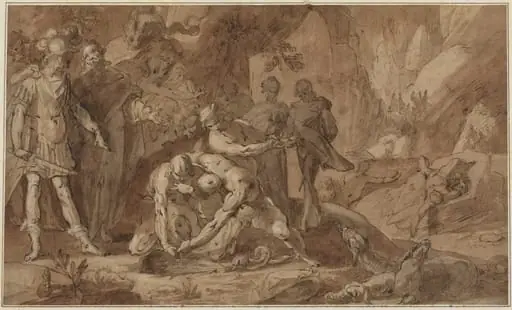 Odysseus and Teiresias
![Jacob and Rebecca before Isaac [recto], by French 18th Century](https://artifactworldgallery.com/img/french-18th-century--jacob-and-rebecca-before-isaac-recto--5393ee8d0dceb48c-w320.webp) Jacob and Rebecca before Isaac [recto]
Jacob and Rebecca before Isaac [recto]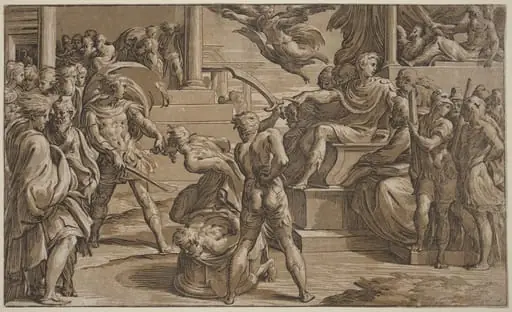 The Martyrdom of Saints Peter and Paul
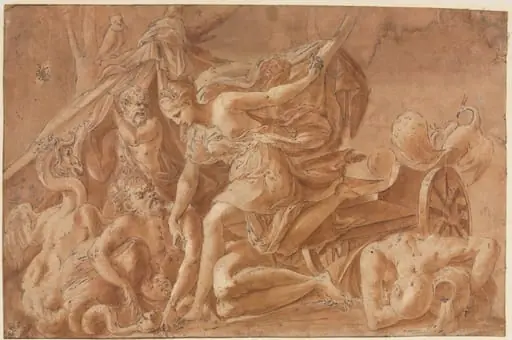 Copy after Primaticcio's Juno Awakening Sleep
![The Martyrdom of Saints Peter and Paul [recto], by Antonio da Trento](https://artifactworldgallery.com/img/antonio-da-trento--the-martyrdom-of-saints-peter-and-paul-recto--a51e90060085a207-w320.webp) The Martyrdom of Saints Peter and Paul [recto]
The Martyrdom of Saints Peter and Paul [recto]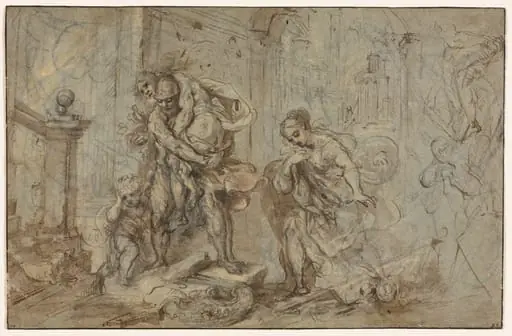 Aeneas Saving Anchises at the Fall of Troy
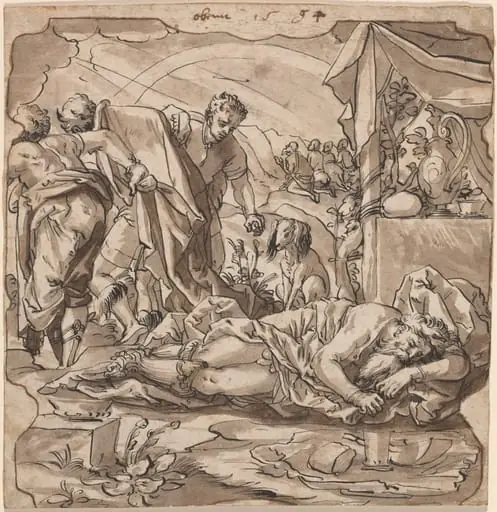 The Drunkenness of Noah
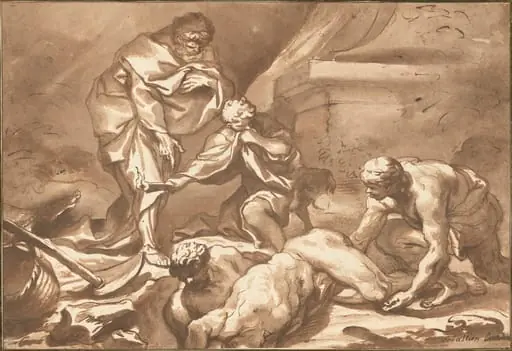 Tobit Burying the Dead
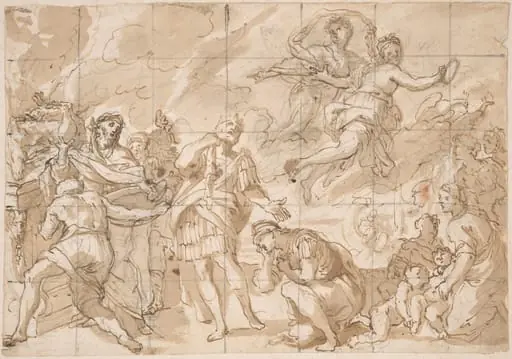 The Sacrifice of Iphigenia
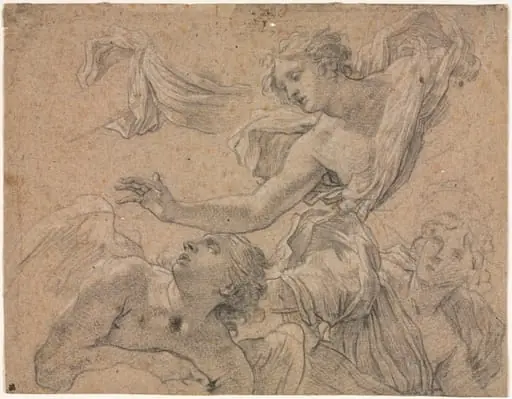 Studies of Angels (recto)
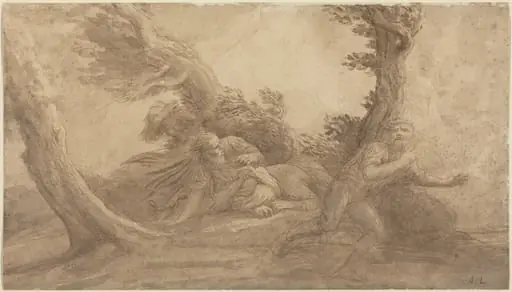 Clap of Thunder
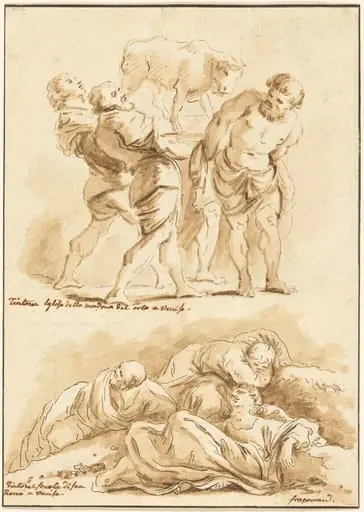 Worship of the Golden Calf and Christ on the Mount of Olives