Artwork
Răpirea Proserpinei
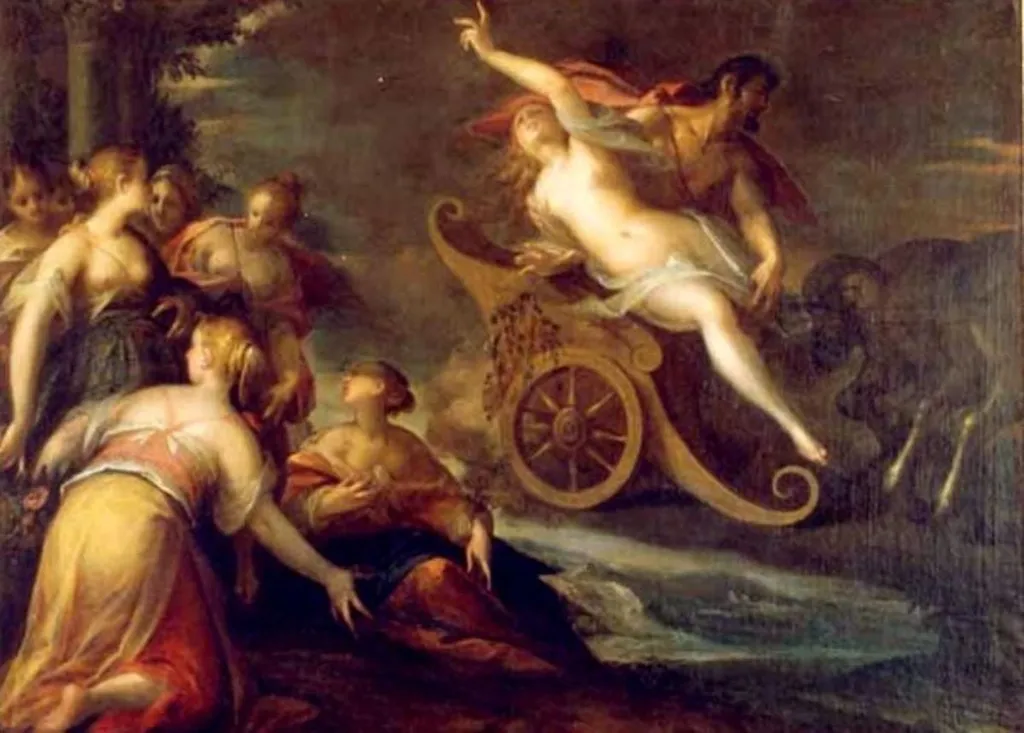
Răpirea Proserpinei is an unspecified painting by the Mannerist artist Hans von Aachen. It dates from 1589 and is held in the collection of the Brukenthal National Museum.
About this work
Overview
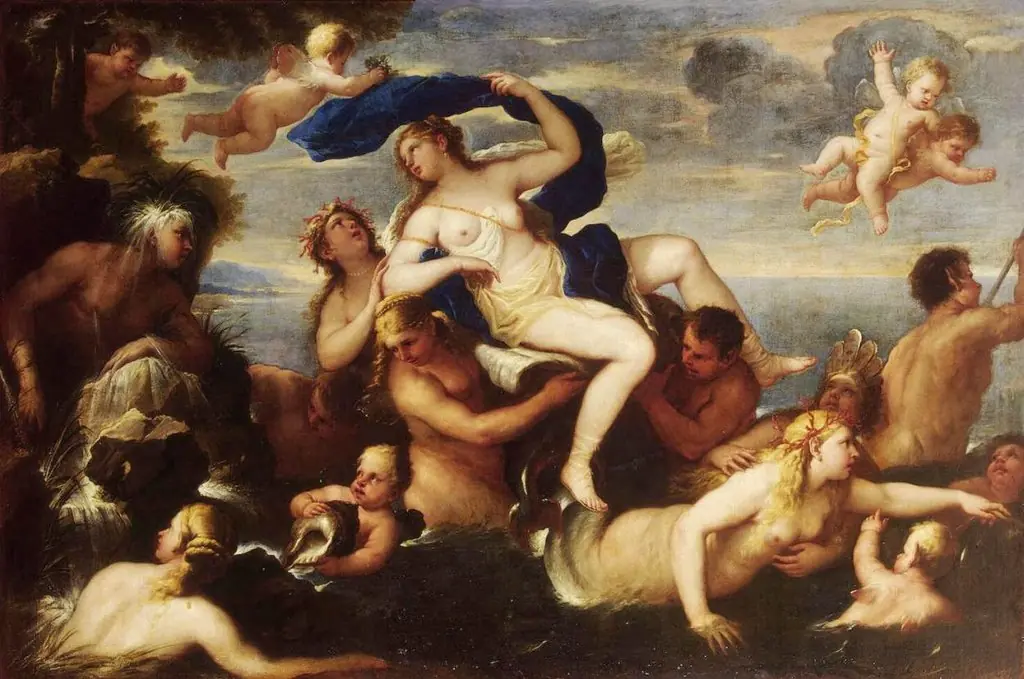
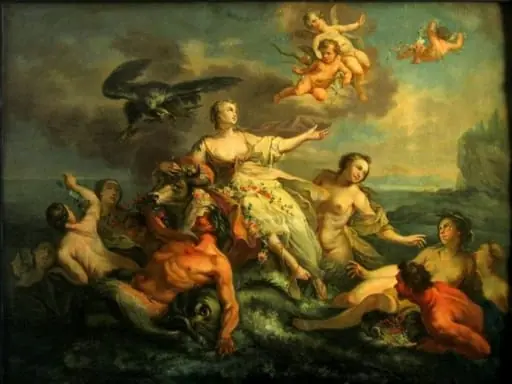
Created in 1589 by the German painter Hans von Aachen, this oil work illustrates the myth of Proserpina’s abduction. The composition centers on a chariot drawn by a male figure who seizes the heroine, while another woman reaches toward her. Surrounding figures, some clothed and some nude, react with alarm, set against a dark, indistinct landscape that heightens the scene’s tension.
Subject & Meaning
The narrative derives from the Roman myth in which Pluto, ruler of the underworld, kidnaps Proserpina, daughter of Ceres, to make her his wife. The painting captures the moment of forced departure, emphasizing the contrast between the vulnerable, outstretched Proserpina and the relentless grasp of her captor, while the onlookers embody the grief and helplessness of those left behind.
Technique & Style
Von Aachen employs a pronounced chiaroscuro, juxtaposing illuminated flesh against a deep, shadowy background to model forms and convey drama.
Von Aachen employs a pronounced chiaroscuro, juxtaposing illuminated flesh against a deep, shadowy background to model forms and convey drama. The figures display elongated limbs and exaggerated poses, hallmarks of Northern Mannerism, where elegance and artificiality supersede naturalistic representation. The ornate chariot, rendered with intricate detailing, further underscores the work’s decorative complexity.
History & Provenance
The painting was produced during von Aachen’s tenure as court artist to Emperor Rudolf II, whose collection favored mythological and erotic subjects. It formed part of a series of allegorical works commissioned by the emperor for his Prague palace, reflecting the Habsburg court’s taste for sophisticated, intellectually charged imagery.
Context
At the close of the 16th century, the Habsburg court in Prague served as a hub for artists from across Europe, fostering a synthesis of Italian and Northern styles. Von Aachen’s work embodies this cultural exchange, merging the sensuality of Italian mythological painting with the intricate, stylized forms characteristic of German Mannerism.
Artist & collection
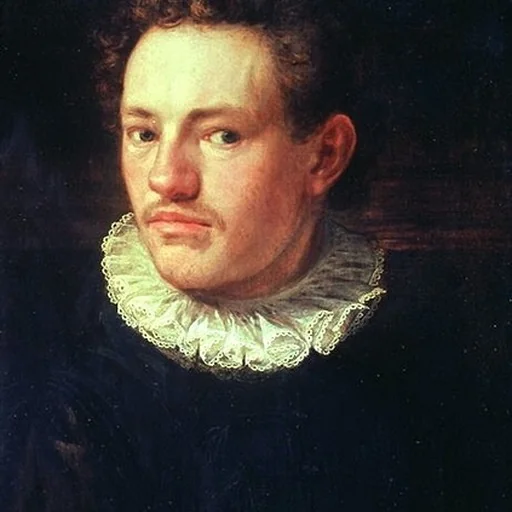
Artist
Hans von Aachen (1552 – 4 March 1615) was a German painter who was one of the leading representatives of Northern Mannerism.