Artwork
Parable of the Wheat and the Tares
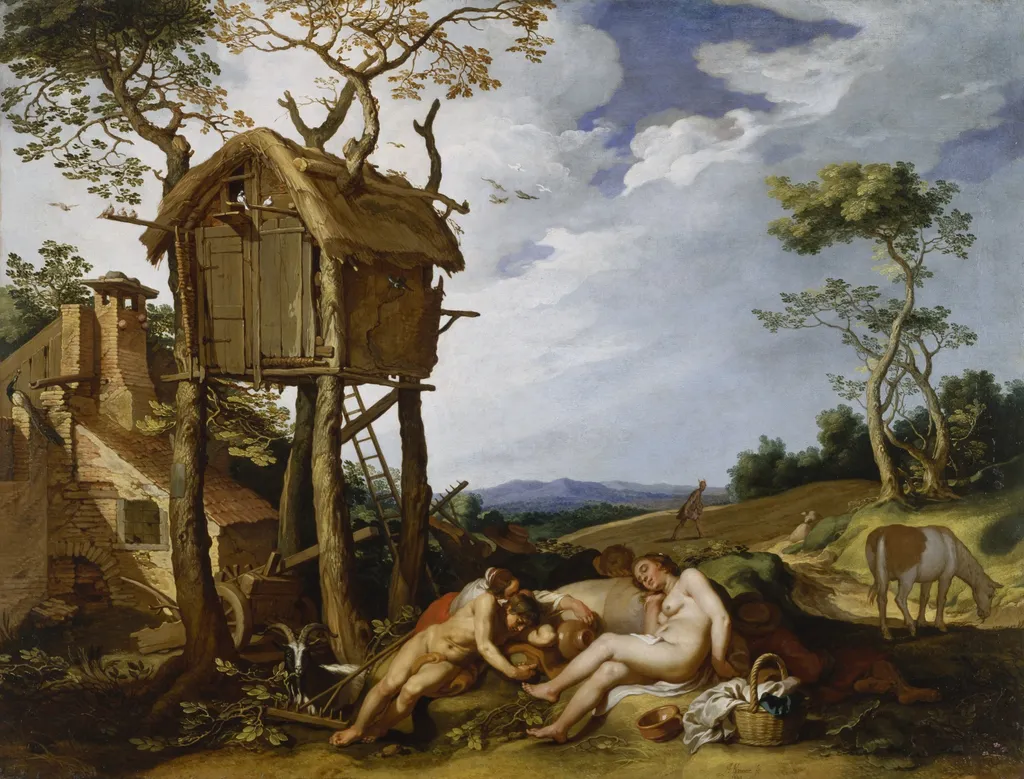
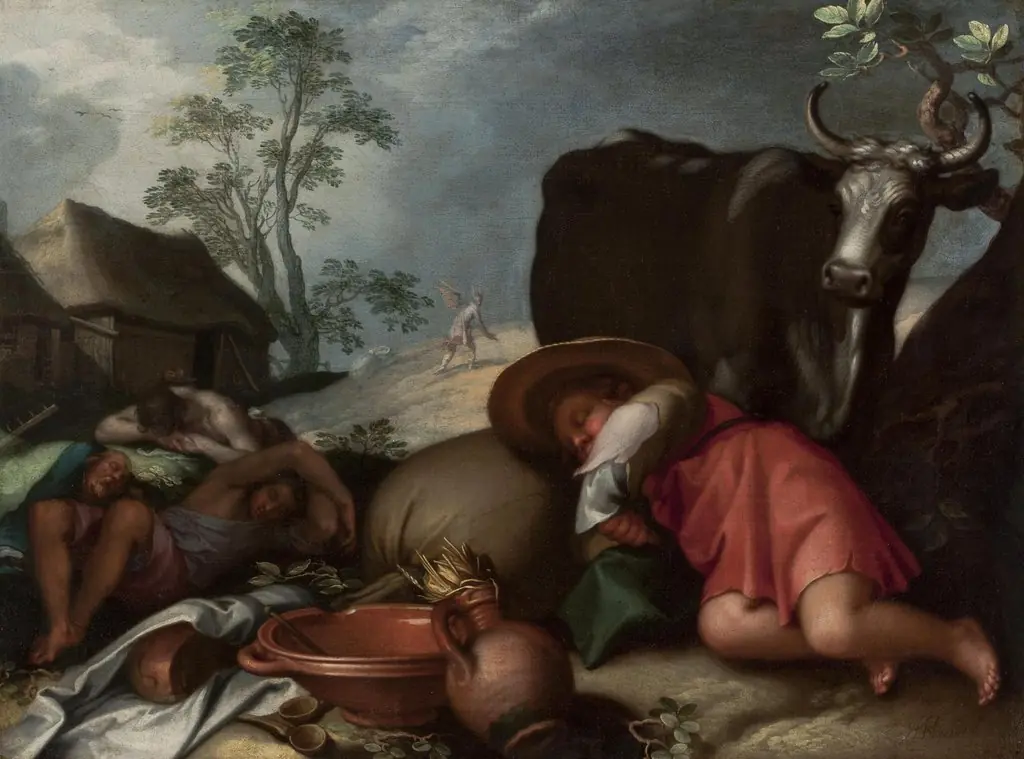
Parable of the Wheat and the Tares is an oil painting by the Early Baroque Italian artist Abraham Bloemaert. It dates from 1624 and is held in the collection of the Walters Art Museum.
About this work
Overview
Parable of the Wheat and the Tares is a 1624 oil painting by Dutch artist Abraham Bloemaert, blending a biblical narrative with serene countryside elements.
Subject & Meaning
The painting illustrates the biblical Parable of the Tares, juxtaposed with everyday rural life, including a dovecote and a sleeping shepherd, conveying a sense of everyday life intersecting with spiritual themes.
Technique & Style
Executed in the early Baroque Italian style, the work features soft shadows and chiaroscuro, creating a quiet, peaceful atmosphere, characteristic of Bloemaert's adaptation of Baroque techniques after his initial Mannerist period.
History & Provenance
Created in 1624, the painting reflects Bloemaert's transition from the Haarlem Mannerist style to Baroque. As a renowned teacher, he influenced the Utrecht Caravaggisti, a group of Dutch painters inspired by Caravaggio.
Context
The scene's tranquility, with figures resting near a raised wooden hut, a grazing goat, and a horse, suggests a portrayal of rural repose, possibly after a day's labor, set against a backdrop of rolling hills and trees.
Legacy
While the painting's specific legacy is not detailed here, Bloemaert's work, including this piece, contributed to the broader influence of Baroque styles in Dutch art, and his teaching impacted the development of the Utrecht Caravaggisti.
Own this work as a print
Artist & collection

Artist
Abraham Bloemaert (25 December 1566 – 27 January 1651) was a Dutch painter and printmaker who used etching and engraving.

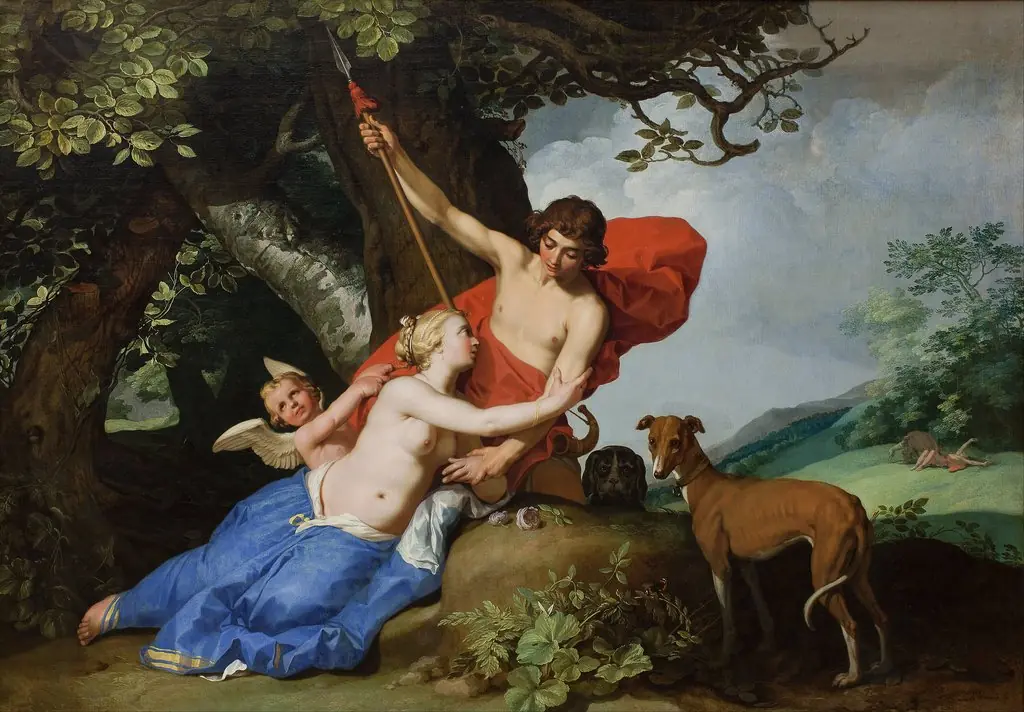
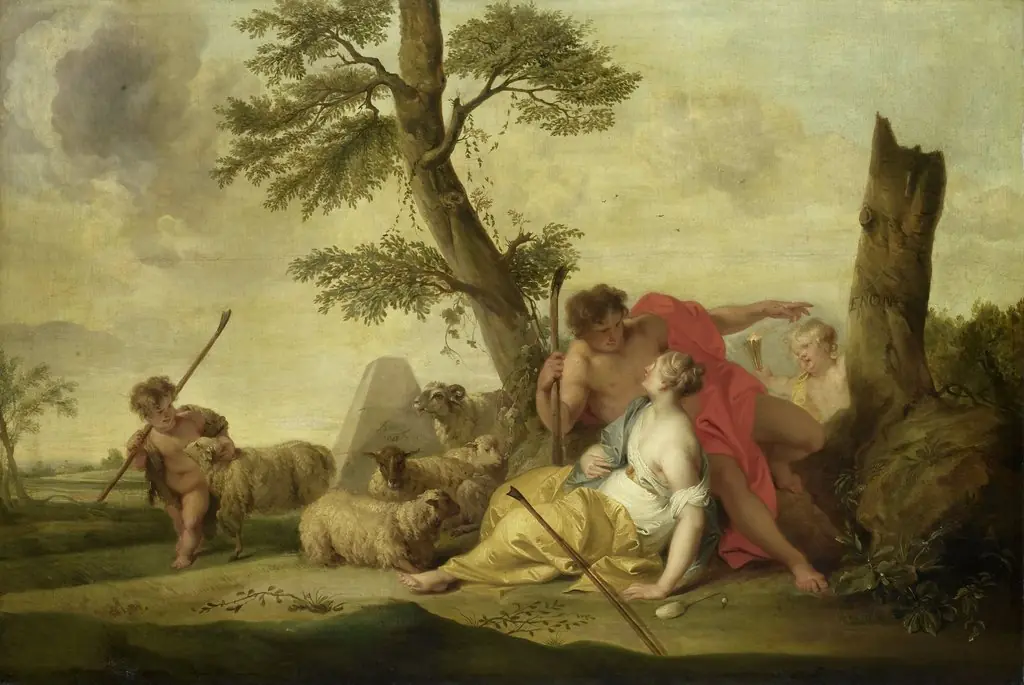 Paris and Oenone
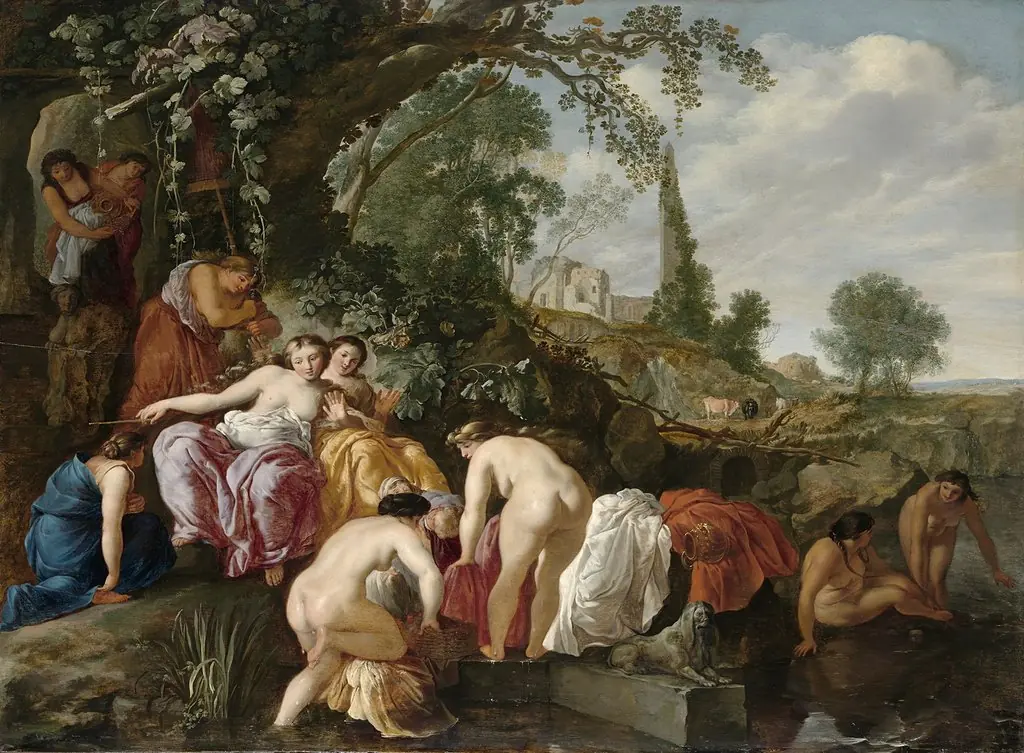 The Finding of Moses
 Diana and her Nymphs
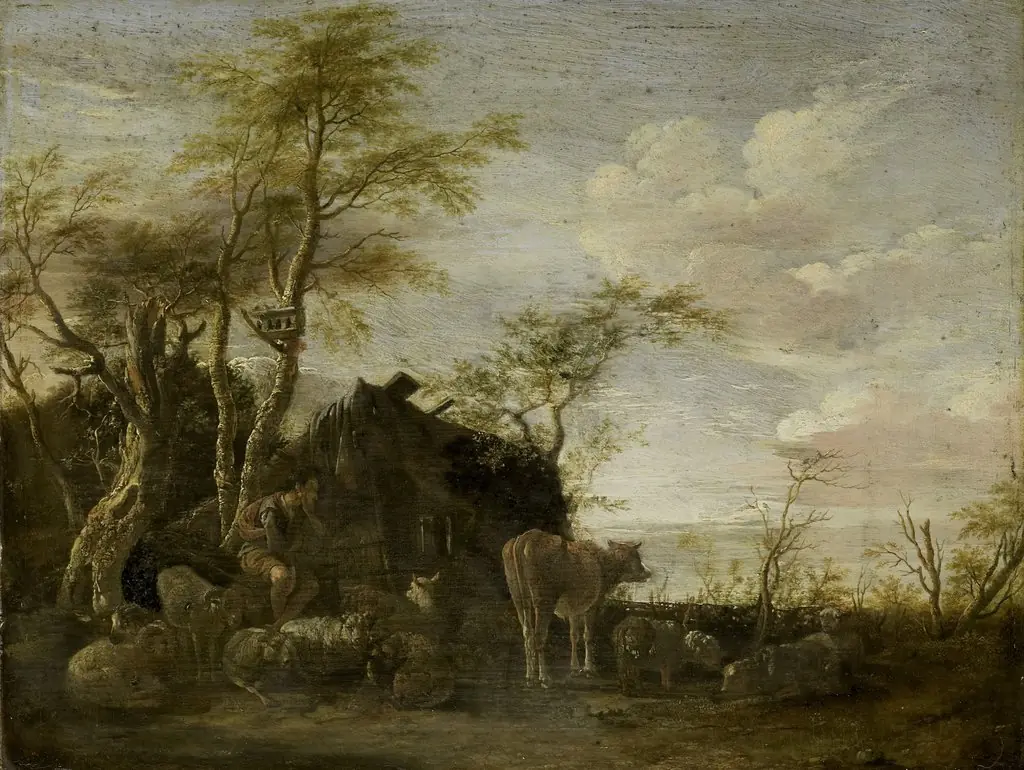 A herdsman's hut
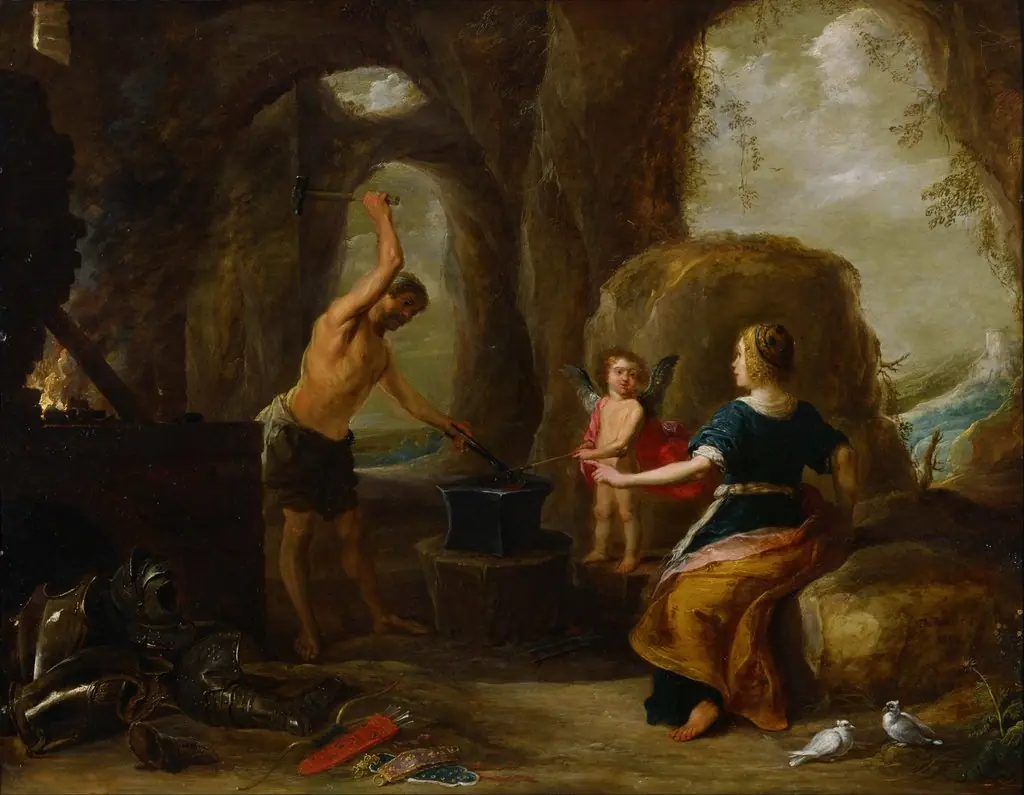 Venus Visiting Vulcan’s Forge
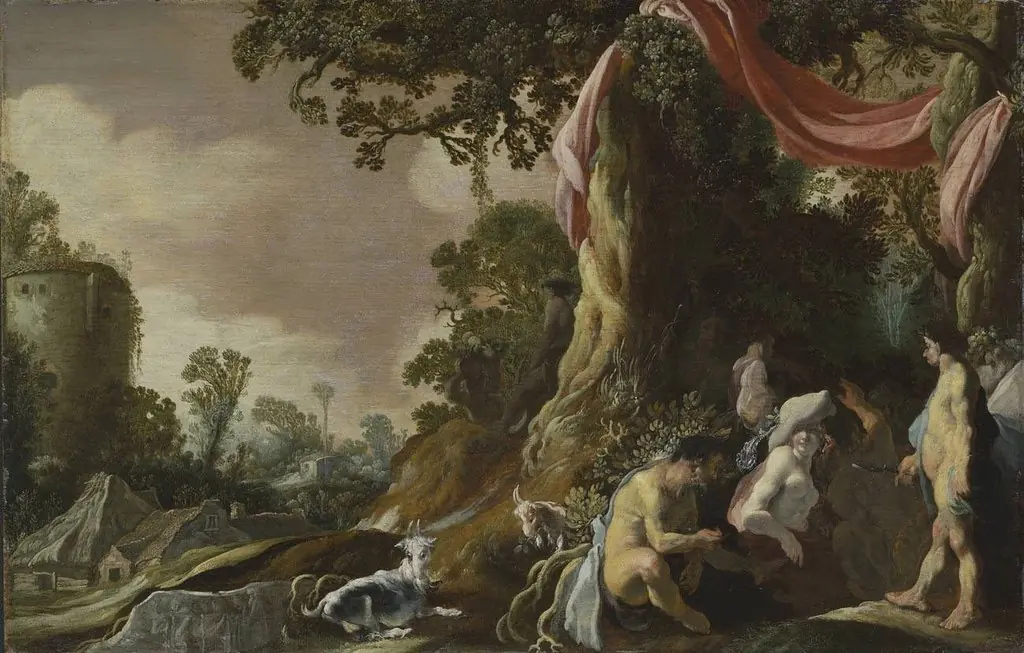 Bucolic scene (shepherd scene ?)
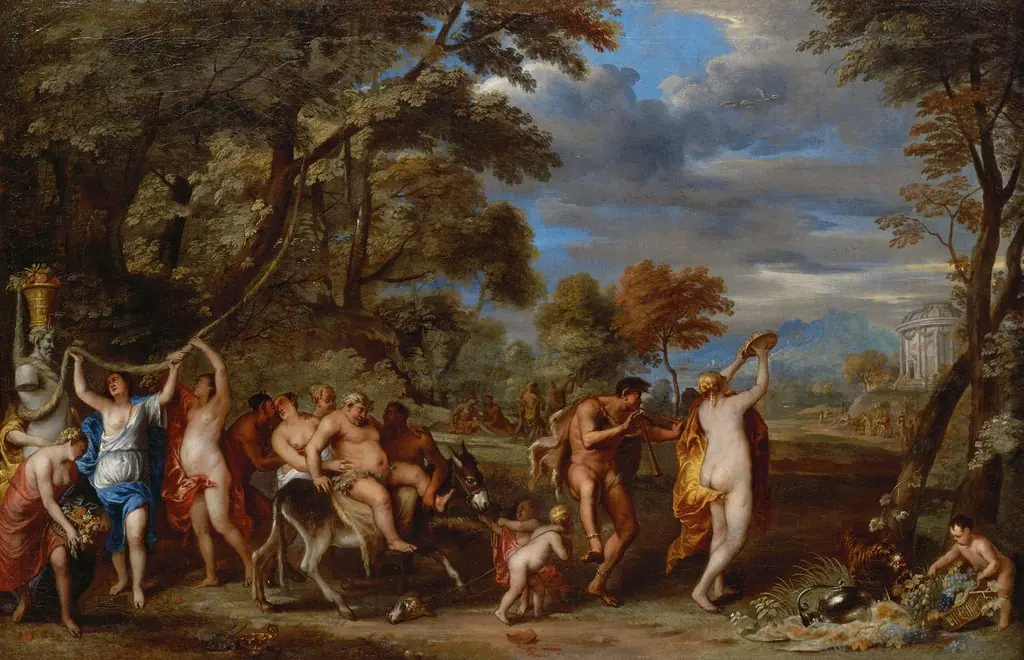 Bacchanal
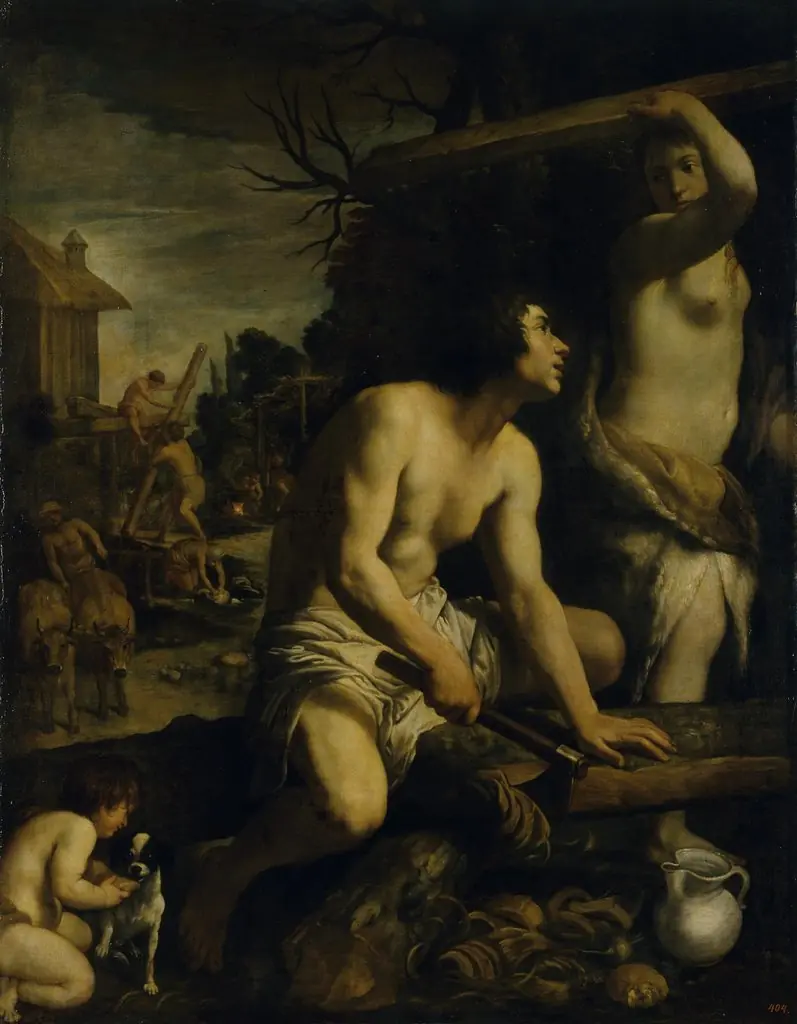 Construction of Noah's Ark
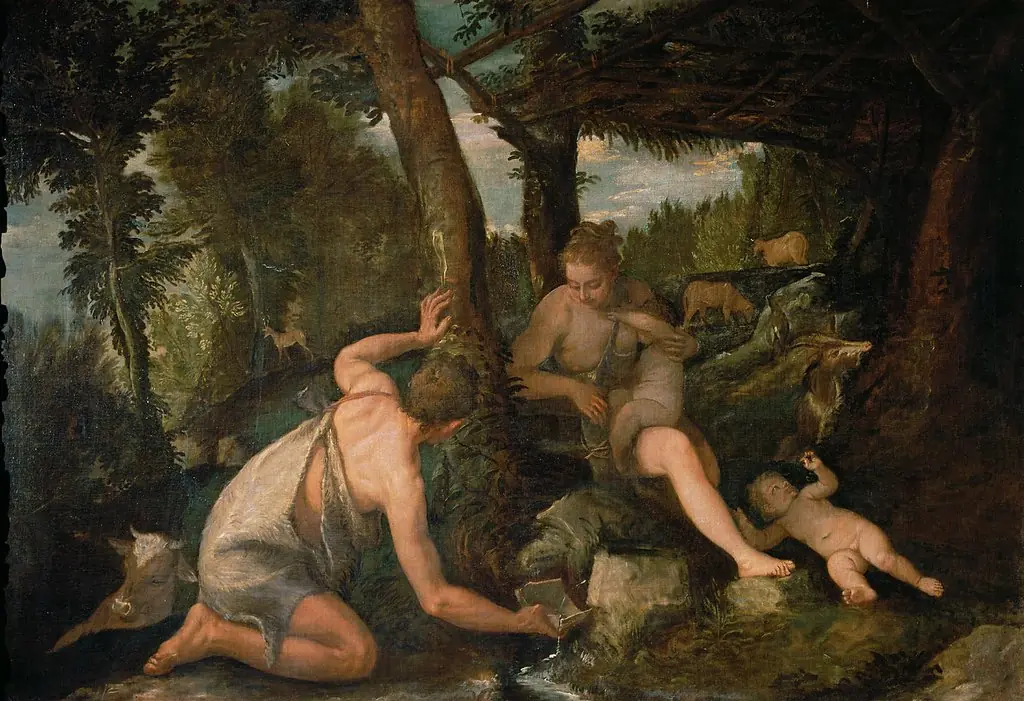 Adam and Eve after the Expulsion from Paradise
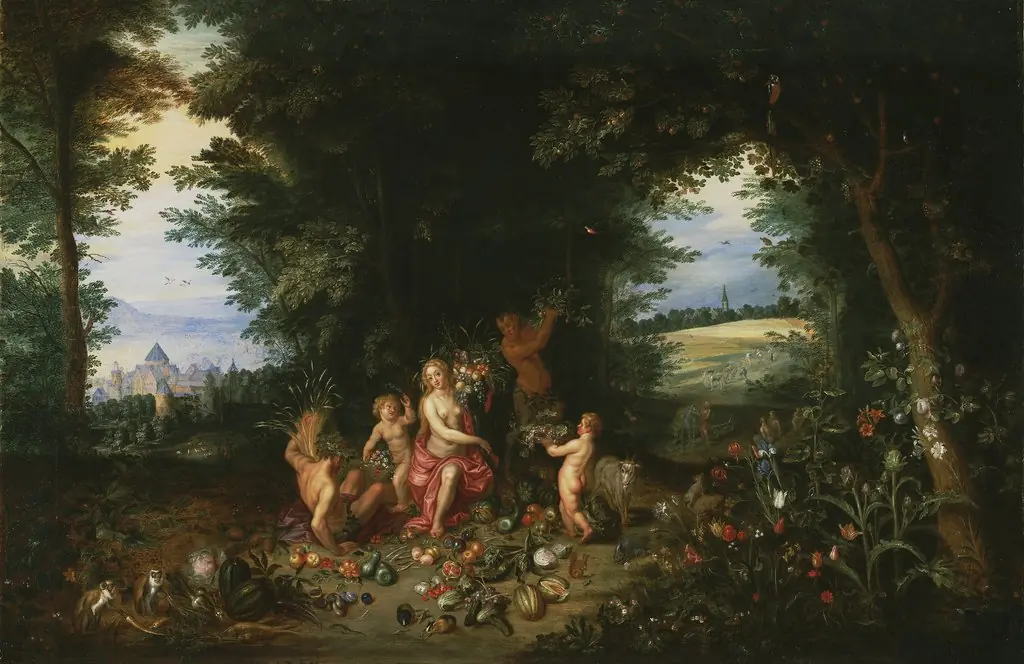 Landscape with Ceres (Allegory of Earth)
 Venus Bewailing the Slain Adonis
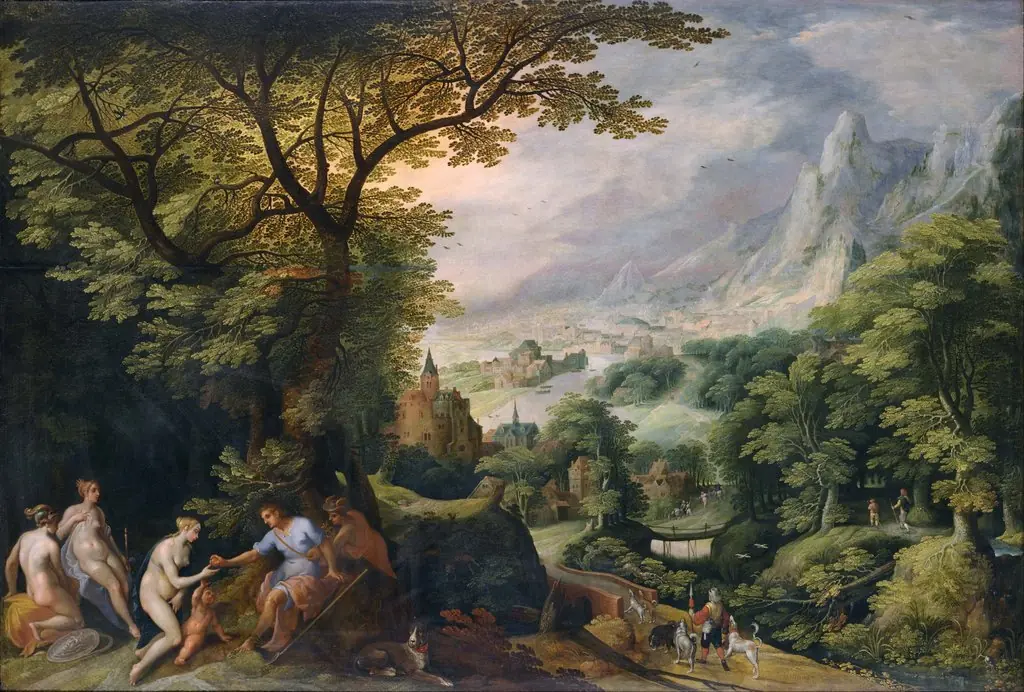 Landscape with the Judgement of Paris