Artwork
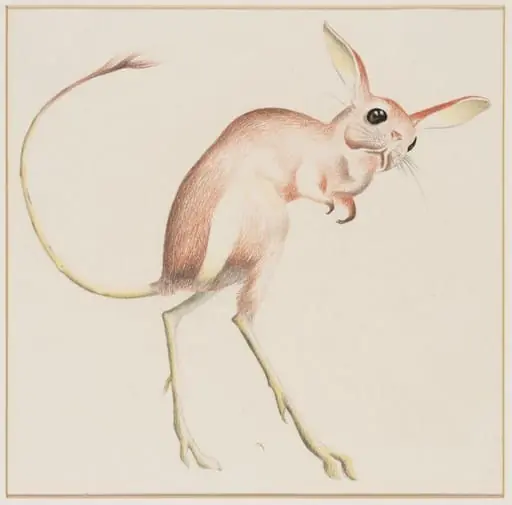
Rat dEgypte apellé en Arabe Gérbouh
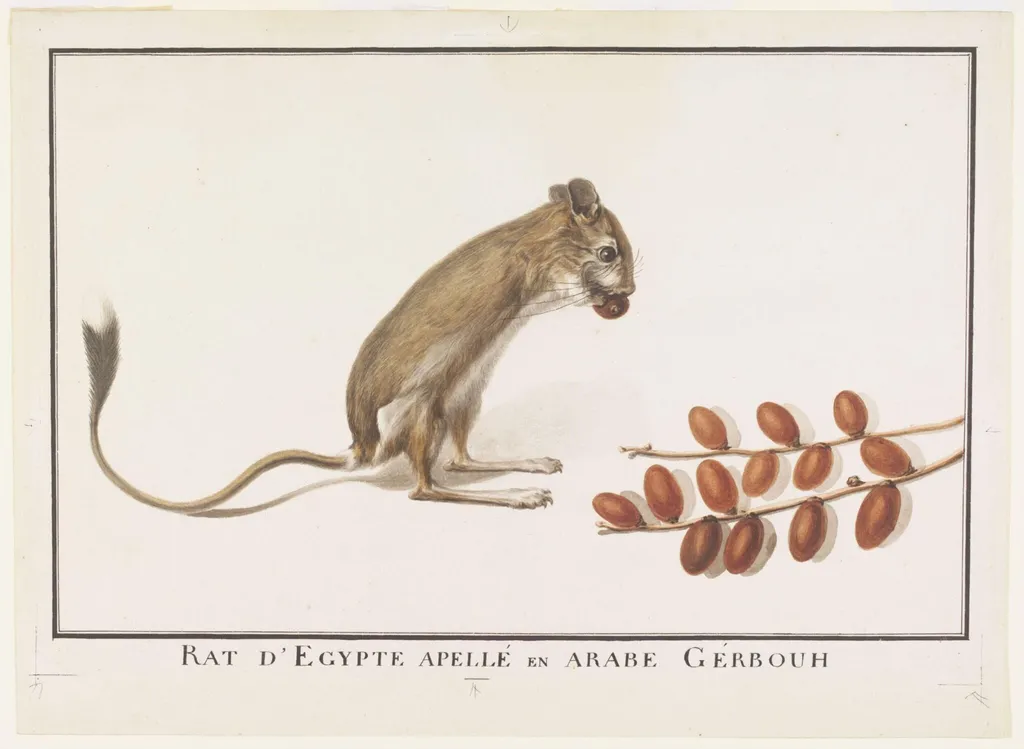
Rat dEgypte apellé en Arabe Gérbouh is a watercolor work on paper by the Orientalist artist Jean-Baptiste Adanson. It dates from 1786 and is held in the collection of the Victoria and Albert Museum. This watercolour depicts a jerboa, a desert rodent with distinctive large hind legs and a long tail, eating a date.
About this work
Here’s a tight rewrite at 100 words: This watercolor shows a jerboa—a small desert rodent with huge hind legs and a long tail—eating a date.
Here’s a tight rewrite at 100 words:
This watercolor shows a jerboa—a small desert rodent with huge hind legs and a long tail—eating a date. The French artist painted it between 1775 and 1796, when natural details fascinated European viewers.
It may be a rare “portrait” of a tame pet, not just a scientific sketch. Jerboas leap far to dodge predators and thrive in Egypt’s dry heat.
Look up the next jerboa artist, Louis Jean-Marie Daubenton.
Overview
This watercolour depicts a jerboa, a desert rodent with distinctive large hind legs and a long tail, eating a date. Created by Jean-Baptiste Adanson, a French diplomat and draughtsman, it showcases the artist's attention to natural detail.
Subject & Meaning
The jerboa, a nocturnal desert dweller common in Egypt, is shown holding a date in its front paws. The depiction may be a portrait of a tame pet, rather than a purely scientific illustration, highlighting the animal's ability to be domesticated.
History & Provenance
Jean-Baptiste Adanson, brother of naturalist Michel Adanson, served as French consul in Egypt from 1775 to 1785. He compiled a large collection of drawings on natural history, antiquities, and views during his time in Egypt and Syria, although a proposed publication of his work in 1795 was never realised.
Artist & collection
Artist
Jean-Baptiste Adanson spent years chasing the Gerbouh, a giant Nile rat that barely anyone outside Senegal had ever drawn right.

 The Bahama Coney (Mus Monax)
 Plate 12: A Cheetah(?) and a Wild Sheep
 A Field Mouse, from Below
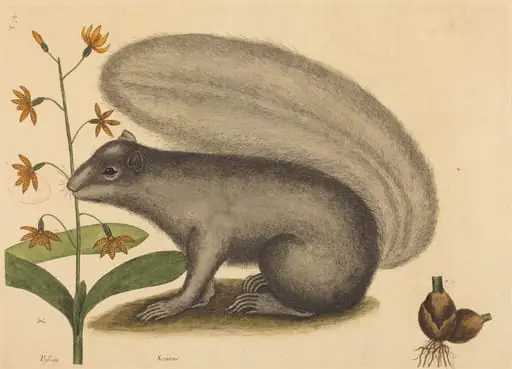 The Grey Fox Squirrel (Sciurus cinereus)
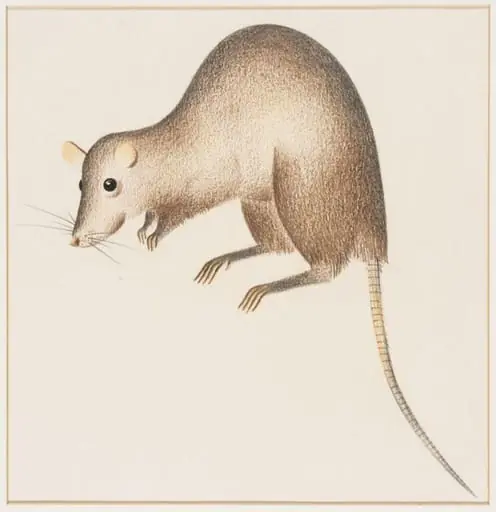 Rat
Rat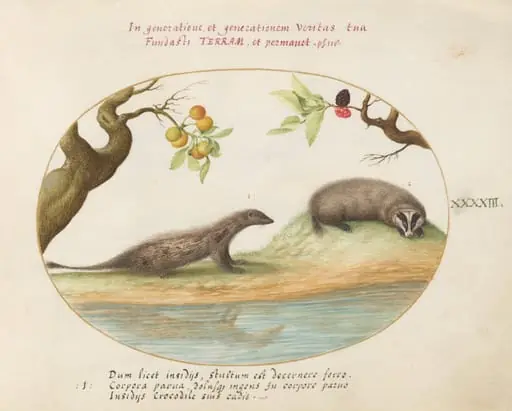 Plate 43: Mongoose and Badger with Fruit Trees
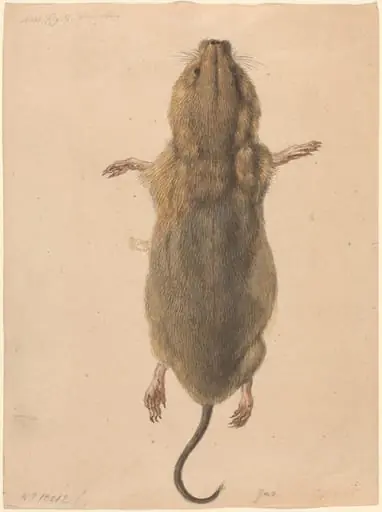 A Field Mouse, from Above
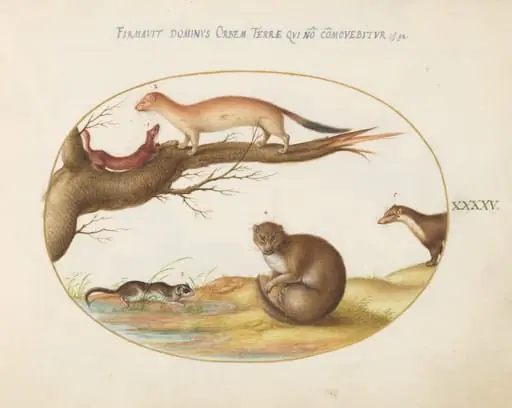 Plate 45: Weasels, a Ferret, and a "Nut Mouse"
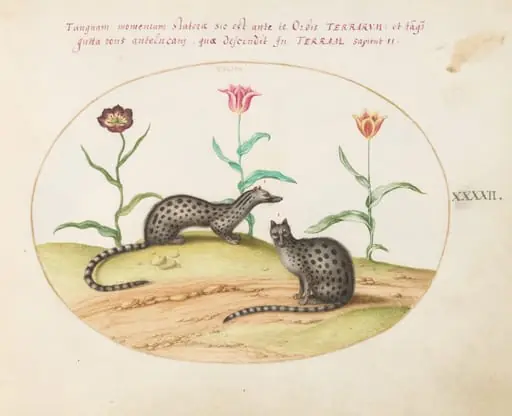 Plate 42: Two Genets or Civet Cats with Tulips
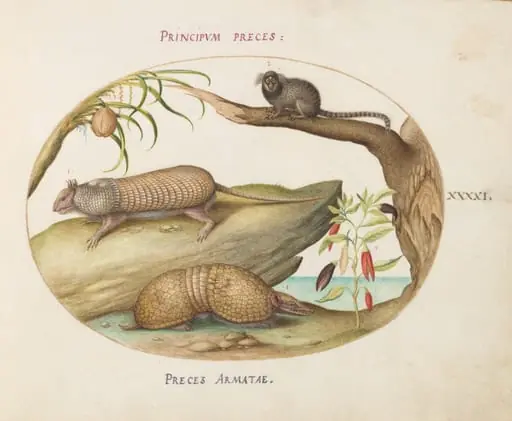 Plate 41: Two Types of Armadillos with a Marmoset, a Coconut Palm, and a Pepper Plant
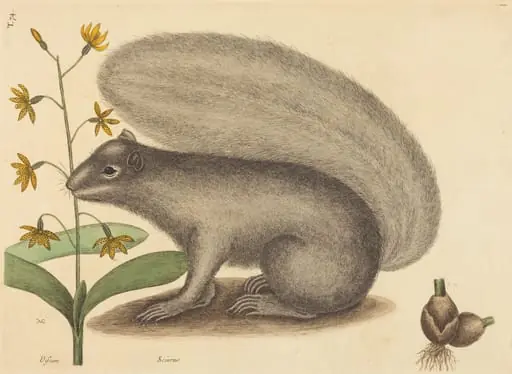 The Grey Fox Squirrel (Sciurus cinereus)
 Jerboa