Artwork
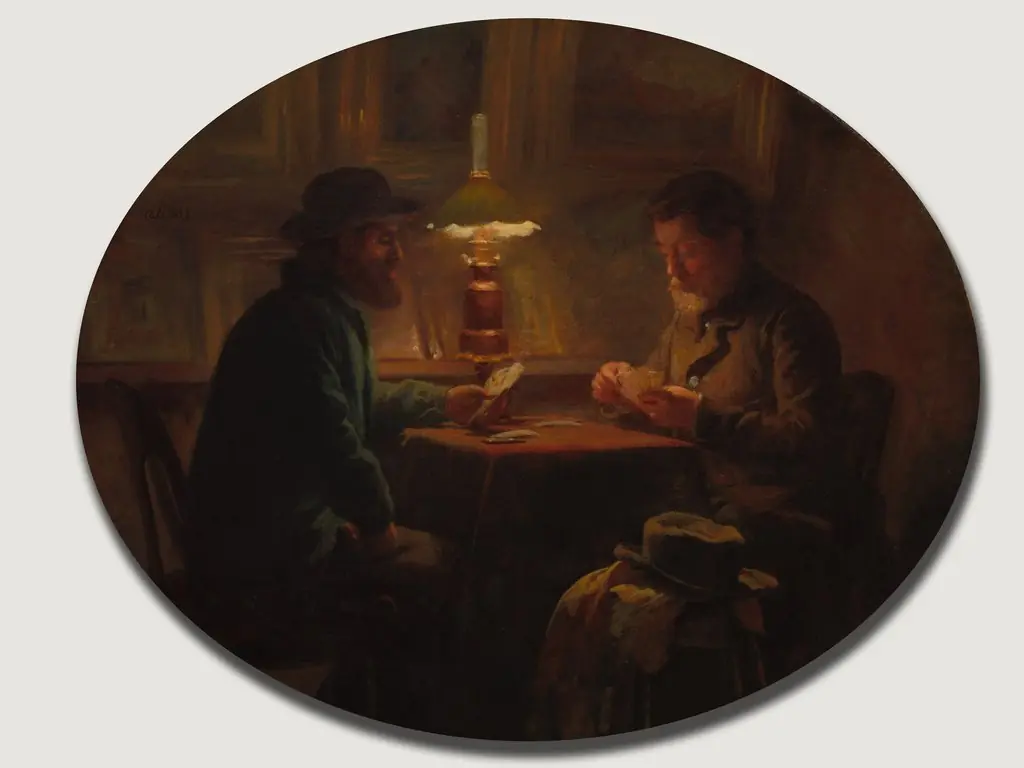
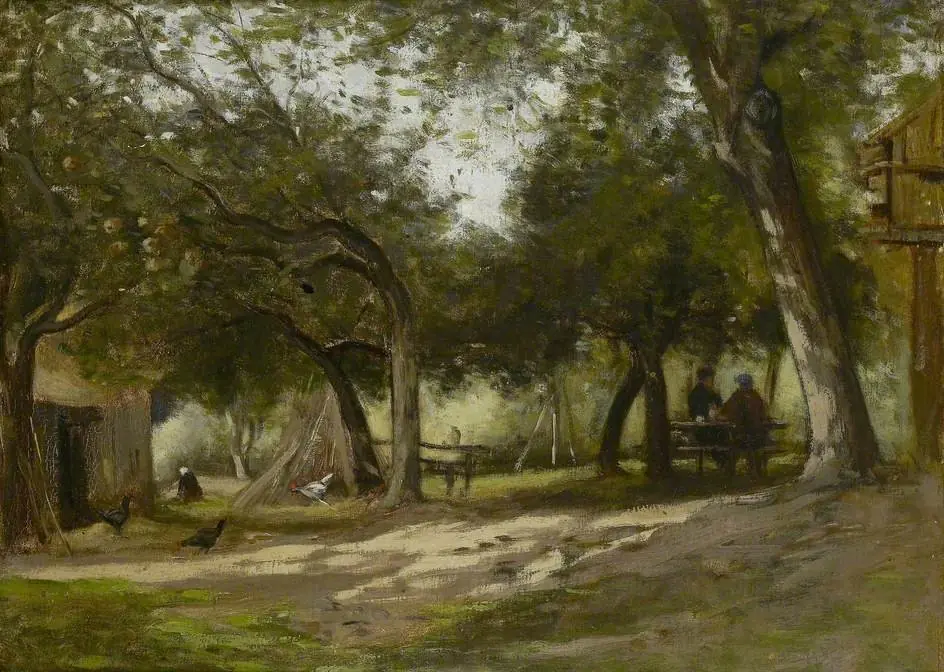
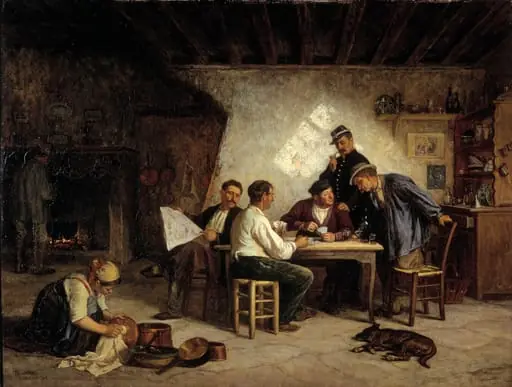
Card Game at "le Père Martin"
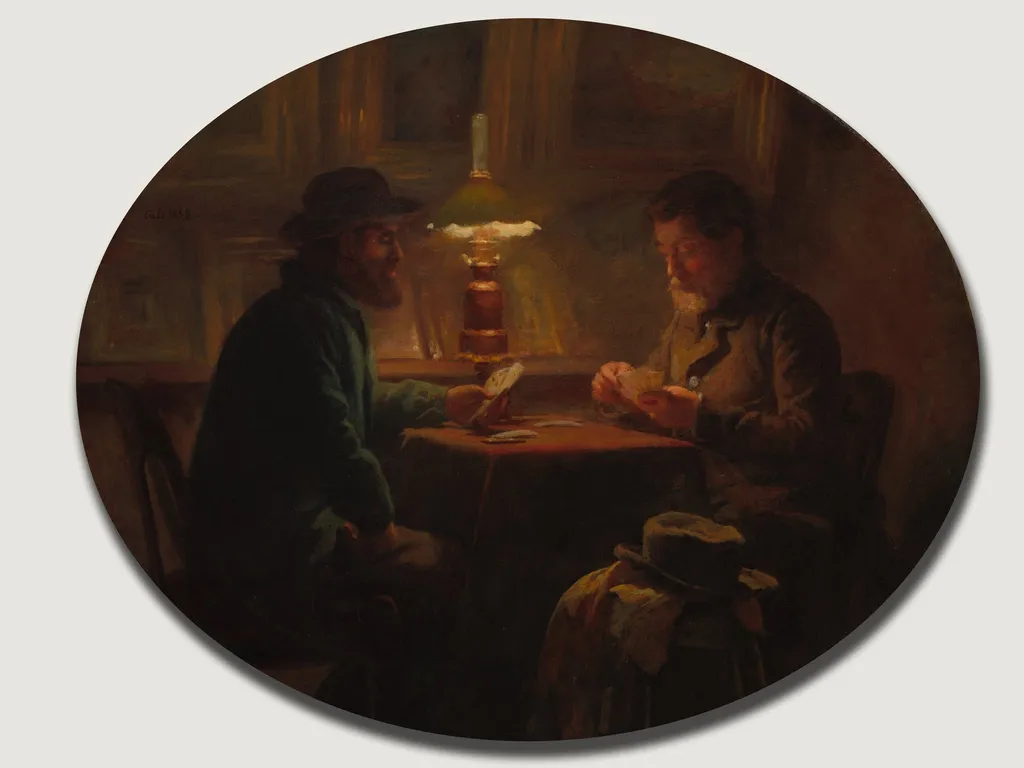
Card Game at "le Père Martin" is an unspecified painting by the Impressionist artist Adolphe-Félix Cals. It dates from 1859 and is held in the collection of the Cleveland Museum of Art.
About this work
Overview
It is part of the collection at The Cleveland Museum of Art, where it remains a subtle example of 19th-century domestic observation.
Painted in 1859 by Adolphe-Félix Cals, this work depicts a quiet moment of leisure in a modest Parisian interior. The scene captures two men engaged in a card game at a small table, illuminated by a single lamp. The painting belongs to the Realist tradition, emphasizing ordinary life without idealization. It is part of the collection at The Cleveland Museum of Art, where it remains a subtle example of 19th-century domestic observation.
Subject & Meaning
The painting portrays an unremarkable evening between two men, their concentration on the game suggesting familiarity and routine. No grand narrative is present—only the quiet tension of play and the intimacy of shared time. The hanging coat and plain walls reinforce the setting as a private, unadorned space. The work values the dignity of everyday rituals, inviting viewers to find meaning in stillness rather than spectacle.
Technique & Style
Cals employs a restrained palette and loose, tactile brushwork to evoke texture and atmosphere. The warm glow of the lamp contrasts with the deep shadows, modeling forms with naturalistic precision. Light falls selectively, drawing attention to faces and hands while leaving the background in muted tones. The brushstrokes are neither polished nor hurried, lending the scene an immediate, almost documentary quality that enhances its realism.
History & Provenance
Created in 1859, the painting entered The Cleveland Museum of Art’s collection in the 20th century. Its early ownership history is not well documented, but it was likely acquired by a private collector in France before its eventual transfer to the United States. The work remained relatively obscure outside academic circles until its inclusion in broader surveys of French Realism in the late 1900s.
Context
In mid-19th century France, artists increasingly turned from historical and mythological subjects to scenes of contemporary life. Cals, influenced by Courbet and the Barbizon painters, focused on the quiet corners of urban and rural existence. This painting reflects a broader cultural shift toward valuing the authentic over the theatrical, aligning with the rise of Realism as a dominant artistic movement.
Legacy
Though not widely known today, the painting exemplifies the quiet power of Realist genre scenes. It influenced later artists interested in capturing unvarnished moments of daily life. Its preservation in a major American museum ensures continued access for study and reflection, offering a quiet counterpoint to the more dramatic narratives of its era.
Artist & collection