Artwork
Still Life with Vegetables, Partridge, and a Jug
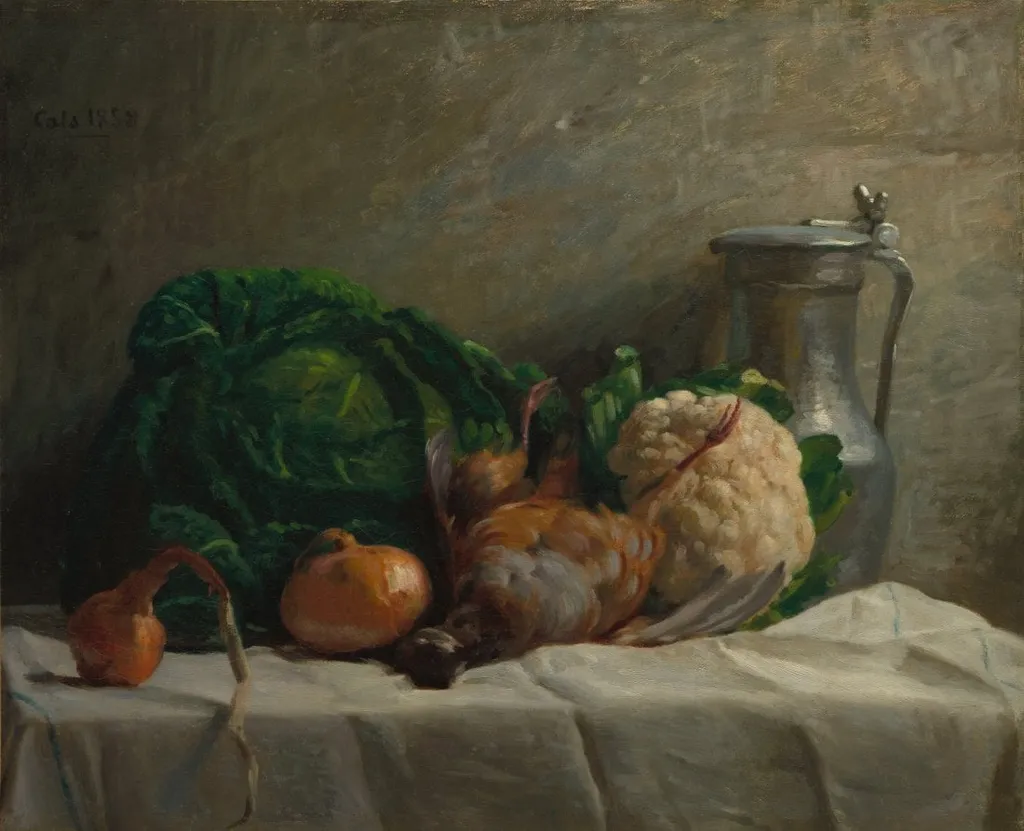
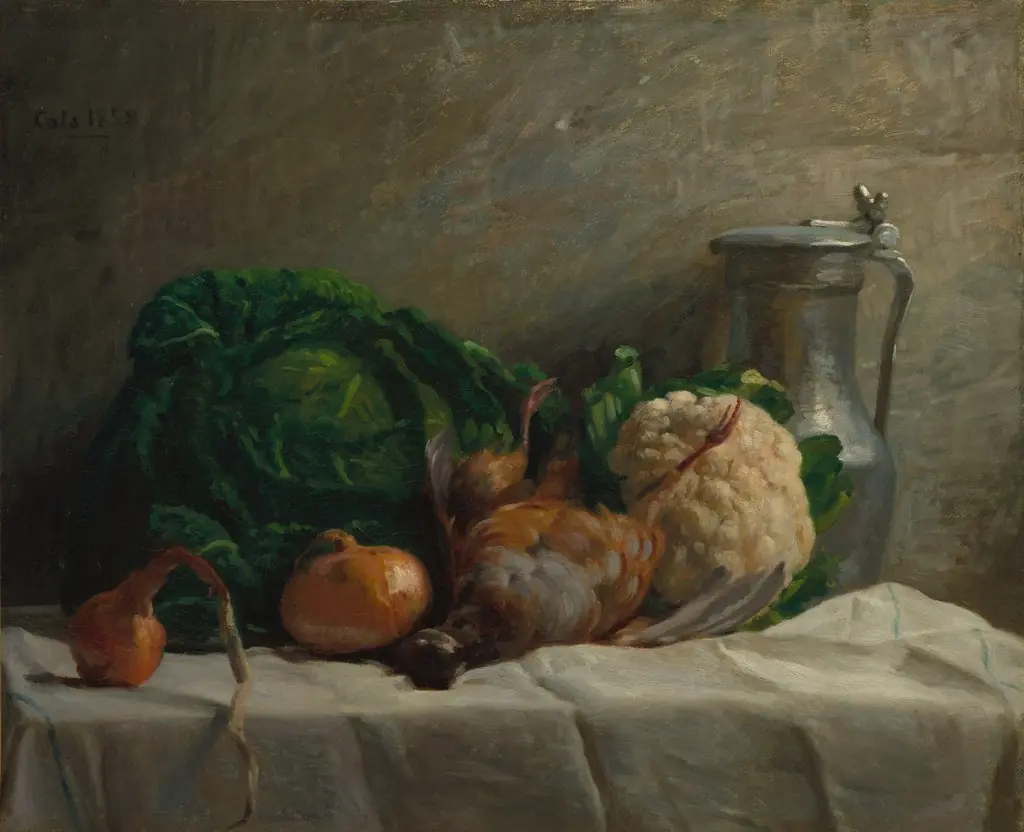
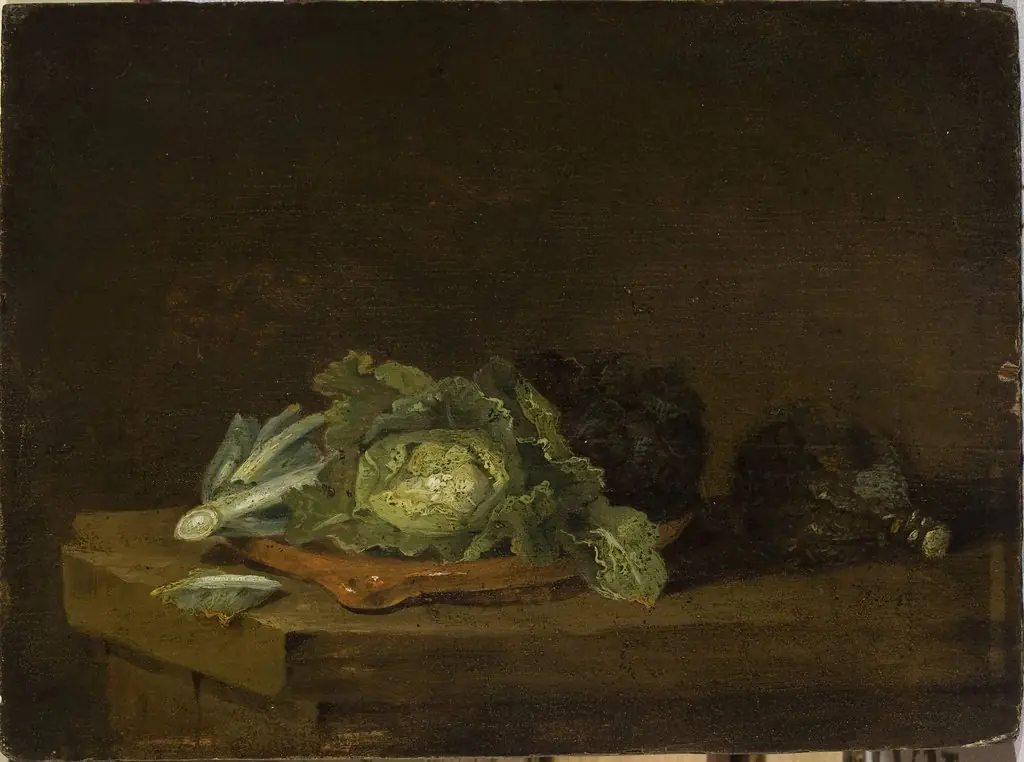
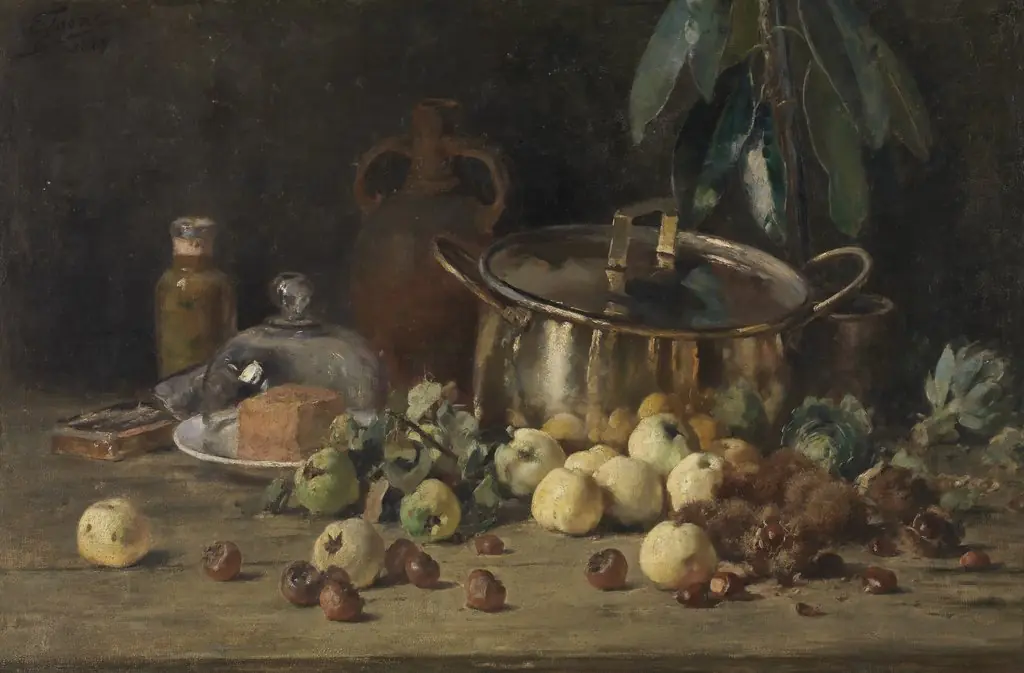
Still Life with Vegetables, Partridge, and a Jug is an unspecified painting by the Impressionist artist Adolphe-Félix Cals. It dates from 1858 and is held in the collection of the Cleveland Museum of Art. The canvas presents a modest tabletop arrangement: a deceased partridge, a cluster of onions, a head of cabbage, and a simple clay jug.
About this work
The partridge and cabbage are the exact ingredients for *perdrix au chou*, a simple country dish.
You see a dead partridge, onions, cabbage, and a clay jug on a wooden table.
Most still lifes back then showed fancy silver or rare fruit. Cals painted everyday food—what a middle-class French family might actually eat. The partridge and cabbage are the exact ingredients for *perdrix au chou*, a simple country dish.
If you like this quiet realism, look up the subject france, 19th century, mod euro.
Overview
The canvas presents a modest tabletop arrangement: a deceased partridge, a cluster of onions, a head of cabbage, and a simple clay jug. Rendered in muted tones, the composition emphasizes the ordinary fare of a 19th‑century French household rather than the luxurious objects often favored in contemporary still lifes.
Subject & Meaning
The items depicted correspond directly to the ingredients of perdrix au chou, a traditional rural dish of partridge cooked with cabbage. By choosing this specific culinary reference, the artist links the painting to everyday nourishment and the domestic rituals of middle‑class French life.
Technique & Style
The painter employs a restrained palette and careful modeling to highlight the varied textures of feather, vegetable skin, and earthenware. While the work retains a realistic fidelity to form, it also reflects an interest in underlying compositional geometry, arranging the objects to create balanced visual rhythms.
History & Provenance
Created by the French artist who spent most of his career in the Paris region before relocating to Normandy in 1871, the piece belongs to a period when he exhibited regularly at the Impressionist shows from 1874 to 1879. Though still lifes formed a notable part of his output, they were not his primary focus, as he favored outdoor scenes captured during daily walks.
Context
In the latter half of the 19th century, many painters began to depict humble, everyday objects—carrots, onions, oysters—challenging the prevailing taste for opulent silverware and exotic fruit in salon paintings. This work aligns with that shift, presenting a realistic snapshot of a common French meal rather than an idealized banquet.
Artist & collection