Artwork
Herde und Hirten am Brunnen
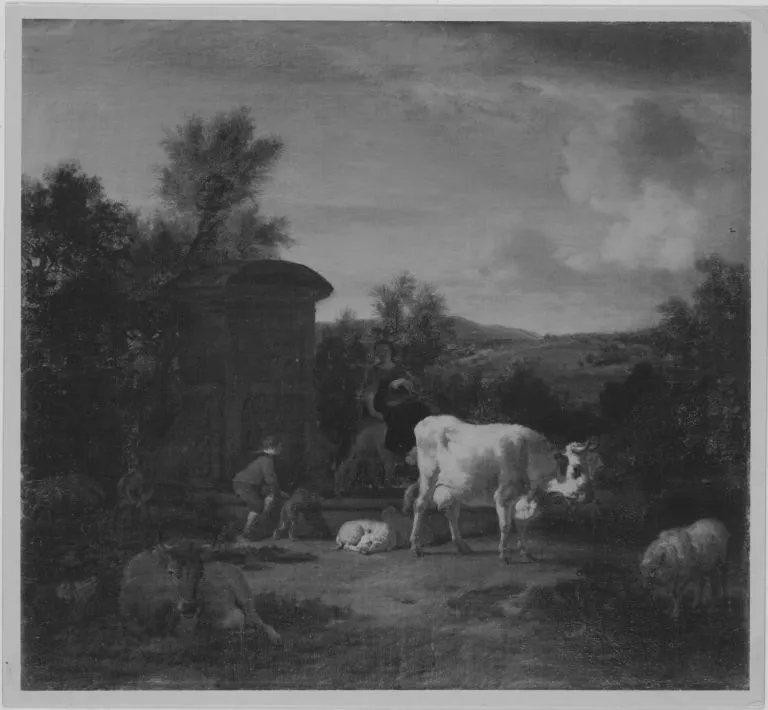
Herde und Hirten am Brunnen is an unspecified painting by the Dutch Golden Age artist Adriaen van de Velde. It dates from 1670 and is held in the collection of the Bavarian State Painting Collections.
About this work
Overview
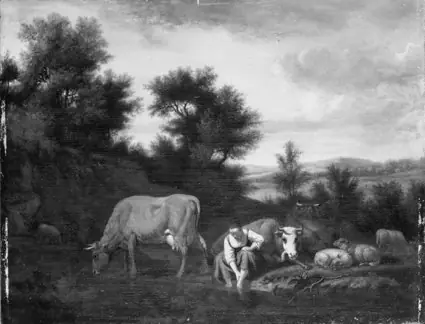
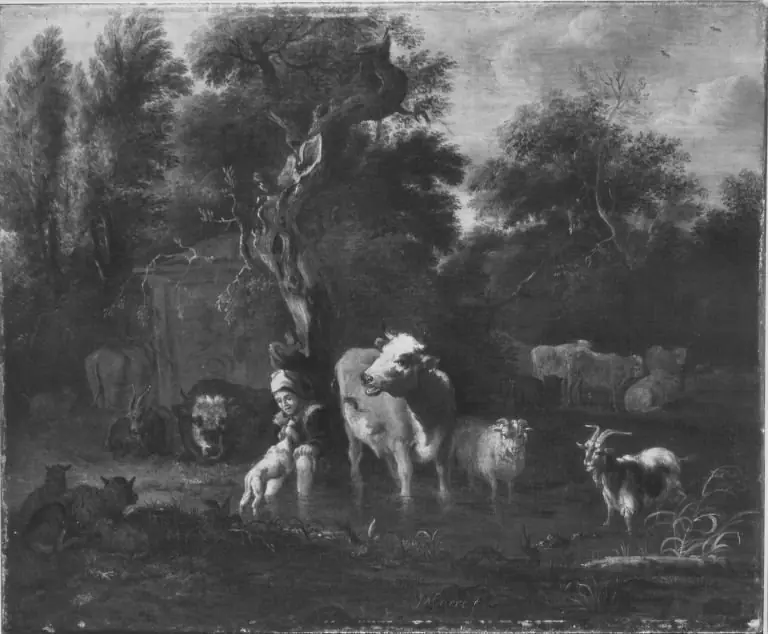
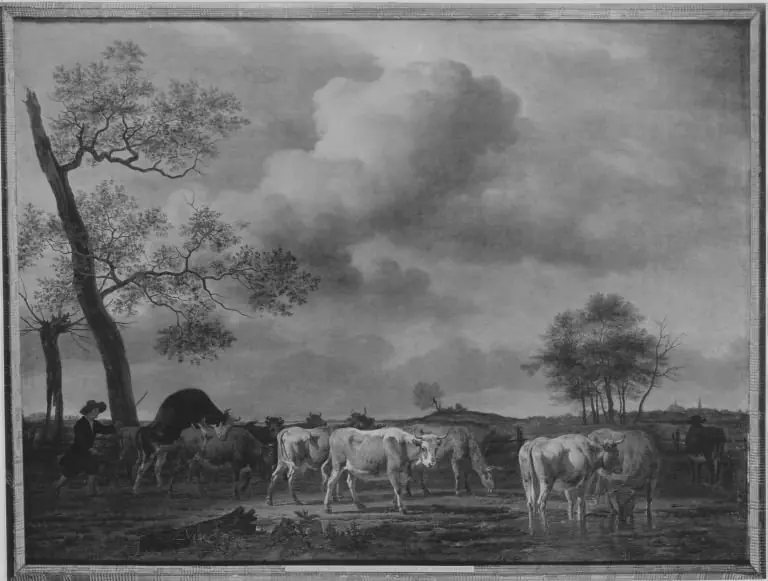
A prominent white cow anchors the left side of the foreground, while a shepherd tends to a small fire nearby, adding a narrative element of daily rural life.
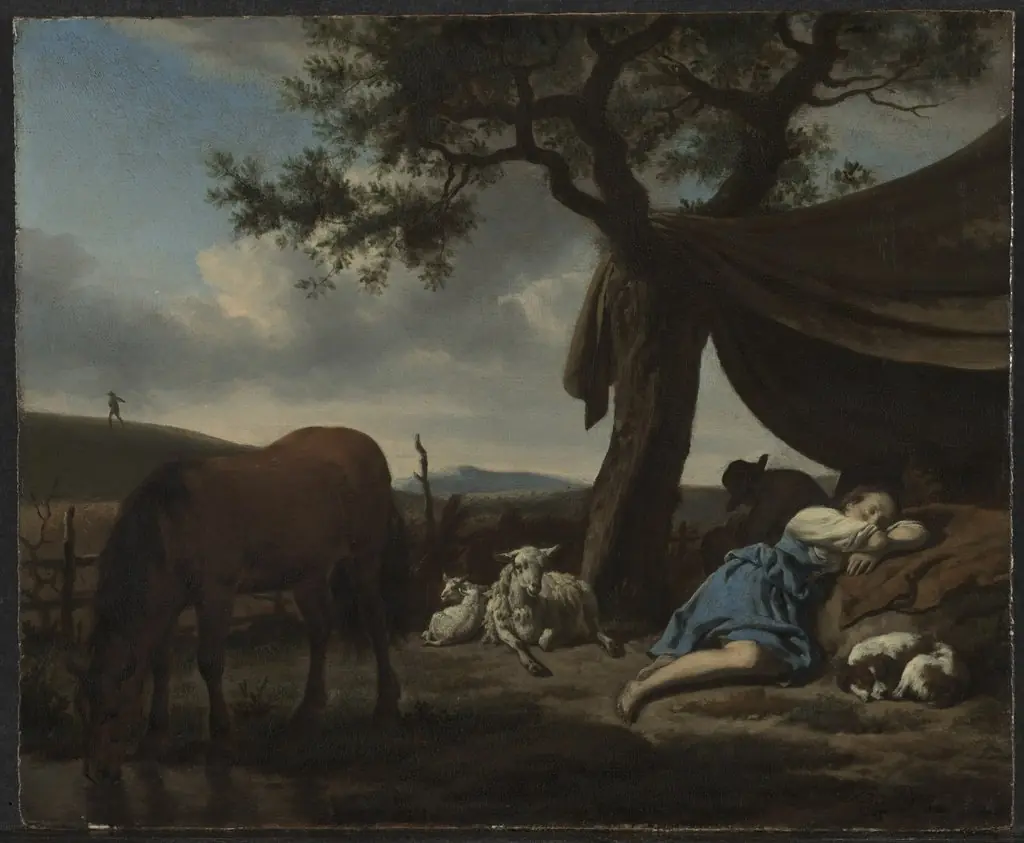
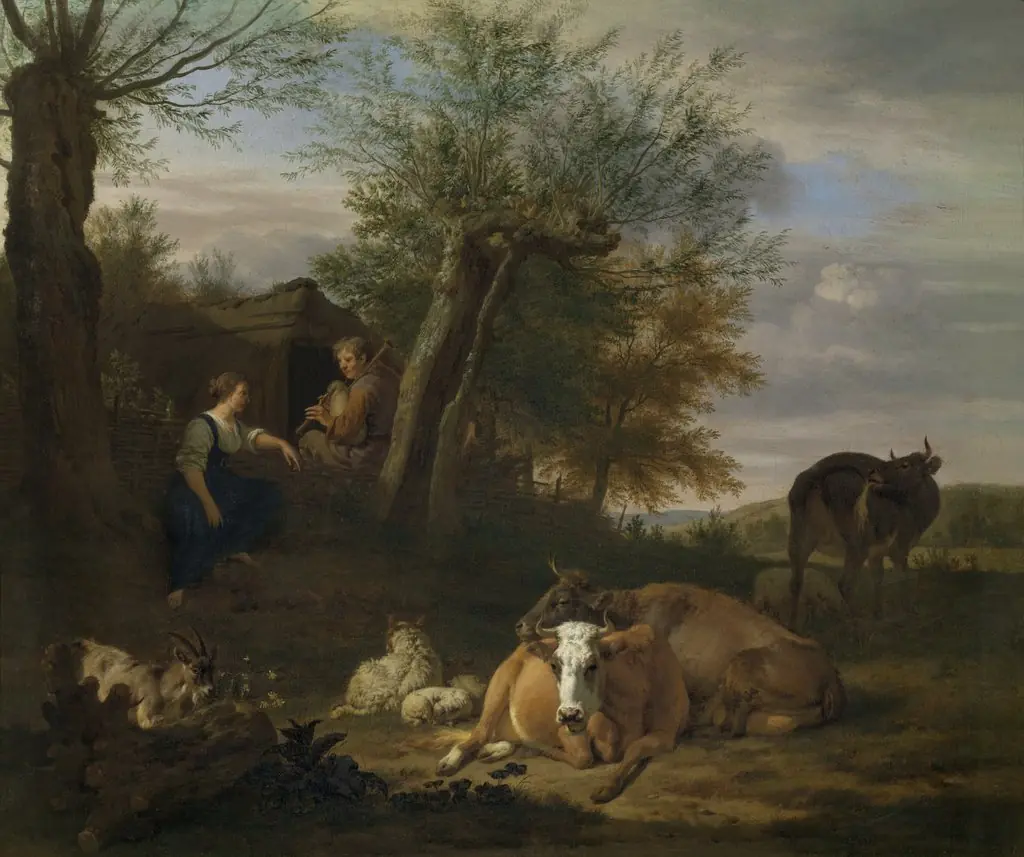
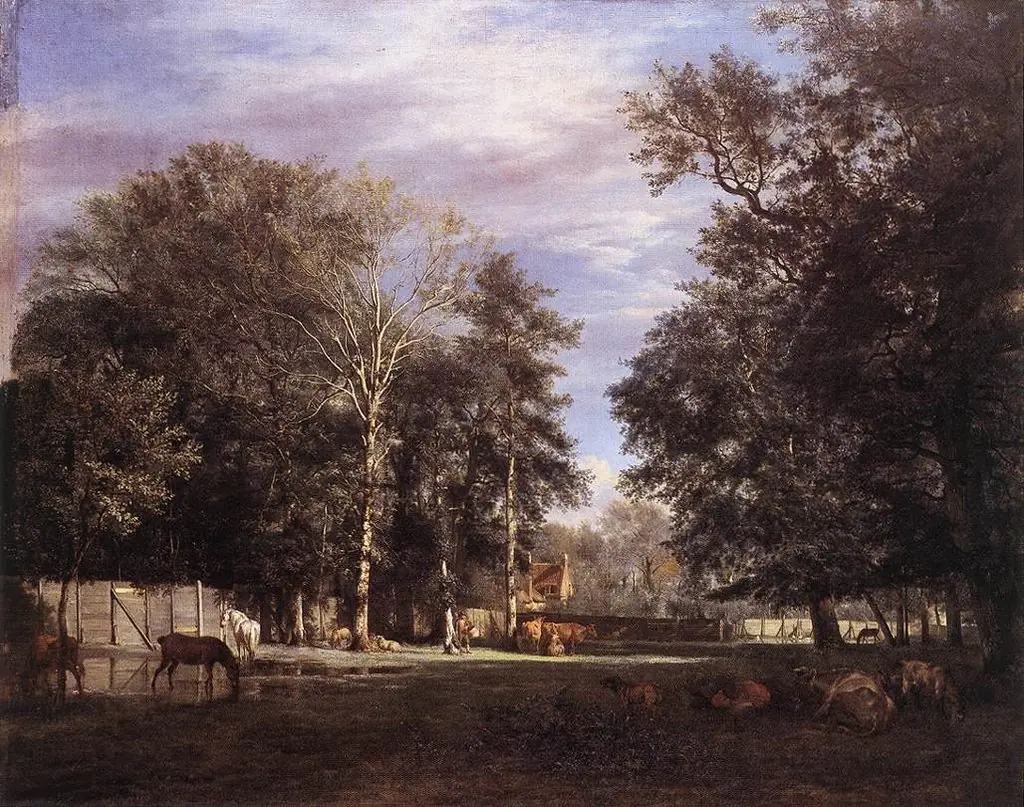
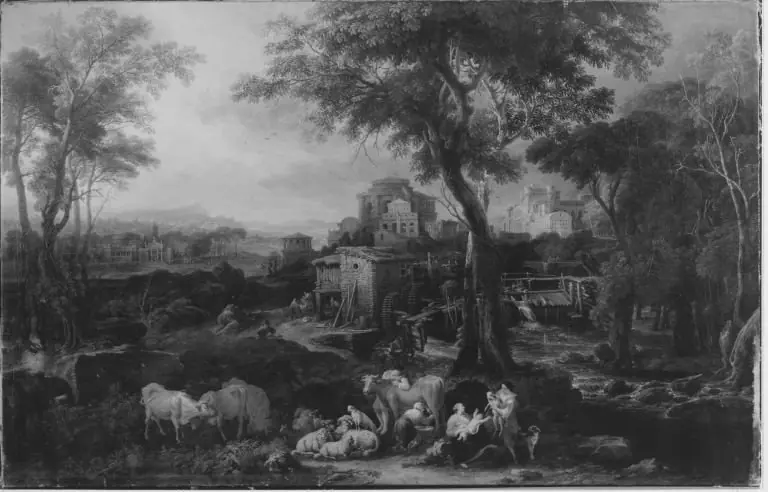
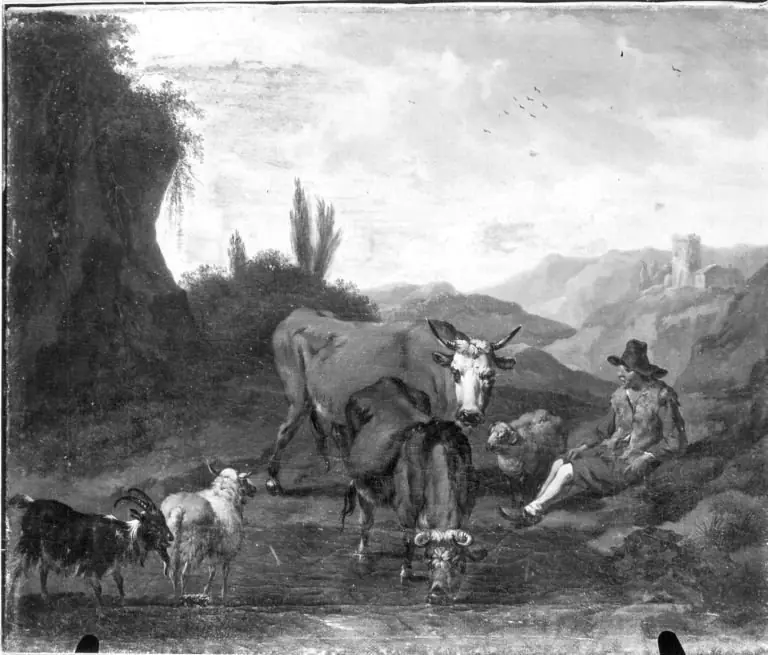
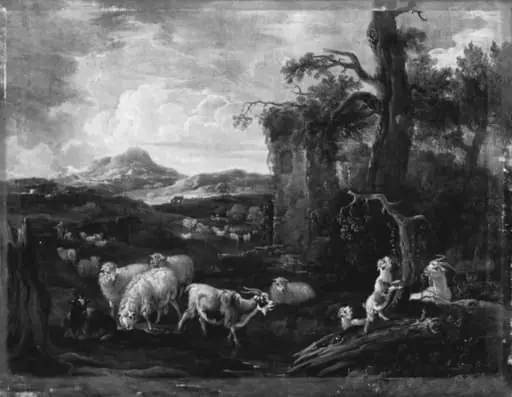
Herde und Hirten am Brunnen (Flocks and Shepherds at the Fountain), painted by Adriaen van de Velde in 1670, is a quintessential example of Dutch Golden Age landscape painting. The work depicts a pastoral scene where shepherds and their livestock gather around a stone fountain in a sunlit clearing. Compositionally, the artist arranges the figures and animals in the foreground to create a sense of depth, leading the viewer's eye toward a horizon of rolling hills and scattered trees under a vast, cloud-streaked sky. A prominent white cow anchors the left side of the foreground, while a shepherd tends to a small fire nearby, adding a narrative element of daily rural life. Van de Velde, renowned for his mastery in integrating figures into landscapes, executes the scene with delicate brushwork and a refined palette that captures the specific quality of Dutch light. Created near the end of the artist's short life, this painting reflects his mature style, characterized by a harmonious balance between human activity and the natural environment. The work exemplifies the 17th-century Dutch interest in idealized rural tranquility and the precise observation of nature, securing its place as a significant contribution to the genre of animal and landscape painting.
Subject & Meaning
The work illustrates everyday life in the countryside, emphasizing the relationship between humans, animals, and the land. The central stone structure, possibly a memorial or communal well, serves as a focal point for the shepherds and their herd, suggesting themes of community, labor, and the quiet rhythms of agrarian existence.
Technique & Style
Van de Velde employs a restrained palette and careful modulation of light and shadow to model forms and create depth. The chiaroscuro effect subtly highlights the white cow and the stone monument, while the atmospheric perspective softens distant hills, demonstrating the artist’s skill in rendering texture and space within a naturalistic framework.
History & Provenance
Created in the late Dutch Golden Age, the painting entered the collection of the Alte Pinakothek in Munich, where it remains on display. Its attribution to van de Velde aligns with his known oeuvre of pastoral landscapes, and the work contributes to the museum’s representation of 17th‑century Dutch genre painting.
Artist & collection

Artist
Adriaen van de Velde, was a Dutch painter, draughtsman, and print artist. His favorite subjects were landscapes with animals and genre scenes. He also painted beaches, dunes, forests, winter scenes, portraits in…