Artwork
Crucifixion
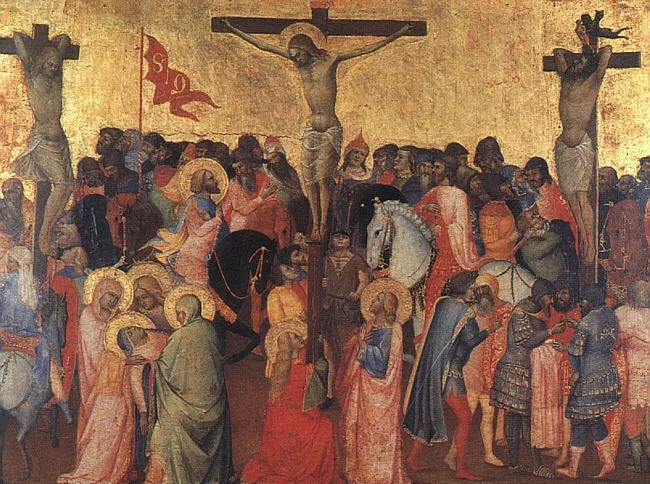
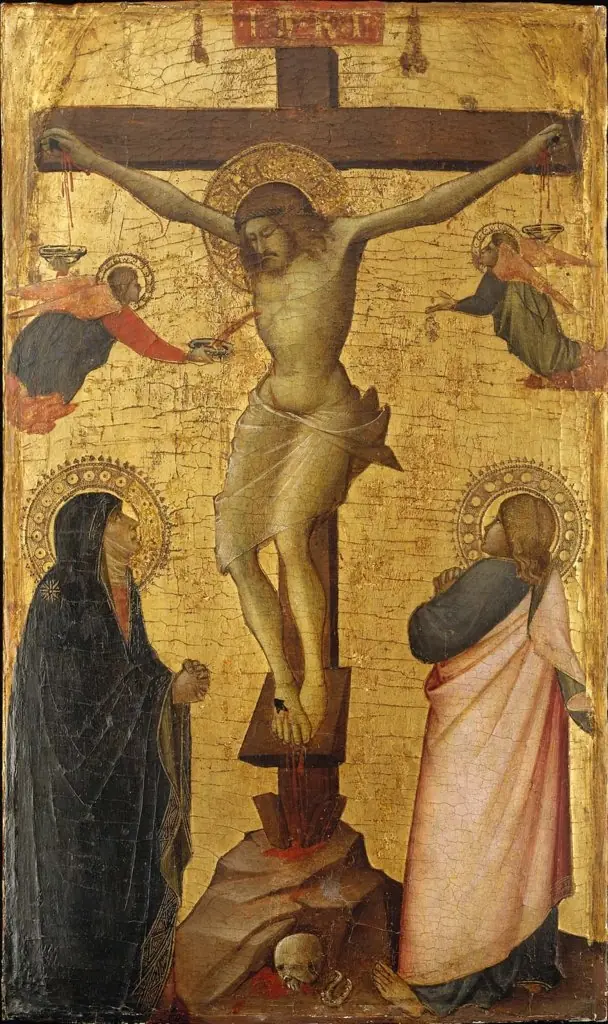
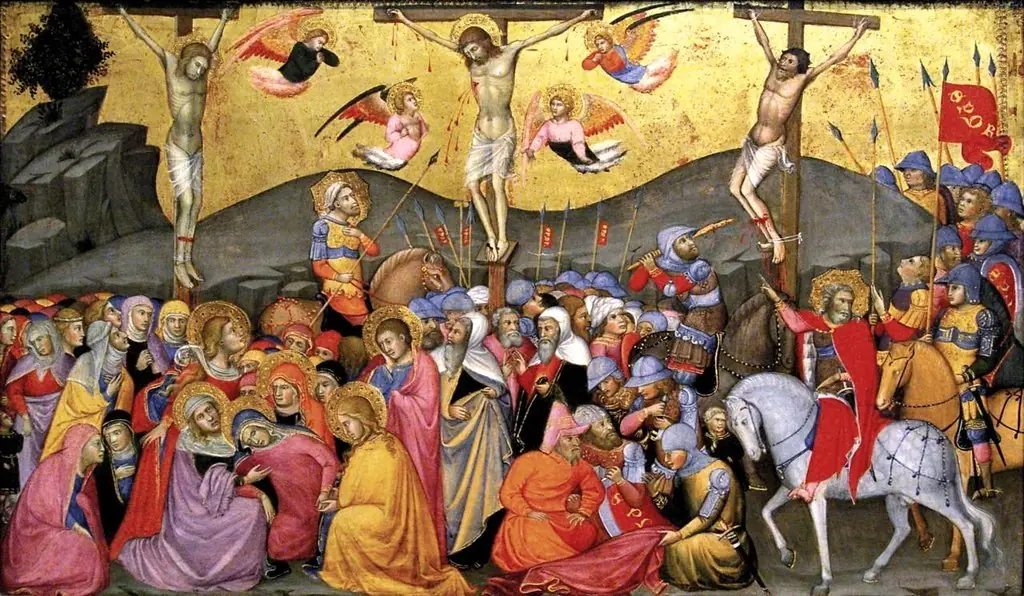
Crucifixion is a tempera painting by the Byzantine icon painting artist Agnolo Gaddi. It dates from 1396 and is held in the collection of the Uffizi Gallery.
About this work
Overview
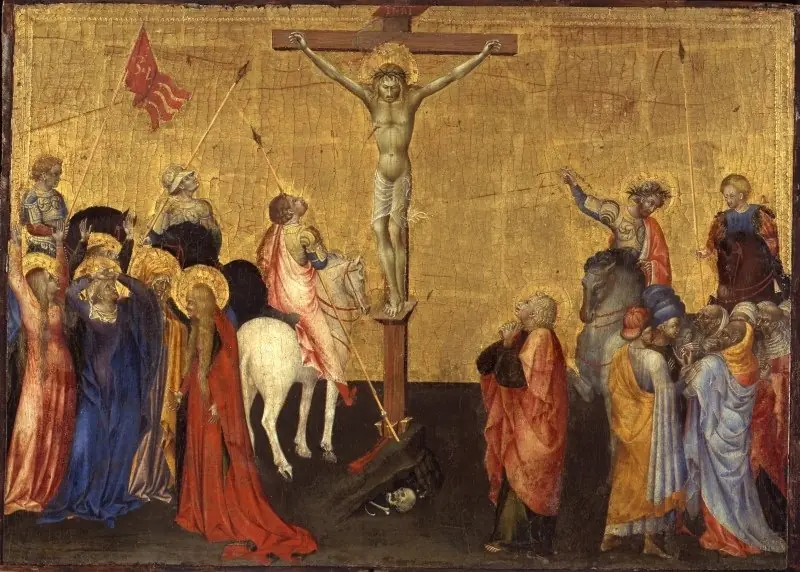
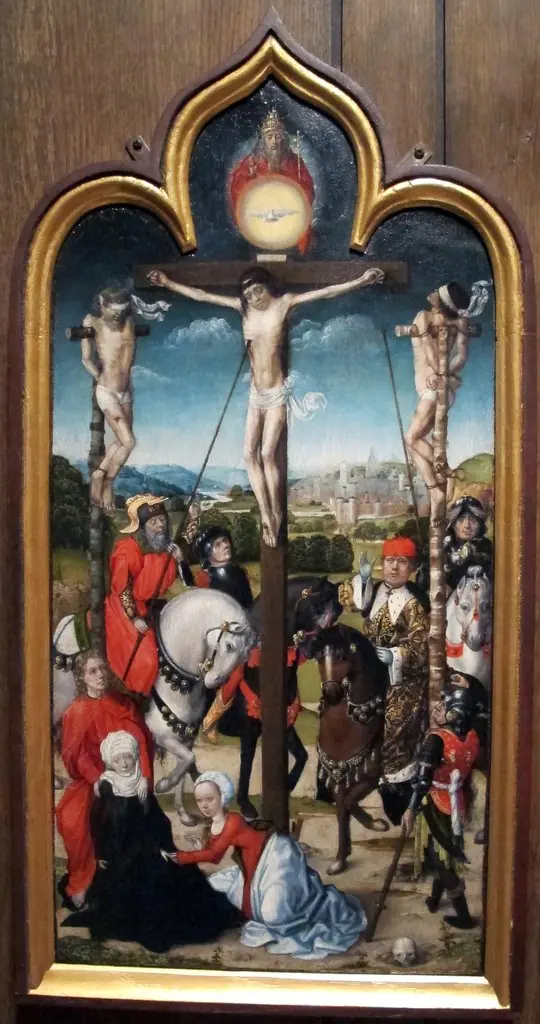
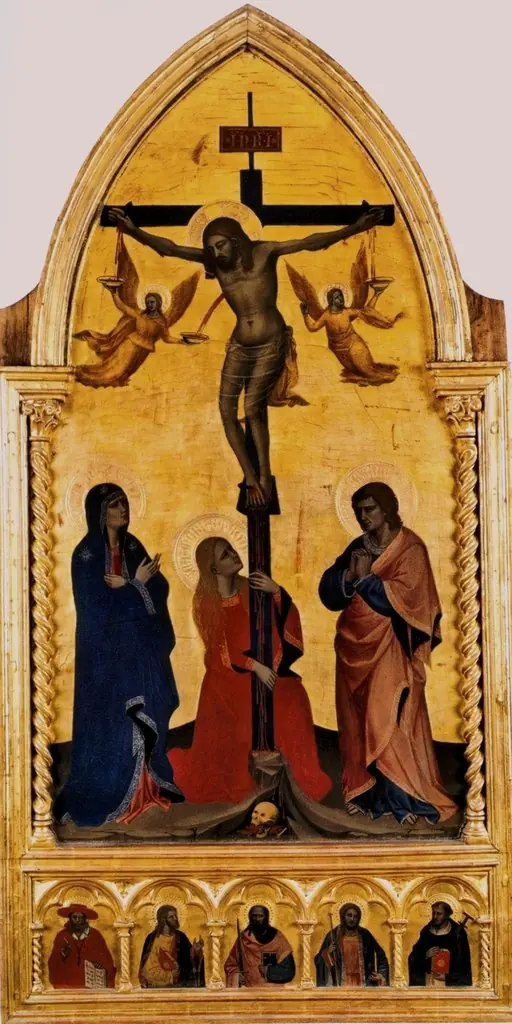
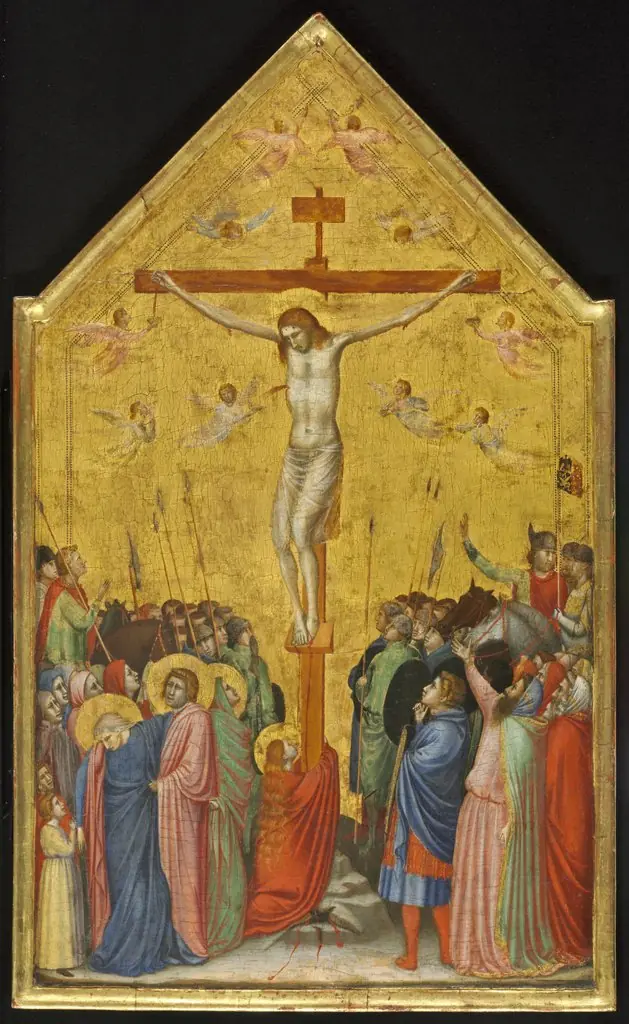
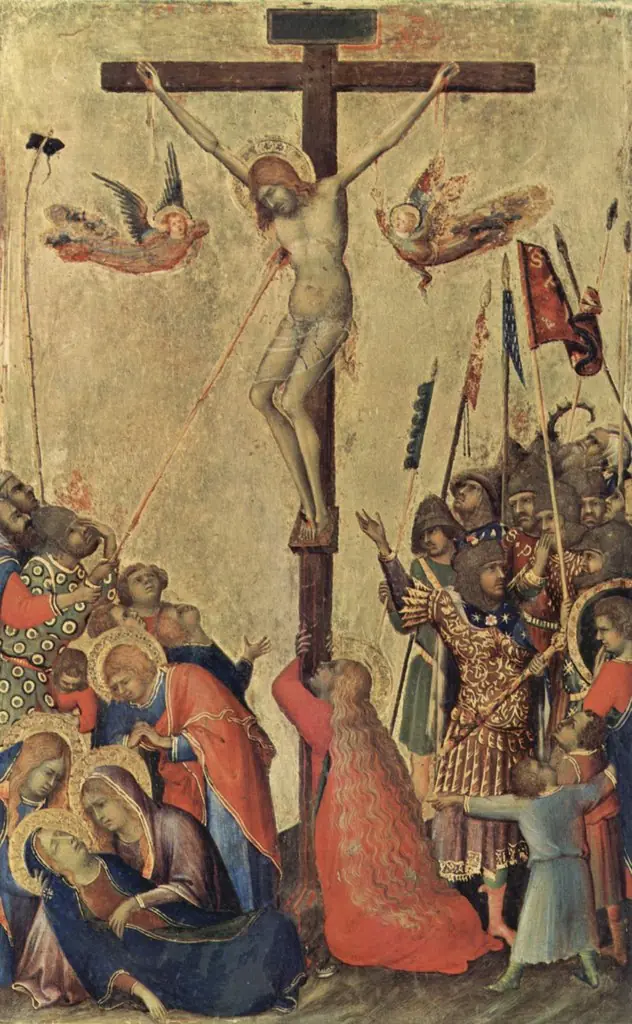
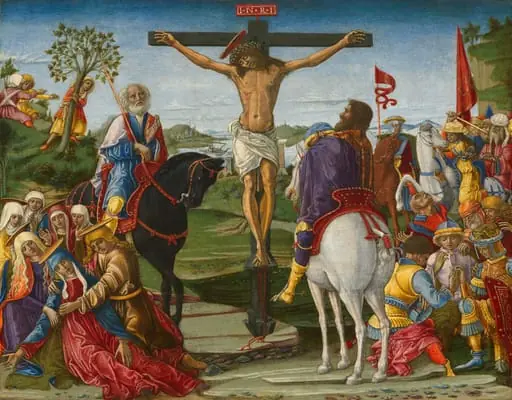
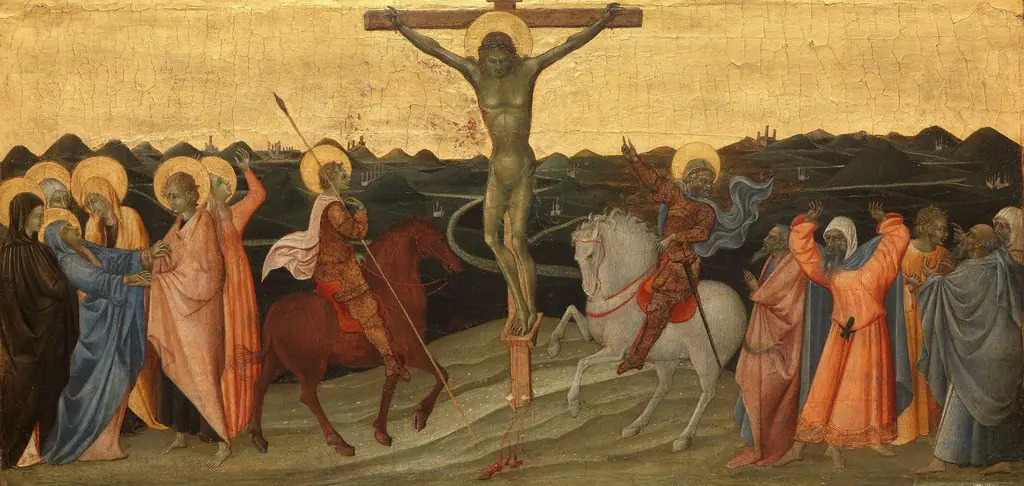
Created in 1396 by Florentine artist Agnolo Gaddi, this tempera panel presents a conventional depiction of the Crucifixion. The central figure of Christ on the cross is surrounded by a dense assembly of mourners and onlookers, rendered against a gold ground that emphasizes the sacred narrative.
Subject & Meaning
The composition follows Byzantine iconographic conventions, placing the Virgin Mary and two additional figures—a man and a woman—among the grieving crowd. Their solemn gestures and clustered arrangement convey collective sorrow and devotion, reinforcing the theological focus on Christ’s sacrifice.
Technique & Style
Executed in egg tempera, the painting displays the flat, linear qualities typical of late medieval art. Figures appear rigid and lack naturalistic modeling, while the palette is dominated by earthy browns, deep reds, and gold, punctuated by a vivid red banner bearing white lettering.
History & Provenance
Agnolo Gaddi, the son of Taddeo Gaddi and a principal successor to Giotto’s workshop, completed the work toward the end of his career. The panel eventually entered the collection of the Uffizi Gallery in Florence, where it remains on display.
Context
The piece reflects the transitional period in Florentine painting when the Giotto tradition still prevailed but was giving way to emerging naturalism. Gaddi’s adherence to established iconography and his use of tempera illustrate the lingering influence of Byzantine aesthetics in late 14th‑century Italy.
Artist & collection
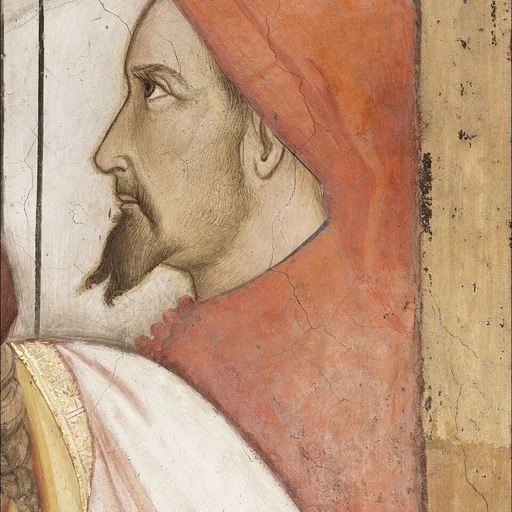
Artist
Agnolo Gaddi (c.1350–1396) was an Italian painter. He was born and died in Florence, and was the son of the painter Taddeo Gaddi, who was himself the major pupil of the Florentine master Giotto. Agnolo was a painter…