Artwork
Crucifixion
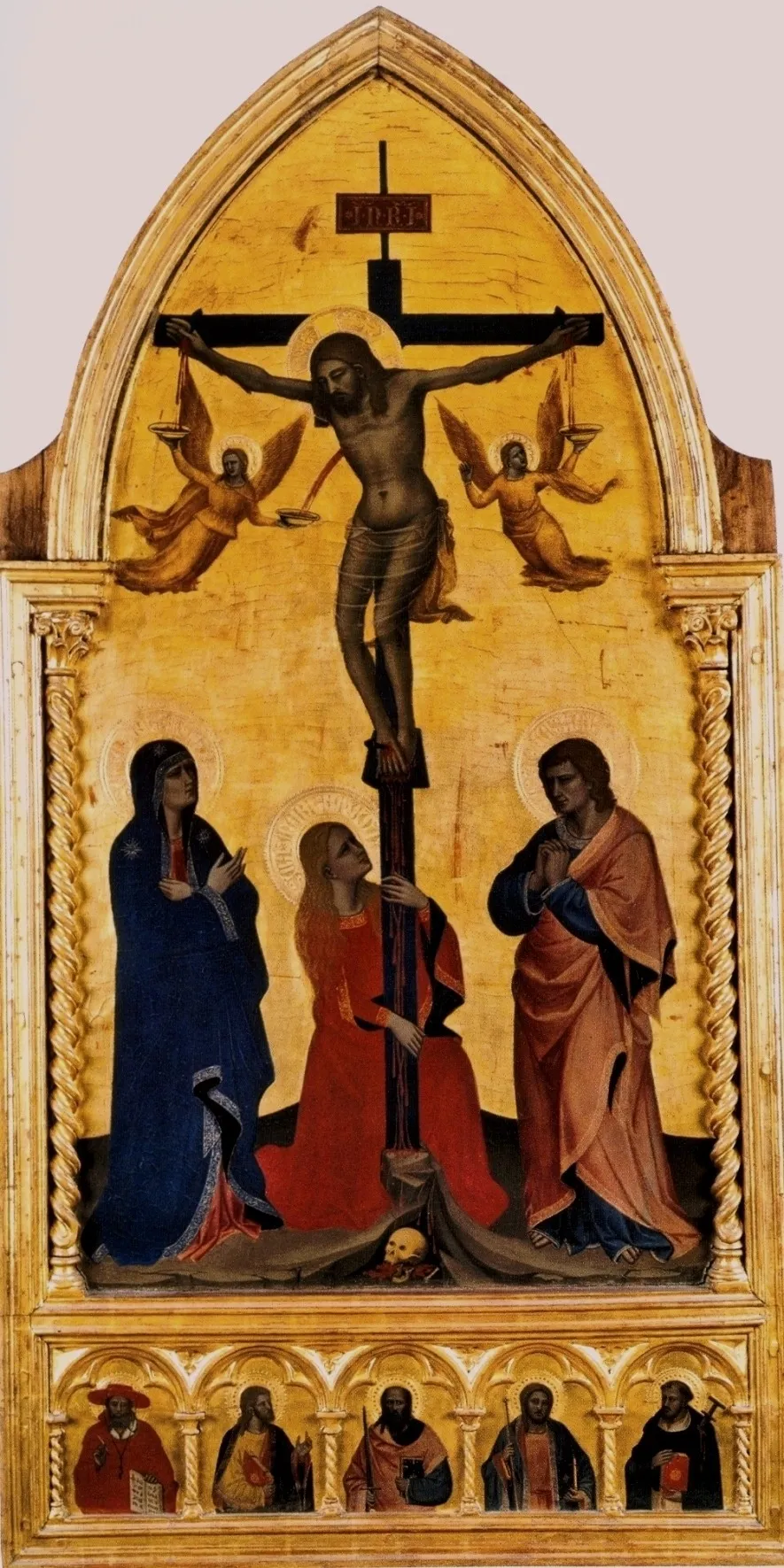
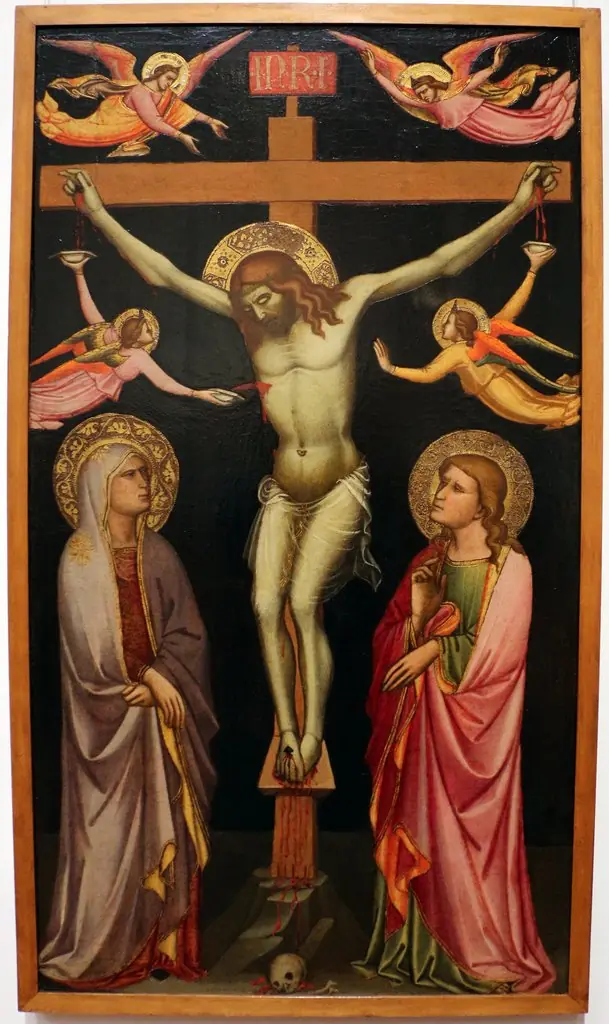
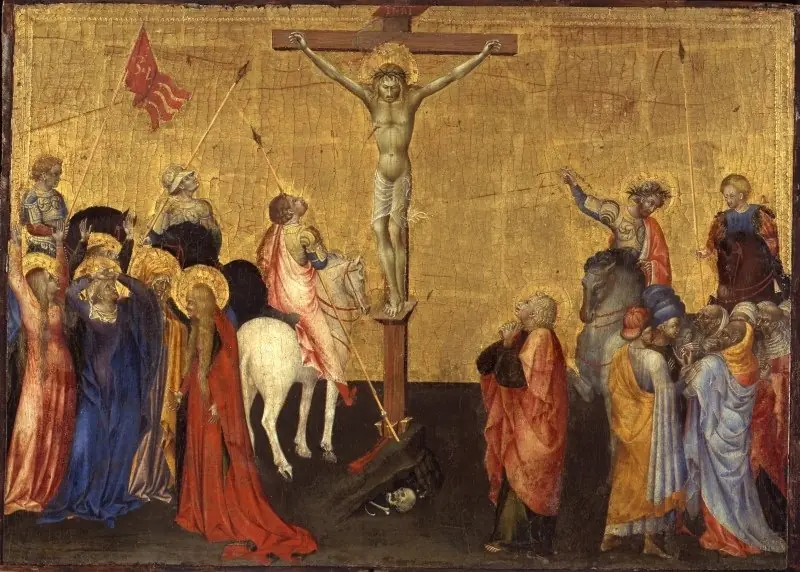
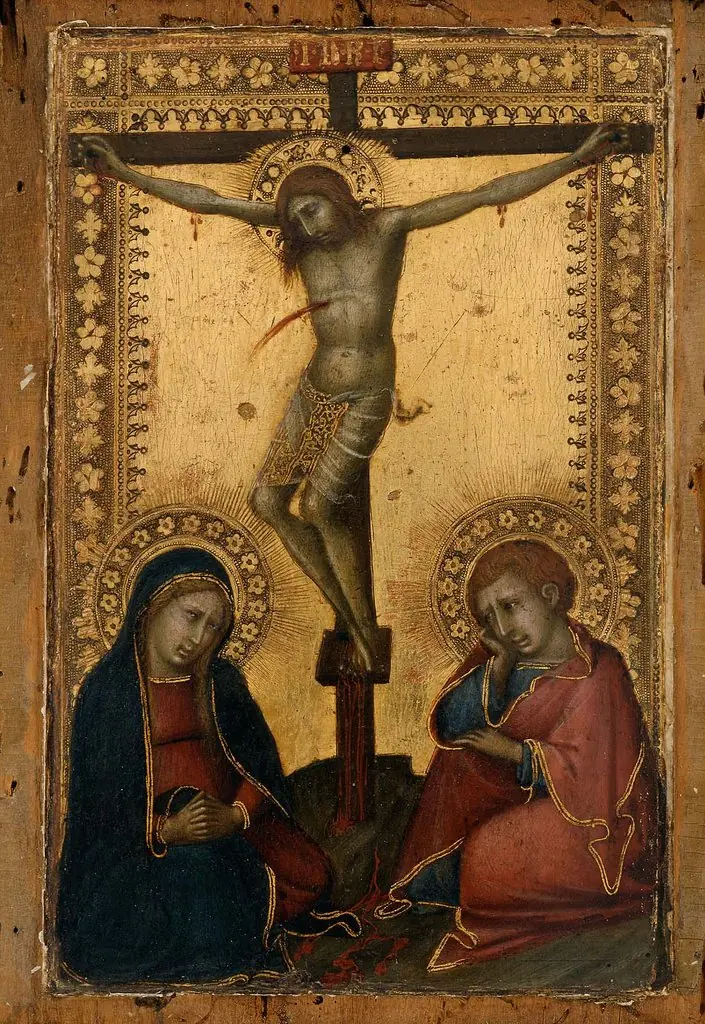
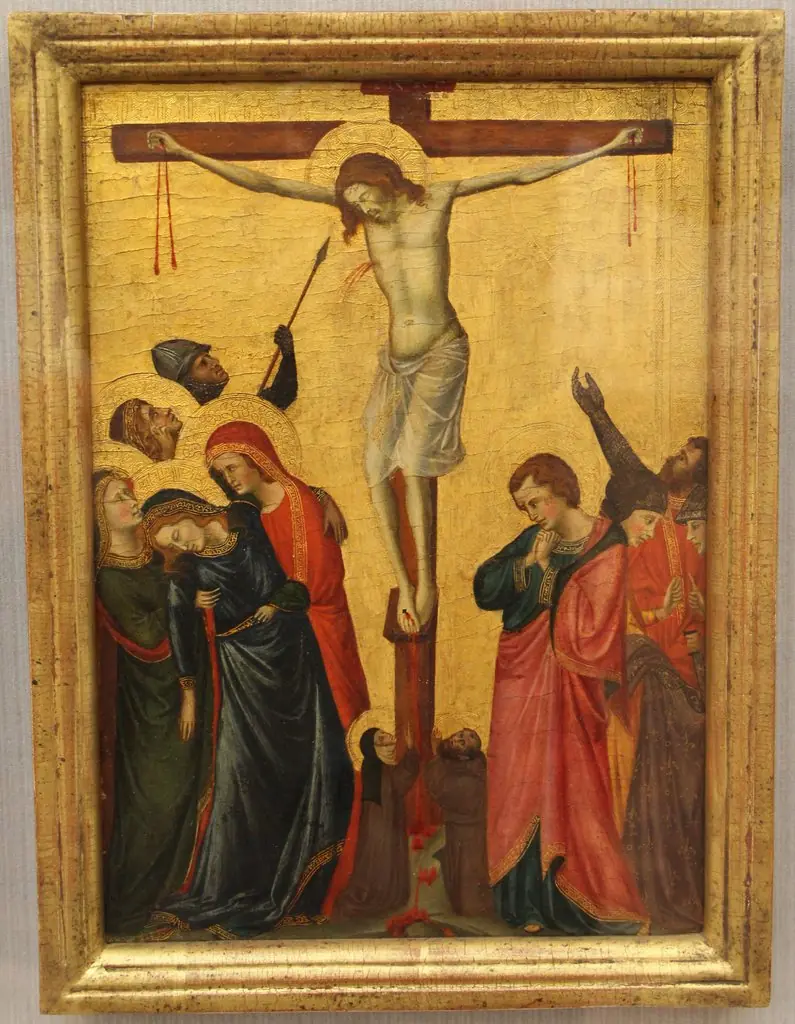
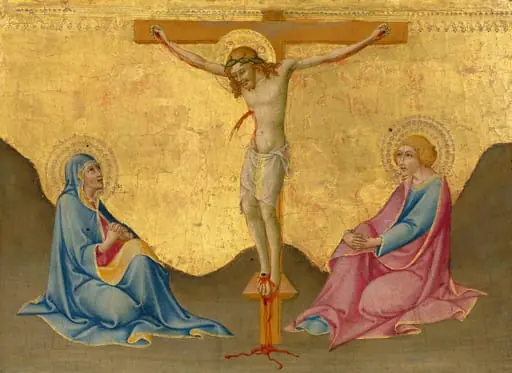
Crucifixion is a tempera painting by the Byzantine icon painting artist Nardo di Cione. It dates from 1350 and is held in the collection of the Uffizi Gallery.
About this work
Overview
Nardo di Cione's Crucifixion is a tempera painting from circa 1350, depicting the central event of Christian faith. The work is part of the Uffizi Gallery's collection.
Subject & Meaning
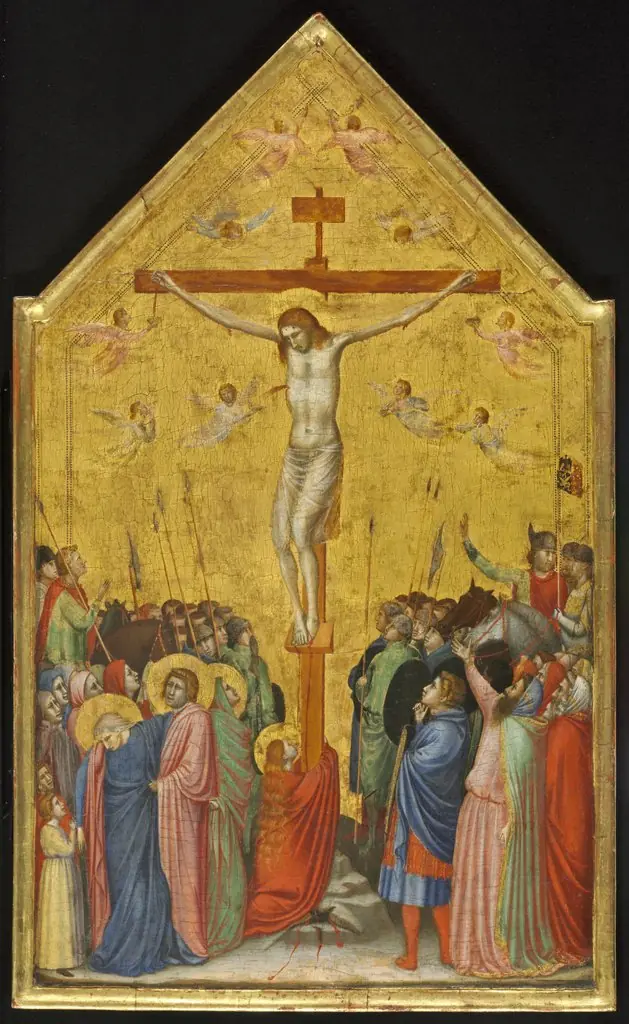
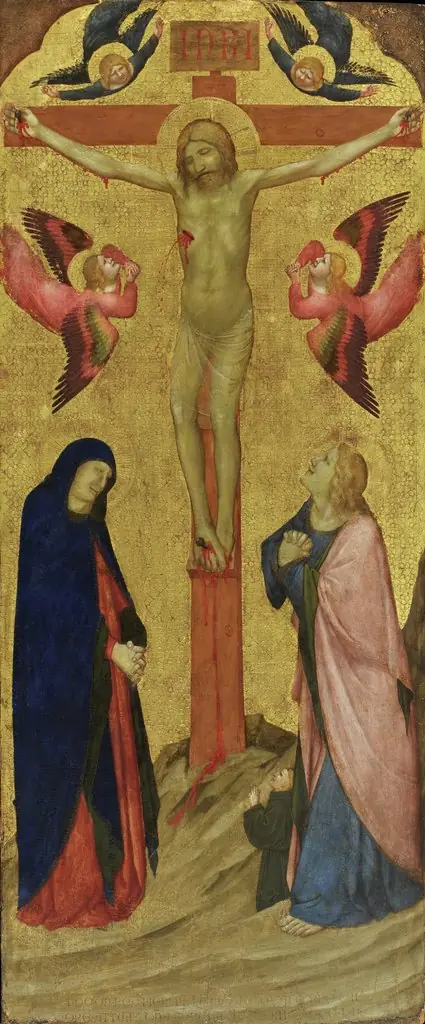
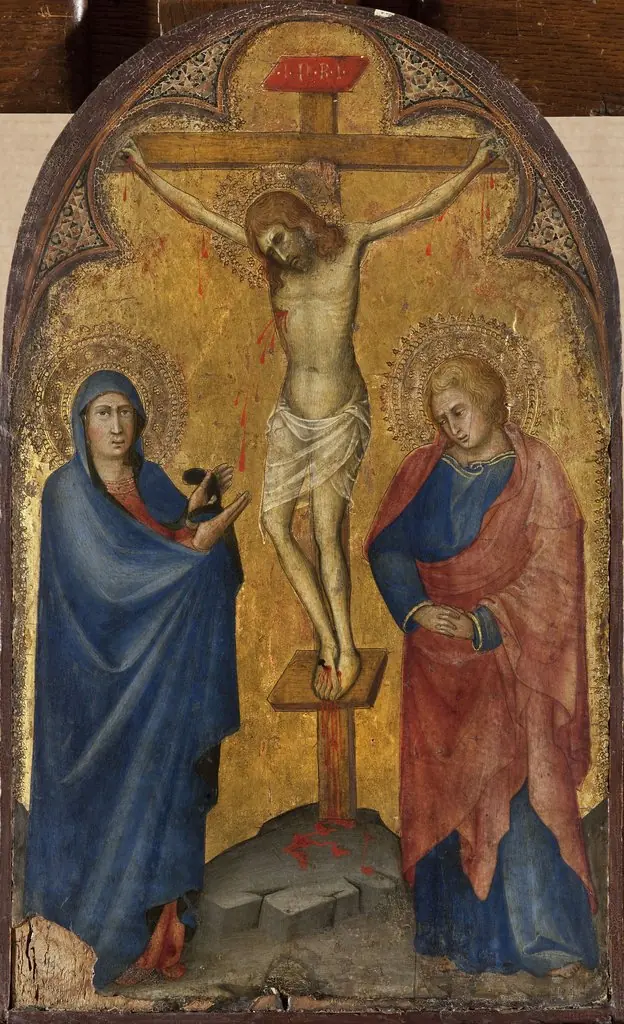
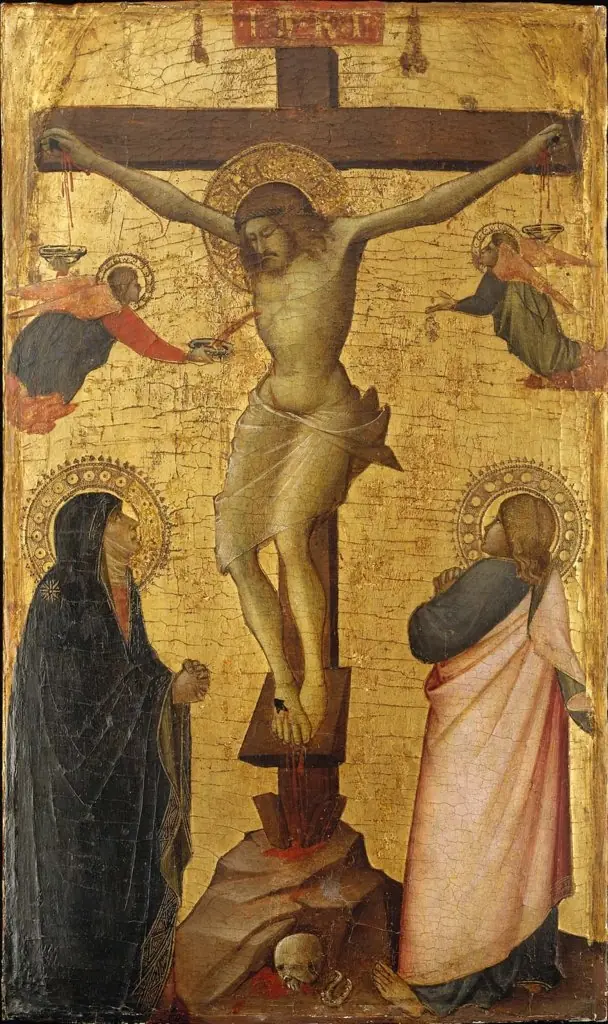
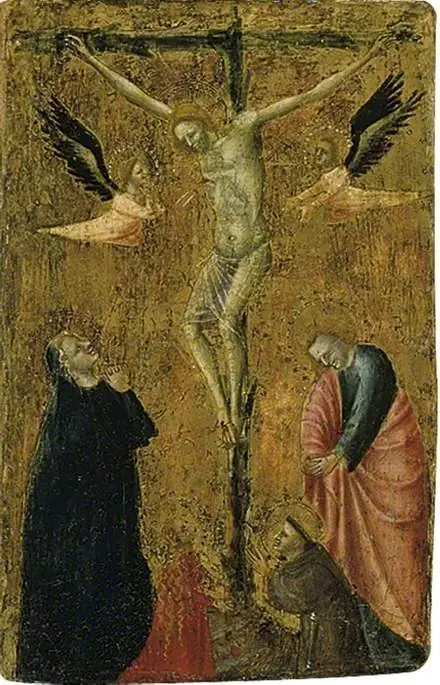
The painting focuses on the crucified Jesus Christ, surrounded by key figures: a woman in blue (possibly Mary, though not explicitly identified), a kneeling woman in red (often associated with Mary Magdalene), and a man in brown. Above, two angels hold unspecified objects, while six smaller figures in arches below display various items, collectively conveying a narrative of devotion and mourning.
Technique & Style
Executed in tempera, the painting showcases a traditional medieval technique. Characteristic of its time, the work features a gold background and intricately detailed robes, contributing to its rich, antiquated aesthetic.
History & Provenance
Created around 1350, the Crucifixion is attributed to Nardo di Cione. Its current location is the Uffizi Gallery, though the full provenance history is not detailed here.
Artist & collection


![Saint John the Evangelist [right panel], by Nardo di Cione](https://artifactworldgallery.com/img/nardo-di-cione--saint-john-the-evangelist-right-panel--fdd92c8ff7afceaf-w320.webp) Saint John the Evangelist [right panel]
Saint John the Evangelist [right panel]![Saint Peter [left panel], by Nardo di Cione](https://artifactworldgallery.com/img/nardo-di-cione--saint-peter-left-panel--df6a39da35a16159-w320.webp) Saint Peter [left panel]
Saint Peter [left panel]![Madonna and Child, with the Man of Sorrows [middle panel], by Nardo di Cione](https://artifactworldgallery.com/img/nardo-di-cione--madonna-and-child-with-the-man-of-sorrows-middle-panel--5ab4de48523071e4-w320.webp) Madonna and Child, with the Man of Sorrows [middle panel]
Madonna and Child, with the Man of Sorrows [middle panel]![Madonna and Child, with Saints Peter and John the Evangelist, and Man of Sorrows [entire triptych], by Nardo di Cione](https://artifactworldgallery.com/img/nardo-di-cione--madonna-and-child-with-saints-peter-and-john-the-evangelist--a57f261be4c5dd48-w320.webp) Madonna and Child, with Saints Peter and John the Evangelist, and Man of Sorrows [entire triptych]
Madonna and Child, with Saints Peter and John the Evangelist, and Man of Sorrows [entire triptych]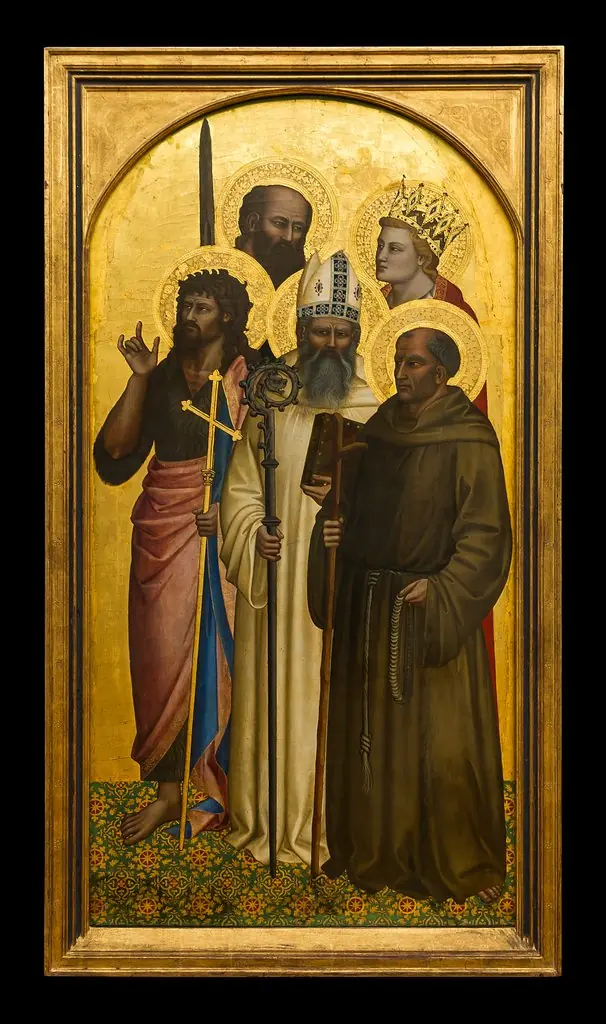 the Saints John the Baptist, Egidius, Gerard of Villamagna, Paul and Catherine (or Miniato)
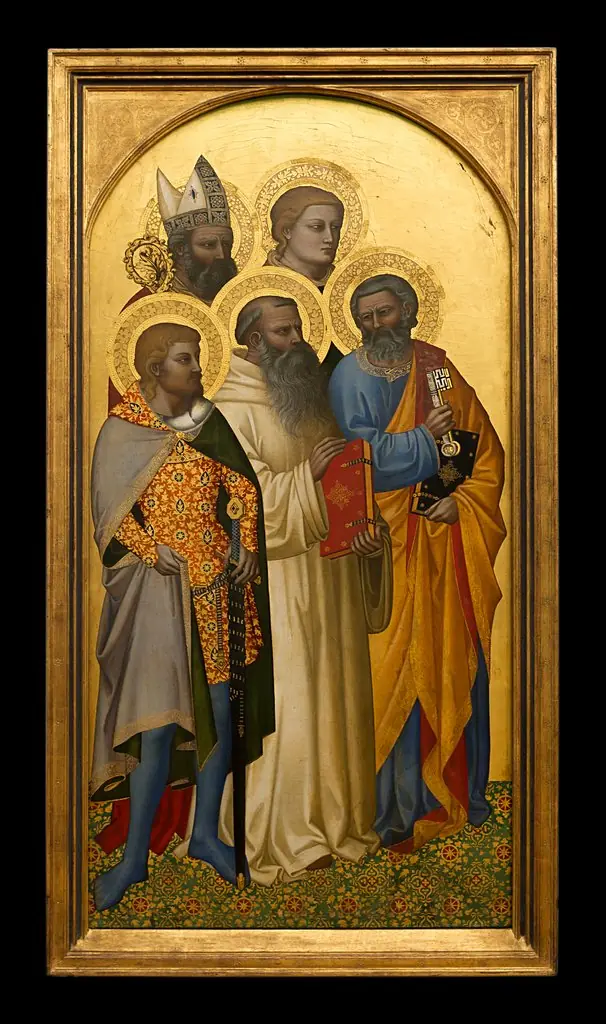 the Saints Peter, Benedict, Julian (?), Stephan (?), and a holy bishop (Nicholas of Bari?)
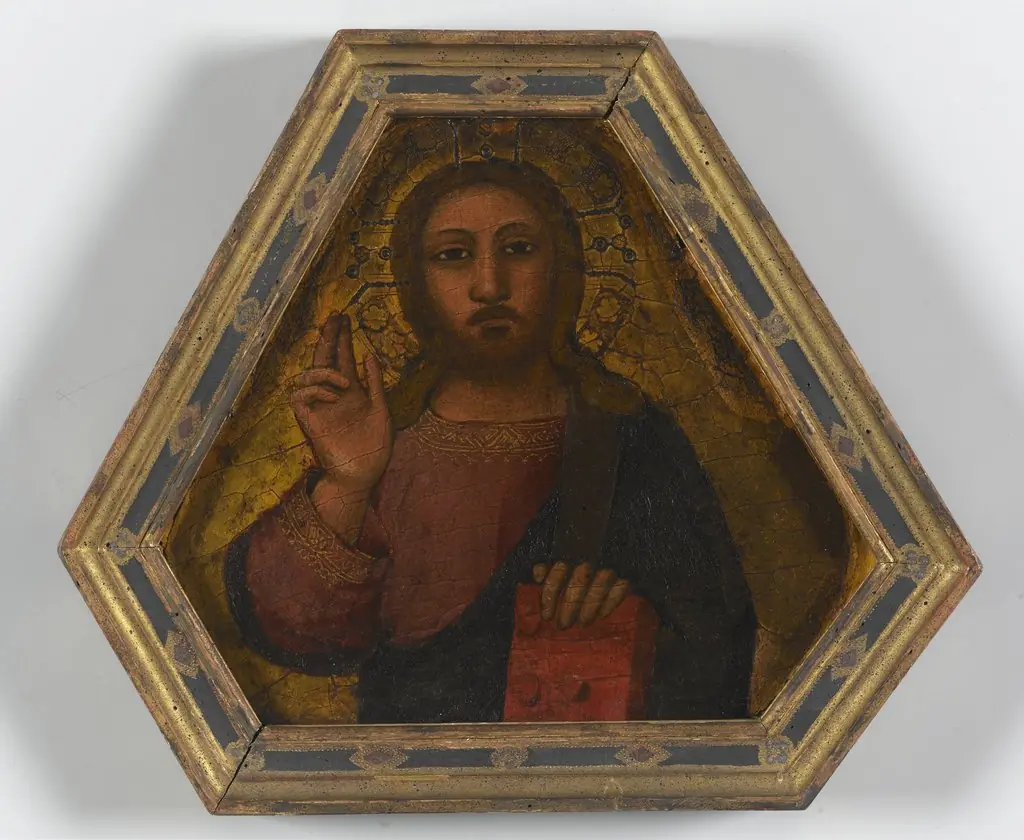 Christ Blessing