Artwork
Les Plaisirs de la chasse: Sommeil
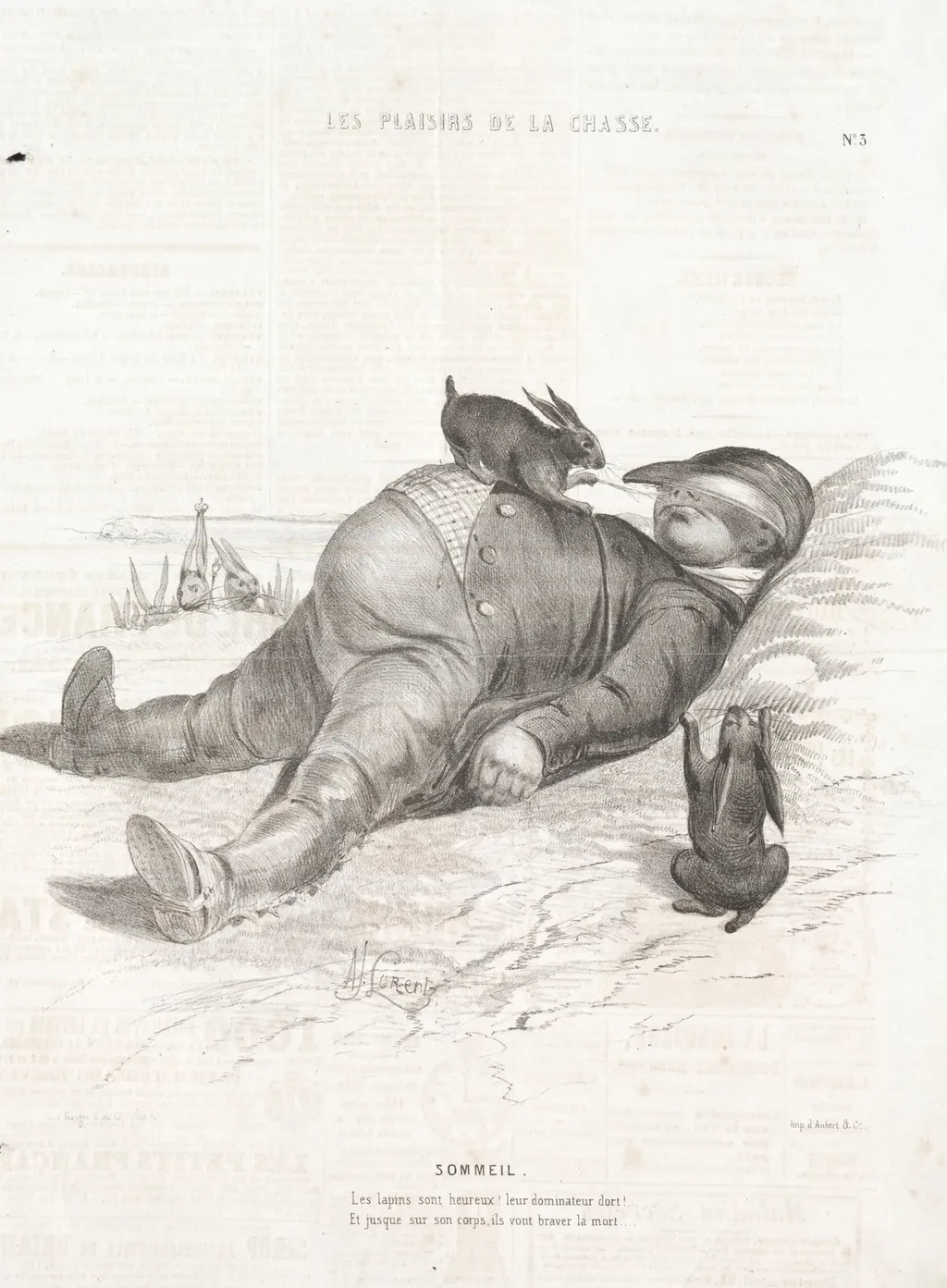
Les Plaisirs de la chasse: Sommeil is a print by the Romanticist artist Alade Joseph Lorentz. It dates from 1842 and is held in the collection of the Cleveland Museum of Art.
About this work
Overview
Created in 1842 by Alade Joseph Lorentz, this print is part of a series titled Les Plaisirs de la chasse. It depicts a moment of stillness rather than action, contrasting the expected energy of a hunt with the stillness of exhausted hunters. The work is held in the collection of The Cleveland Museum of Art and serves as a quiet, ironic commentary on the romanticized pursuit of game.
Subject & Meaning
The title, referencing the joys of hunting, is subverted by the scene’s inaction, highlighting the absurdity or fatigue behind the ritual.
Two hunters lie asleep on the ground, one sprawled with legs raised, the other slumped across his companion’s chest. A rabbit rests calmly on the first man’s abdomen, its presence suggesting indifference or mockery. The title, referencing the joys of hunting, is subverted by the scene’s inaction, highlighting the absurdity or fatigue behind the ritual. The rabbit, unthreatened, becomes an unintended witness to the hunters’ vulnerability.
Technique & Style
Rendered in ink with delicate linework, the composition relies on subtle tonal contrasts and minimal detail to suggest depth. Background elements—tents, a distant church steeple—are lightly sketched, drawing focus to the figures and the rabbit. The loose, almost sketch-like quality enhances the informal, transient nature of the moment, aligning with 19th-century drawing practices that valued spontaneity over finish.
History & Provenance
The print was produced in 1842 as part of a thematic series by Alade Joseph Lorentz. It entered the collection of The Cleveland Museum of Art through documented acquisition, though its earlier ownership history remains largely unrecorded. Its survival as a single sheet among a larger set suggests it was valued for its narrative wit rather than its technical refinement.
Context
In the context of Romantic-era art, this work reflects a growing interest in human frailty and irony over heroic idealism. While many artists of the period dramatized nature and labor, Lorentz chose to depict the quiet collapse of effort. The scene aligns with broader cultural shifts that questioned the nobility of traditional pursuits, using humor to reveal their underlying absurdity.
Legacy
Though not widely reproduced or studied, the print endures as a quiet example of satirical observation in 19th-century printmaking. Its understated irony and focus on the mundane offer a counterpoint to grander Romantic narratives. It remains a subtle testament to how artists used everyday moments to critique cultural assumptions without overt confrontation.
Artist & collection

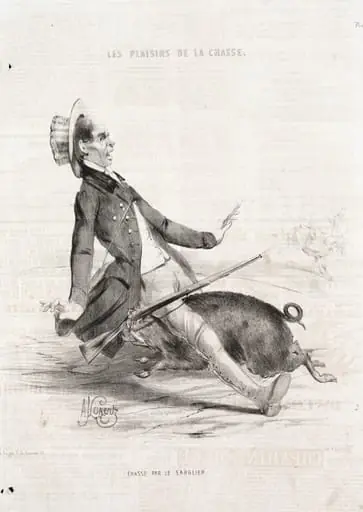 Les Plaisirs de la chasse: Chasse par le sanglier
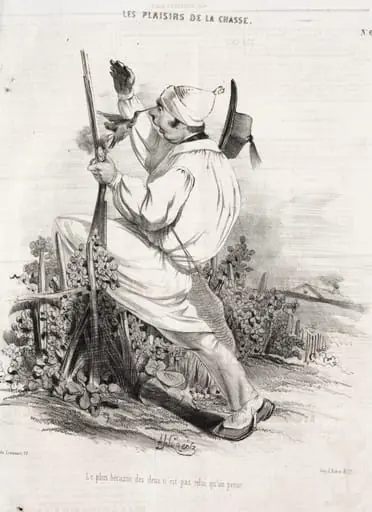 Les Plaisirs de la chasse: Le plus bécasse des deux n'est pas celui qu'on pense
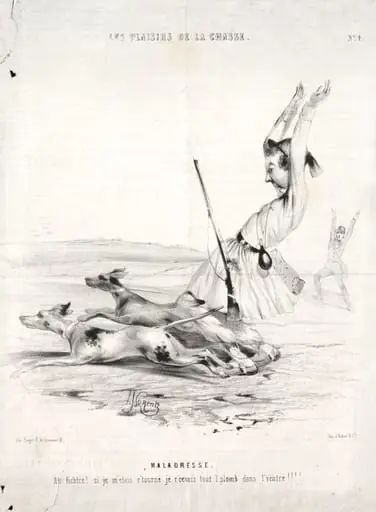 Les Plaisirs de la chasse: Maladresse
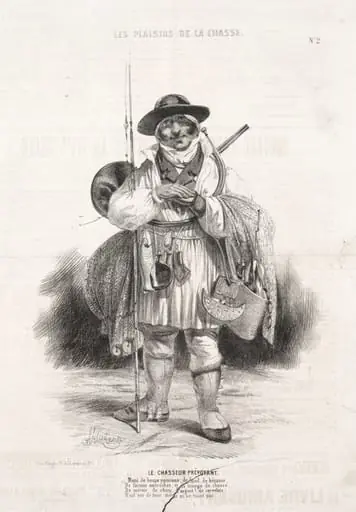 Les Plaisirs de la chasse: Le Chasseur prévoyant
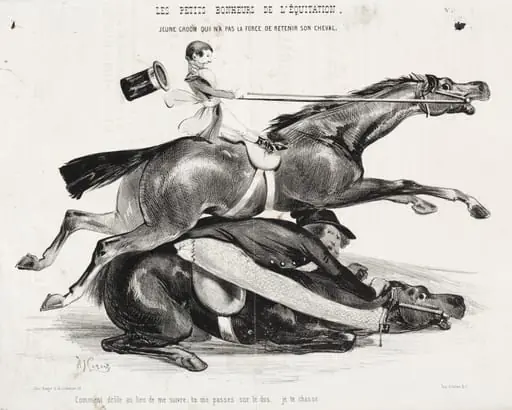 Les petits bonheurs de l'équitation: Jeune Groom qui n'a pas la force de retenir son cheval
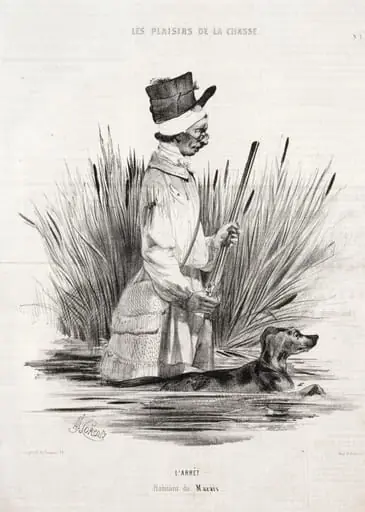 Les Plaisirs de la chasse: L'Arrêt
 Merci! Ce monsieur m'invite a chasser ...
 Lithographic Sketches: It is the End of the World! (frontispiece)
 Et plus un grain de poudre! ...
 Inconvénient pour un propriétaire de ne pas...
 Gazan
Gazan Les chasses ... ne se ressemblent pas
 Ah! Ciel maman maman ... Ah! Dieu ma fille ...
 Un Pauvre père de famille qui...
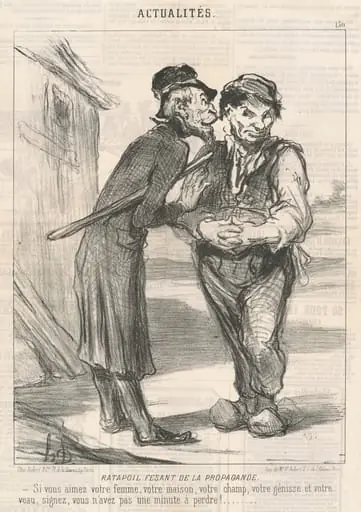 Ratapoil Fesant de la Propaganda: Si vous aimez votre femme, votre maison, votre champ, votre génisse et votre veau, signez, vous n'avez pas une minute de perdre!
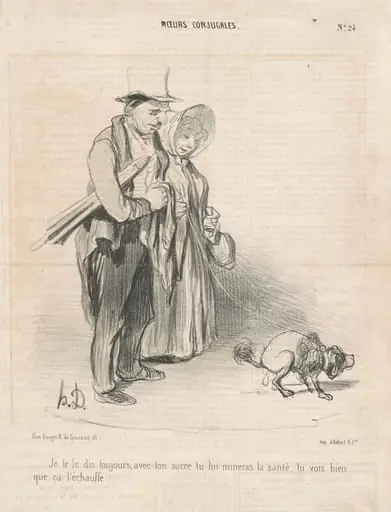 Je te le dis toujours, avec ton sucre...
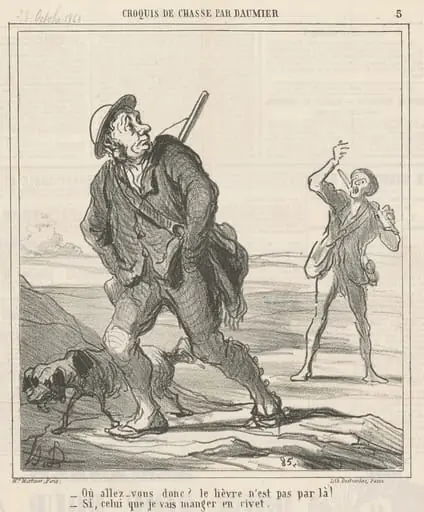 Ou allez-vous donc?
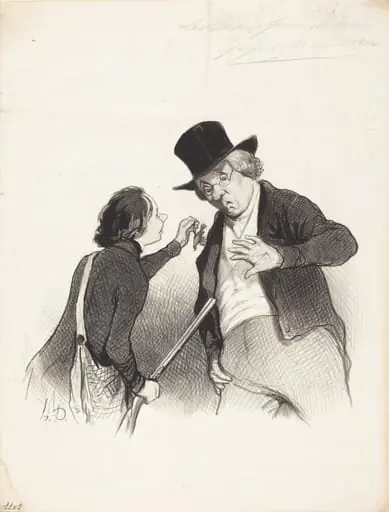 Un Début a la chasse