Artwork
Les Plaisirs de la chasse: Chasse par le sanglier
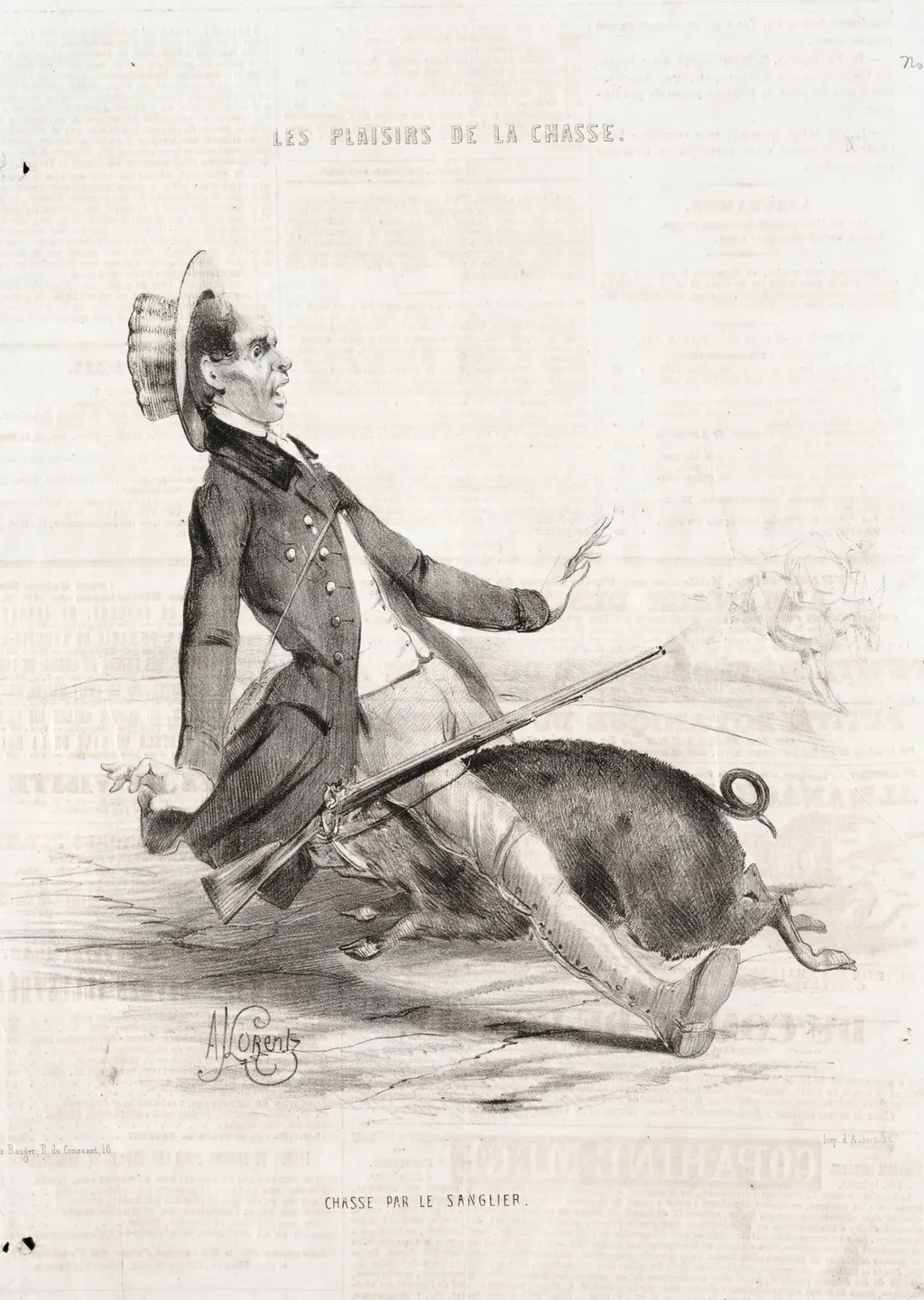
Les Plaisirs de la chasse: Chasse par le sanglier is a print by the Romanticist artist Alade Joseph Lorentz. It dates from 1842 and is held in the collection of the Cleveland Museum of Art.
About this work
Overview
Created in 1842 by Alade Joseph Lorentz, this print is part of a series titled Les Plaisirs de la chasse. It depicts an unconventional hunting scene in which a hunter rides a wild boar, rifle in hand. The work is held in the collection of The Cleveland Museum of Art and reflects the artist’s engagement with dramatic, action-oriented themes common in mid-19th-century European printmaking.
Subject & Meaning
The image portrays a hunter astride a charging wild boar, a reversal of the typical predator-prey dynamic. This surreal encounter suggests a symbolic struggle between human will and untamed nature. The boar’s violent motion and the rider’s composed stance imply a tension between control and chaos, evoking themes of dominance, risk, and the allure of the wild.
Technique & Style
The print’s bold contours and energetic execution align with Romantic-era preferences for emotional immediacy over naturalistic detail.
Lorentz employs strong, fluid lines and exaggerated forms to convey motion and intensity. The contrast between the rider’s sharply defined attire and the boar’s textured, sprawling body enhances visual drama. The light background isolates the figures, focusing attention on their interaction. The print’s bold contours and energetic execution align with Romantic-era preferences for emotional immediacy over naturalistic detail.
History & Provenance
The print was produced in 1842 and entered the Cleveland Museum of Art’s collection through documented acquisition. While little is known about Lorentz’s broader career, this work survives as a rare example of his output. Its preservation suggests it was valued within 19th-century collections for its striking imagery and technical execution.
Context
Emerging during the height of Romanticism, the print reflects broader cultural fascinations with nature’s power and the individual’s confrontation with it. Hunting scenes were common in European art, but this depiction’s fantastical element—riding a boar—sets it apart, hinting at mythic or allegorical intent rather than literal documentation.
Legacy
Though not widely reproduced or studied, the print remains a distinctive example of Romantic-era printmaking that challenges conventional narratives of the hunt. Its unusual composition invites reinterpretation, contributing to ongoing discussions about how artists used fantasy to explore human-nature relationships in the 19th century.
Artist & collection

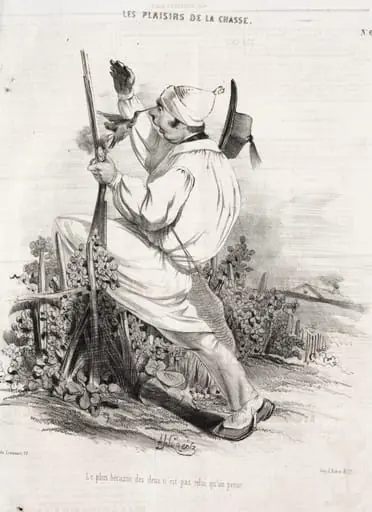 Les Plaisirs de la chasse: Le plus bécasse des deux n'est pas celui qu'on pense
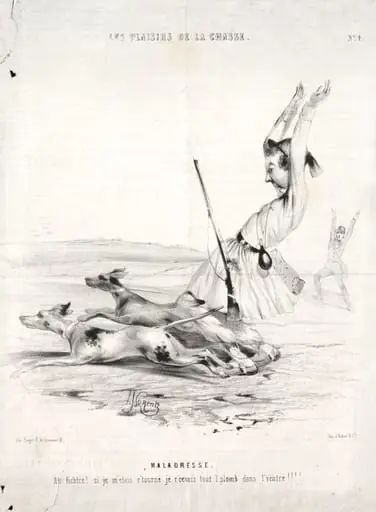 Les Plaisirs de la chasse: Maladresse
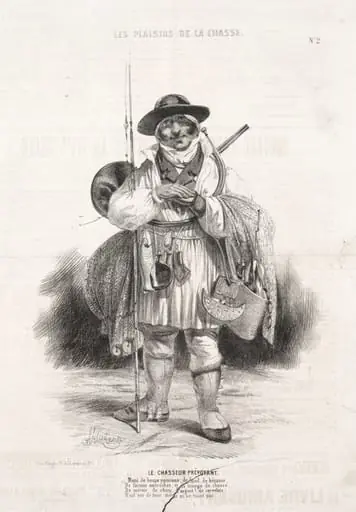 Les Plaisirs de la chasse: Le Chasseur prévoyant
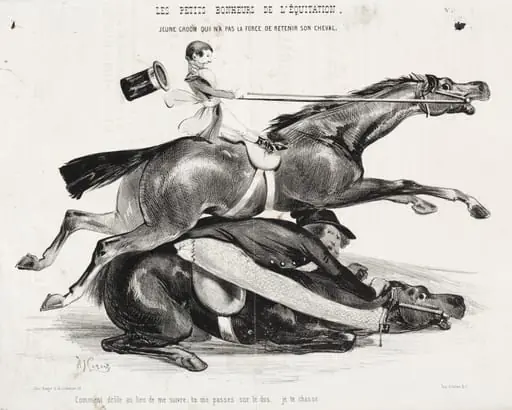 Les petits bonheurs de l'équitation: Jeune Groom qui n'a pas la force de retenir son cheval
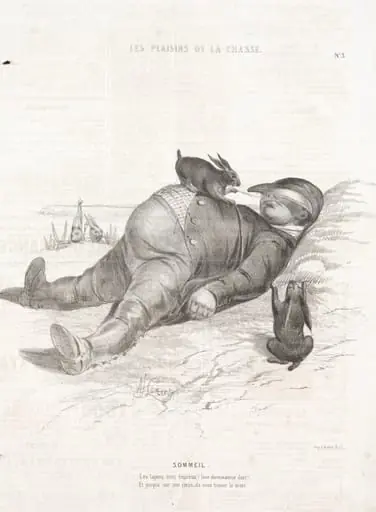 Les Plaisirs de la chasse: Sommeil
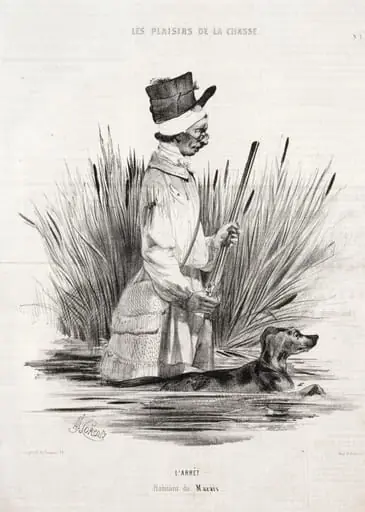 Les Plaisirs de la chasse: L'Arrêt