Artwork
St. Rocco Waterfall and Bridge at Tivoli (Cascata e Ponte di St. Rocco a Tivoli)
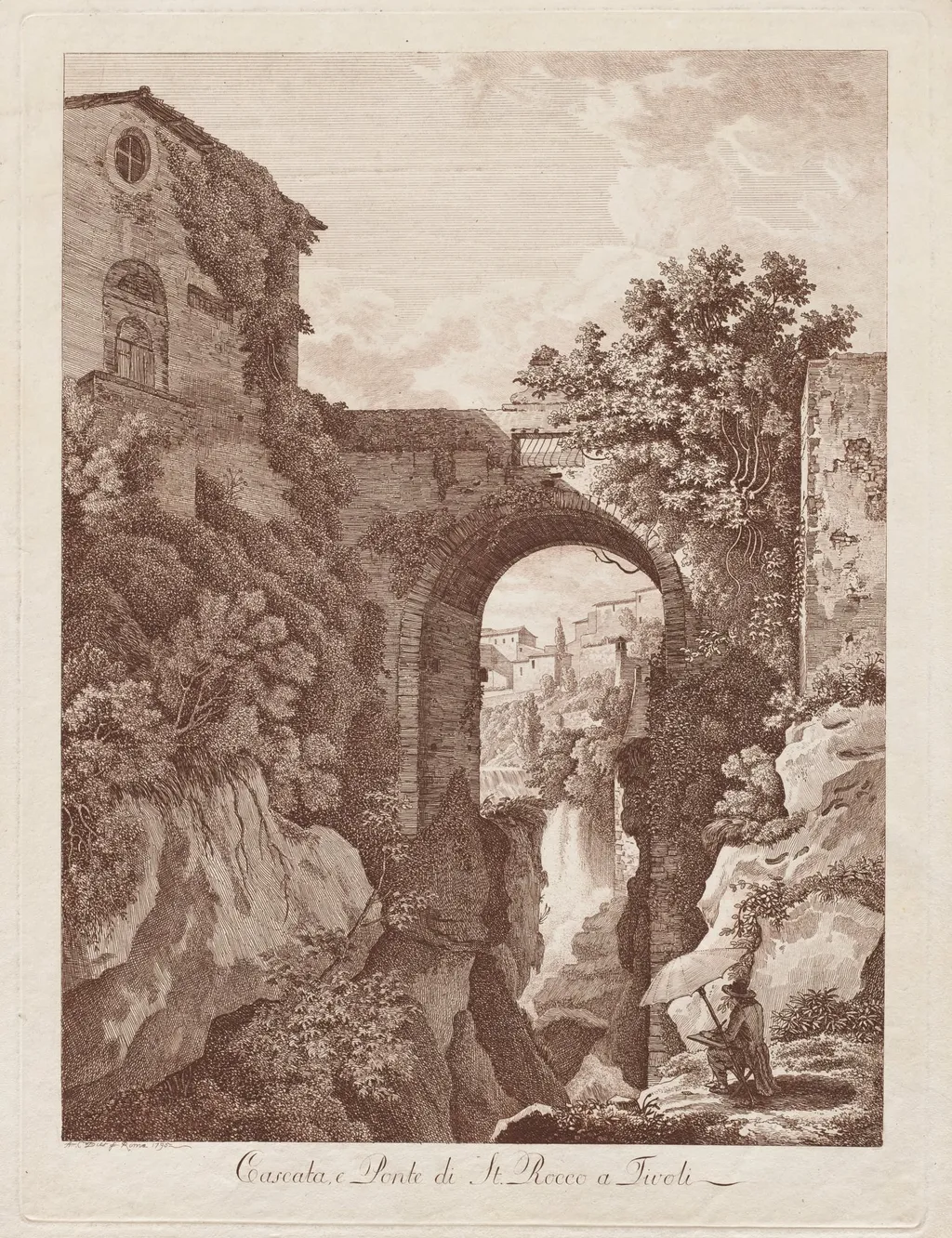
St. Rocco Waterfall and Bridge at Tivoli (Cascata e Ponte di St. Rocco a Tivoli) is a print by the Romanticist artist Albert Christoph Dies. It dates from 1795 and is held in the collection of the Cleveland Museum of Art. Johann Dies, a German artist of the late 1700s, produced this etching after two decades of residence in Italy.
About this work
Overview
Johann Dies, a German artist of the late 1700s, produced this etching after two decades of residence in Italy. The print depicts a waterfall at Tivoli, a stone bridge spanning the water, and a lone figure sketching the scene from a hillside. It belongs to a broader series of Italian landscapes that Dies created while immersed in the country’s artistic milieu.
Subject & Meaning
The composition centers on a solitary artist, palette in hand, translating the natural spectacle of cascading water and ancient bridge into a drawing. This self‑referential moment underscores the Romantic era’s preoccupation with the intimate relationship between creator and environment, emphasizing observation as a conduit for artistic expression.
Technique & Style
Executed as an etching, the work displays a loose, gestural line quality that contemporary critics deemed overly free. The handling of tone and softened transitions hints at a nascent use of sfumato, lending the water and rock faces a subtle atmospheric depth uncommon in earlier German prints.
History & Provenance
Dies initially pursued printmaking studies in Basel but found the instruction lacking, prompting his departure on foot to Rome. He remained in Italy for twenty years, during which he produced this and related views. The etching entered collections of German travelers returning from the Grand Tour, reflecting the period’s appetite for visual souvenirs of Italian scenery.
Context
The late eighteenth century saw successive waves of German artists journey to Italy to engage directly with classical and Renaissance exemplars. Dies’s work aligns with this tradition, yet its emphasis on a contemporary artist in the act of drawing marks a shift toward Romantic sensibilities that would dominate early nineteenth‑century German landscape art.
Artist & collection

Artist
Albert Christoph Dies (1755 – 28 December 1822) was a German painter, engraver, and biographer most noted for his biography of Joseph Haydn, although it is now considered sentimental and not entirely accurate.

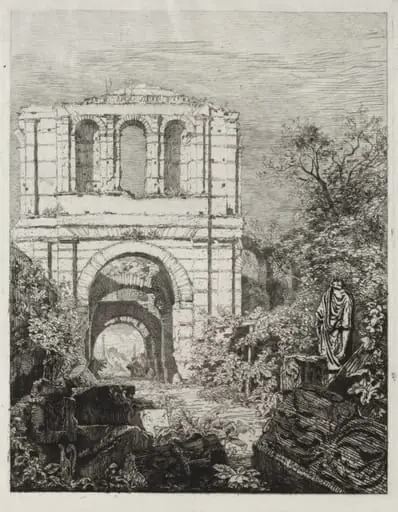 Ruins of the Palais Gallien in Bordeaux
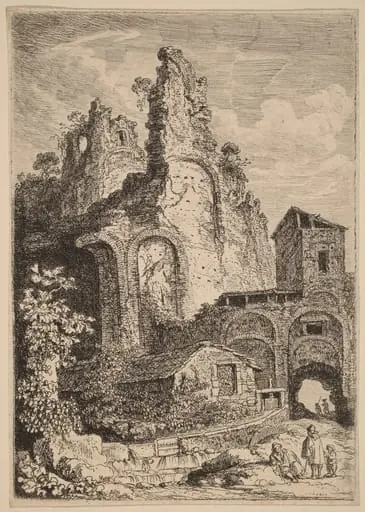 The Old Palace at Tivoli
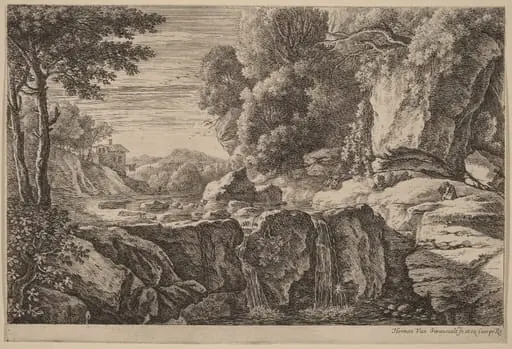 The Small Waterfall
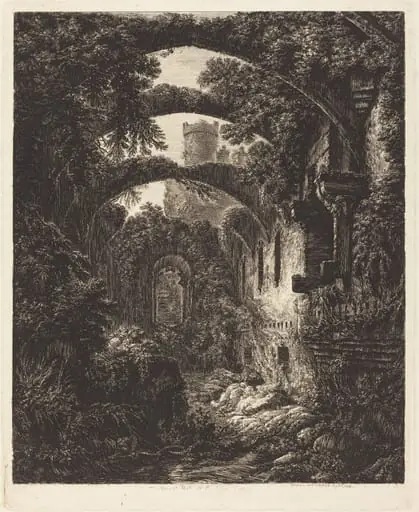 The Great Hall at Conway Castle
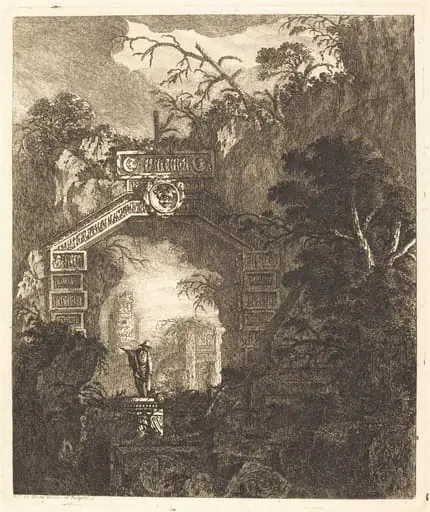 Figure Standing under a Stone Arch
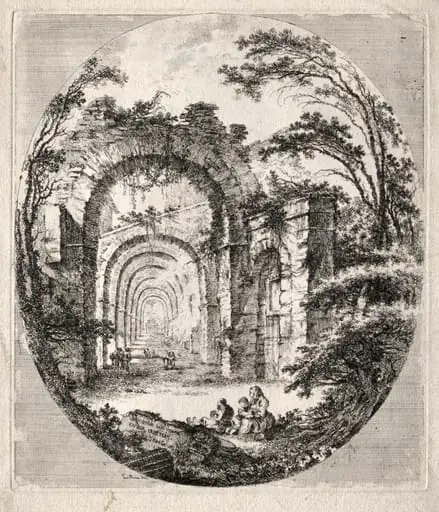 Ancient Ruins
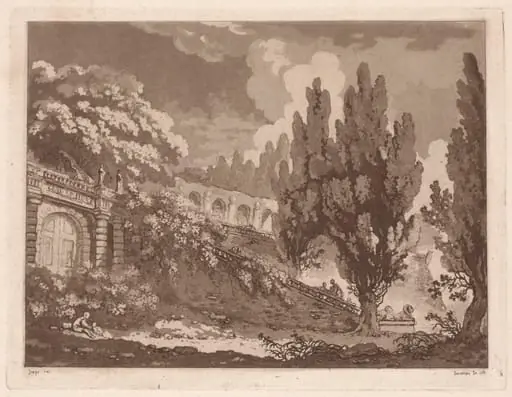 Stairs in an Italian Garden
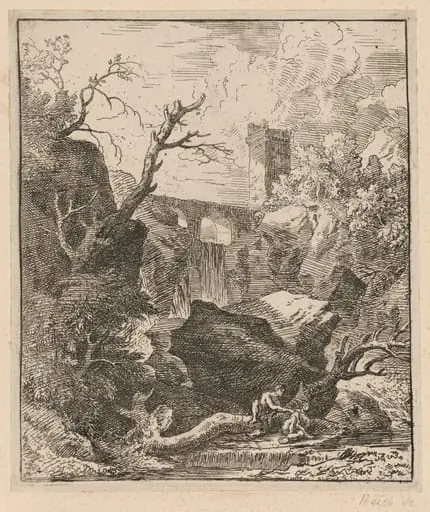 The Angler
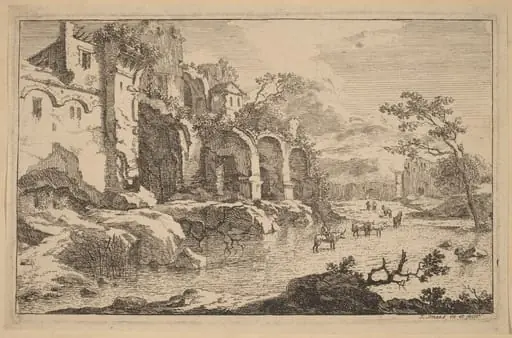 Building in Ruins at the Side of a River
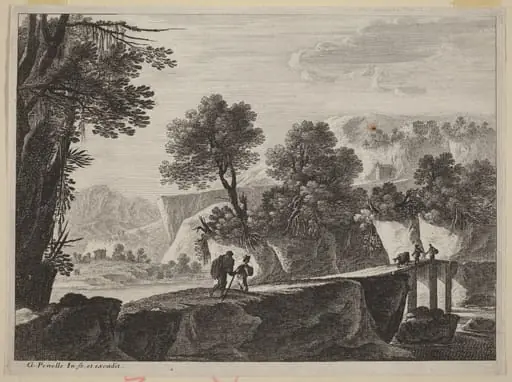 Travelers Approaching a Bridge
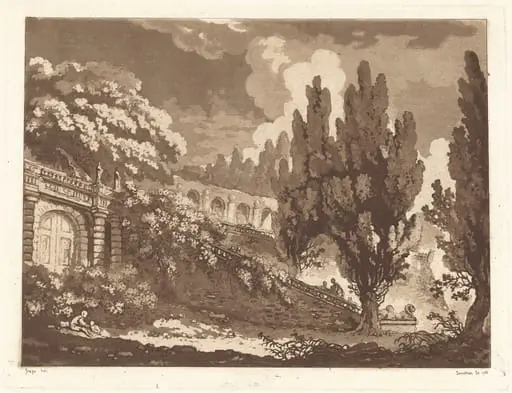 Stairway in an Italian Garden
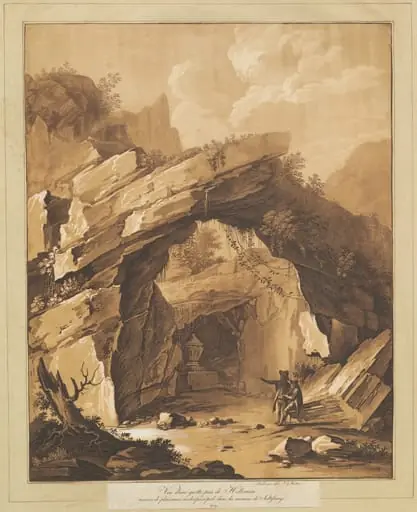 View of the Grotto by Heilbrunn, near Salzburg