Artwork
Franciscan, Pelbartus of Temesvar, in a Garden
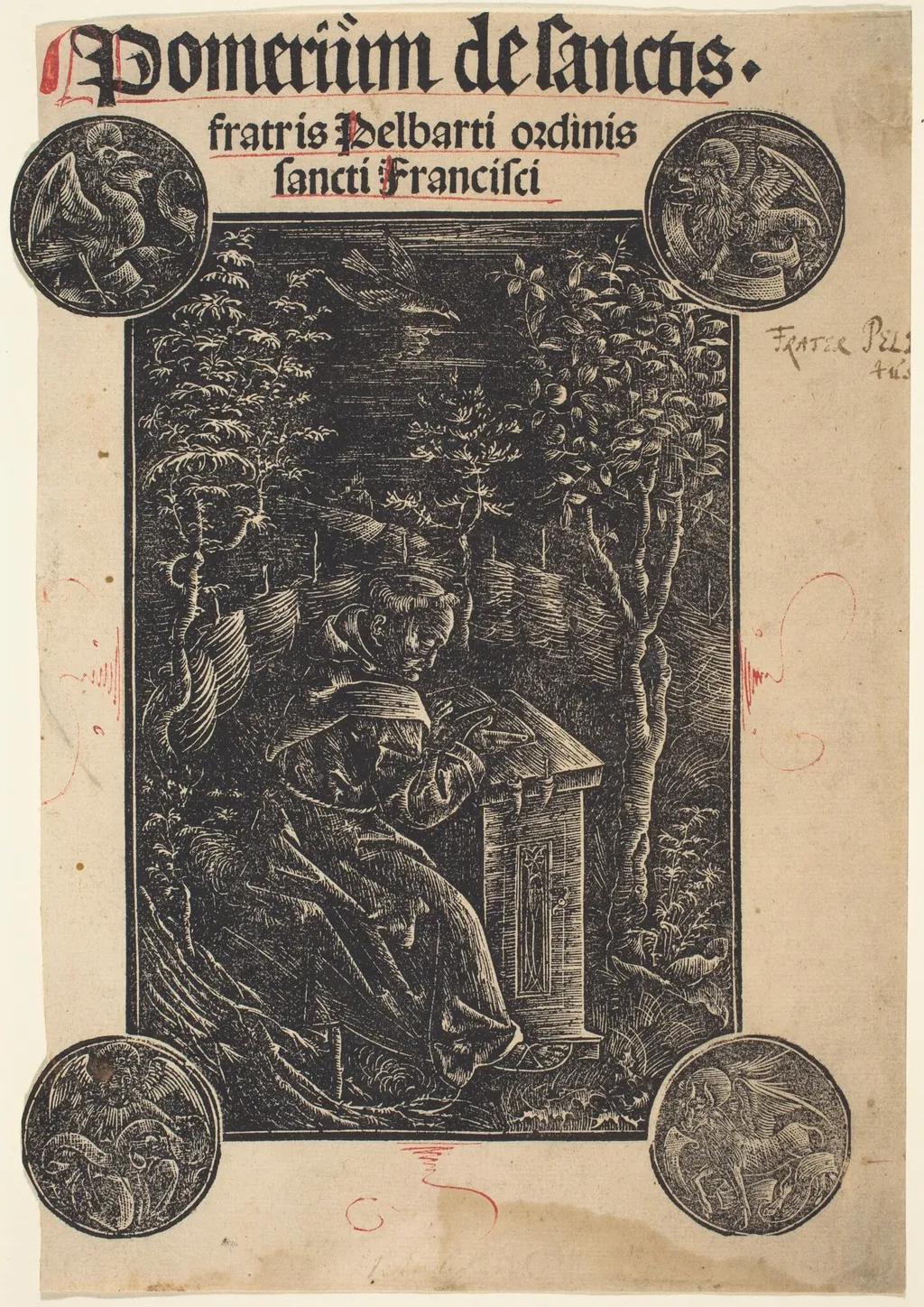
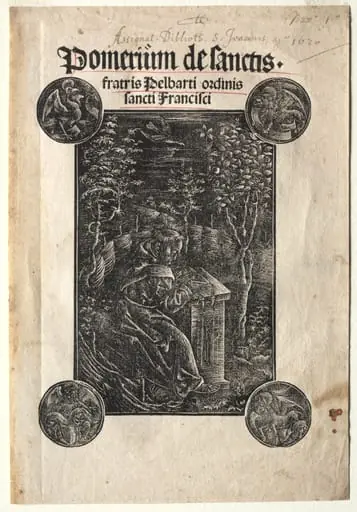
Franciscan, Pelbartus of Temesvar, in a Garden is an ink print by the Renaissance artist German 15th Century. It dates from 1500 and is held in the collection of the National Gallery of Art. The print is a woodcut portraying a Franciscan monk identified as Pelbartus of Temesvar.
About this work
Overview
The print is a woodcut portraying a Franciscan monk identified as Pelbartus of Temesvar. He is seated amid a lush garden, surrounded by trees and assorted plants, with a book resting on his lap. His chin rests on his hand as he gazes downward, while the surrounding border contains a series of small, circular vignettes depicting figures, architecture, and natural elements.
Subject & Meaning
The central figure, a robed monk, suggests a contemplative or scholarly moment, emphasized by the open book and his thoughtful posture. The garden setting may symbolize a spiritual haven or the notion of divine creation, while the peripheral round scenes could serve as visual footnotes, linking the monk’s meditation to broader religious narratives or everyday life.
Technique & Style
Executed as a woodcut, the image was carved into a wooden block, inked, and pressed onto paper. The fine line work evident in the intricate border and the miniature vignettes demonstrates a high level of craftsmanship, typical of late medieval or early Renaissance printmaking where detail was achieved through careful incision of the wood surface.
History & Provenance
The print bears the name Pelbartus of Temesvar, a Franciscan associated with the city of Timișoara. Its elaborate framing and narrative inserts imply it was intended for inclusion in a devotional book or a printed treatise, rather than as a standalone artwork. No specific ownership record is documented, but its format aligns with early printed religious pamphlets.
Context
Woodcut prints of this period often functioned as illustrative accompaniments to theological texts, providing visual reinforcement of the written word. The depiction of a monk in a garden reflects contemporary iconography that linked scholarly pursuit with the natural world, a motif common in monastic literature of Central Europe during the late 15th and early 16th centuries.
Artist & collection

Artist
This 15th-century German artist carved vivid religious scenes into metal and wood, then hand-painted them in bright, symbolic colors.

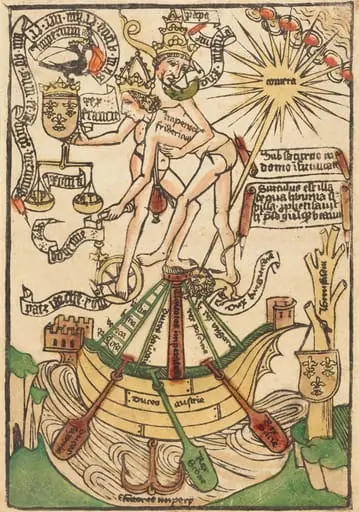 Allegory of the Meeting of Pope Paul II and Emperor Frederick III
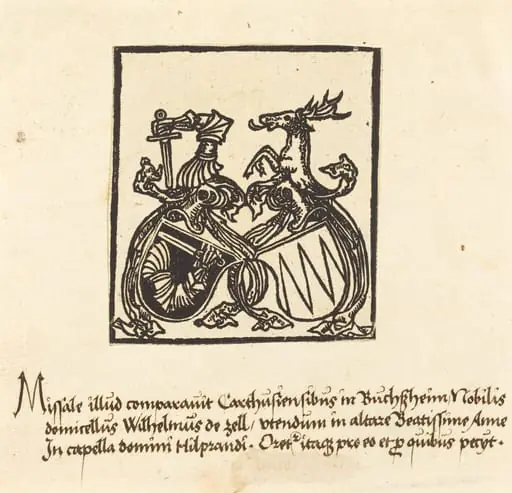 Bookplate of Wilhelm von Zell
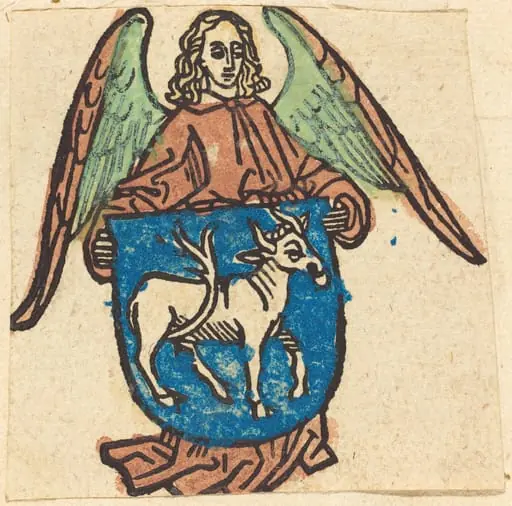 Bookplate of Hilprand Brandenburg of Bibrach
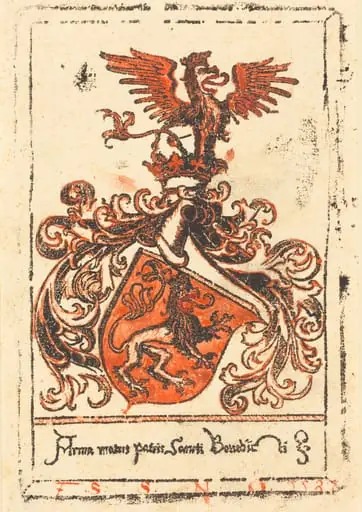 Bookplate of the Abbey of Ottobeuren
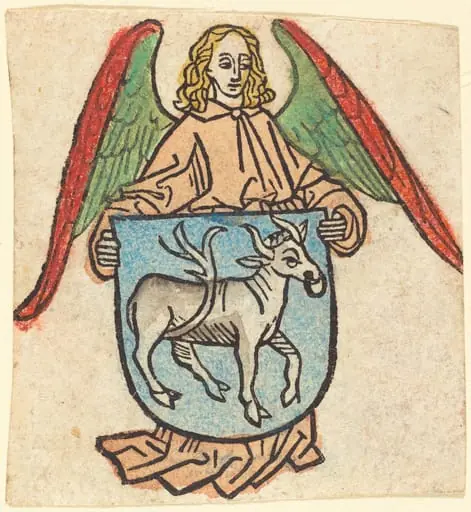 Bookplate of Hilprand Brandenburg of Bibrach
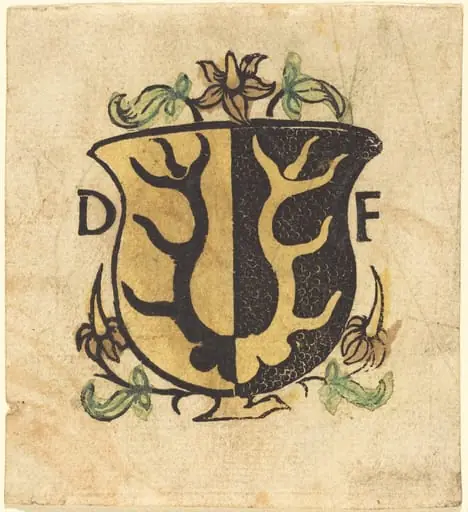 Bookplate of Dominicus Frauenfelder
![Studies for Six Figures (sheet from a model book) [recto], by German 15th Century](https://artifactworldgallery.com/img/german-15th-century--studies-for-six-figures-sheet-from-a-model-book-recto--4837429e0755bc3f-w320.webp) Studies for Six Figures (sheet from a model book) [recto]
Studies for Six Figures (sheet from a model book) [recto]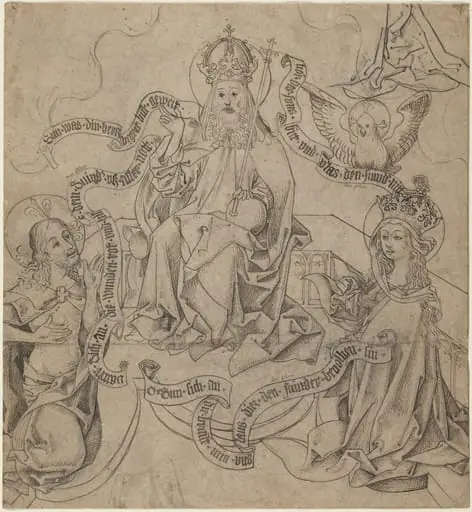 Christ and Mary Interceding with God the Father
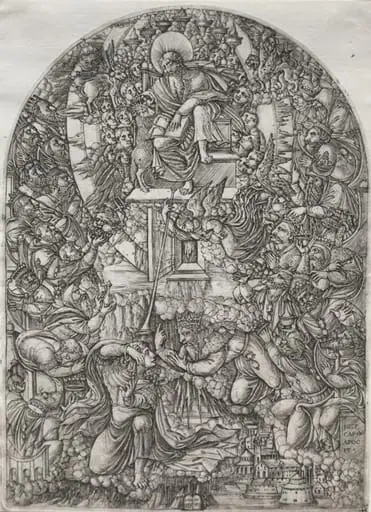 The Apocalpse: St. John Summoned to Heaven
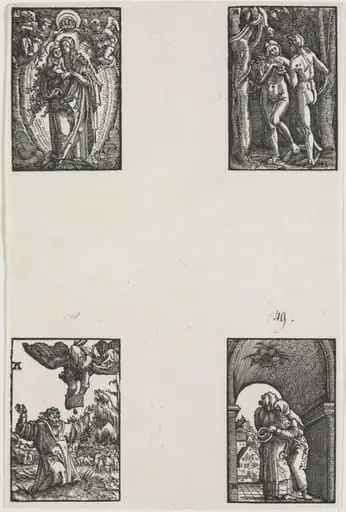 The Fall and Redemption of Man
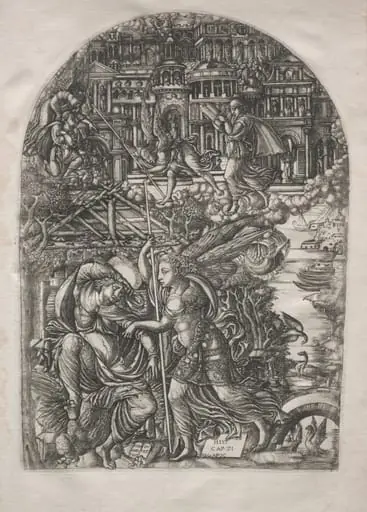 The Apocalypse: The Angel Shows St. John the New Jerusalem
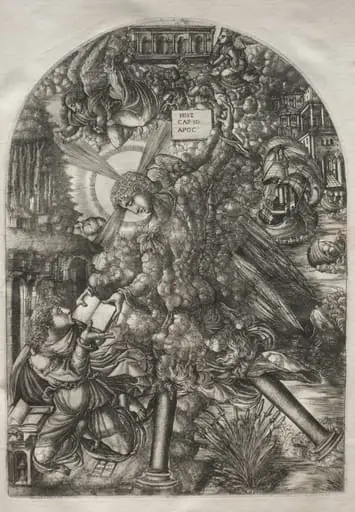 The Apocalypse: The Angel Gives St. John the Book to Eat
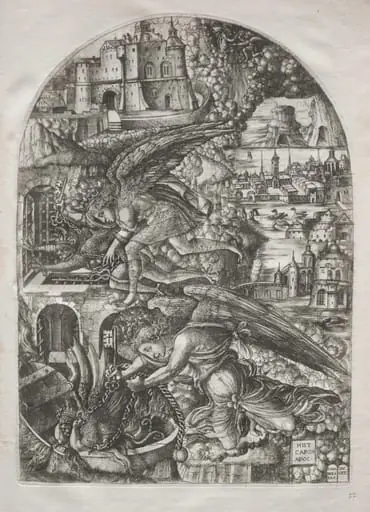 The Apocalypse: Satan Bound for a Thousand Years
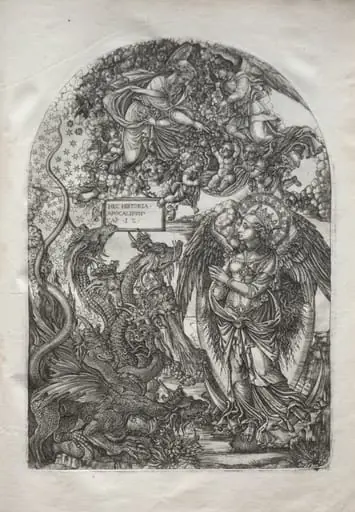 The Apocalypse: St. Michael and the Dragon
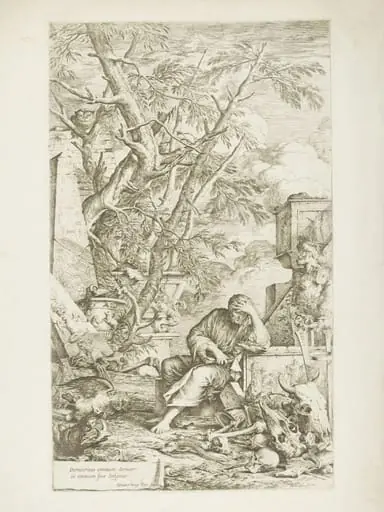 Democritus in Meditation
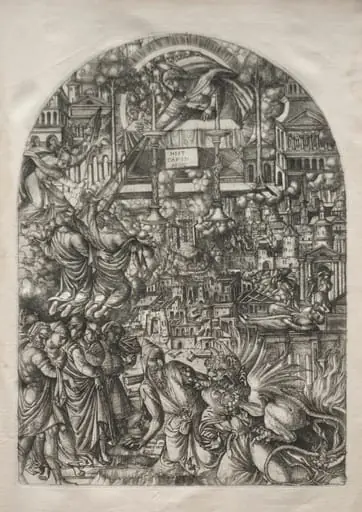 The Apocalypse: The Measurement of the Temple
 The Apocalypse: The Woman Clothed with the Sun
 The Apocalypse: The Angel Shows St. John the Fountain of Living Water
 The Emblem
 Pelbart of Temesvar Studying in a Garden