Artwork
The Obsequies of Agostino Carracci: Third Plate
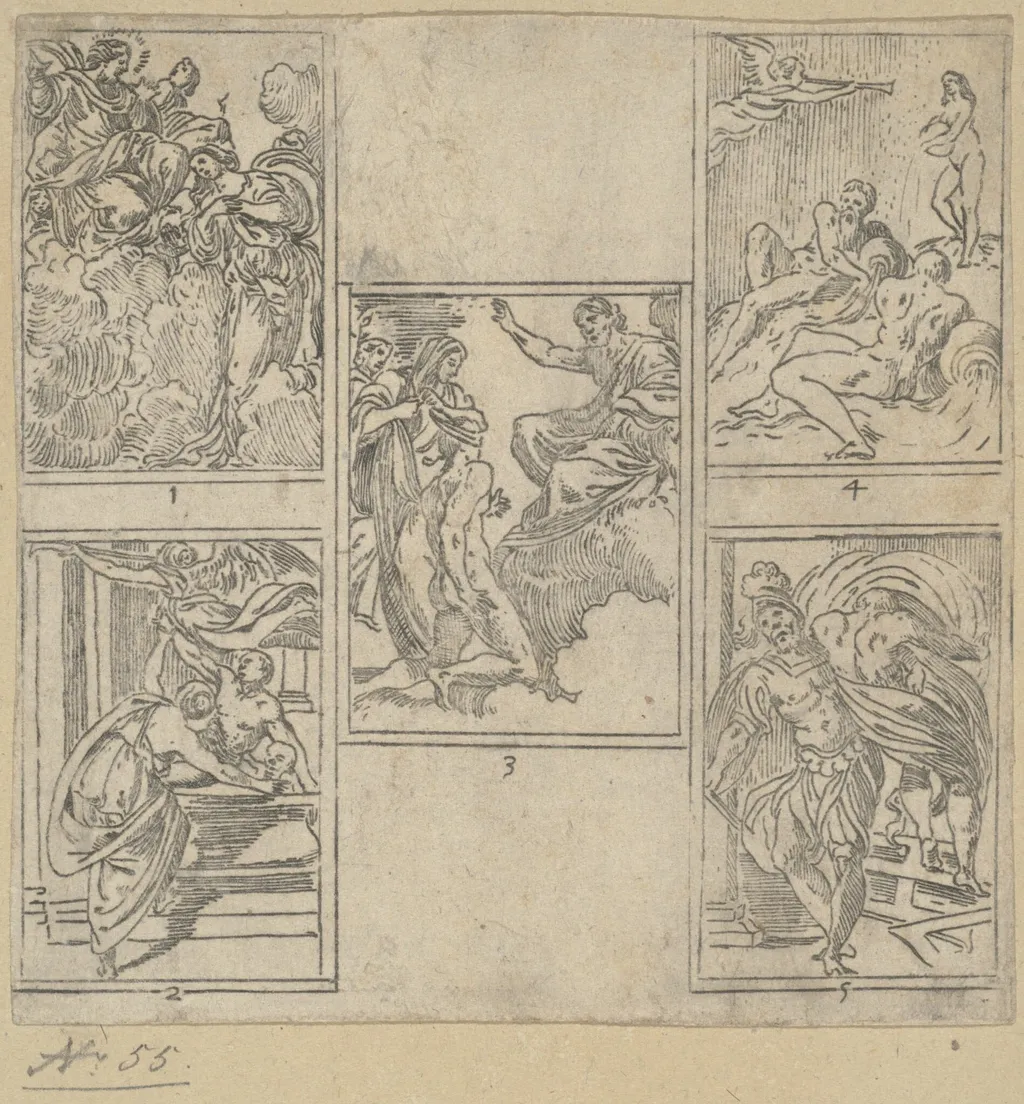
The Obsequies of Agostino Carracci: Third Plate is an ink print by the Baroque artist Guido Reni. It dates from 1603 and is held in the collection of the National Gallery of Art.
About this work
Overview
Unlike his later oil paintings, this piece reflects a more experimental phase, blending narrative intensity with the technical constraints of etching.
Created in 1603 by Guido Reni, this etching is the third in a series commemorating the funeral of Agostino Carracci, a foundational figure in the Bolognese School of painting. Executed on laid paper, the work belongs to a small group of prints Reni produced early in his career. Unlike his later oil paintings, this piece reflects a more experimental phase, blending narrative intensity with the technical constraints of etching. It is now held in the National Gallery of Art, Washington.
Subject & Meaning
The print depicts four vignettes of mourning rituals surrounding Agostino Carracci’s death, arranged in a single frame. Each scene captures gestures of grief—kneeling figures, outstretched arms, airborne forms—suggesting both earthly sorrow and spiritual ascent. The central image, featuring a robed woman cradling a child while a winged figure reaches toward her, may symbolize divine intervention or the soul’s transition. The composition unites personal loss with allegorical undertones common in Counter-Reformation art.
Technique & Style
Reni employed etching to achieve dense, expressive lines, using a needle to scratch through a wax ground on a metal plate before acid biting the exposed areas. The resulting marks are sharp and uneven, conveying urgency and emotional tension. Figures are rendered with exaggerated poses and contorted limbs, emphasizing movement and pathos. The dark, layered ink contrasts with the paper’s texture, enhancing the sense of drama and fragmentation within the confined space of the plate.
History & Provenance
Reni produced this print shortly after relocating to Bologna, where he engaged with the Carracci circle. The series was likely commissioned or circulated among patrons familiar with Agostino’s legacy. Though few impressions survive, the National Gallery of Art’s copy is among the best-preserved. Its presence in a major American collection reflects early 20th-century interest in Italian graphic arts, though its provenance prior to that remains partially undocumented.
Context
The Bolognese School, shaped by the Carracci family, sought to reform painting by blending naturalism with classical ideals. Reni, though not a Carracci by training, absorbed their emphasis on emotional clarity and compositional harmony. This etching, made during his formative years, reveals his early engagement with printmaking as a medium for narrative and commemoration, distinct from his later, more polished frescoes and altarpieces.
Legacy
Though Reni is better known for his paintings, this etching stands as a rare example of his graphic work and offers insight into his early stylistic development. Its emotional intensity and unconventional composition influenced later printmakers exploring dramatic expression. While not widely reproduced in its time, it remains a significant artifact of early Baroque print culture and Reni’s transition from apprentice to independent master.
Artist & collection
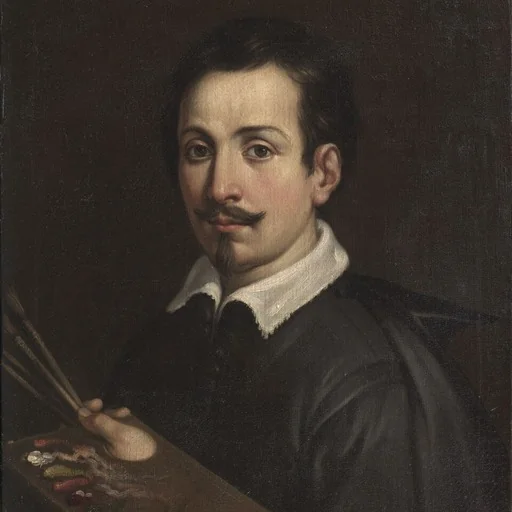
Artist
Guido Reni was an Italian Baroque painter, although his works showed a classical manner, similar to Simon Vouet, Nicolas Poussin, and Philippe de Champaigne.

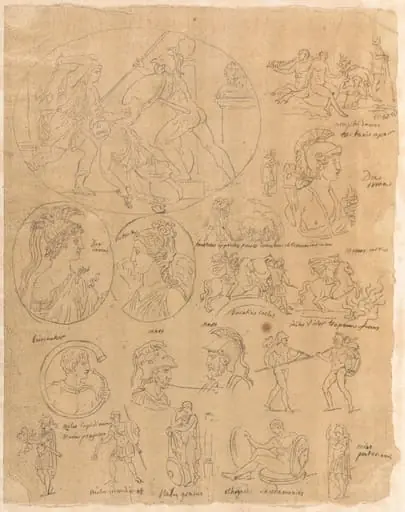 Tracings of Classical Subjects
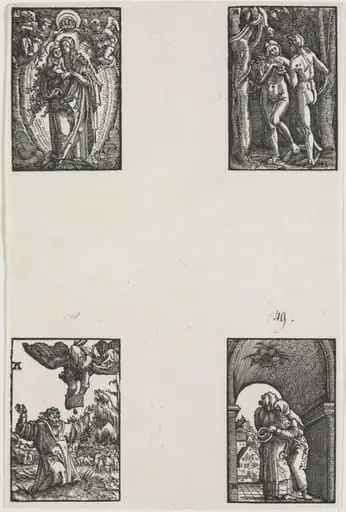 The Fall and Redemption of Man
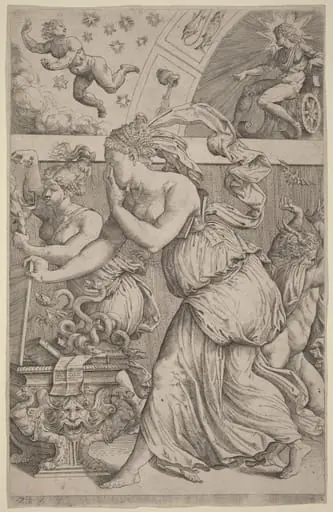 Pandora Opening Her Box
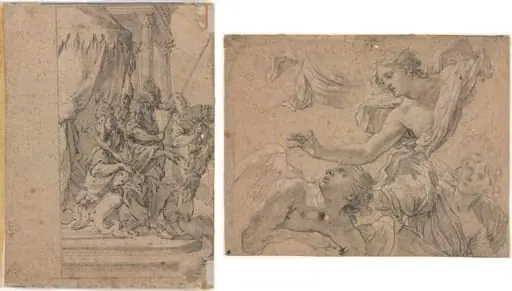 Studies of Angels (recto); Panthea before Cyrus? (verso)
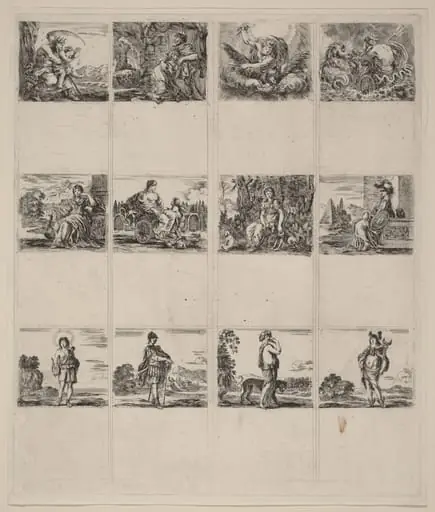 Mythological Playing Cards
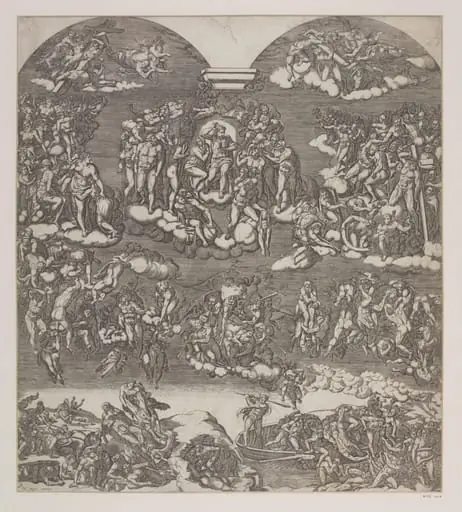 Last Judgment
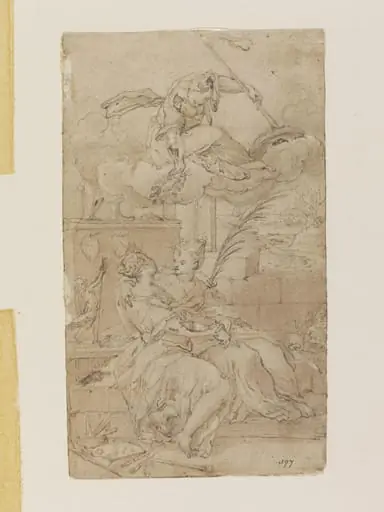 Allegory of the Union of Painting and Sculpture
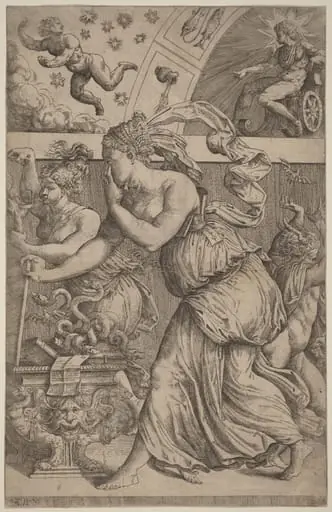 Pandora Opening Her Box
![Fragments from Ancient Cameos in the Grimani Collection [Plate II], by Enea Vico](https://artifactworldgallery.com/img/enea-vico--fragments-from-ancient-cameos-in-the-grimani-collection-plat--6333de7ba7491db7-w320.webp) Fragments from Ancient Cameos in the Grimani Collection [Plate II]
Fragments from Ancient Cameos in the Grimani Collection [Plate II] St. Benignus; Festival of All Saints; Commemoration of the Dead; St. Hubert