Artwork
Peasant Couple Dancing
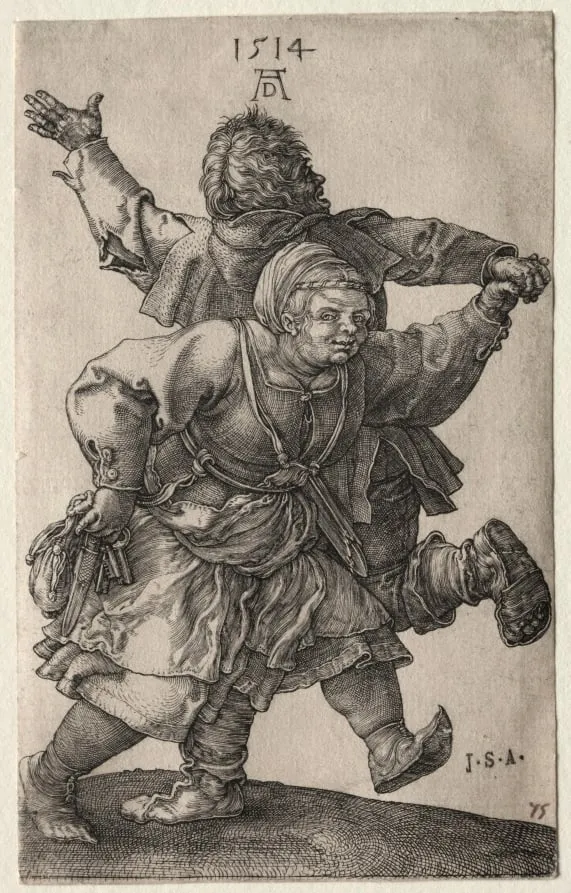
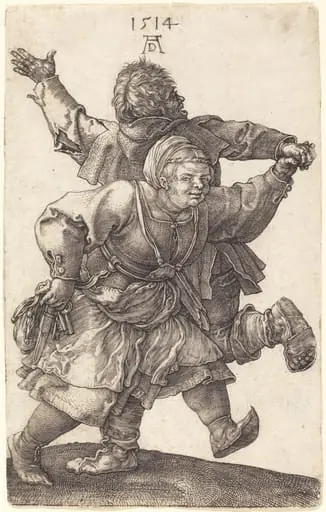
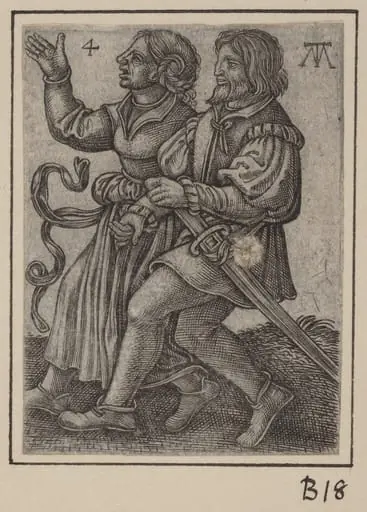
Peasant Couple Dancing is a print by the Renaissance artist Albrecht Dürer. It dates from 1514 and is held in the collection of the Cleveland Museum of Art.
About this work
Overview
This engraving by Albrecht Dürer depicts a rural couple engaged in dance, a subject commonly treated with satire in northern European art of the period. Rather than caricaturing the peasants as crude or comic, Dürer renders them with solemn dignity and meticulous detail, transforming a familiar folk scene into a study of human presence and social identity.
Subject & Meaning
The woman stands as the central figure, her posture controlled and gaze direct, contrasting with the man’s exuberant gesture. Her attire—apron, skirt, and belt bearing keys, a purse, and a knife—signals domestic authority and autonomy. Dürer shifts the narrative from mockery to quiet empowerment, suggesting that rural life holds its own structure and moral weight, not merely chaos or folly.
Technique & Style
This technical rigor elevates the peasants beyond genre, aligning them with Renaissance ideals of human proportion and physical presence.
Dürer employs fine, precise lines to render anatomy with unusual clarity—veins in the hands, folds in fabric, and the tension in limbs are rendered with scientific attention. The figures’ twisting forms are balanced within a shallow space, their scale dominating the composition. This technical rigor elevates the peasants beyond genre, aligning them with Renaissance ideals of human proportion and physical presence.
History & Provenance
Created in the early 16th century, the print belongs to Dürer’s series of engravings exploring social types and human form. It entered the collection of the Cleveland Museum of Art in the 20th century, where it remains a key example of his engagement with everyday life. Its survival in good condition reflects its early recognition as a work of serious artistic intent.
Context
While peasant dances were popular motifs in northern art, they typically served as moralizing or humorous tropes. Dürer’s approach diverges by rejecting caricature in favor of observation. His interest in anatomy and social hierarchy, shaped by humanist thought and classical ideals, informs this work as much as his technical mastery, positioning rural figures within a broader humanist framework.
Legacy
This engraving contributed to a redefinition of peasant imagery in European art, influencing later artists to treat rural subjects with psychological depth. Dürer’s focus on individual agency and bodily realism challenged prevailing stereotypes, leaving a quiet but lasting imprint on how ordinary lives could be represented with gravity and precision.
Artist & collection
Artist
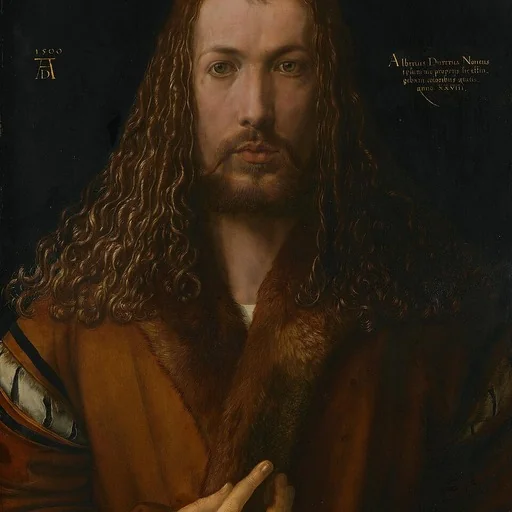
Albrecht Dürer spent his life in Nuremberg, a busy German city where artists traded prints like currency.

![Madonna and Child [obverse], by Albrecht Dürer](https://artifactworldgallery.com/img/albrecht-durer--madonna-and-child-obverse--d7b8ebf05d22ebe5-w320.webp)
![Lot and His Daughters [reverse], by Albrecht Dürer](https://artifactworldgallery.com/img/albrecht-durer--lot-and-his-daughters-reverse--b4ebf9b282faa17a-w320.webp)