Artwork
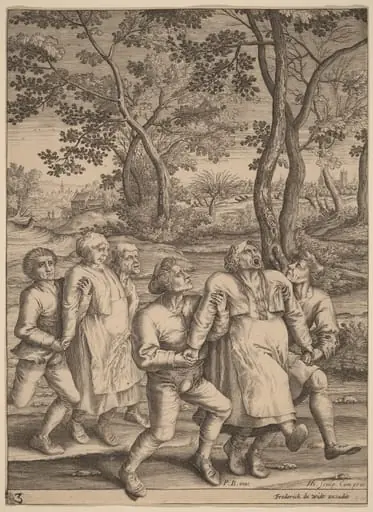
Epileptics Walking to the Left
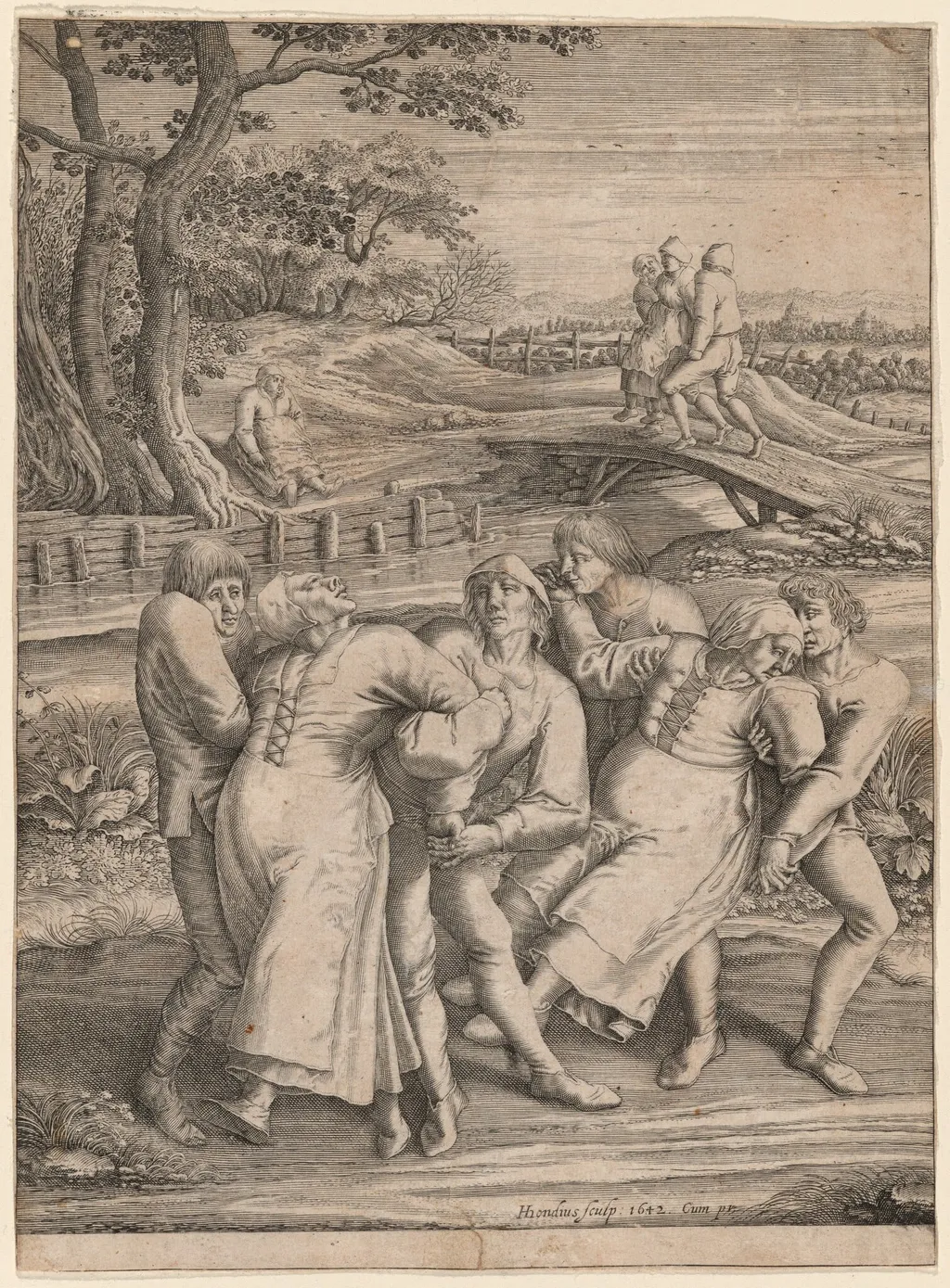
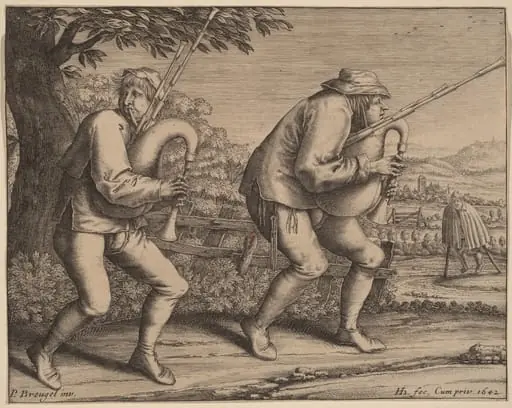
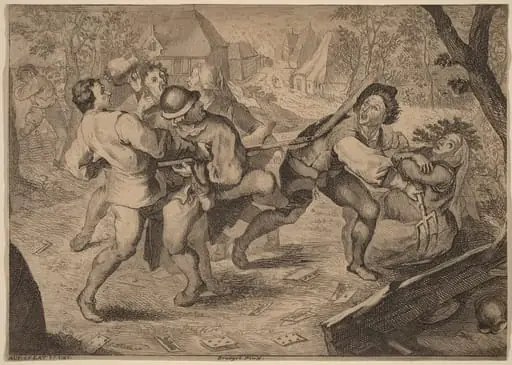
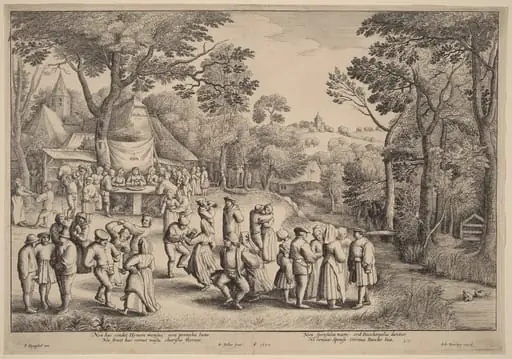
Epileptics Walking to the Left is an ink print by the Baroque artist Hendrik Hondius I. It dates from 1642 and is held in the collection of the National Gallery of Art.
About this work
Overview
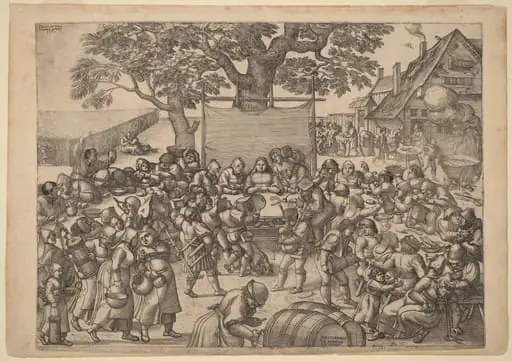
In the distance, two individuals move away, while those nearer the water appear to sway in an irregular, jerky motion that suggests a physical disturbance.
Hendrik Hondius I’s 1642 engraving, titled Epileptics Walking to the Left, depicts a small group of figures gathered beside a wooded stream. The composition balances standing, seated, and kneeling bodies, all oriented toward the viewer with expressions of concentration or concern. In the distance, two individuals move away, while those nearer the water appear to sway in an irregular, jerky motion that suggests a physical disturbance.
Subject & Meaning
The work presents a visual interpretation of what 17th‑century observers identified as epileptic seizures. By arranging the figures in a natural setting, Hondius contrasts the calm of the surrounding landscape with the involuntary movements of the afflicted, perhaps commenting on the tension between bodily disorder and the order of nature as understood in his era.
Technique & Style
Executed as an engraving on laid paper, the image relies on precise line work and cross‑hatching to model volume and convey motion. Hondus’s use of sharp contours delineates each figure, while varying densities of shading suggest the flickering, spasmodic gestures associated with seizures, a hallmark of the detailed, narrative style common to Dutch printmaking of the period.
History & Provenance
The print was produced in Amsterdam by Hondius, a prominent publisher and cartographer. After changing hands among private collectors, it entered the collection of the National Gallery of Art in Washington, D.C., where it is currently held and displayed as part of the museum’s early modern European prints holdings.
Context
In the mid‑1600s, medical knowledge of epilepsy was limited, and visual representations often served both documentary and didactic purposes. Hondius’s engraving fits within a broader tradition of anatomical and pathological prints that aimed to educate viewers about bodily ailments, reflecting contemporary attempts to categorize and understand neurological disorders through art.
Artist & collection