Artwork
Two Street Players and a Girl
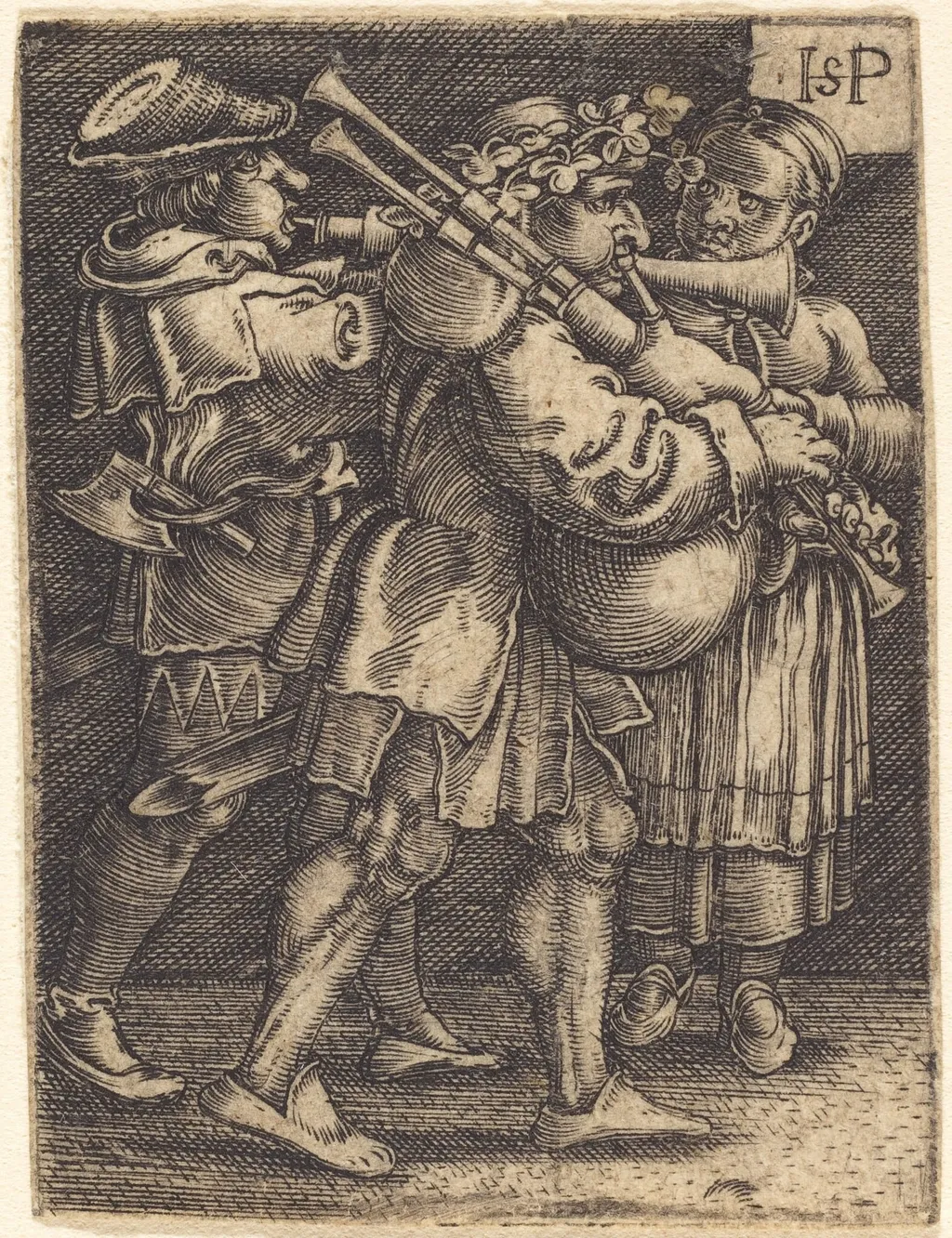
Two Street Players and a Girl is an ink print by the Renaissance artist Sebald Beham. It dates from 1526 and is held in the collection of the National Gallery of Art.
About this work
Overview
Sebald Beham’s engraving *Two Street Players and a Girl*, executed around 1526, presents a compact, black‑and‑white scene of three figures engaged in a street performance. The work measures only a few inches across, typical of the “Little Masters” school, and showcases the artist’s meticulous attention to detail within a modest format.
Subject & Meaning
The composition features two male entertainers—a drummer and a figure wielding a long baton, reminiscent of a conductor—accompanied by a young woman in a flowing dress who gazes downward while holding a fan. The juxtaposition of music, movement, and the contemplative female figure reflects the genre‑type interest in everyday street life that characterizes much of Beham’s graphic output.
Technique & Style
Beham achieves tonal variation and texture through dense cross‑hatching, layering fine parallel lines to model shadows and define the intricate clothing folds. This method, common among early 16th‑century German printmakers, allows a rich sense of depth despite the medium’s reliance on ink and paper alone.
History & Provenance
Born in Nuremberg, Beham established his reputation there before moving to Frankfurt later in his career. As a member of the “Little Masters,” he worked in the wake of Albrecht Dürer, producing highly finished prints for a market that prized small, collectible artworks. The engraving’s survival in several museum collections attests to its continued scholarly interest.
Artist & collection

Artist
Sebald Beham (1500–1550) was a German painter and printmaker, mainly known for his very small engravings.


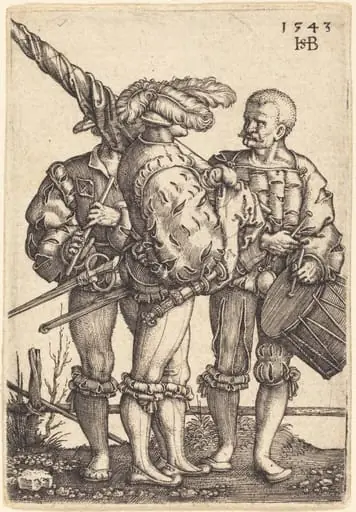 Standard Bearer, Drummer, and Piper
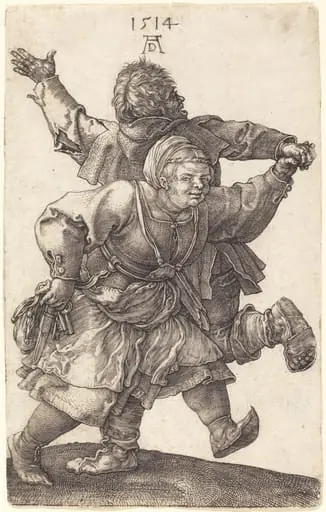 Peasant Couple Dancing
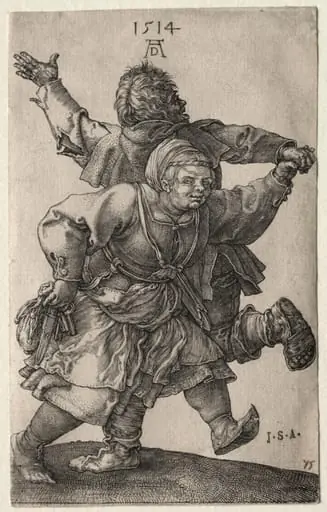 Peasant Couple Dancing
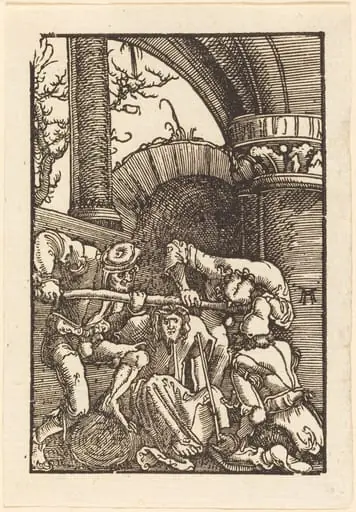 Christ Crowned with Thorns
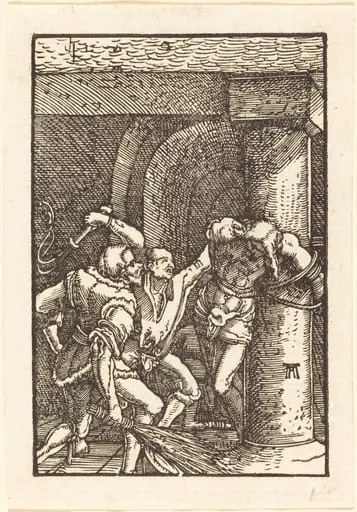 The Flagellation of Christ
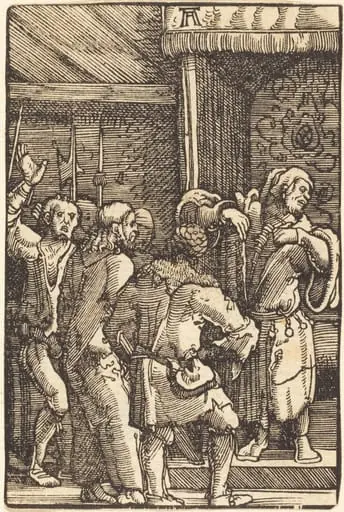 Christ before Caiaphas
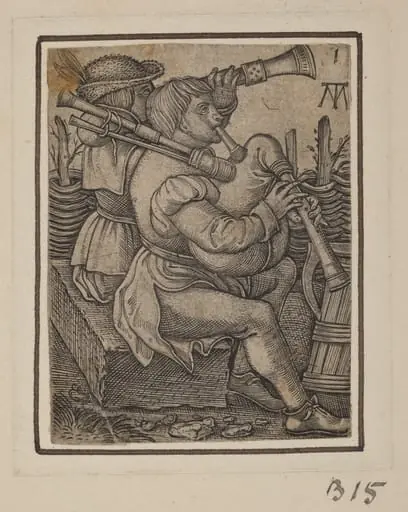 Bagpipe Players
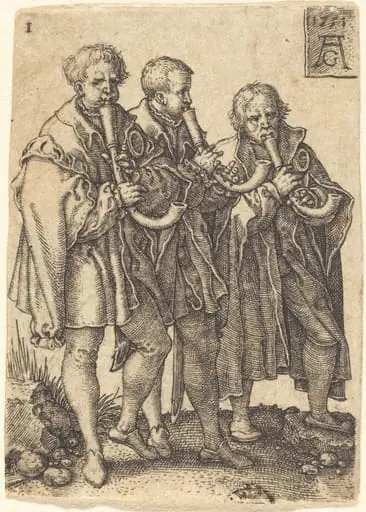 Three Musicians
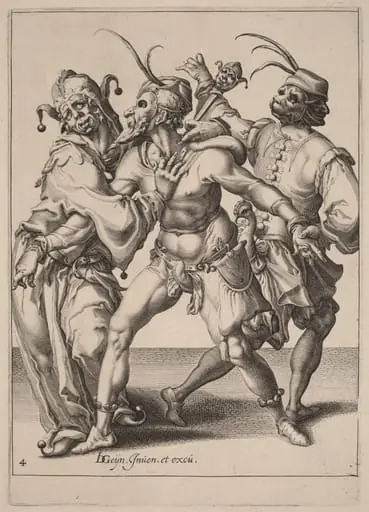 Three Dancing Mummers, Including a Jester
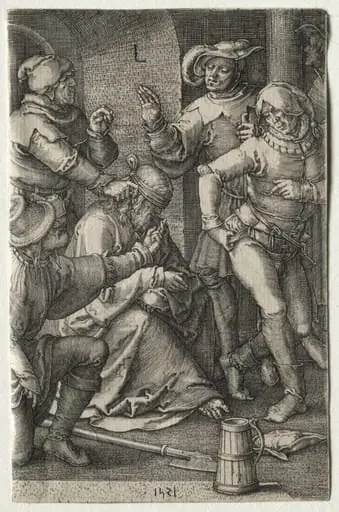 The Passion: The Mocking of Christ
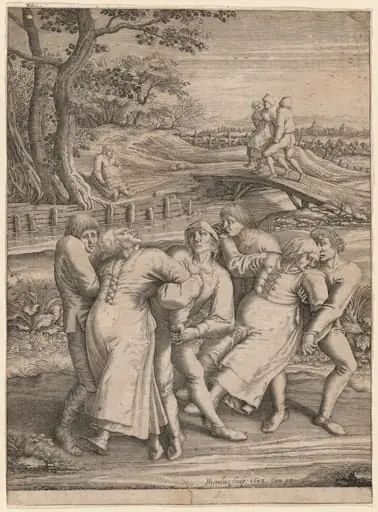 Epileptics Walking to the Left
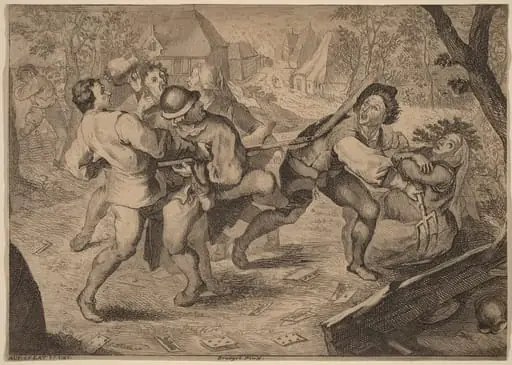 Peasants Fighting