Artwork
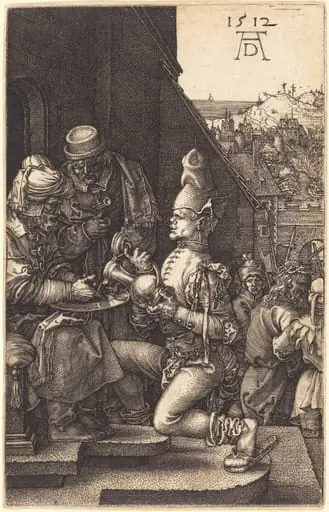
The Little Passion: Pilate Washing his Hands
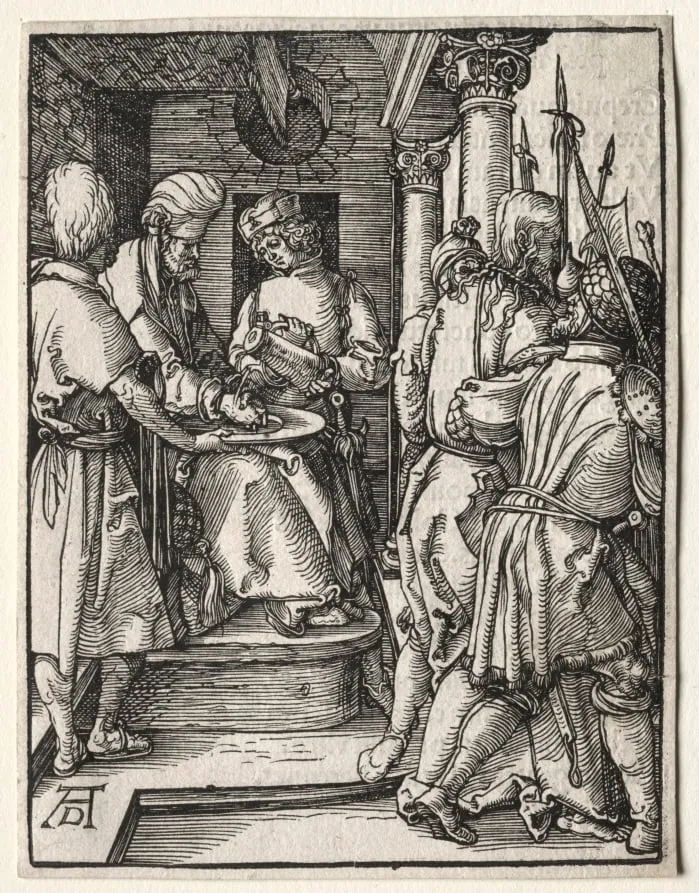
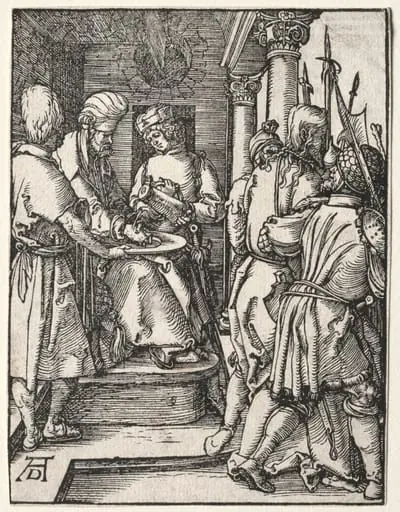
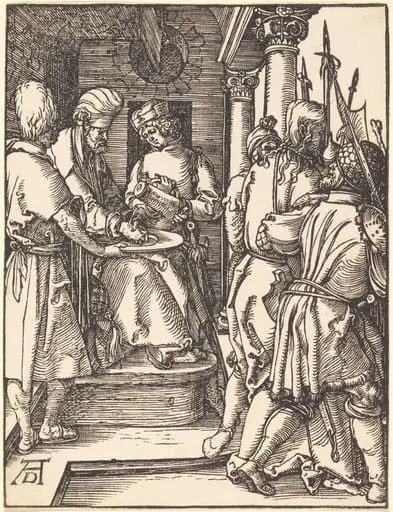
The Little Passion: Pilate Washing his Hands is a print by the Renaissance artist Albrecht Dürer. It dates from 1510 and is held in the collection of the Cleveland Museum of Art.
About this work
Overview
Created in 1510, this woodcut is part of Albrecht Dürer’s *Little Passion* series, a sequence of 37 prints illustrating scenes from Christ’s final days.
Created in 1510, this woodcut is part of Albrecht Dürer’s *Little Passion* series, a sequence of 37 prints illustrating scenes from Christ’s final days. Dürer, already renowned for his precision in printmaking, used this medium to explore theological narratives with remarkable detail. The work reflects his technical evolution from woodcut to more nuanced engraving techniques, though this piece remains a finely executed woodcut. It is held today by the Cleveland Museum of Art.
Subject & Meaning
The scene depicts Pontius Pilate washing his hands before the crowd, a gesture symbolizing his attempt to absolve himself of responsibility for Christ’s condemnation. Surrounding figures—soldiers, attendants, and onlookers—convey tension and moral ambiguity. Dürer captures the moment not as a grand spectacle but as an intimate, psychologically charged encounter, emphasizing the weight of complicity and moral evasion in a crowded, confined space.
Technique & Style
Dürer employed fine, controlled lines to model form and depth, using cross-hatching and varying line density to suggest volume and shadow. The contrast between light and dark, though limited to black ink on paper, creates a strong sense of spatial recession. Architectural elements like columns and arches frame the scene with geometric clarity, while the figures’ postures and gestures are rendered with acute attention to anatomical detail and emotional nuance.
History & Provenance
The print was produced during Dürer’s mature period, following his first trip to Italy, where he absorbed Renaissance ideals of perspective and human proportion. It circulated widely in Northern Europe, contributing to his international reputation. The Cleveland Museum of Art acquired the work in the 20th century as part of its growing collection of early Northern prints, preserving it as a key example of early 16th-century printmaking.
Context
In early 16th-century Germany, religious imagery was central to both devotional practice and artistic production. Dürer’s *Little Passion* series responded to a growing demand for portable, affordable religious scenes among the educated middle class. His prints bridged the gap between traditional iconography and humanist inquiry, offering viewers not just devotion but also psychological depth and moral reflection.
Legacy
Dürer’s *Little Passion* series set a new standard for narrative clarity and technical refinement in printmaking. This particular image influenced later artists in its use of psychological realism and spatial compression. The work remains a touchstone for understanding how print culture disseminated religious themes and artistic innovation across Europe in the decades before the Reformation.
Artist & collection
Artist
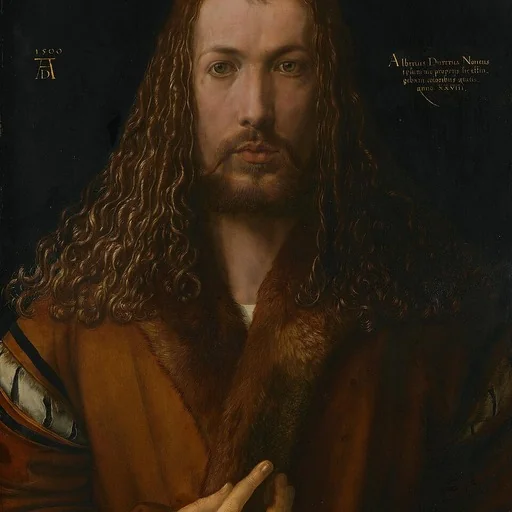
Albrecht Dürer spent his life in Nuremberg, a busy German city where artists traded prints like currency.

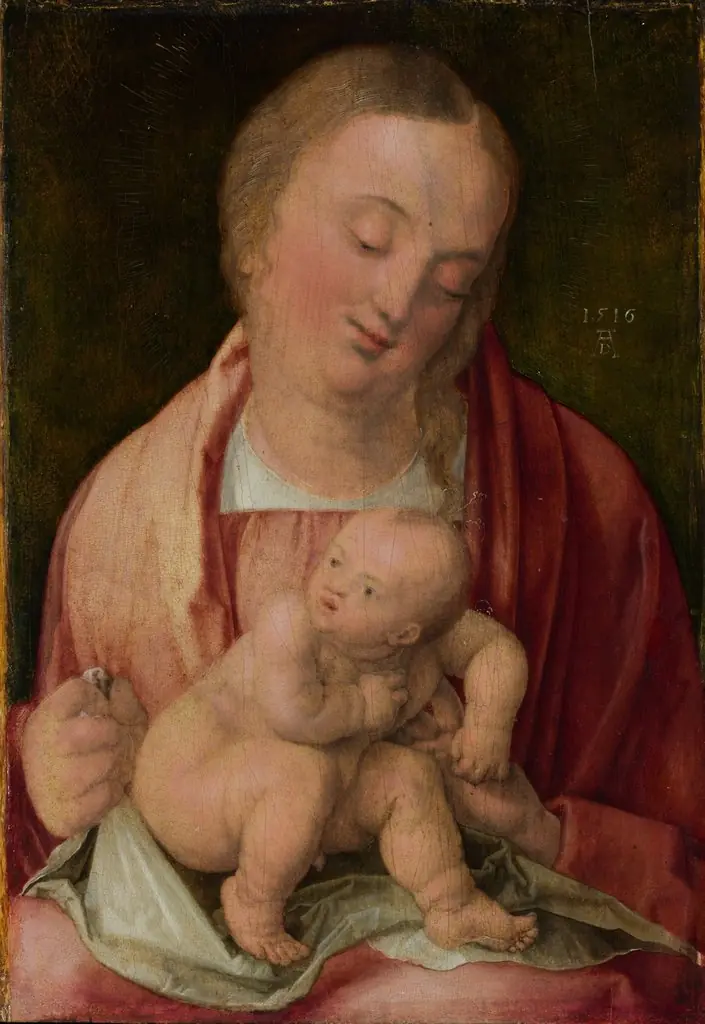
![Madonna and Child [obverse], by Albrecht Dürer](https://artifactworldgallery.com/img/albrecht-durer--madonna-and-child-obverse--d7b8ebf05d22ebe5-w320.webp)
![Lot and His Daughters [reverse], by Albrecht Dürer](https://artifactworldgallery.com/img/albrecht-durer--lot-and-his-daughters-reverse--b4ebf9b282faa17a-w320.webp)