Artwork
Jan van Leyden
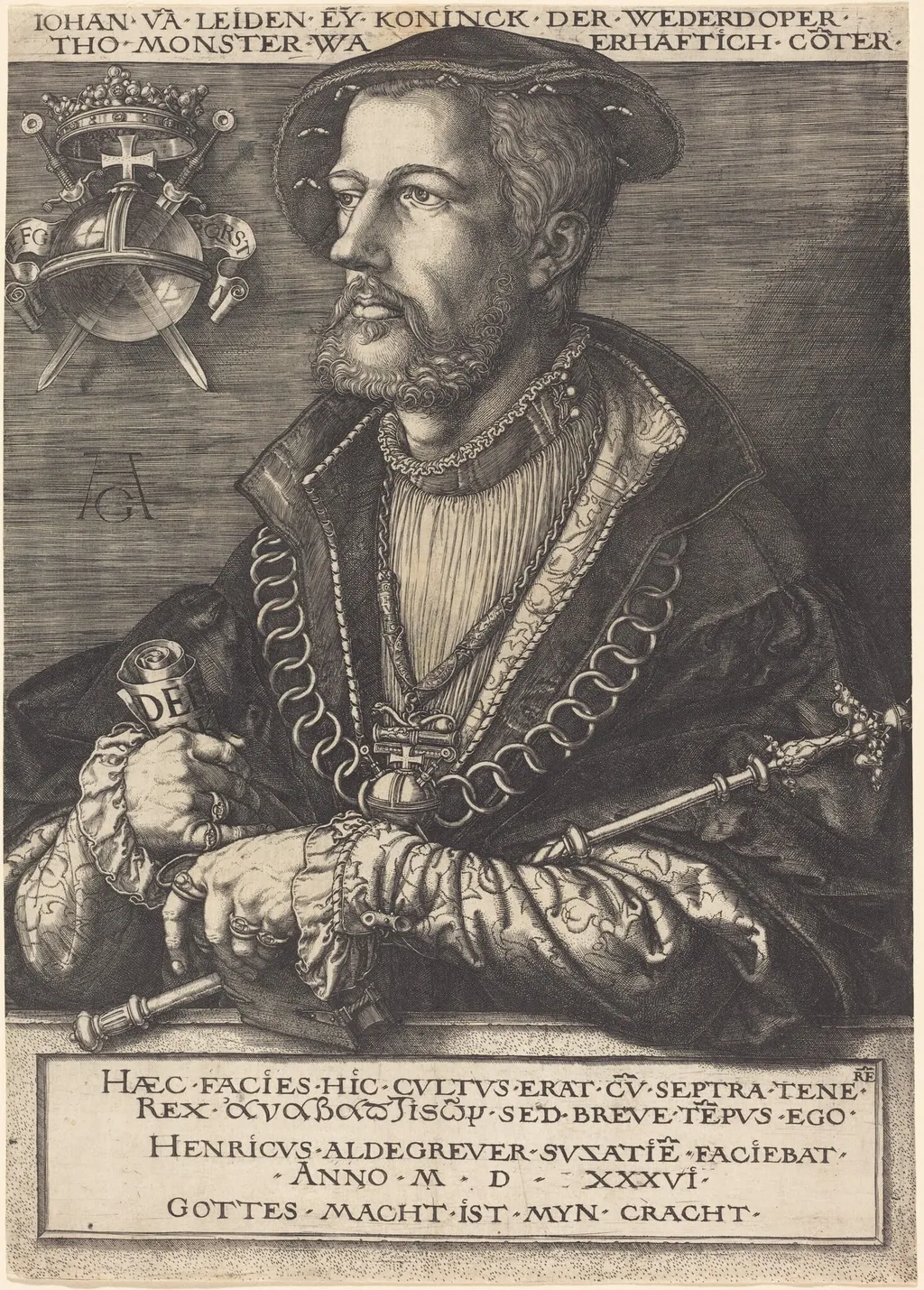
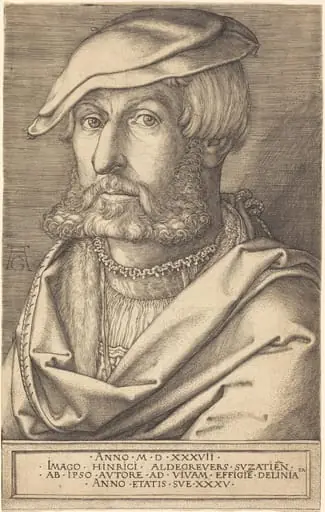
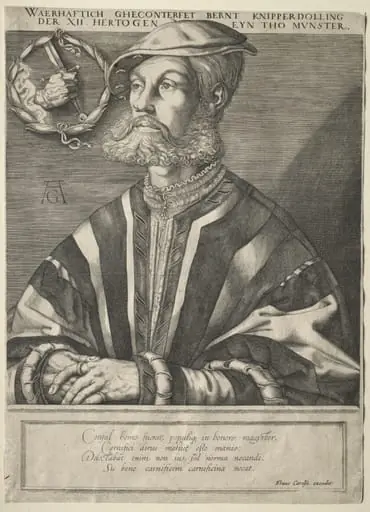
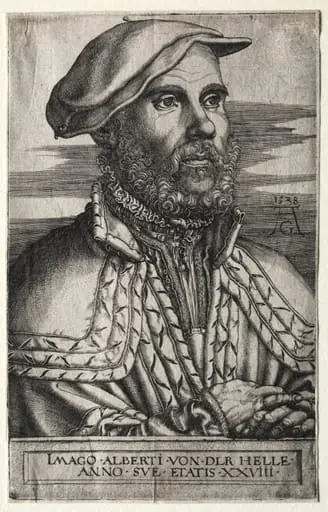
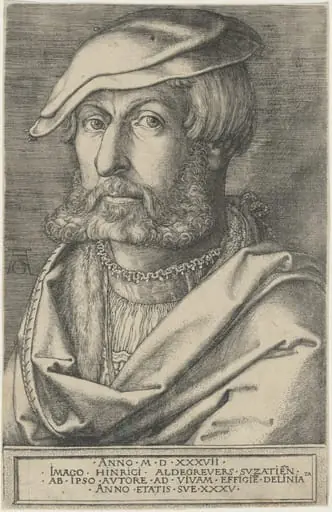
Jan van Leyden is an ink print by the Northern Renaissance artist Heinrich Aldegrever. It dates from 1532 and is held in the collection of the National Gallery of Art.
About this work
Overview
Executed in fine linear detail, the work belongs to the German 'Little Masters'—printmakers who refined small-format engravings after Dürer’s influence.
Heinrich Aldegrever’s 1532 engraving portrays Jan van Leyden, a radical Anabaptist leader who briefly ruled Münster. Executed in fine linear detail, the work belongs to the German 'Little Masters'—printmakers who refined small-format engravings after Dürer’s influence. Aldegrever, active as both painter and printmaker, used this medium to engage with contemporary religious and political figures, blending portraiture with symbolic narrative.
Subject & Meaning
The portrait depicts Jan van Leyden as a secular ruler cloaked in religious authority. He wears a jeweled chain and holds a crown bearing a cross, suggesting divine sanction for his rule. Beneath his hands lie armor and weapons, implying martial power. The solemn expression and plain background focus attention on his dual identity: a spiritual reformer and a temporal monarch, reflecting the contested nature of his leadership.
Technique & Style
Aldegrever employed precise engraving techniques, using fine incised lines to model form and texture. The rendering of fabric, metal, and facial features relies on controlled hatching and cross-hatching, typical of Northern Renaissance printmaking. The Latin inscriptions frame the image formally, while the artist’s signature anchors it in the tradition of signed, limited-edition prints, emphasizing craftsmanship over mass reproduction.
History & Provenance
Created in 1532, shortly after van Leyden’s execution, the engraving emerged amid widespread Protestant and Catholic propaganda targeting Anabaptist movements. Its circulation likely served to document or condemn his rule. Though no early ownership records are documented, the print’s survival suggests it was collected by those interested in religious upheaval, possibly within scholarly or ecclesiastical circles in the Holy Roman Empire.
Context
The print reflects the turbulent religious climate of 1530s Germany, where Anabaptist uprisings challenged both Catholic and Lutheran authorities. Aldegrever’s depiction aligns with contemporary visual polemics that portrayed radical leaders as dangerous pretenders. The emphasis on regalia and weaponry echoes broader trends in portraiture that used objects to signal legitimacy or threat, depending on the viewer’s allegiance.
Legacy
Aldegrever’s engraving remains a key visual record of Jan van Leyden, preserving his image beyond textual accounts. While not widely reproduced in later centuries, it contributes to the historiography of the Münster Rebellion and exemplifies how printmaking functioned as a tool for political and religious commentary. Its restrained aesthetic contrasts with later sensationalized depictions, offering a more nuanced, contemporary perspective.
Artist & collection

Artist
Heinrich Aldegrever or Aldegraf was a German painter and engraver. He was one of the "Little Masters", the group of German artists making small old master prints in the generation after Albrecht Dürer.