Artwork
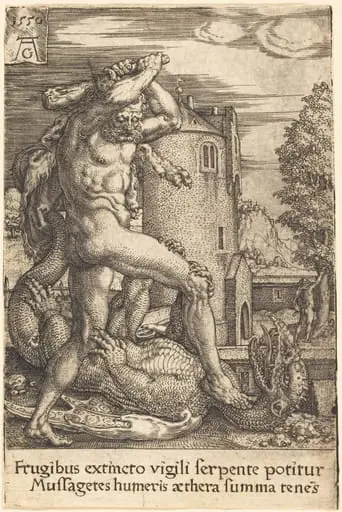
Hercules Killing Cacus
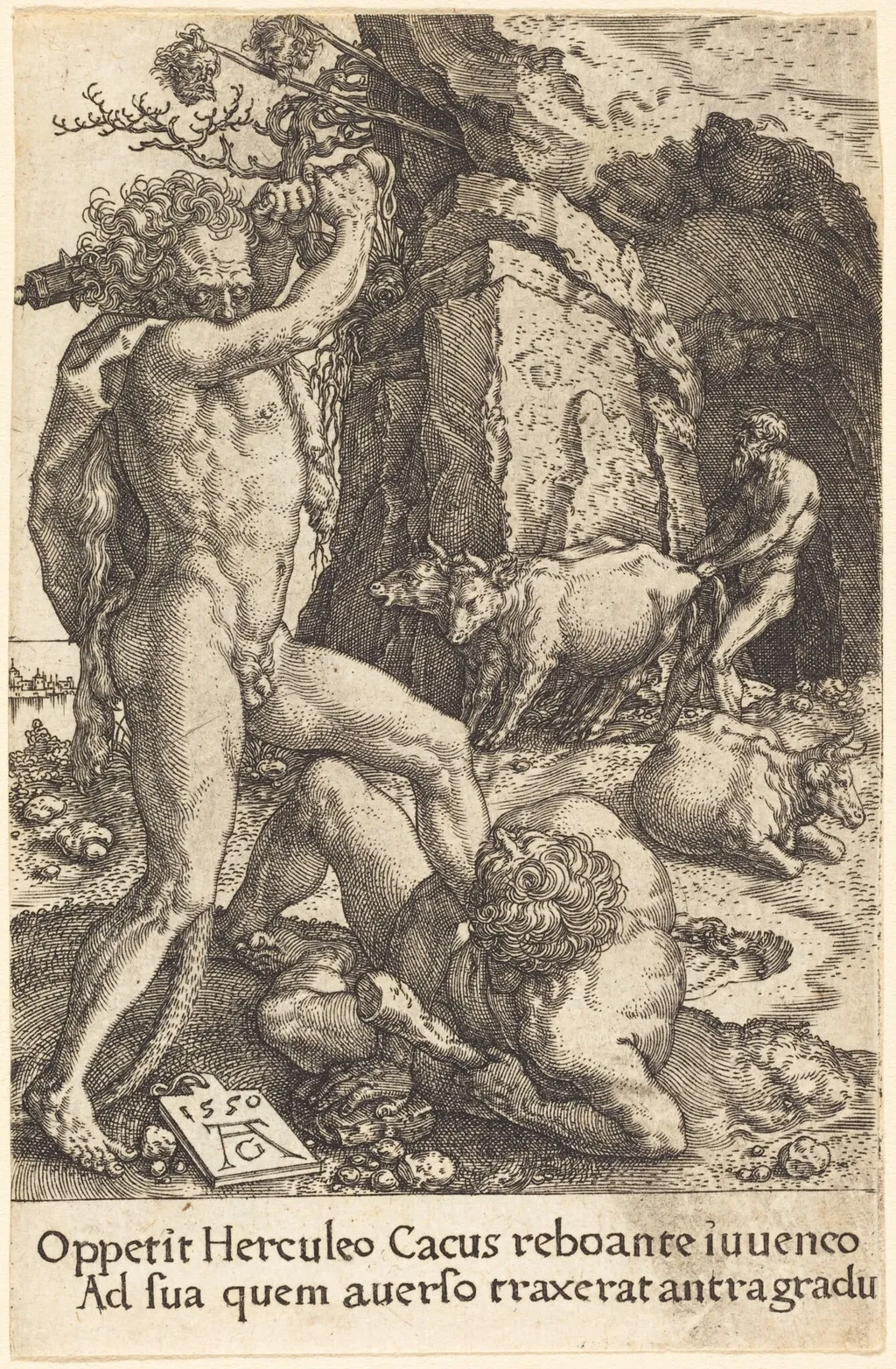
Hercules Killing Cacus is a print by the Northern Renaissance artist Heinrich Aldegrever. It dates from 1550 and is held in the collection of the National Gallery of Art.
About this work
Overview
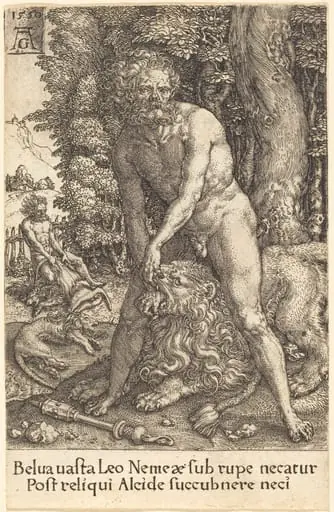
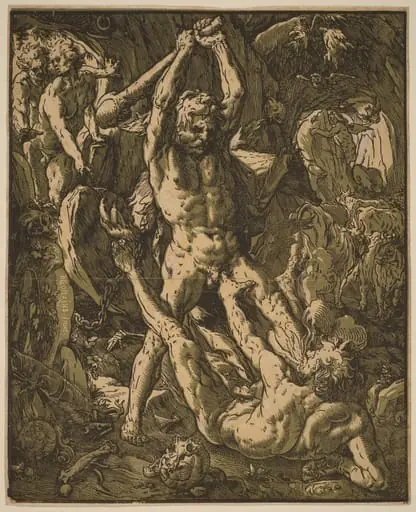
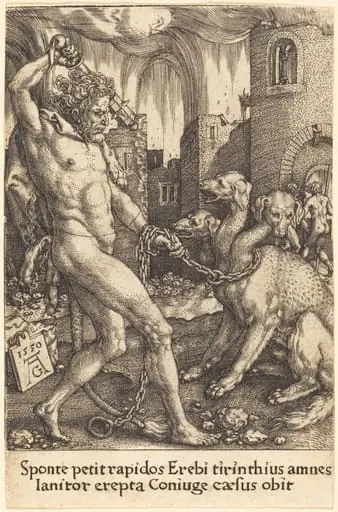
Heinrich Aldegrever’s 1550 copper engraving presents the climactic moment when Hercules subdues the monstrous Cacus. Executed on a modestly sized plate, the image captures a dynamic struggle set against a craggy landscape, with the hero’s muscular form contrasted by the serpentine limbs of the defeated creature.
Subject & Meaning
The composition illustrates the classical myth in which Hercules, armed with his club, overpowers Cacus—a fire‑breathing giant who stole the cattle of the city of Rome. The confrontation symbolizes the triumph of order and heroic virtue over chaos and theft, a theme frequently revisited in Renaissance art.
Technique & Style
Aldegrever employed fine, incised lines typical of the Northern Renaissance’s engraving tradition, creating deep hatching to model flesh and shadow. The intricate detailing of musculature, tangled limbs, and the rocky ground reflects the “Little Masters”’ penchant for meticulous, small‑scale works that reward close inspection.
History & Provenance
Created shortly after the death of Albrecht Dürer, the print belongs to a period when German engravers sought to emulate and surpass his technical achievements. The work has survived in several museum collections, often catalogued alongside Aldegrever’s other mythological and religious subjects.
Context
During the mid‑16th century, Northern artists increasingly turned to classical antiquity for subject matter, integrating humanist ideals with local artistic practices. Aldegrever’s choice of Hercules—a figure embodying strength and moral resolve—mirrored contemporary interests in heroic exempla and the moral instruction they could provide.
Artist & collection

Artist
Heinrich Aldegrever or Aldegraf was a German painter and engraver. He was one of the "Little Masters", the group of German artists making small old master prints in the generation after Albrecht Dürer.