Artwork
John
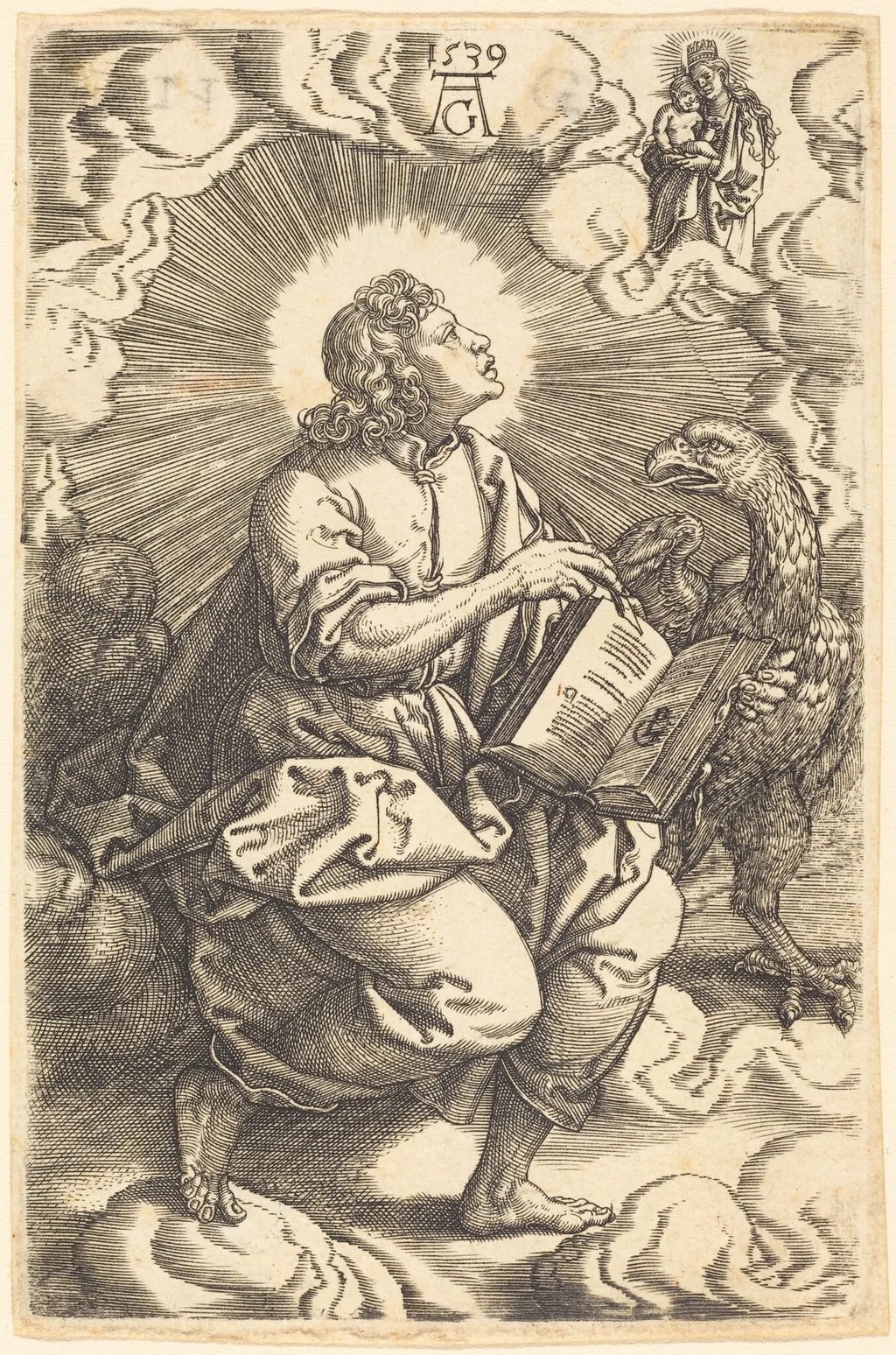
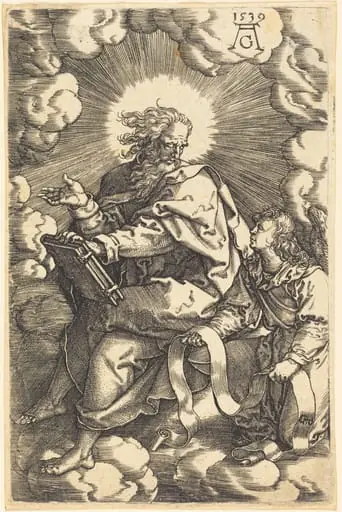
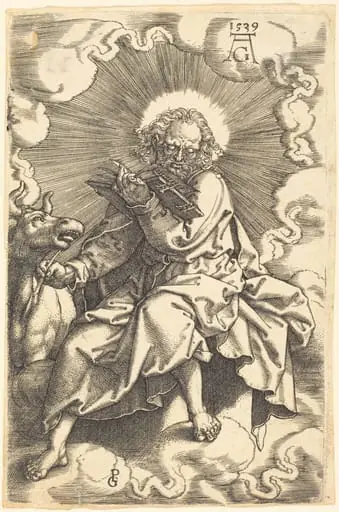
John is an ink print by the Northern Renaissance artist Heinrich Aldegrever. It dates from 1539 and is held in the collection of the National Gallery of Art.
About this work
Overview
Created in 1539, this etching is attributed to Heinrich Aldegrever, a German artist linked to the group known as the Little Masters. Working in the decades after Albrecht Dürer, Aldegrever specialized in small, finely rendered prints, and this work exemplifies his typical output in that period.
Subject & Meaning
The image centers on a solitary male figure traditionally identified as the biblical John. The composition focuses exclusively on the sitter, allowing the viewer to contemplate his expression and posture without narrative distraction, a common approach in devotional portraiture of the era.
Technique & Style
Executed entirely with etched lines, the work achieves depth through dense cross‑hatching and delicate stippling. This meticulous line work creates subtle gradations of tone and texture, reflecting the refined, detailed aesthetic that characterized the Little Masters’ prints.
History & Provenance
Aldegrever produced the piece during the mid‑16th century, a time when etching served both as a means of artistic practice and as a marketable commodity. While specific ownership records are scarce, the print has been documented in several European collections of early modern graphic art.
Context
The etching belongs to a broader tradition of German printmaking that flourished after Dürer’s innovations. Artists like Aldegrever adopted the medium to explore intricate detail on a modest scale, catering to collectors who prized technical virtuosity over monumental size.
Artist & collection

Artist
Heinrich Aldegrever or Aldegraf was a German painter and engraver. He was one of the "Little Masters", the group of German artists making small old master prints in the generation after Albrecht Dürer.