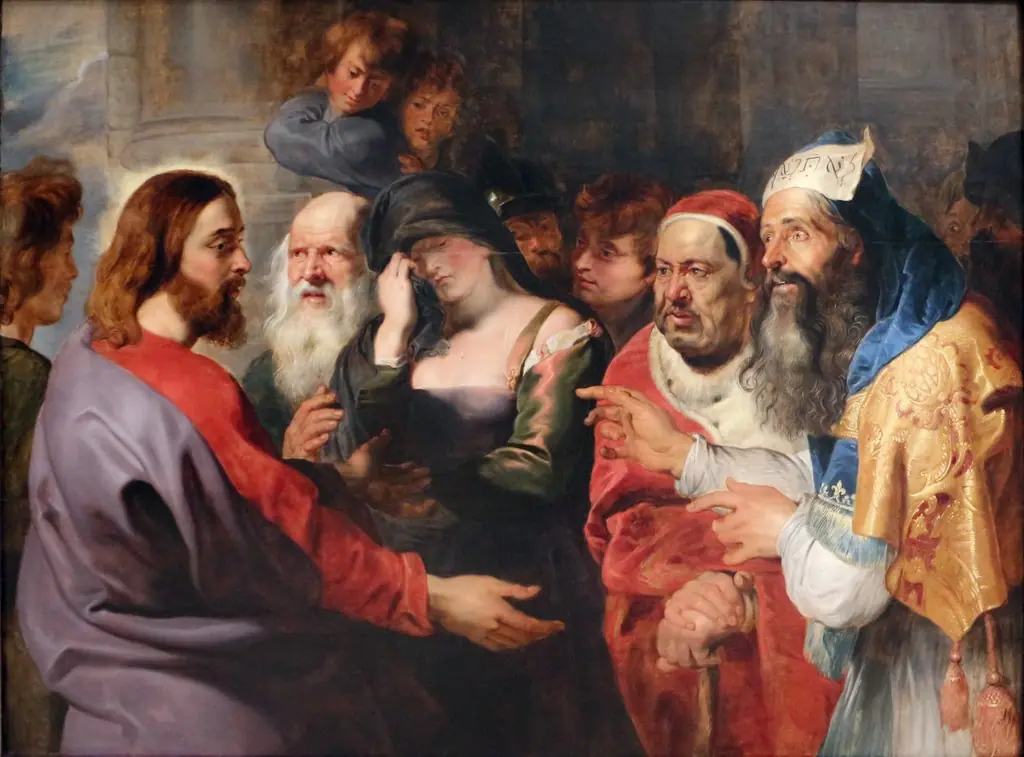
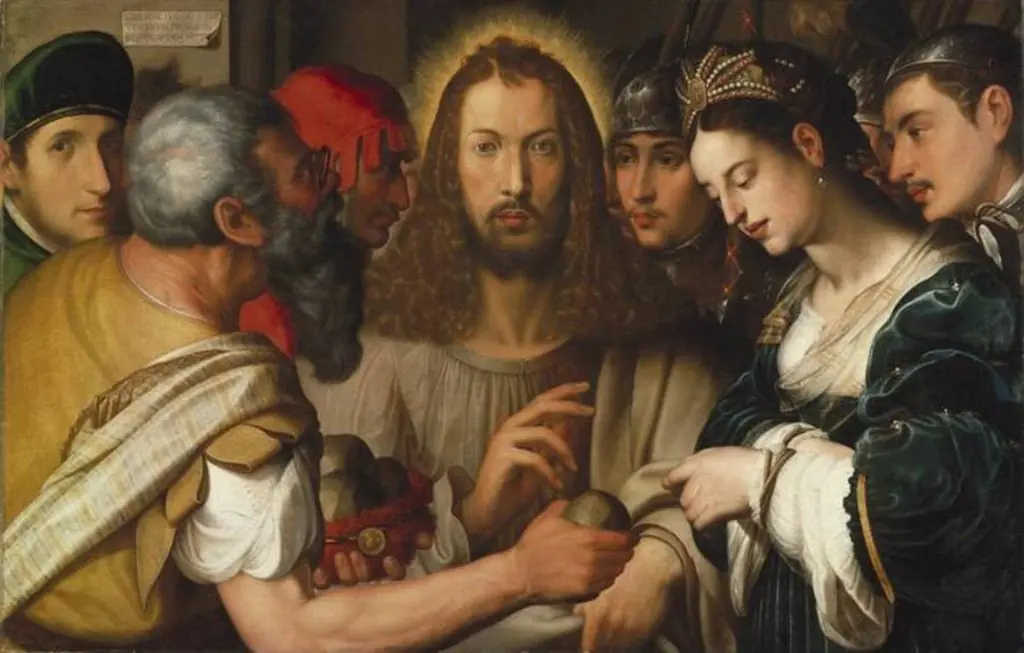
Artwork
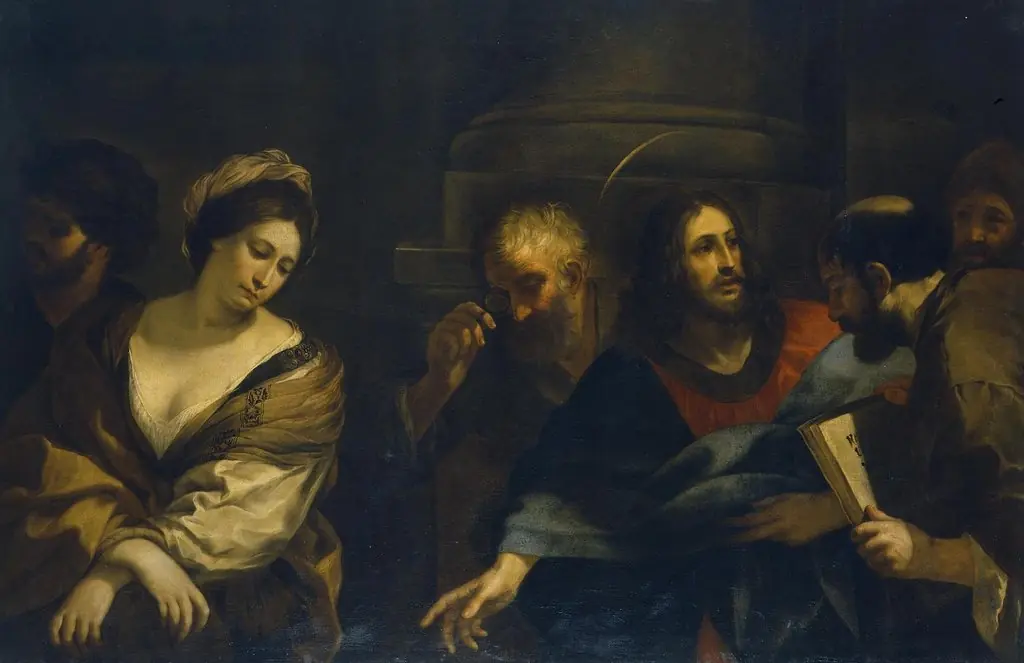
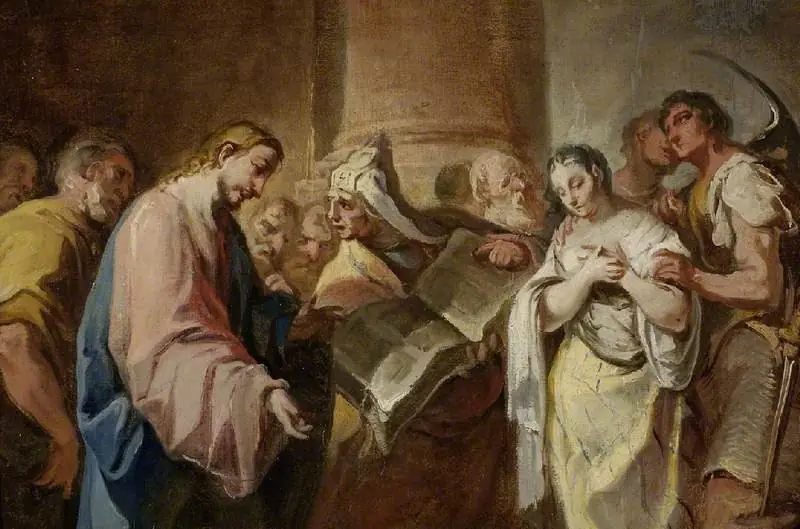
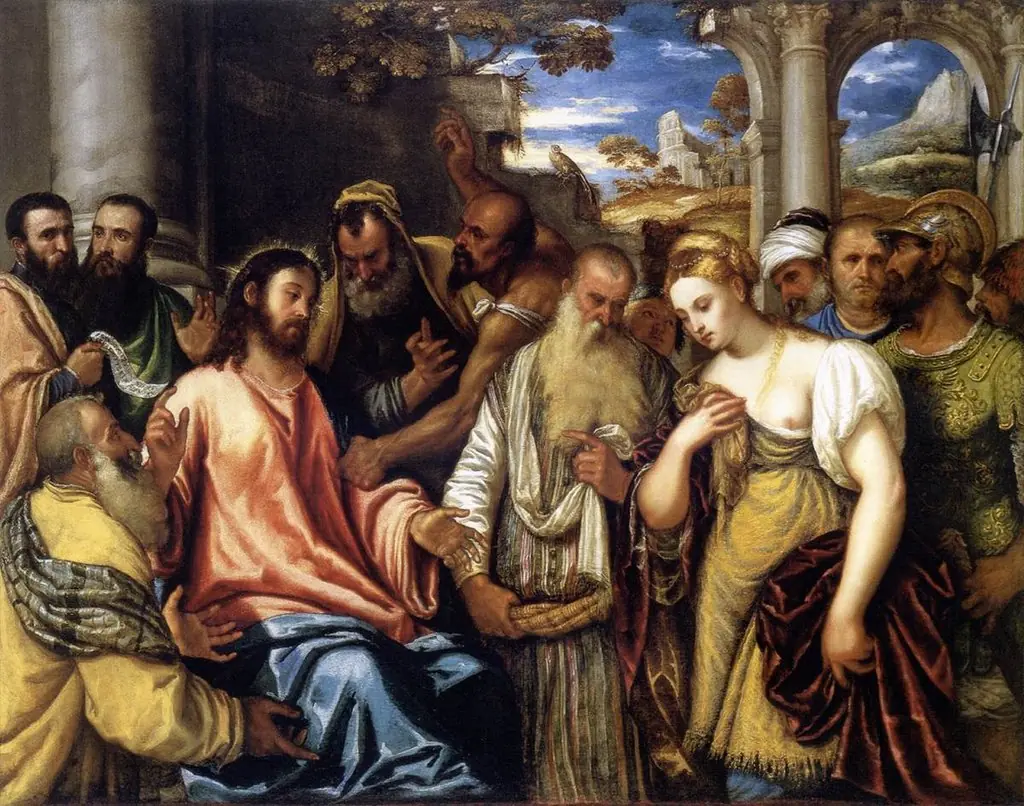
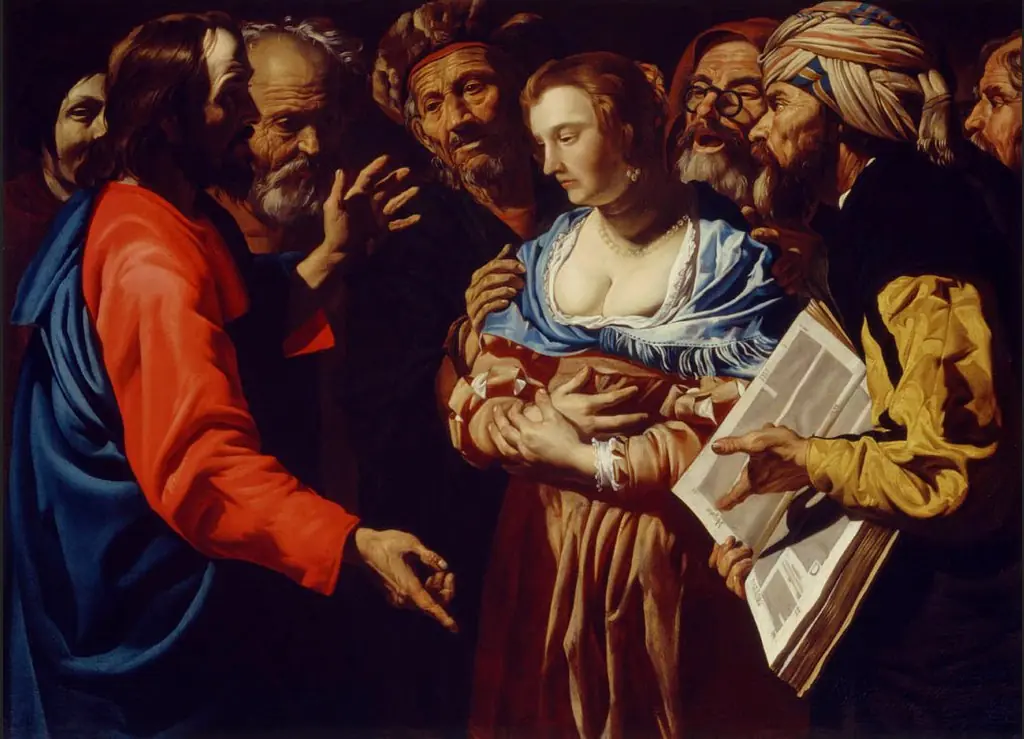
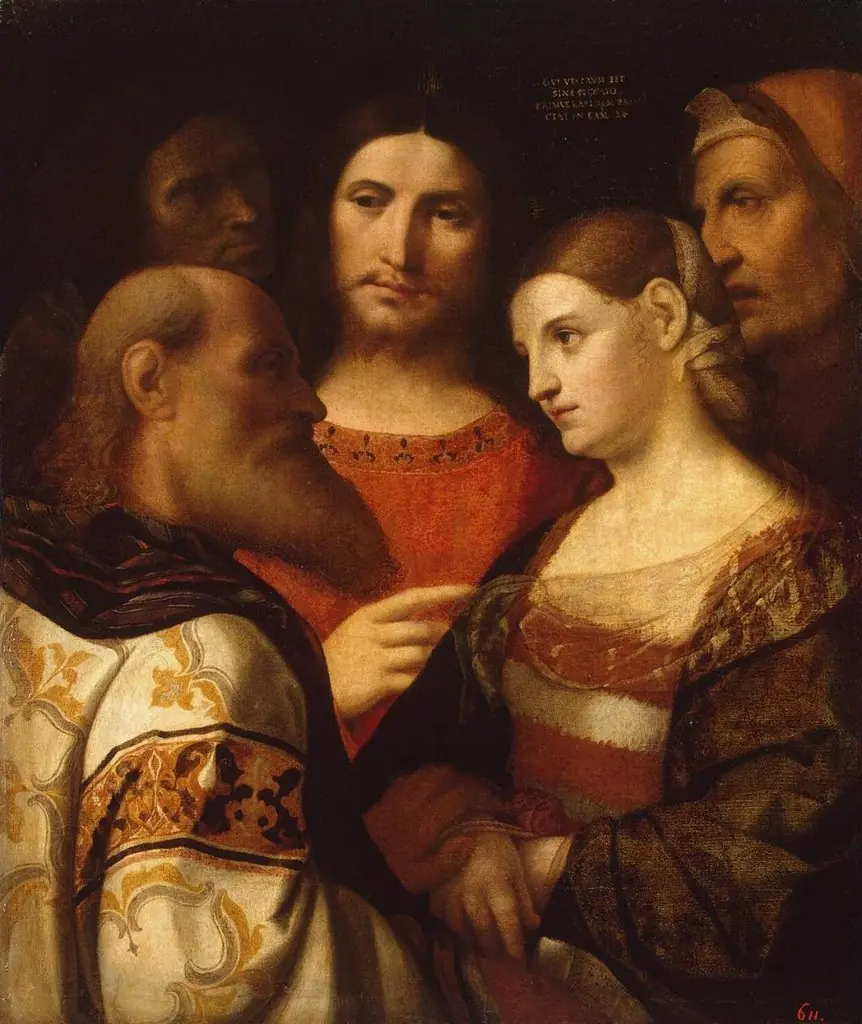
Christ and the Woman Taken in Adultery
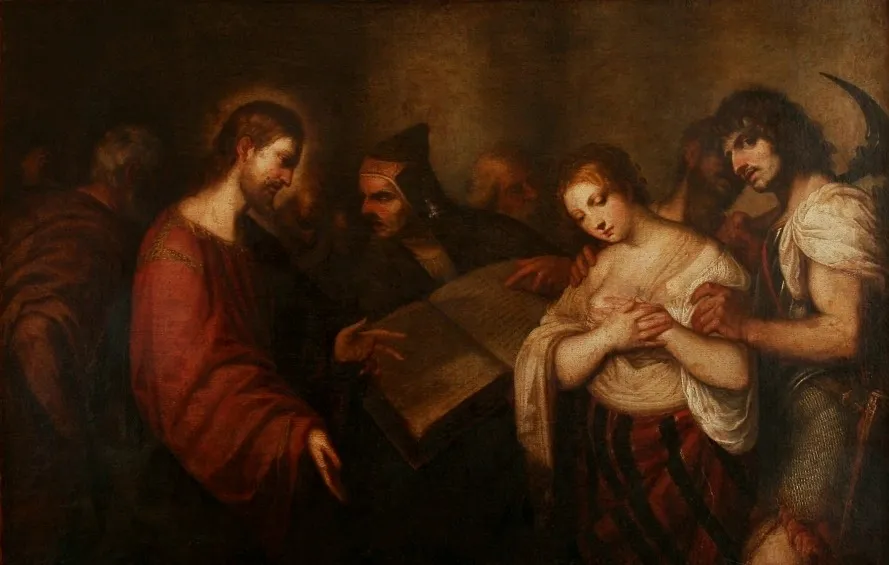
Christ and the Woman Taken in Adultery is an oil painting by the Early Baroque Italian artist Alessandro Varotari. It dates from 1630 and is held in the collection of the Kunsthistorisches Museum.
About this work
Overview
Alessandro Varotari, known as Il Padovanino, executed the oil painting *Christ and the Woman Taken in Adultery* in 1630. The work belongs to the late‑Mannerist and early‑Baroque phase of Venetian painting and is presently part of the Kunsthistorisches Museum’s collection in Vienna.
Subject & Meaning
The composition illustrates the Gospel episode in which Jesus confronts the accusers of a woman caught in adultery. The woman kneels in a white robe, while Christ, clothed in a red garment trimmed with gold, rests a hand on her shoulder, emphasizing mercy and forgiveness amid moral judgment.
Technique & Style
Varotari employs strong chiaroscuro, casting the background in deep shadow to isolate the central figures. The contrast of light on the red and white robes heightens the drama, while the painter’s handling of oil creates a tactile sense of texture in the fabrics and flesh.
History & Provenance
Born into a family of artists—son of Dario Varotari the Elder and brother of Chiara Varotari, who assisted him—Il Padovanino produced this work during his mature period. After changing hands among private collections, the painting entered the Kunsthistorisches Museum, where it remains on display as part of the museum’s Baroque holdings.
Artist & collection
Artist
Alessandro Leone Varotari (4 April 1588 – 20 July 1649), also commonly known as Il Padovanino, was a Venetian painter of the late-Mannerist and early-Baroque Venetian school, best known for having mentored Pietro…