Artwork
Vanitas
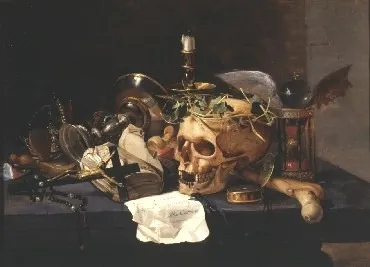
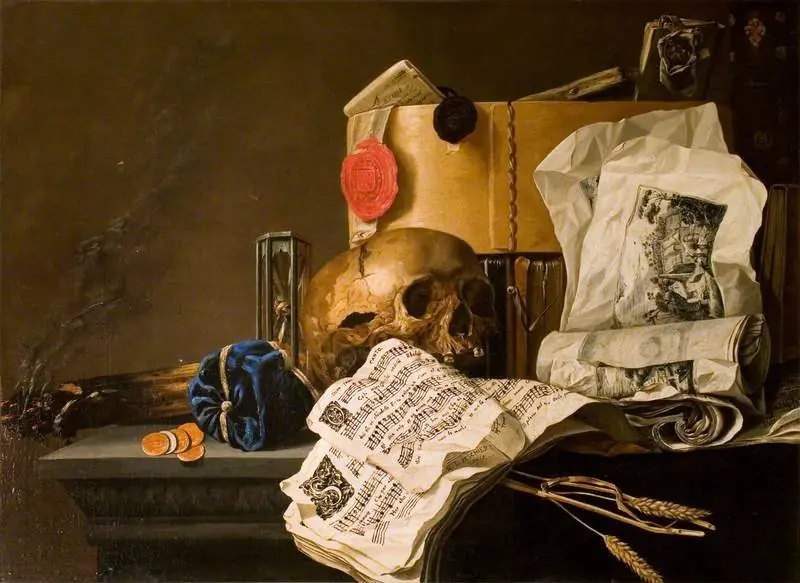
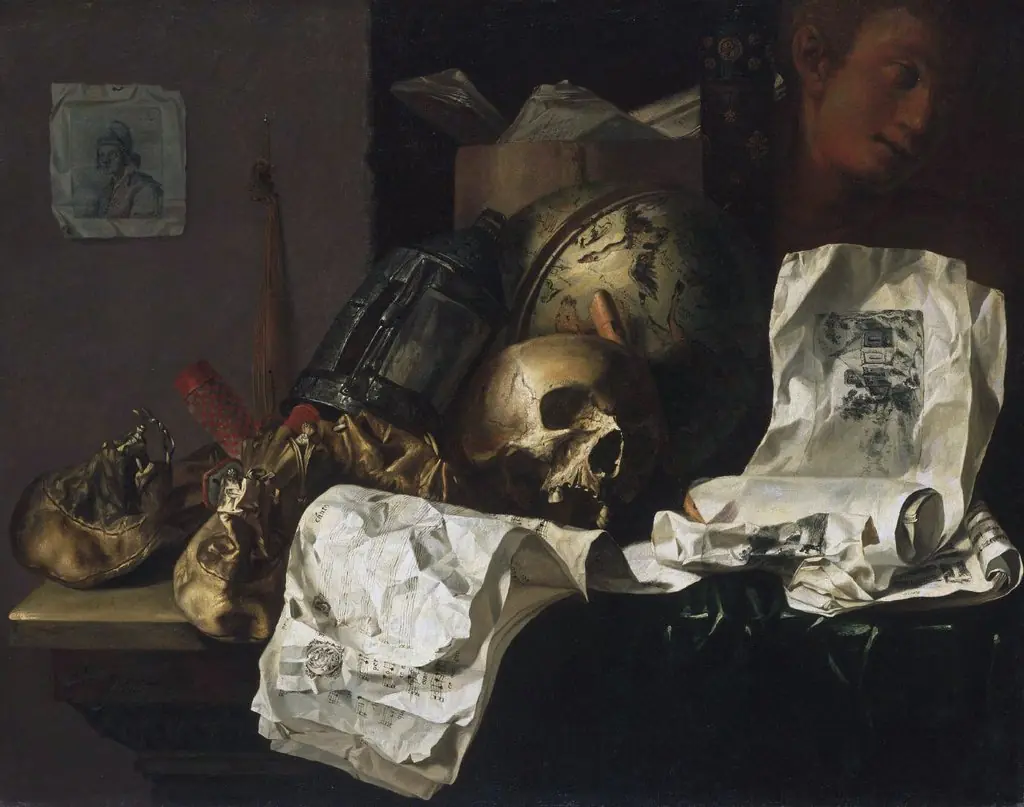
Vanitas is an oil painting by the Flemish Baroque painting artist Alexander Coosemans. It dates from 1665 and is held in the collection of the Royal Museums of Fine Arts of Belgium.
About this work
Overview
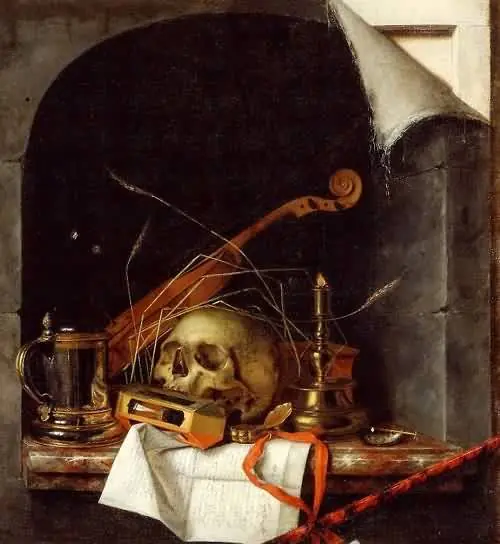
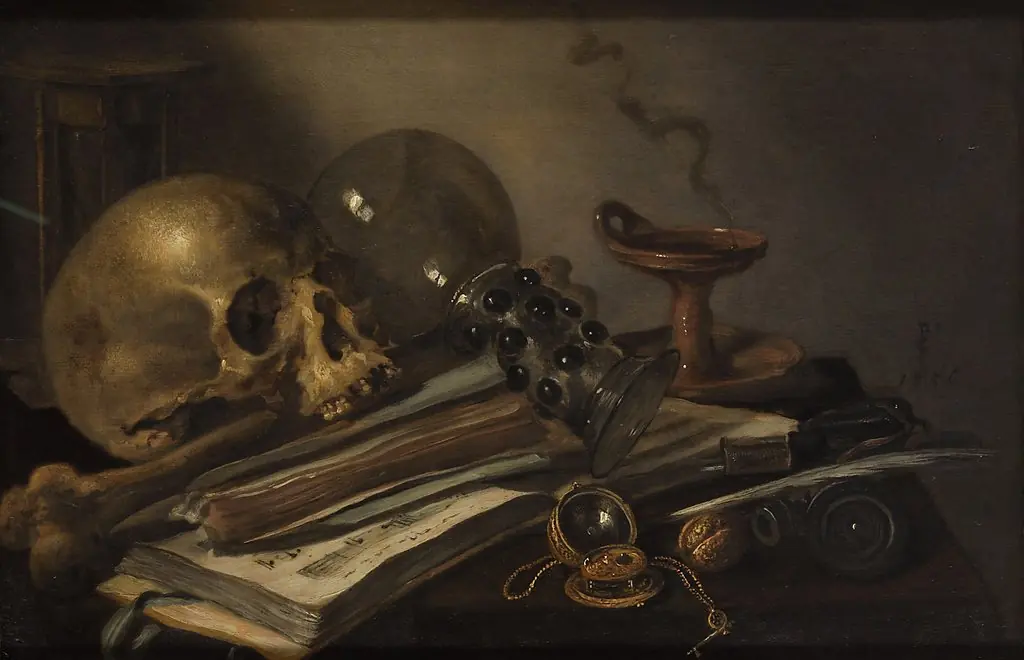
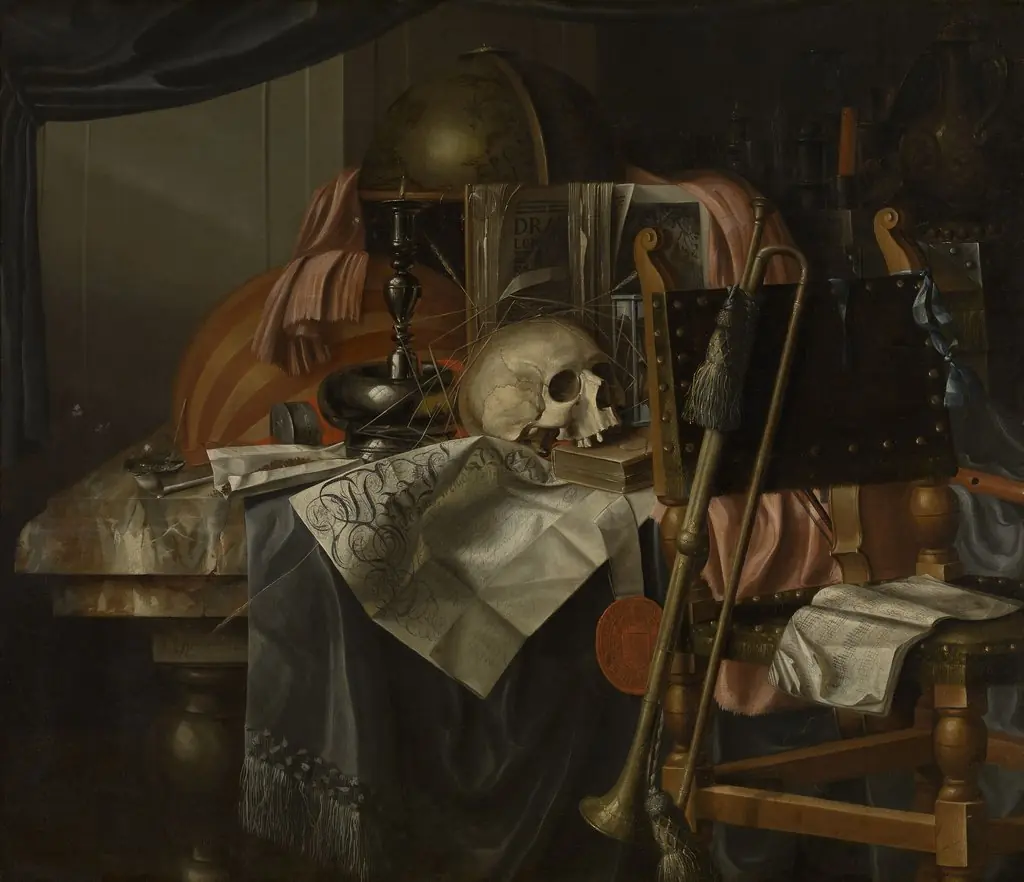
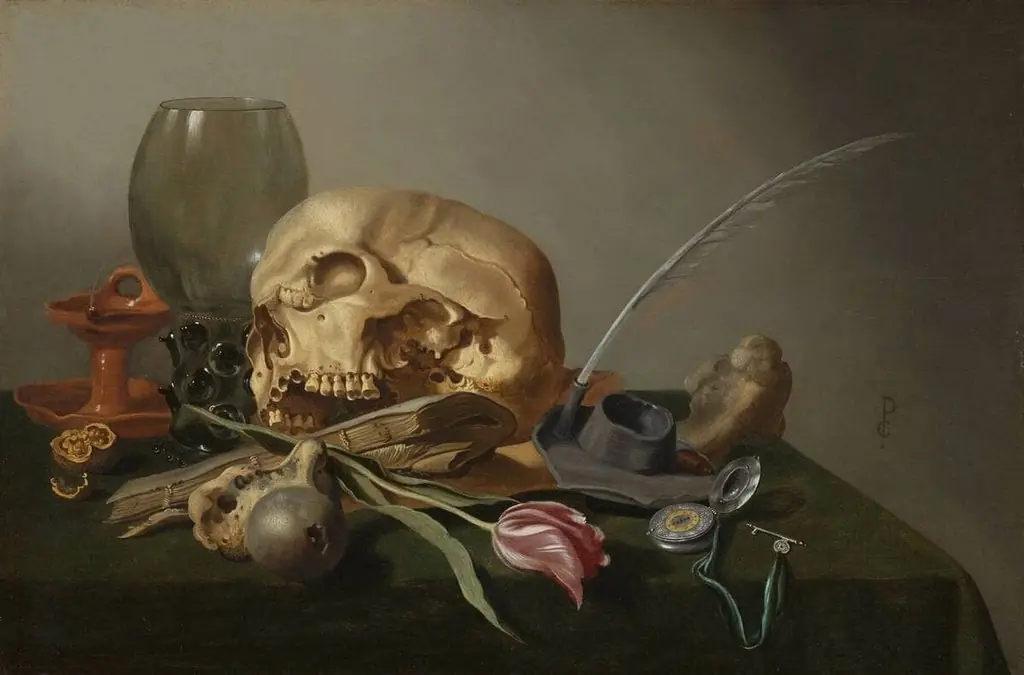
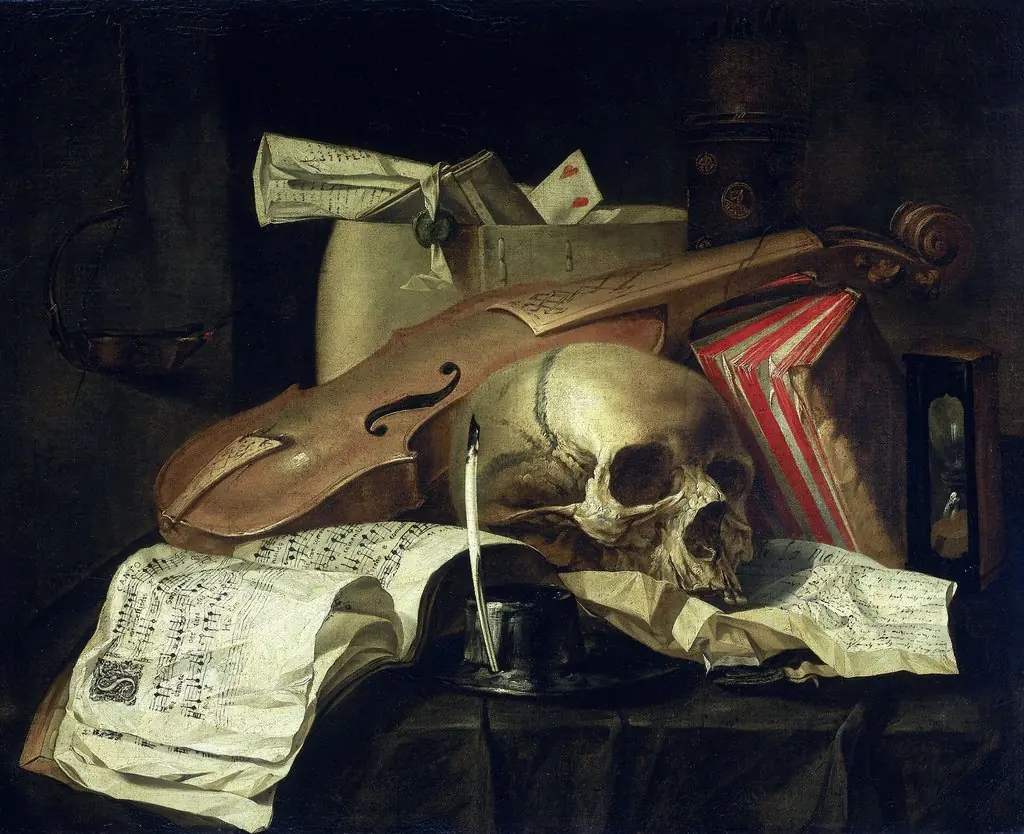
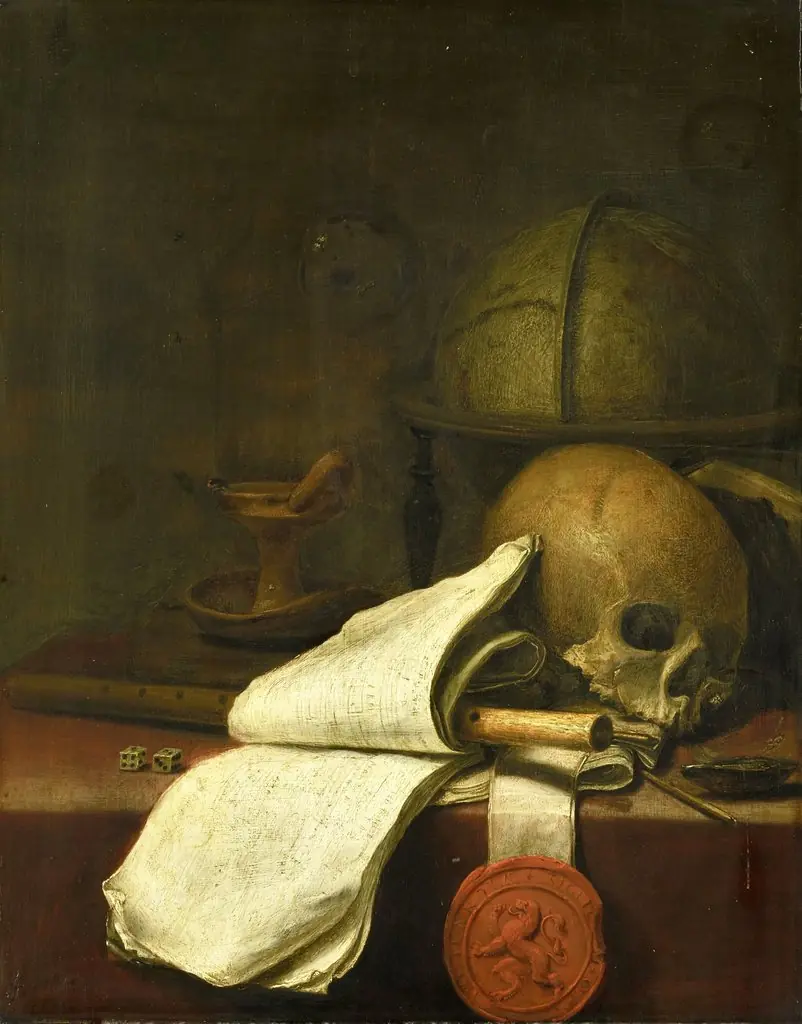
Created in 1665, this oil painting by Flemish artist Alexander Coosemans presents a meticulously arranged still life that embodies the vanitas tradition. Set against a muted, dark backdrop, the composition centers on a skull crowned with a leafy wreath, surrounded by symbols of time, mortality and the fleeting nature of earthly pursuits.
Subject & Meaning
The work juxtaposes a human skull, a femur, two hourglasses—one broken, one intact—a candlestick, a helmet and a cloth bearing faint script. These elements function as conventional vanitas motifs, reminding viewers of life's transience, the inevitability of death, and the futility of material ambition.
Technique & Style
Coosemans employs the Flemish Baroque emphasis on precise realism, rendering textures such as bone, metal, and fabric with striking fidelity. Subtle chiaroscuro models the forms, while the dark background isolates the objects, enhancing their three‑dimensional presence and drawing the eye to the central symbols.
History & Provenance
The painting forms part of the Royal Museums of Fine Arts of Belgium collection. It reflects Coosemans’ mid‑17th‑century output, during which he specialized in still lifes that explored moral and philosophical themes through elaborate symbolic arrangements.
Artist & collection
Artist
Alexander Coosemans (1627–1689) was a Flemish Baroque painter specialized in still lifes of flower pieces, fruit, and inanimate subjects. He painted vanitas still lifes, pronkstillevens and game pieces.

Museum
Royal Museums of Fine Arts of Belgium
Continue through works from the same source collection.