Artwork
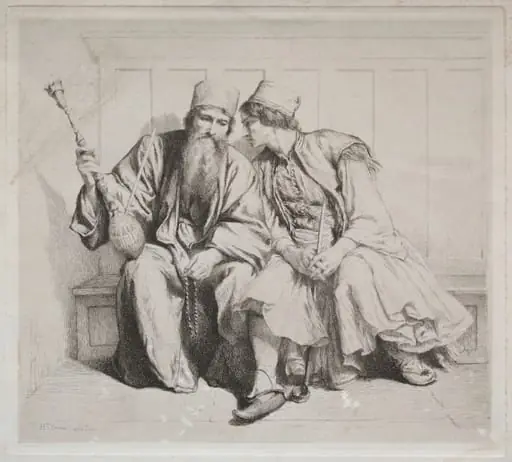
Young Greek Man in Conversation with a Priest
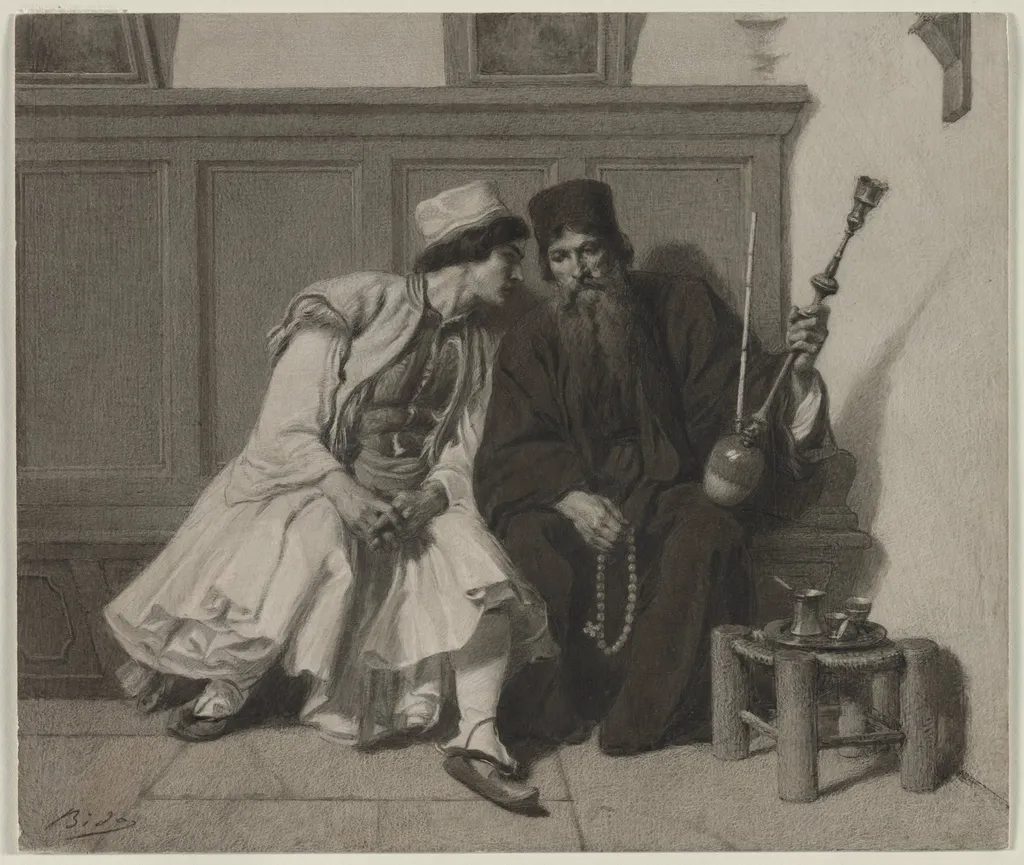
Young Greek Man in Conversation with a Priest is a drawing by the Romanticist artist Alexandre Bida. It dates from 1859 and is held in the collection of the Cleveland Museum of Art.
About this work
Overview
The work is part of the collection at The Cleveland Museum of Art and reflects the artist’s interest in ethnographic detail and intimate human interaction.
Created in 1859 by Alexandre Bida, this pencil drawing captures a quiet moment between two figures in a modest interior. The work is part of the collection at The Cleveland Museum of Art and reflects the artist’s interest in ethnographic detail and intimate human interaction. Rendered with delicate linework, it belongs to a series of studies Bida made during his travels in the Eastern Mediterranean.
Subject & Meaning
The scene depicts a young Greek man in a loose white garment engaging with an older man dressed in dark robes and holding a crook-like staff. The elder’s attire and object suggest clerical status, possibly a priest or local religious figure. The younger man’s forward lean and relaxed posture imply a personal, informal exchange—perhaps a consultation, confession, or spiritual counsel—rather than a formal ritual.
Technique & Style
Bida employs subtle pencil shading to model forms and define spatial depth, using chiaroscuro to concentrate attention on the faces and hands of the figures. The soft, directional light emerges from an unseen source, casting gentle shadows across the wooden walls and garments. The drawing’s precision in texture—fabric folds, beard strands, and the grain of wood—reveals a disciplined observational approach rooted in academic draftsmanship.
History & Provenance
The drawing was produced during Bida’s time in the Ottoman Empire, where he documented regional customs and religious practices. It entered the Cleveland Museum of Art’s collection in the 20th century, likely through a broader acquisition of 19th-century European Orientalist works. Its provenance traces back to the artist’s personal sketchbooks, preserved and later dispersed among institutional collections.
Context
Bida’s work emerged amid a European fascination with the Near East, often filtered through colonial and romantic lenses. Unlike grand historical scenes, this drawing focuses on quiet, everyday encounters. It aligns with a trend among artists to record authentic local life, though still shaped by Western perspectives. The setting reflects the domestic architecture and religious customs of rural Greek communities under Ottoman rule.
Legacy
This drawing stands as a modest but significant example of 19th-century ethnographic art, valued for its restraint and attention to detail. It contributes to scholarly understanding of how European artists engaged with non-Western subjects—not through spectacle, but through quiet observation. Its preservation in a major museum underscores its role in documenting cultural specificity during a period of shifting regional identities.
Own this work as a print
Artist & collection

 Le Corps de Garde
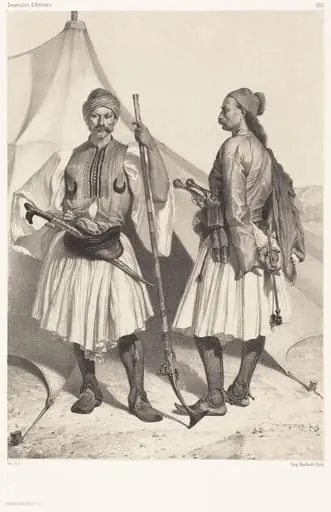 Arnautes, Égypte (Albanians, Egypt)
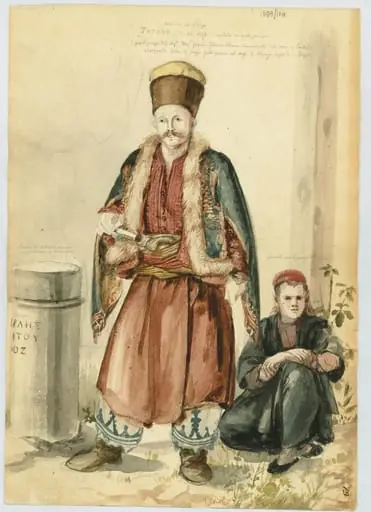 Ο τάταρος του Αλή Πασά "στην υπηρεσία του στρατηγού Adam" και ο νεαρός υπηρέτης του
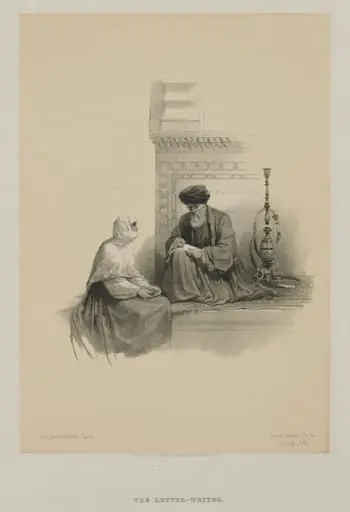 Egypt and Nubia, Volume III: The Letter-Writer, Cairo
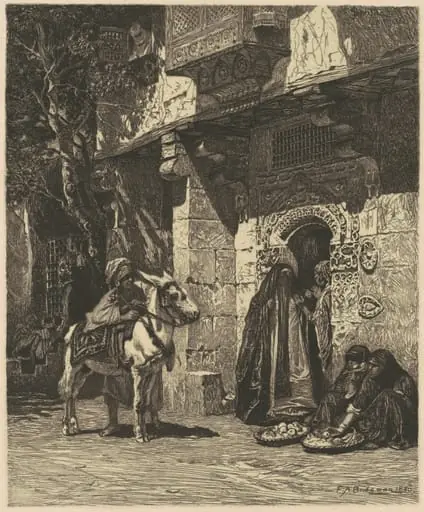 A Lady of Cairo Visiting
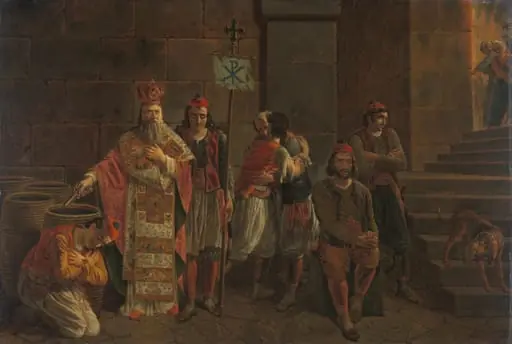 The Last Defenders of Missolonghi, 22 April 1826: an episode from the Greek War of Independence
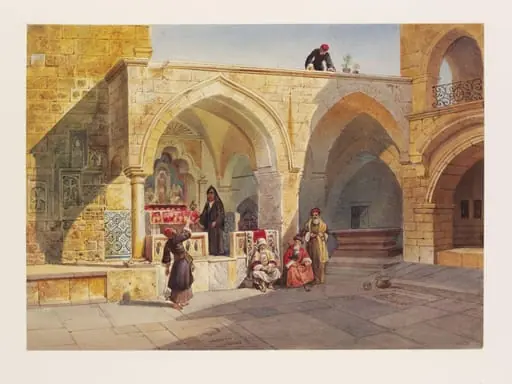 Court of the House of Caiaphus
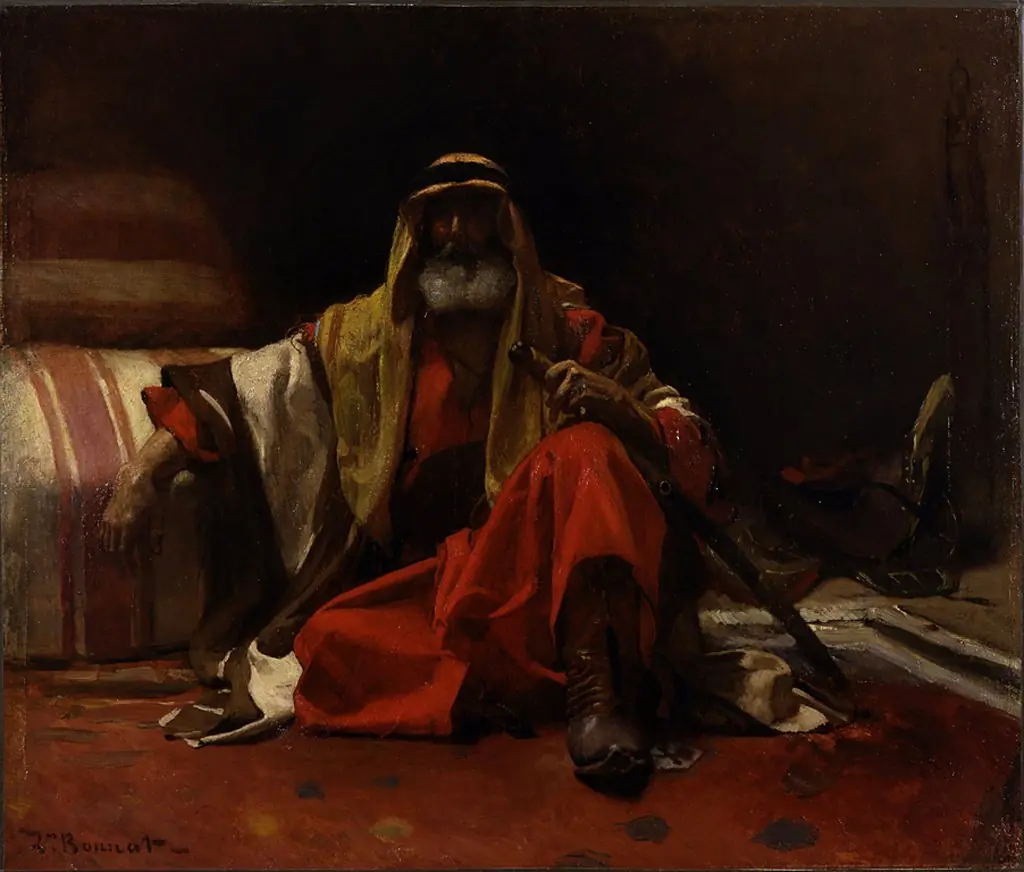 An Arab Sheik
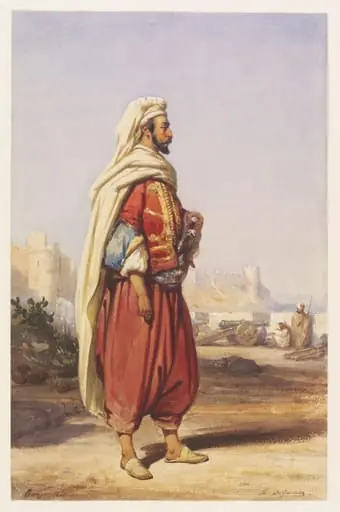 A Moroccan Amir
 Two Turks, with a Servant, smoking on a Terrace overlooking a Lake or Sea in Turkey or Greece
 Young Greek Man in Conversation with a Priest