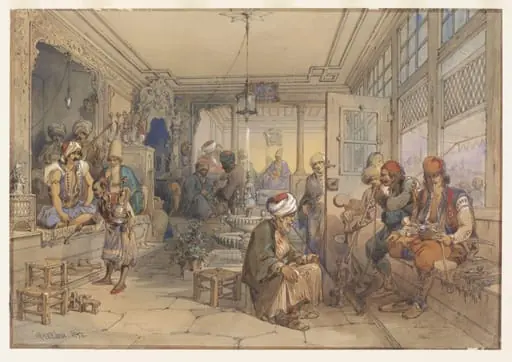
Artwork
Café in Constantinople
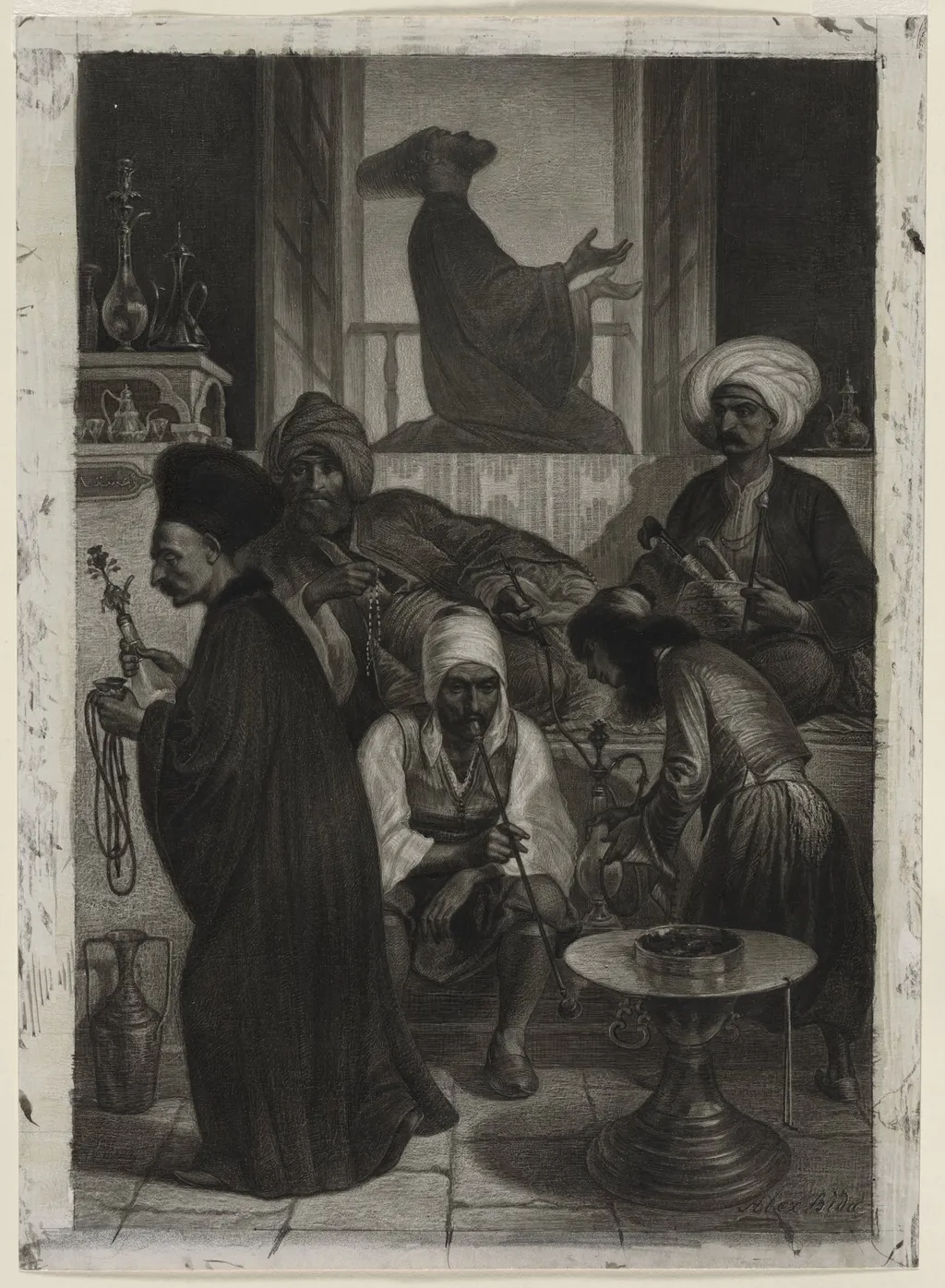
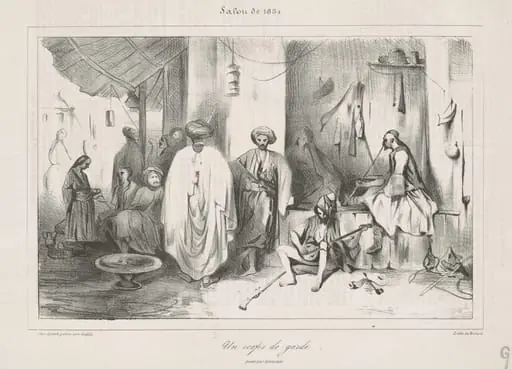
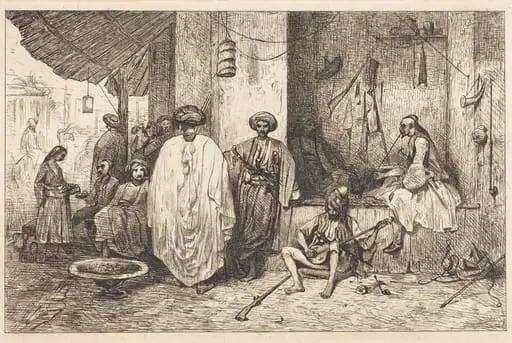
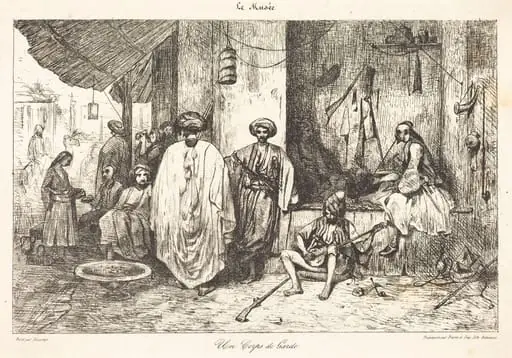
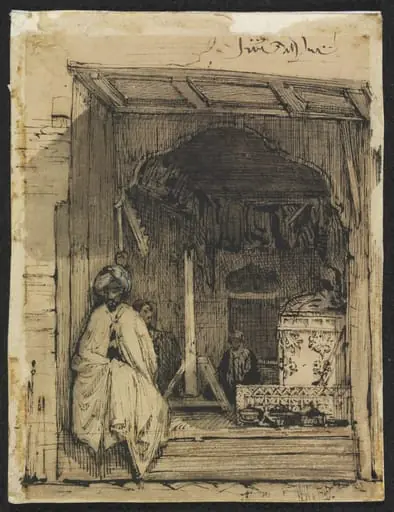
Café in Constantinople is a drawing by the Romanticist artist Alexandre Bida. It dates from 1847 and is held in the collection of the Cleveland Museum of Art. This detailed drawing depicts a café scene in Constantinople, executed with a distinctive layered technique.
About this work
Overview
This detailed drawing depicts a café scene in Constantinople, executed with a distinctive layered technique. The artist applied ink and graphite over a foundation of white chalk, then refined the composition by scratching fine lines with a stylus. This method allowed for subtle tonal variations and precise detailing, distinguishing the work from conventional ink drawings of the period.
Subject & Meaning
While the setting is grounded in observed reality, the arrangement of figures and spatial symmetry suggests a staged composition.
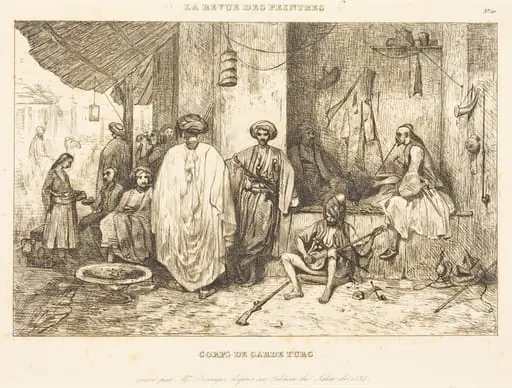
The scene captures everyday life in a Constantinopolitan café, with figures dressed in local attire engaged in quiet activities. While the setting is grounded in observed reality, the arrangement of figures and spatial symmetry suggests a staged composition. The focus on costume and environment reflects an interest in cultural documentation, yet the formal balance hints at aesthetic idealization rather than pure reportage.
Technique & Style
The drawing employs a multi-layered approach: white chalk establishes a luminous base, over which ink and graphite build shadow and form. A stylus is used to incise delicate highlights, revealing the chalk beneath and enhancing contrast. This technique creates a refined chiaroscuro effect, emphasizing texture and volume without heavy shading, resulting in a crisp, almost enamel-like surface.
History & Provenance
The artist, Antoine Bida, first traveled to the Near East in 1843, departing from Venice to sketch scenes in Constantinople and Syria. He returned multiple times, gathering visual material for his studio work. This drawing likely stems from those early journeys, though its polished finish suggests it was completed later in his Paris studio, combining on-site observation with studio refinement.
Context
Bida worked during a period of heightened European interest in Orientalist themes. His approach differed from many contemporaries by prioritizing meticulous observation over exotic fantasy. Yet his compositions often retained a sense of theatrical order, aligning with academic preferences for balanced, decorative structure—even when depicting candid moments of daily life.
Legacy
Bida’s technique of scratching through ink and graphite to reveal chalk highlights remained uncommon among his peers. While not widely imitated, his method influenced later draftsmen interested in controlled tonal gradation. His drawings are now valued for their technical ingenuity and their quiet, unromanticized record of 19th-century urban life in the Ottoman capital.
Artist & collection