Artwork
Penitent Magdalene
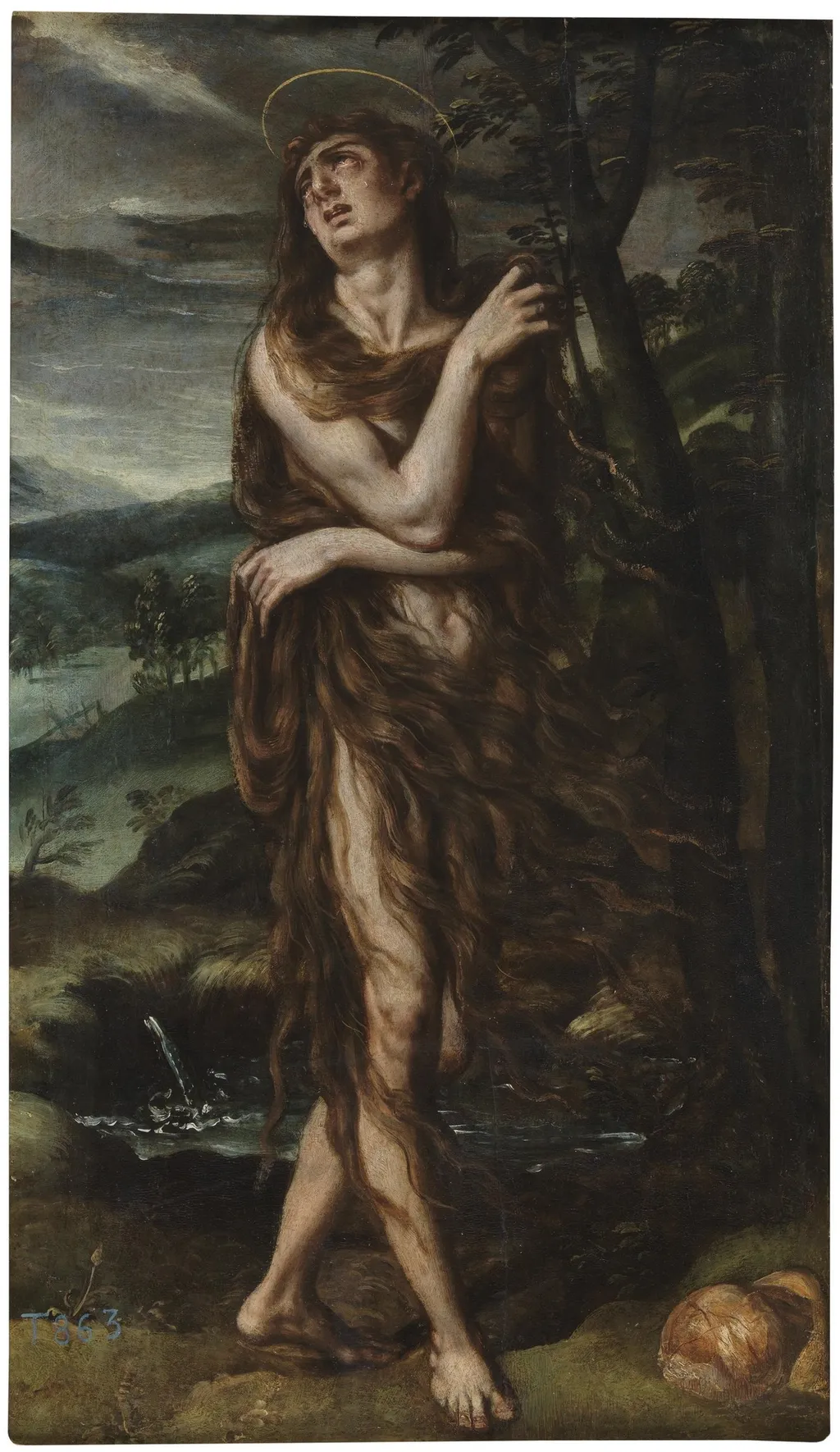
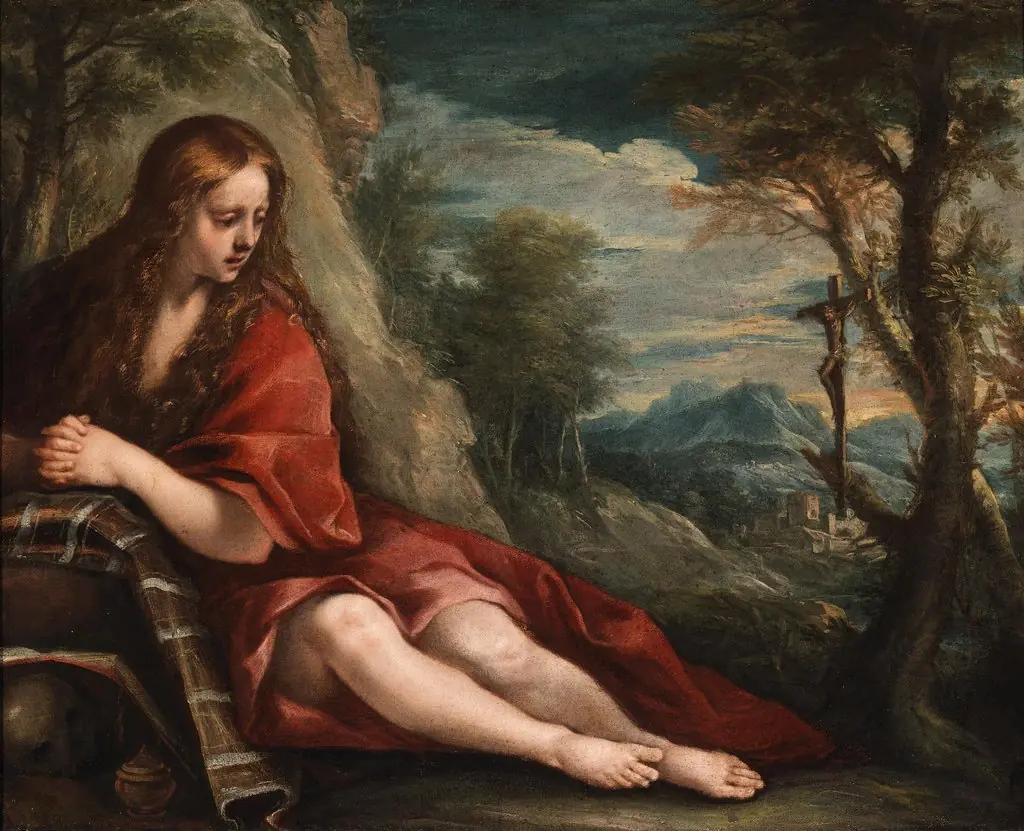
Penitent Magdalene is an oil painting by the Early Baroque Italian artist Alexandro Loarte. It dates from 1601 and is held in the collection of the Museo del Prado.
About this work
Overview
Alejandro de Loarte’s *Penitent Magdalene* (1601) is an oil painting that presents a solitary female figure in a contemplative pose.
Alejandro de Loarte’s *Penitent Magdalene* (1601) is an oil painting that presents a solitary female figure in a contemplative pose. The work measures roughly a modest size and is held in the Museo del Prado. Though Loarte is chiefly known for his still‑life compositions, this canvas belongs to his limited output of religious subjects, reflecting the transitional aesthetic between the late Renaissance and the early Baroque.
Subject & Meaning
The central figure is identified as Mary Magdalene, portrayed with long hair and a simple brown robe. Her arms are crossed and her gaze lifts toward an unseen sky, suggesting a moment of penitence and spiritual introspection. The surrounding landscape—trees, gentle hills, and a reflective body of water—provides a serene backdrop that reinforces the theme of redemption through quiet contemplation.
Technique & Style
Loarte employs chiaroscuro to model the Magdalene’s form, allowing light to emerge from the darker surroundings and create a three‑dimensional presence. Impasto passages in the robe and foliage add tactile surface variation, while a warm palette of earth tones deepens the atmospheric effect. The composition balances the emerging Baroque interest in drama with lingering Renaissance compositional restraint.
History & Provenance
Completed in 1601, the painting entered the Spanish royal collection before being transferred to the Museo del Prado, where it remains on display. Documentation links the work to Loarte’s later career, a period when he began to explore narrative religious themes alongside his established still‑life practice.
Context
The canvas reflects the broader diffusion of early Baroque sensibilities from Italy into Spain, a movement characterized by heightened emotional expression and dynamic lighting. Loarte’s choice of Mary Magdalene—a figure associated with repentance—aligns with Counter‑Reformation ideals that emphasized personal conversion and piety.
Artist & collection
Artist
Alejandro de Loarte (c.1590/1600 – 12 December 1626) was a Spanish painter active during the late Renaissance and early Baroque periods. He specialized in still-lifes.