Artwork
Untitled
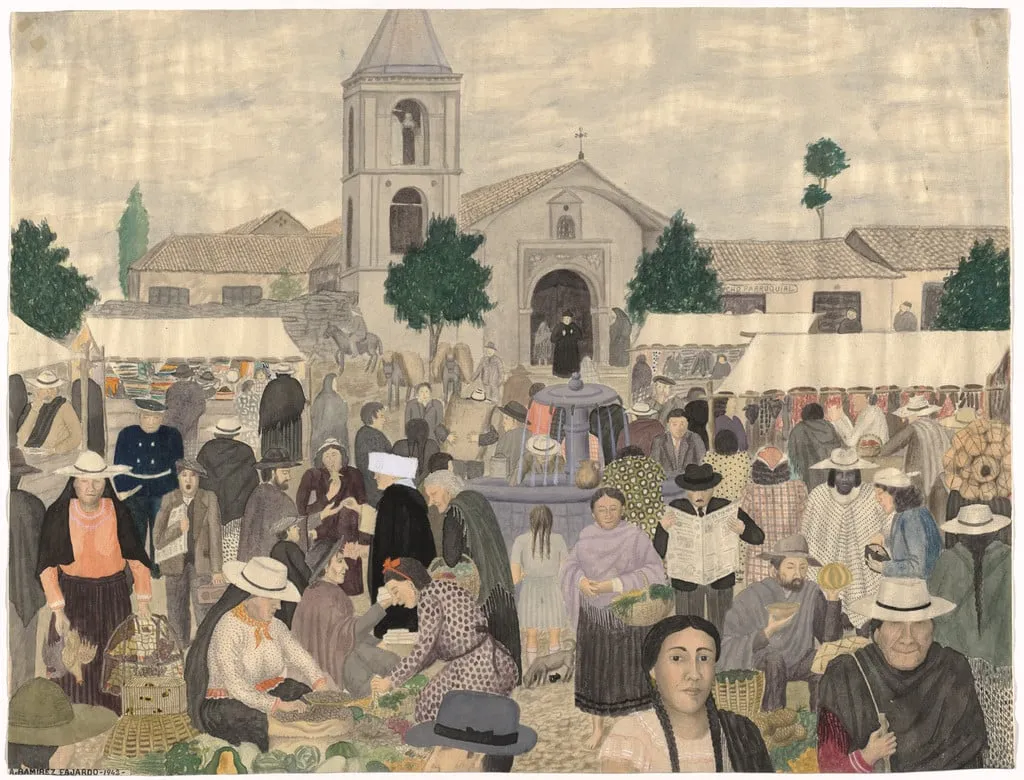
Untitled is a watercolor drawing by Alfonso Ramirez Fajardo. It dates from 1942 and is held in the collection of the Museum of Modern Art.
About this work
Overview
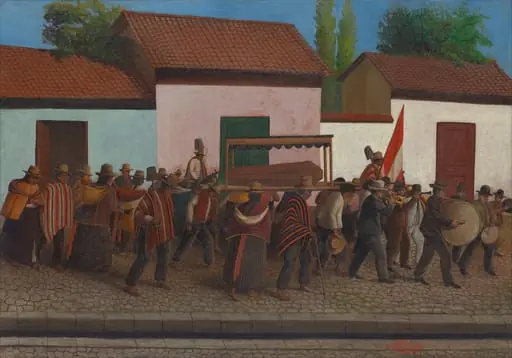
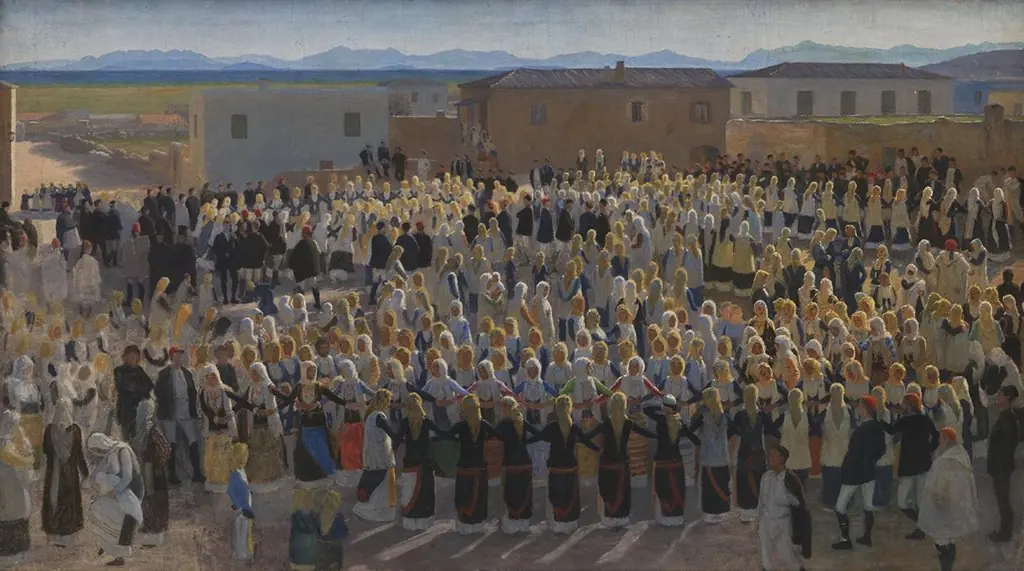
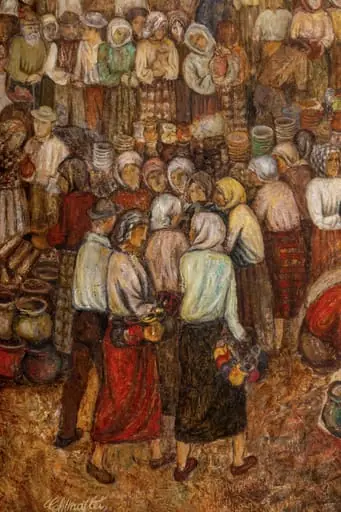
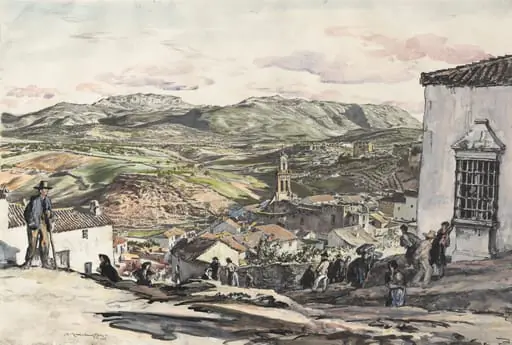
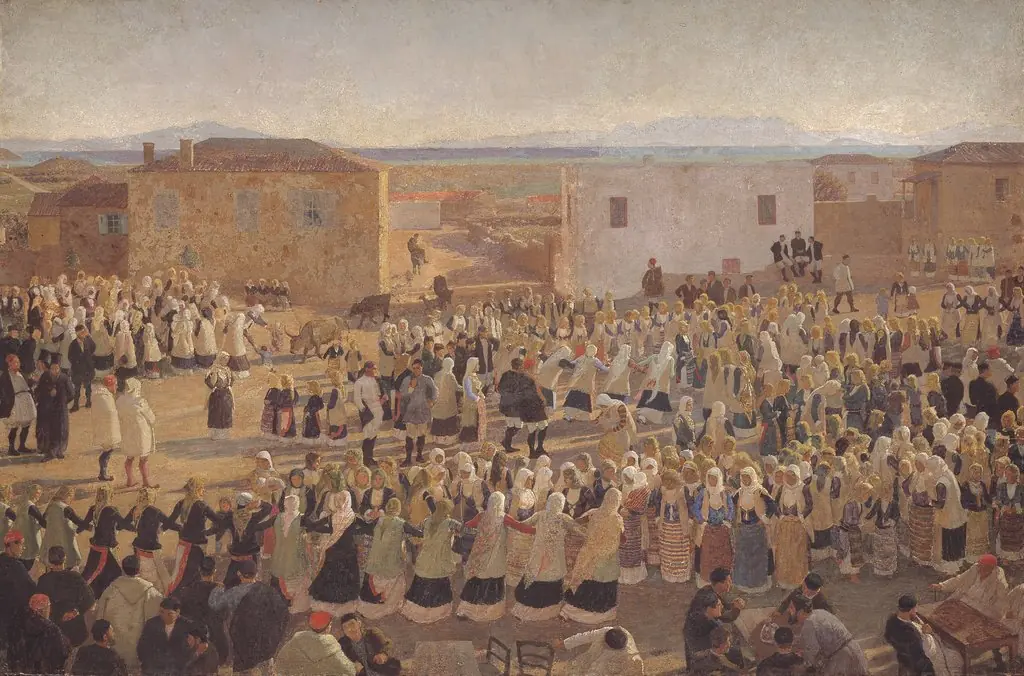
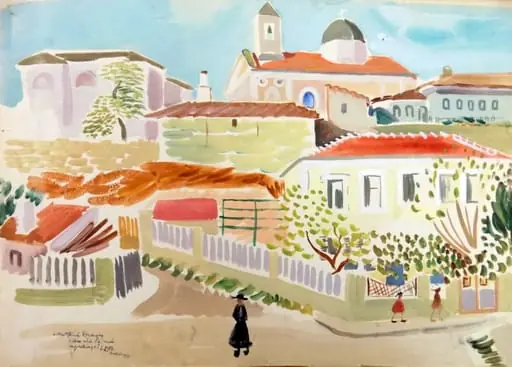
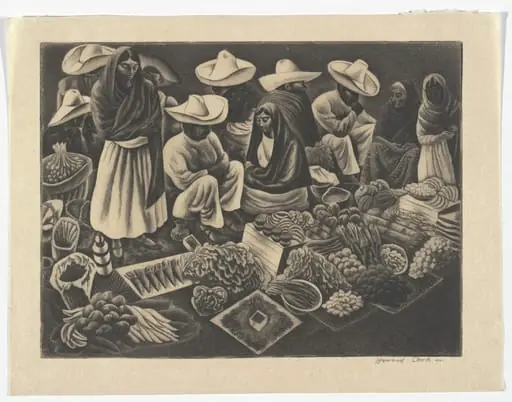
Created in 1942, this drawing by Alfonso Ramirez Fajardo combines watercolor, pencil, and colored pencil on paper. It depicts a bustling urban street scene and is part of the collection at The Museum of Modern Art. The work belongs to a body of mid-20th-century Latin American drawings that capture everyday life with quiet observation rather than dramatic emphasis.
Subject & Meaning
The scene portrays a lively public space filled with pedestrians, musicians, food vendors, and a horse-drawn cart. Figures blend into the environment, their individual identities unremarked upon. The composition conveys a sense of communal rhythm, where activity unfolds without focal point or hierarchy, reflecting the unscripted flow of daily existence under a warm, overhead sun.
Technique & Style
The artist applied watercolor in translucent layers, a method known as glazing, allowing underlying tones to subtly show through. Pencil and colored pencil define forms with light, precise lines. The resulting surface feels luminous, with colors emerging gradually to suggest the soft, diffused light of late afternoon, enhancing the scene’s atmospheric warmth without harsh contrast.
History & Provenance
The work was completed in 1942 and entered the collection of The Museum of Modern Art at a later date. Its acquisition reflects the institution’s interest in expanding its holdings of Latin American modernist drawings during the mid-century. No record of prior ownership or exhibition history beyond the museum’s collection is widely documented.
Context
This piece aligns with a broader trend among Latin American artists of the era who turned to watercolor for its immediacy and accessibility. Rather than monumental themes, they focused on ordinary urban life, often influenced by regional visual traditions and the informal textures of public space. The work avoids idealization, presenting scenes as observed, not staged.
Legacy
Though not widely reproduced, the drawing contributes to the understanding of watercolor as a serious medium for social observation in 20th-century Latin American art. Its restrained palette and emphasis on atmosphere influenced later artists exploring similar themes of public life through layered, translucent techniques.
Artist & collection