Artwork
Picturesque Architecture in Paris, Ghent, Antwerp, Rouen: Rue des Marmousets, Paris
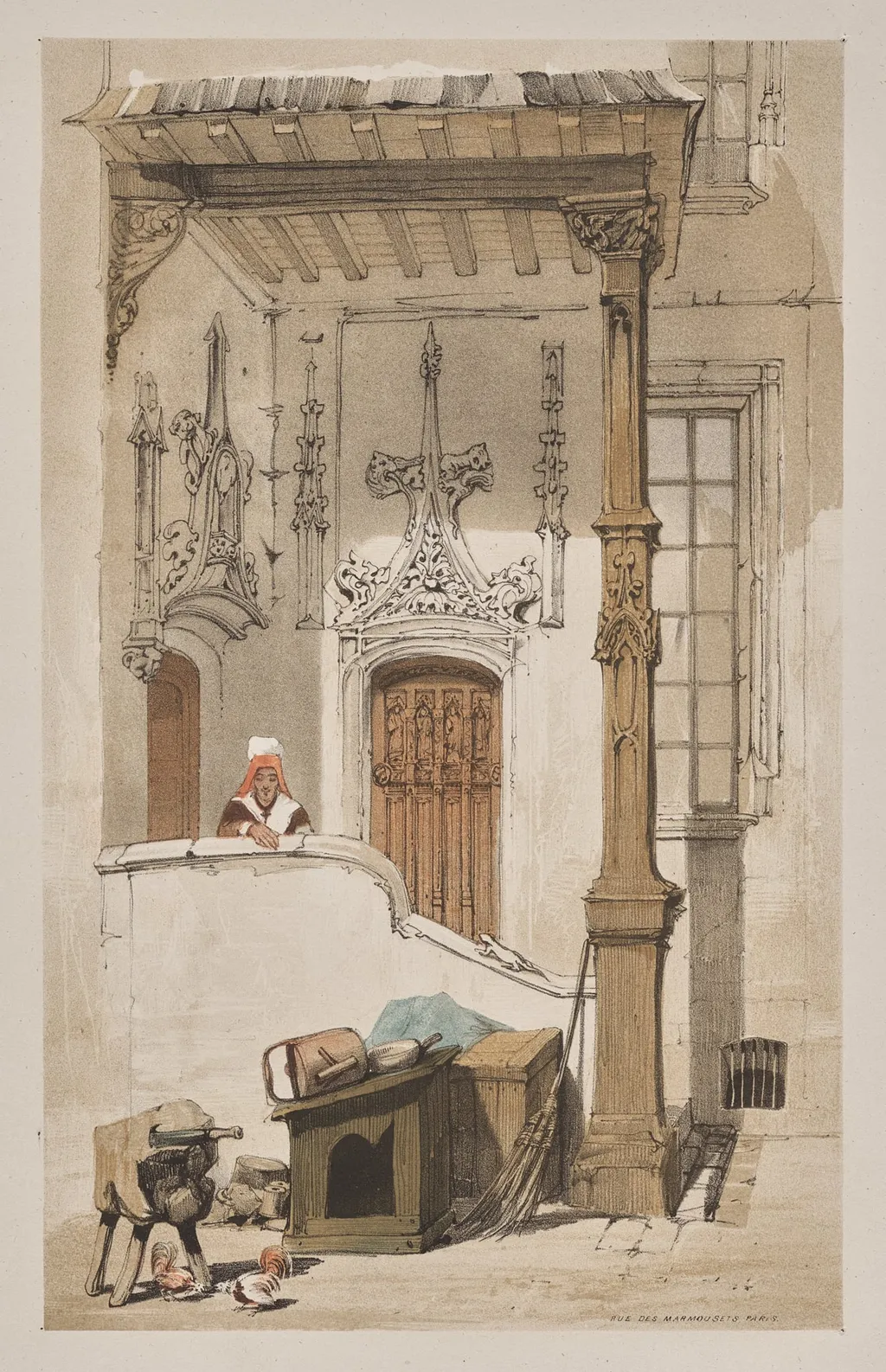
Picturesque Architecture in Paris, Ghent, Antwerp, Rouen: Rue des Marmousets, Paris is a work on paper by the Romanticist artist Thomas Shotter Boys. It dates from 1839 and is held in the collection of the Cleveland Museum of Art.
About this work
The building’s door is fancy with carvings, and a tall column stands beside a window with diamond-shaped panes.
This sketch shows a narrow Parisian street corner with an old stone building. A woman in a red headscarf leans out a window, looking down at a small wooden cart below. The cart holds a few items: a basket, a bag, and a small dog. The building’s door is fancy with carvings, and a tall column stands beside a window with diamond-shaped panes.
The artist drew tiny details like the woman’s posture and the street’s uneven stones. This sketch was made in 1839 to record old European streets before they changed.
Check out Romanticism to see how artists used scenes like this to show history and emotion.
Overview
This 1839 lithograph by Thomas Shotter Boys captures a quintessential Parisian street scene, Rue des Marmousets, with meticulous attention to architectural and everyday details.
Subject & Meaning
The lithograph depicts a narrow street corner in Paris, featuring an old stone building with a intricately carved door and a woman in a red headscarf observing a small wooden cart below, laden with a basket, bag, and a dog. The scene conveys a sense of everyday life in a historic European setting, potentially on the cusp of change.
Technique & Style
Boys employed his characteristic detailed watercolour-turned-lithograph technique to render the scene, emphasizing textures like uneven street stones, carved doorways, and the play of light through diamond-paned windows. The level of detail, from the woman's posture to the dog in the cart, underscores his dedication to capturing the intricacies of urban life.
History & Provenance
Created in 1839 as part of a broader project to document old European architecture before potential transformation, the lithograph is now housed in the Cleveland Museum of Art's collection.
Context
This work aligns with the Romantic era's emphasis on history, emotion, and the beauty of everyday life, using the Parisian streetscape as a backdrop for narrative and atmospheric depth.
Legacy
While not individually renowned as a landmark piece, it contributes to Boys' legacy as a meticulous recorder of 19th-century urban landscapes, offering a glimpse into the past for modern audiences.
Artist & collection
Artist
Thomas Shotter Boys (1803–1874) was an English watercolour painter and lithographer, mostly producing cityscapes and images of buildings, although he produced some rural landscapes and marine subjects.

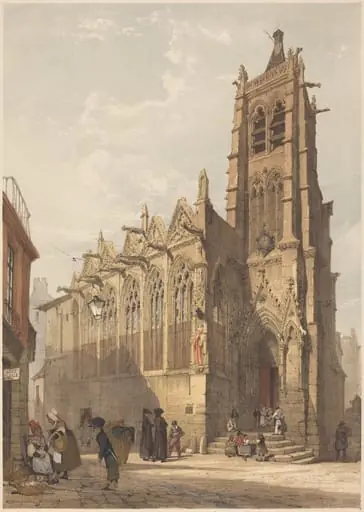
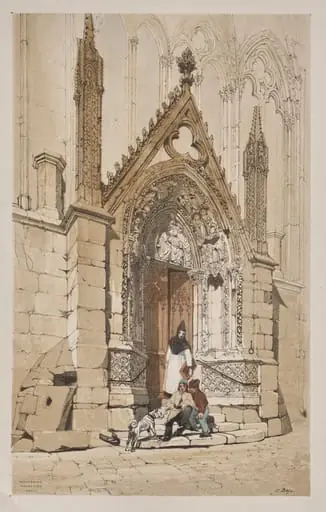 Picturesque Architecture in Paris, Ghent, Antwerp, Rouen: Porte Rouge, Nôtre Dame, Paris
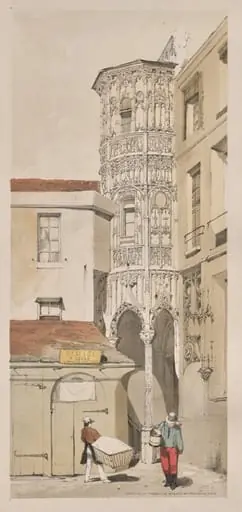 Picturesque Architecture in Paris, Ghent, Antwerp, Rouen: Hôtel de la Tremouille, Rue des Bourbonnois, Paris
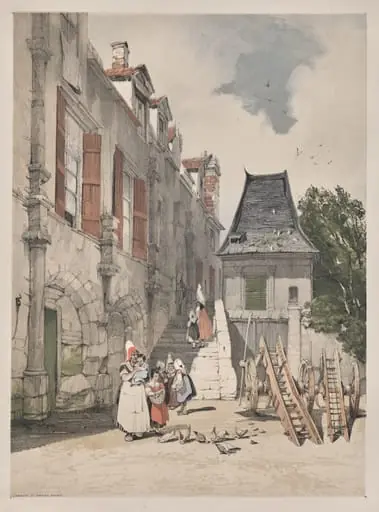 Picturesque Architecture in Paris, Ghent, Antwerp, Rouen: L'Abbaye St. Amand, Rouen, France
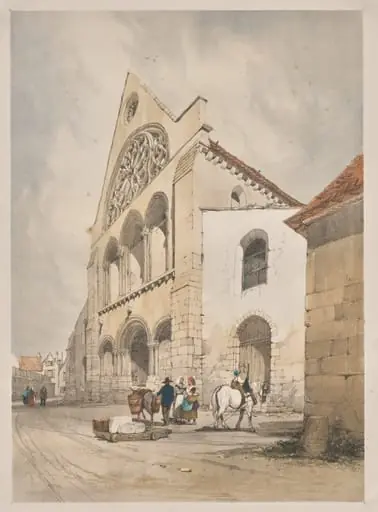 Picturesque Architecture in Paris, Ghent, Antwerp, Rouen: St. Andre, Chartres, France
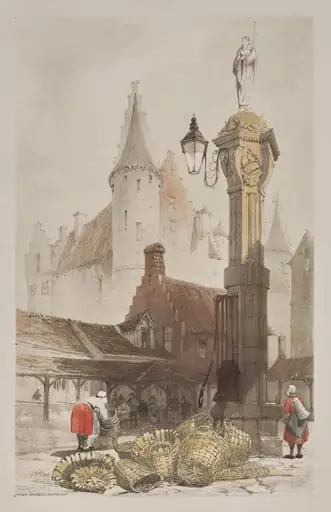 Picturesque Architecture in Paris, Ghent, Antwerp, Rouen: Fish Market, Antwerp, Belgium
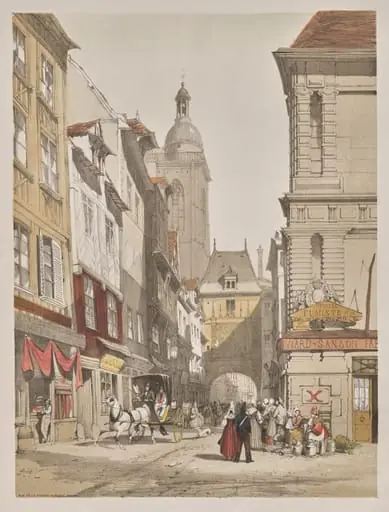 Picturesque Architecture in Paris, Ghent, Antwerp, Rouen: Rue de la Crosse Horlogue, Rouen, France
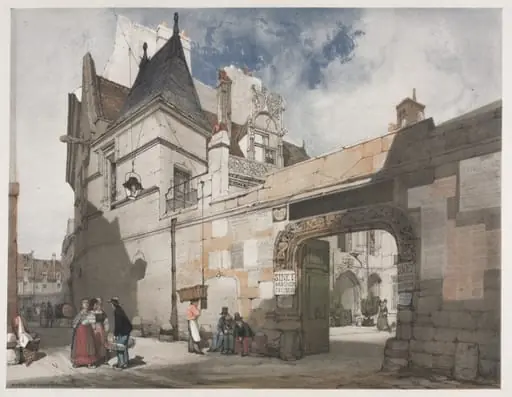 Picturesque Architecture in Paris, Ghent, Antwerp, Rouen: Hôtel de Cluny, Paris
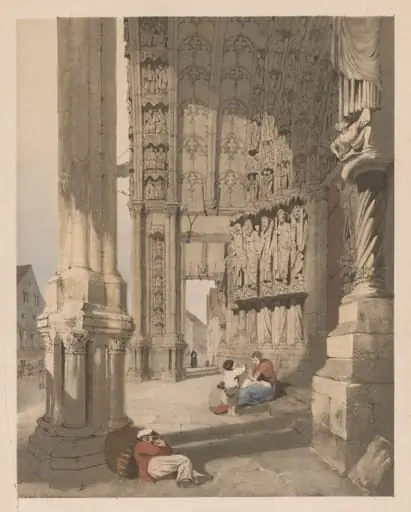 Picturesque Architecture in Paris, Ghent, Antwerp, Rouen, Etc.: South Porch of Chartres Cathedral,
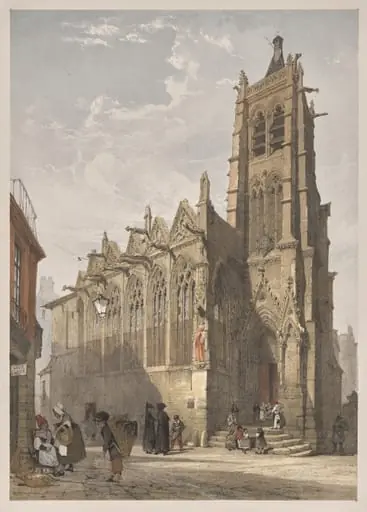 Picturesque Architecture in Paris, Ghent, Antwerp, Rouen: St. Severin, Paris
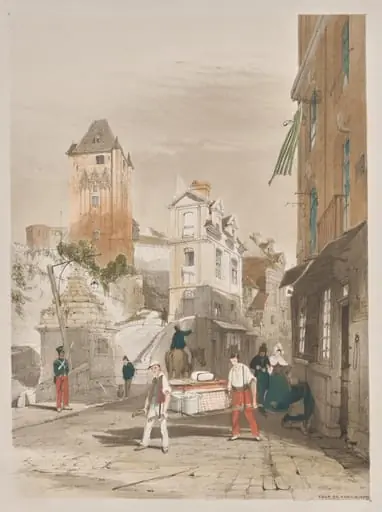 Picturesque Architecture in Paris, Ghent, Antwerp, Rouen: Tour de Remy, Dieppe, France
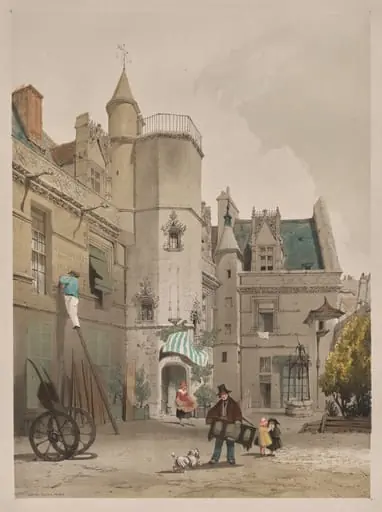 Picturesque Architecture in Paris, Ghent, Antwerp, Rouen: Hôtel Cluny, Paris