Artwork
Landscape study
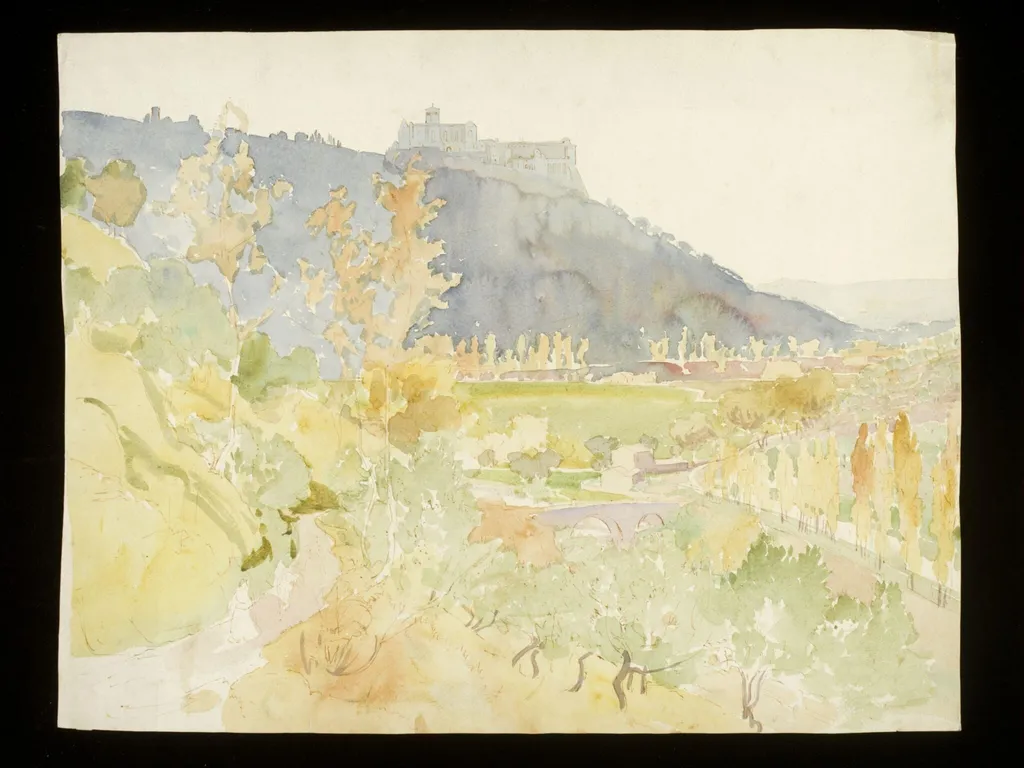
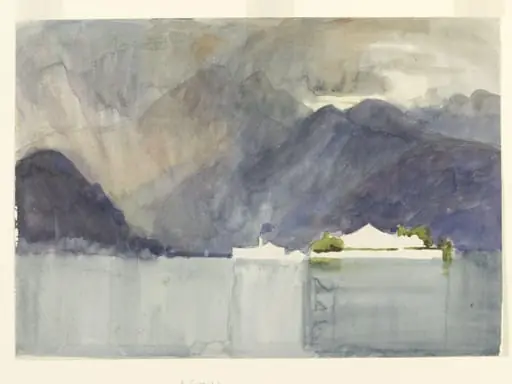
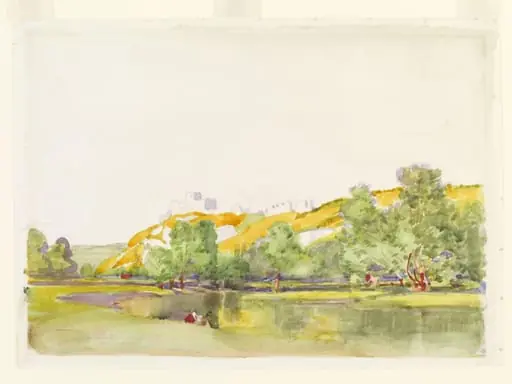
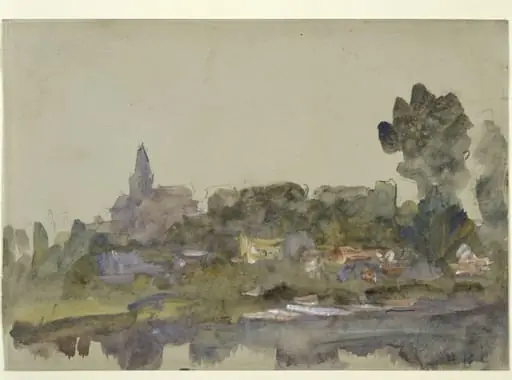
Landscape study is a watercolor work on paper by the Impressionist artist Alfred East. It dates from 1870 and is held in the collection of the Victoria and Albert Museum.
About this work
Overview
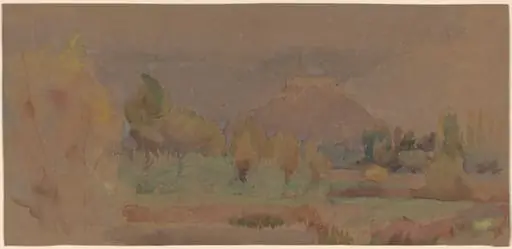
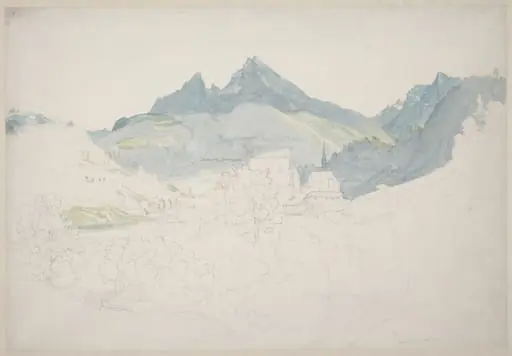
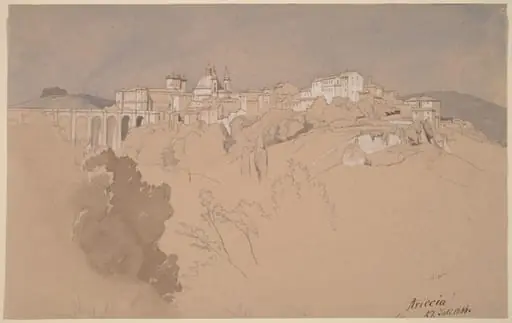
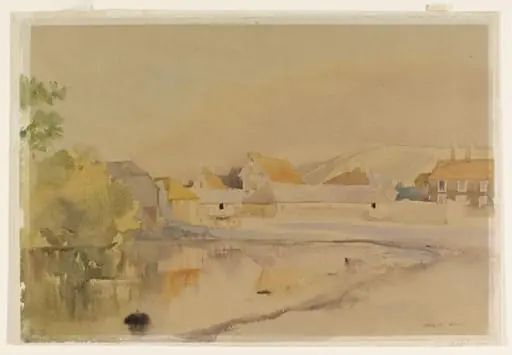
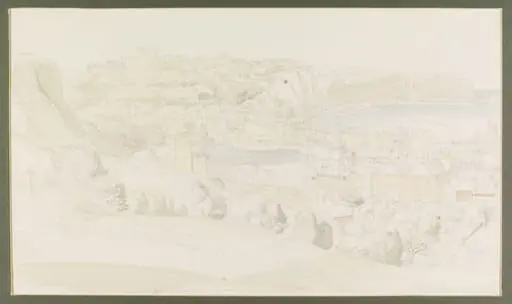
Created in 1870, this watercolor by Alfred East captures a quiet rural scene with minimal detail and a focus on atmosphere. Executed in translucent washes, the work reflects the artist’s interest in capturing fleeting light and spatial depth. It is part of the Victoria and Albert Museum’s collection, where it is preserved as an example of 19th-century British landscape practice.
Subject & Meaning
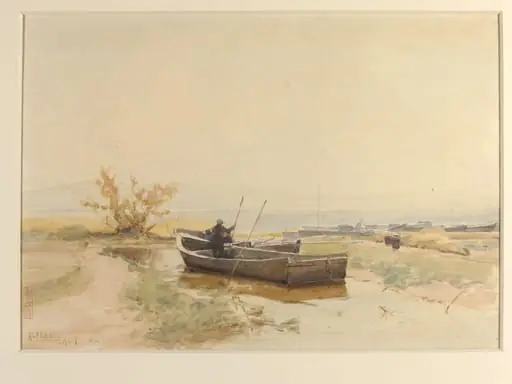
The scene depicts a gentle valley with a winding river, scattered trees, and modest dwellings, all receding toward a distant hill crowned by a pale, indistinct structure. The building’s blurred form suggests memory or ruin rather than a specific landmark. The composition evokes solitude and stillness, emphasizing nature’s quiet dominance over human presence without narrative or symbolism.
Technique & Style
East employed loose, fluid brushwork and diluted pigments to create soft transitions between tones of gray, pale yellow, and blue.
East employed loose, fluid brushwork and diluted pigments to create soft transitions between tones of gray, pale yellow, and blue. The watercolor’s transparency allowed the paper’s white to suggest light, while edges dissolve into misty washes. There are no sharp outlines; forms emerge through subtle gradations, prioritizing mood over precision and aligning with contemporary experiments in atmospheric rendering.
History & Provenance
The work was completed during East’s early career, before his later travels to Japan and the Mediterranean. It remained in private hands until acquired by the Victoria and Albert Museum, where it entered the national collection as part of a broader effort to document British watercolor traditions. Its preservation reflects its value as a representative study rather than a finished exhibition piece.
Context
In the 1870s, British artists increasingly turned to watercolor for its immediacy and capacity to convey transient effects of light. East’s work aligns with this trend, sharing affinities with the Aesthetic Movement’s preference for tonal harmony over detail. Though not formally part of Impressionism, the painting’s sensitivity to atmosphere resonates with broader European shifts toward observational, plein-air approaches.
Legacy
This study exemplifies East’s contribution to the evolution of British watercolor, bridging traditional topographical work and more expressive, light-focused techniques. While not widely known today, it remains a quiet testament to the medium’s capacity for evoking mood through restraint. Its presence in the V&A underscores its role in documenting the period’s artistic priorities beyond grand historical subjects.
Own this work as a print
Artist & collection