Artwork
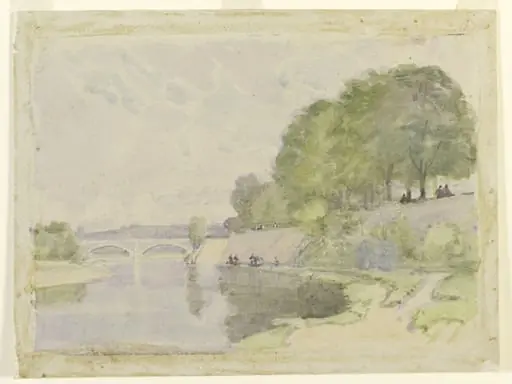
The Bridge of Alcantara at Toledo
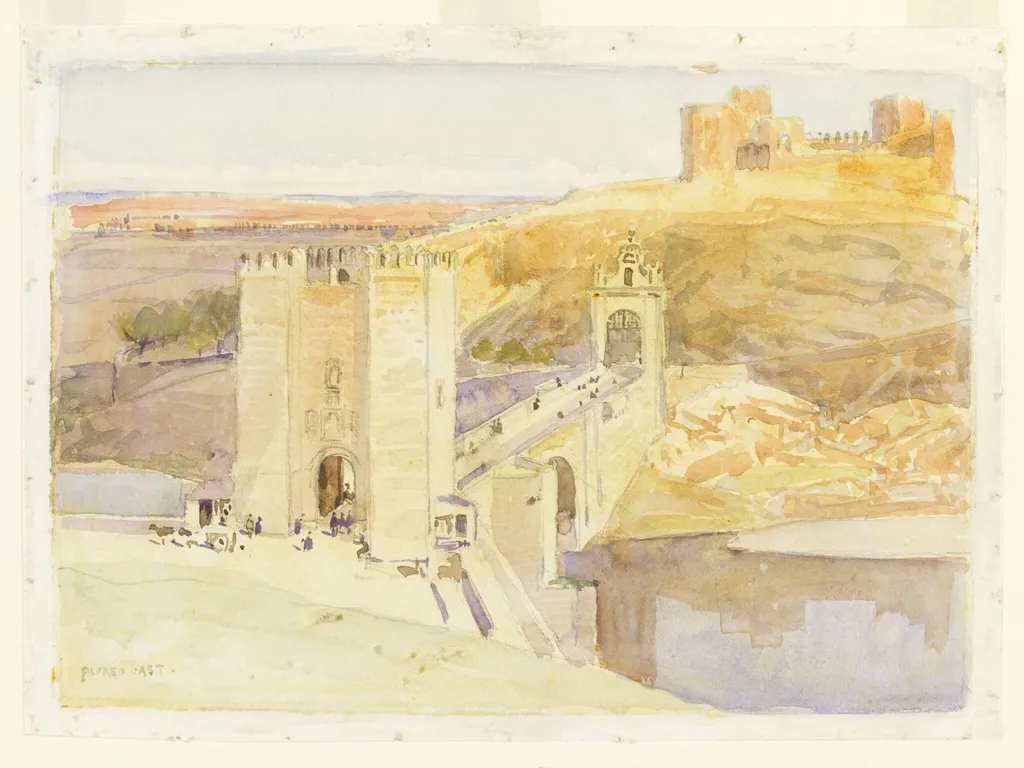
The Bridge of Alcantara at Toledo is a watercolor work on paper by the Impressionist artist Alfred East. It dates from 1870 and is held in the collection of the Victoria and Albert Museum.
About this work
Overview
Executed in loose, expressive brushwork, the piece reflects East’s interest in landscape and atmospheric effects.
Painted in 1870, this watercolour by Sir Alfred East captures the Bridge of Alcantara in Toledo, Spain. Executed in loose, expressive brushwork, the piece reflects East’s interest in landscape and atmospheric effects. The work is signed by the artist and bears signs of age, with pigments subtly faded over time. It remains a quiet record of his travels and observational practice during his early career.
Subject & Meaning
The painting centers on a medieval stone bridge spanning the Tagus River, featuring multiple arches and a central tower. Figures move along the walkway and pass beneath its arches, suggesting daily life in the city. The composition avoids grandeur, instead emphasizing quiet pedestrian activity and the bridge’s integration into the surrounding terrain. It conveys a sense of place rather than narrative or symbolism.
Technique & Style
East employed transparent watercolour washes to suggest light and texture with minimal detail. His brushwork is swift and fluid, capturing the play of shadow across stone and the soft glow of afternoon light. The palette is restrained, with warm ochres, muted greens, and pale blues. The technique prioritizes immediacy and mood over precision, characteristic of plein-air sketching practices of the period.
History & Provenance
Created during East’s travels in Spain, the work entered the collection of the Victoria and Albert Museum, where it remains today. Its modest scale and medium suggest it was made as a study rather than a finished exhibition piece. The faded pigments and worn paper indicate prolonged exposure to light, consistent with its use as a personal record rather than a display object.
Context
In the late 19th century, British artists increasingly traveled to southern Europe to study light and architecture. East’s watercolour aligns with this trend, reflecting a broader interest in documenting historic structures with direct observation. Unlike grander historical paintings, this work belongs to a quieter tradition of topographical sketching, valued for its honesty and sensitivity to place.
Legacy
Though not widely exhibited, the watercolour exemplifies East’s commitment to capturing landscape through direct experience. It contributes to a body of work that helped shape British watercolour’s shift toward spontaneity and atmospheric realism. Its preservation in a major museum underscores its value as a document of 19th-century artistic travel and technique.
Artist & collection

 Landscape study
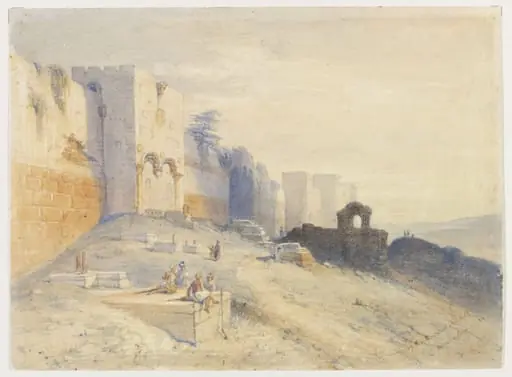 Remains of the Ancient Temple of Jerusalem
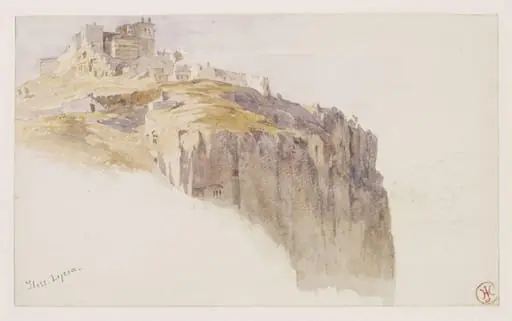 Tloss
Tloss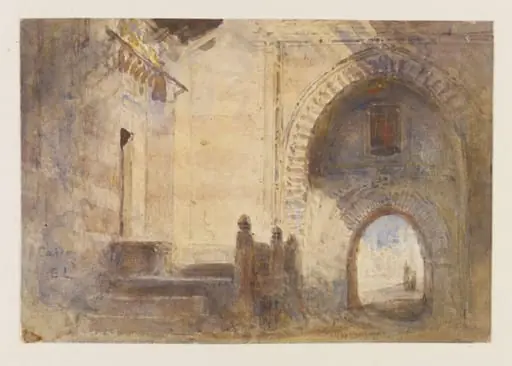 A Gateway in Cairo
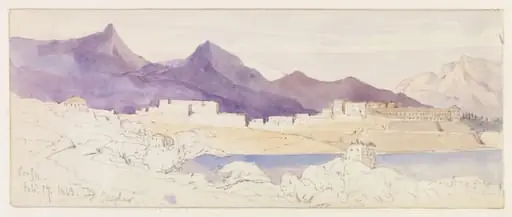 Corfu
Corfu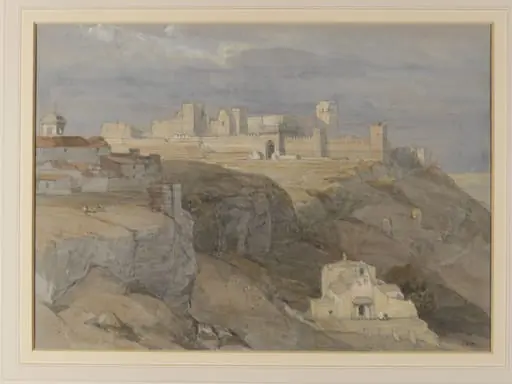 The Alcazar of Carmona, Andalusia
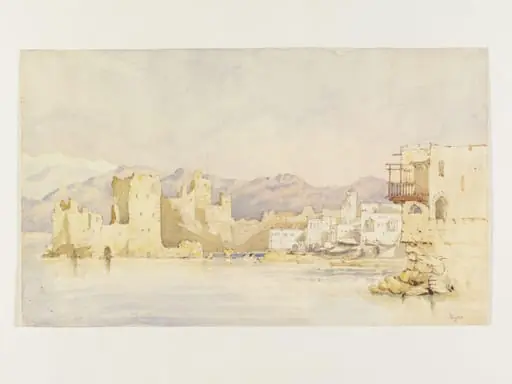 Tyre
Tyre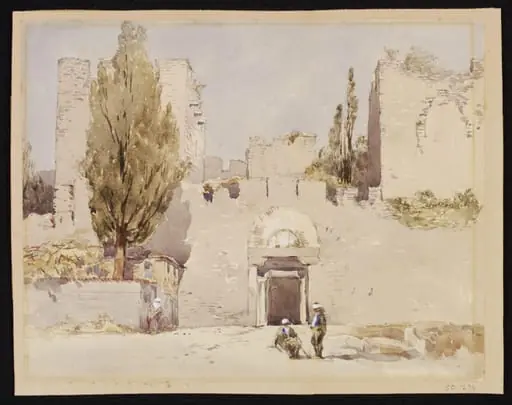 Entrance to the Cannon Gate (Top Kapisi) in Constantinople
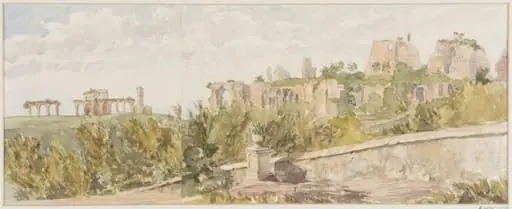 Palace of the Ceasars, Rome
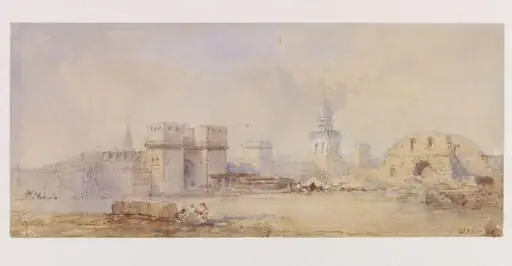 Bab al-Nasr and walls of Cairo, with part of the Mosque of Khalif al-Hakim
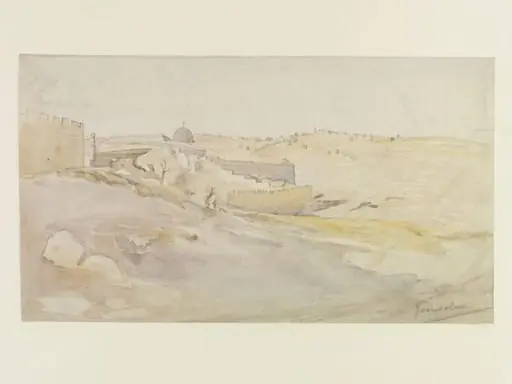 Jerusalem
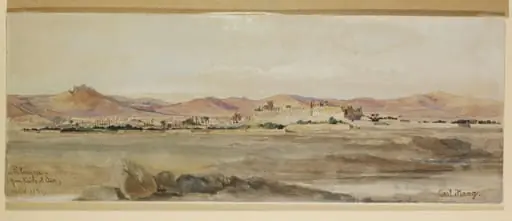 Palmyra (from Kasr el Ain)