Artwork
Ely
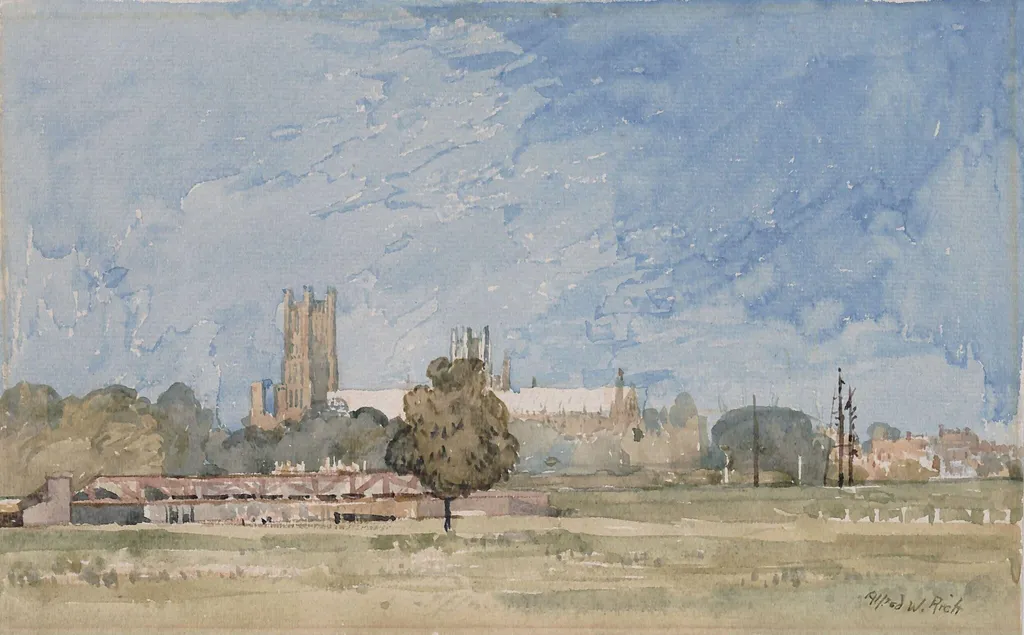
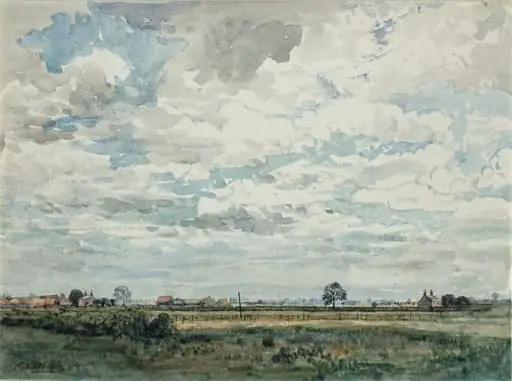
Ely is a watercolor work on paper by the Impressionist artist Alfred Rich. It dates from 1880 and is held in the collection of the Victoria and Albert Museum.
About this work
Overview
This watercolour, dated 1880 and signed by Alfred Rich, depicts a tranquil rural view of Ely. Rendered in delicate washes, the scene emphasizes atmospheric light rather than architectural detail. The composition centers on a distant church tower, framed by open fields and a low stone wall at the foreground, suggesting a quiet, unembellished observation of the English countryside.
Subject & Meaning
The painting presents a modest, unpopulated landscape, focusing on the enduring presence of the church amid cultivated land. The absence of human figures and the subdued tones convey stillness and continuity. The lone tree and stone wall anchor the scene in everyday rural life, reflecting a quiet reverence for the local environment rather than a dramatic narrative.
Technique & Style
The technique prioritizes immediacy and light effects over precision, aligning with emerging trends in observational painting.
Rich employed loose, rapid brushwork to suggest form through tone rather than outline. The sky is built with soft, irregular strokes of pale blue and white, evoking drifting clouds without definition. Fields are indicated by patches of muted green and ochre, with minimal blending. The technique prioritizes immediacy and light effects over precision, aligning with emerging trends in observational painting.
History & Provenance
Created in 1880, the work is one of several watercolours by Alfred Rich documenting English landscapes during a period of growing interest in plein air study. Its survival in private collections suggests it was valued as a personal record rather than a public exhibition piece. No record of public display or major acquisition is documented.
Context
In the late 19th century, British artists increasingly turned to watercolour for its portability and spontaneity, moving away from highly finished studio works. Rich’s approach reflects this shift, echoing the influence of French Impressionist methods—though without their chromatic intensity—emphasizing transient light and informal composition in a distinctly English idiom.
Legacy
Rich’s watercolour contributes to a broader tradition of modest, observational landscape art in Victorian Britain. While not widely exhibited or collected during his lifetime, his work exemplifies how amateur and professional artists alike used watercolour to capture the subtle rhythms of the natural world, influencing later generations focused on direct observation over idealized scenery.
Own this work as a print
Artist & collection
Artist
Alfred Rich painted quiet English buildings in watercolour between about 1880 and 1920.

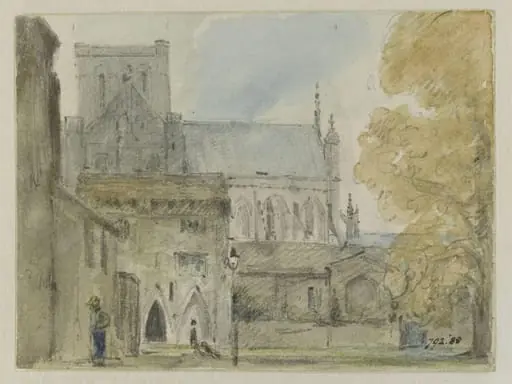 Winchester Cathedral: entrance to the Deanery from the south
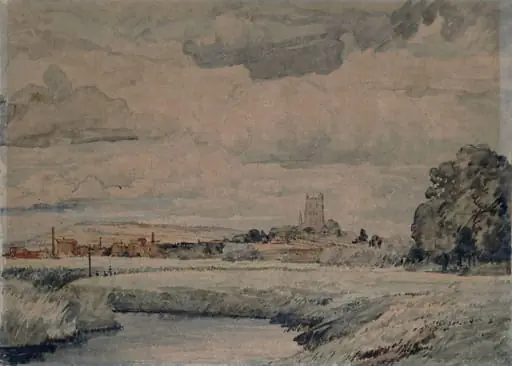 On the Avon
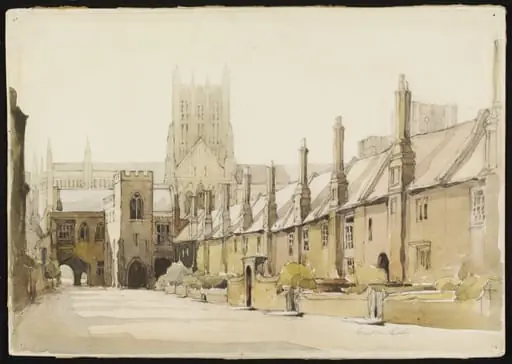 The Vicars' Close, Wells
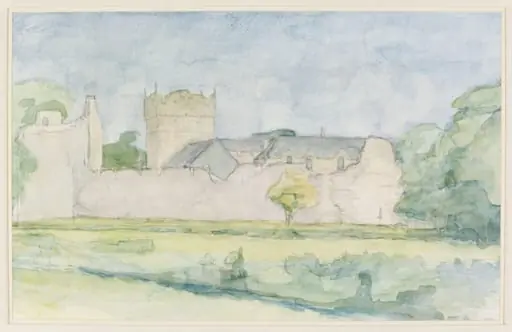 Ewenny Priory, Glamorganshire
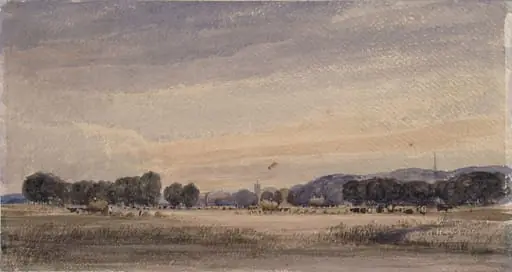 Fields near Norwich
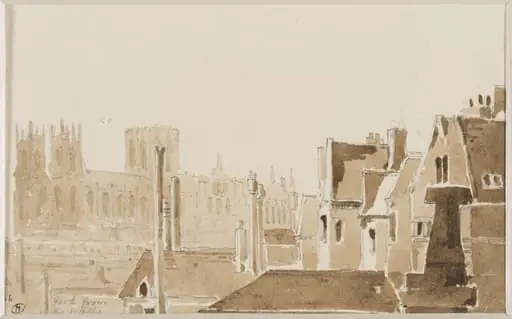 York from the Walls
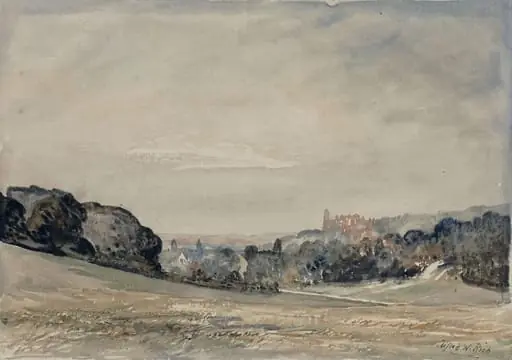 Berkhamsted
 The Green and Church, Calne
 The Thames, with Eton College and chapel
 East Bergholt Church: view from the east
 Oliver Cromwell's House in Ely