Artwork
St. Ives
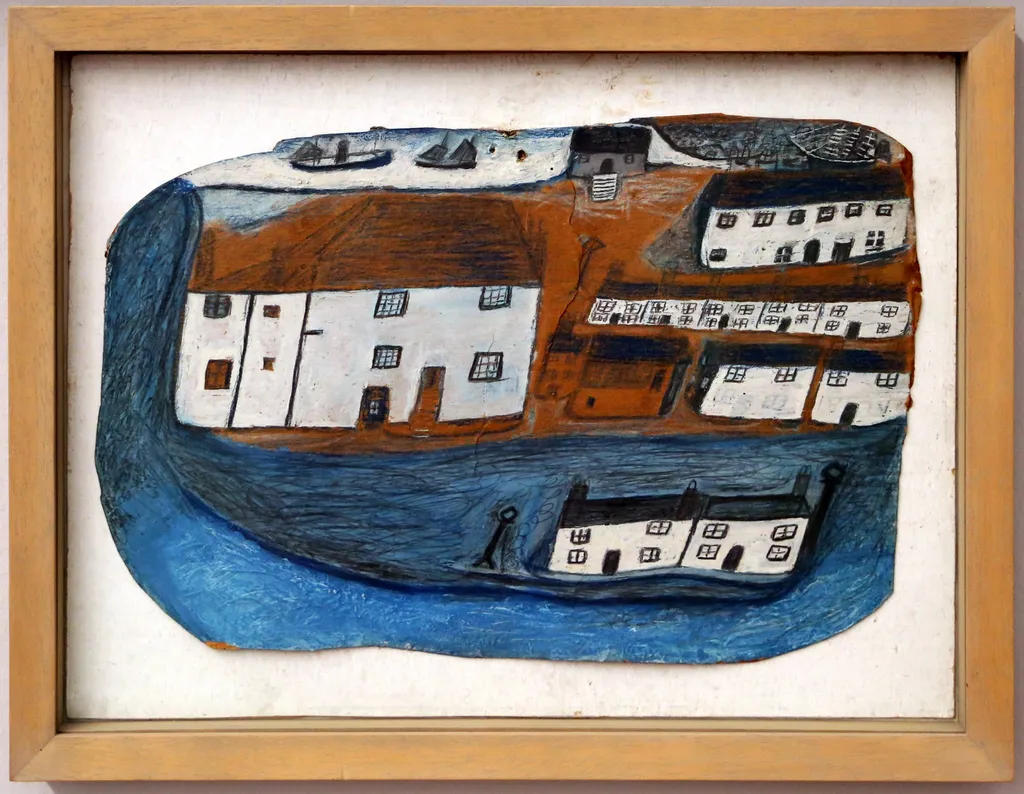
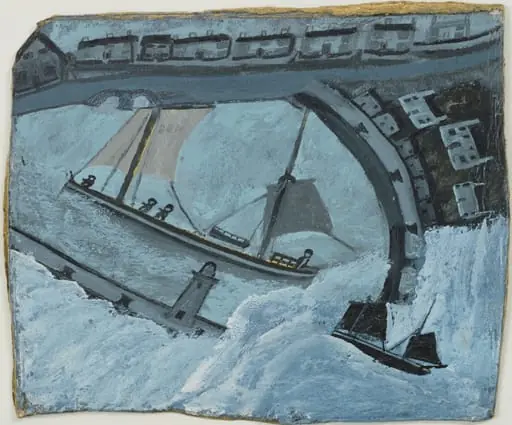
St. Ives is an unspecified painting by the British Romanticist artist Alfred Wallis. It dates from 1928 and is held in the collection of the Tate Britain. St.
About this work
Overview
St. Ives is a 1928 painting by Alfred Wallis, a self-taught artist who began creating art at 70. Executed with household paint on cardboard, the work captures a serene seaside town scene.
Subject & Meaning
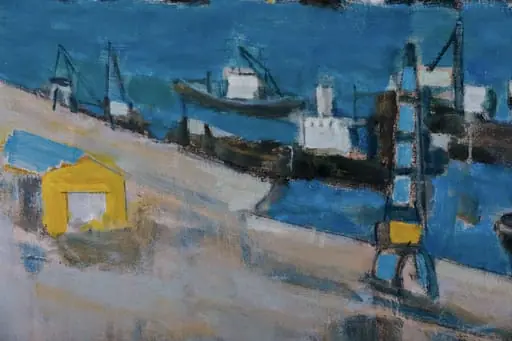
The painting portrays a coastal town with white buildings and brown roofs set against a blue water body and white background. The composition conveys a sense of depth and atmosphere, evoking the quiet essence of a seaside community.
Technique & Style
Wallis's naïve style, informed by his lifelong maritime experience, characterizes the painting. Simple yet effective use of color and composition creates a charming, depthful image.
History & Provenance
Though overlooked in his lifetime, Wallis's work, including St. Ives, was later championed by modernist artists Ben Nicholson and Christopher Wood, leading to posthumous recognition.
Context
St. Ives aligns with British Romanticism due to its intuitive, personally rooted depiction of coastal life, despite the artist's lack of formal training.
Artist & collection
Artist
Alfred Wallis (8 August 1855 – 29 August 1942) was a British artist and marine stores dealer.