Artwork
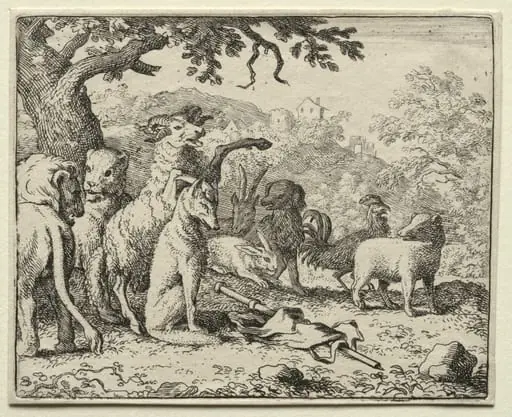
Reynard the Fox: Reynard Sends a Packet to the Lion
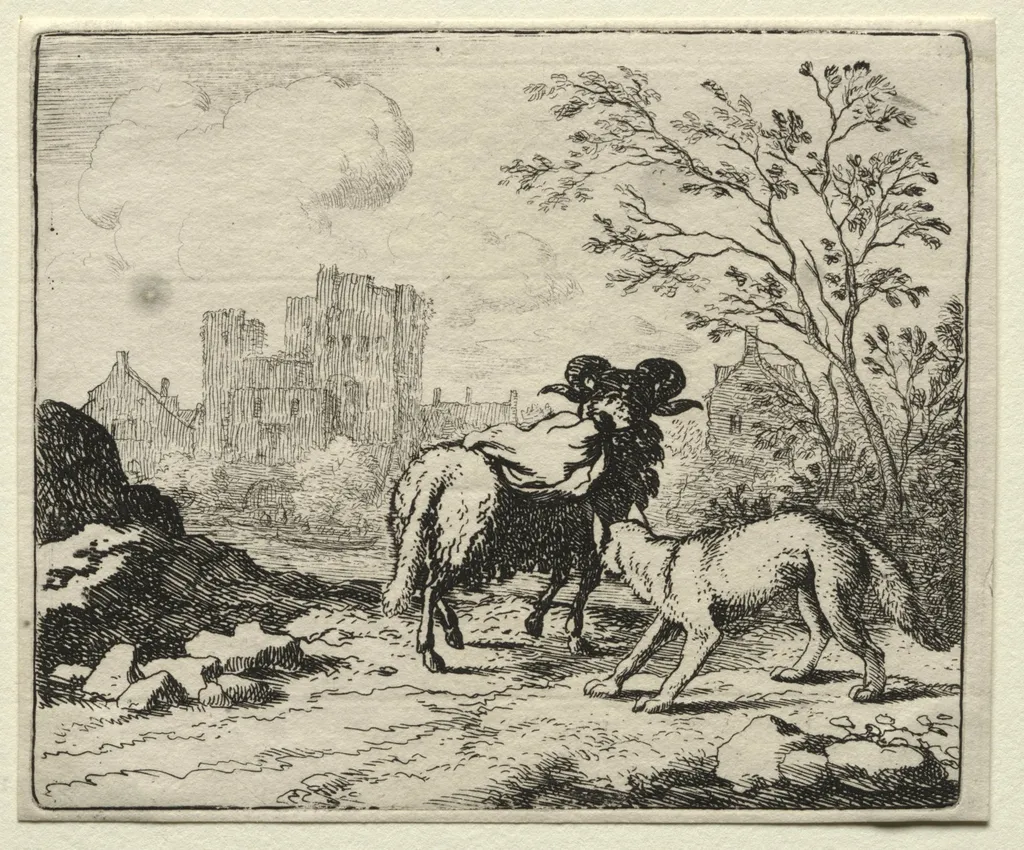
Reynard the Fox: Reynard Sends a Packet to the Lion is a print by the Baroque artist Allart van Everdingen. It dates from 1662 and is held in the collection of the Cleveland Museum of Art.
About this work
Overview
The work reflects the Dutch Golden Age’s interest in folk narratives and everyday symbolism, rendered with restrained detail and atmospheric depth.
Created in 1662 by Dutch artist Allart van Everdingen, this print is part of a series illustrating the medieval Reynard the Fox tales. Executed in etching, it captures a moment of quiet deception within a rural landscape. Van Everdingen, known for his landscape prints and narrative scenes, used fine lines to convey both atmosphere and subtle character. The work reflects the Dutch Golden Age’s interest in folk narratives and everyday symbolism, rendered with restrained detail and atmospheric depth.
Subject & Meaning
The scene depicts Reynard, the cunning fox, delivering a packet to the lion, a figure of authority in the medieval beast epic. Two sheep, one recumbent and the other still, flank the fox, suggesting submission or complicity. The packet implies a message or bribe, reinforcing Reynard’s role as a trickster navigating power structures. The quiet tension in the composition underscores the tale’s moral ambiguity—authority is vulnerable to manipulation, even in serene settings.
Technique & Style
Van Everdingen employed etching to achieve fine, controlled lines that define texture and mood without heavy shading. The background features sparse, angular trees and a distant tower, suggesting depth through minimalism. The fox’s posture and the sheep’s stillness are rendered with precise, economical strokes, enhancing the narrative’s tension. The monochrome palette focuses attention on gesture and composition, aligning with Northern European print traditions that valued clarity over ornament.
History & Provenance
The print was produced during the height of Dutch printmaking, when illustrated fables were widely circulated. Van Everdingen’s Reynard series was likely intended for private collectors interested in allegorical storytelling. The work entered the Cleveland Museum of Art’s collection in the 20th century, where it remains part of a broader holding of Dutch graphic arts. Its survival reflects the enduring appeal of medieval tales in early modern visual culture.
Context
The Reynard cycle, originating in 12th-century Europe, remained popular in the Low Countries as a vehicle for social satire. In 17th-century Dutch society, where civic order and moral conduct were heavily emphasized, tales of a fox outwitting the lion resonated as subtle critiques of authority. Van Everdingen’s depiction aligns with a broader trend of using folklore to explore human behavior, blending folk tradition with contemporary artistic sensibilities.
Legacy
Van Everdingen’s Reynard prints contributed to the preservation and visual codification of medieval animal fables in early modern Europe. While less celebrated than his landscapes, these works demonstrate how narrative printmaking sustained cultural memory. The series influenced later illustrators of fables and remains a key example of how Dutch artists translated literary tradition into intimate, psychologically nuanced imagery.
Own this work as a print
Artist & collection
Artist
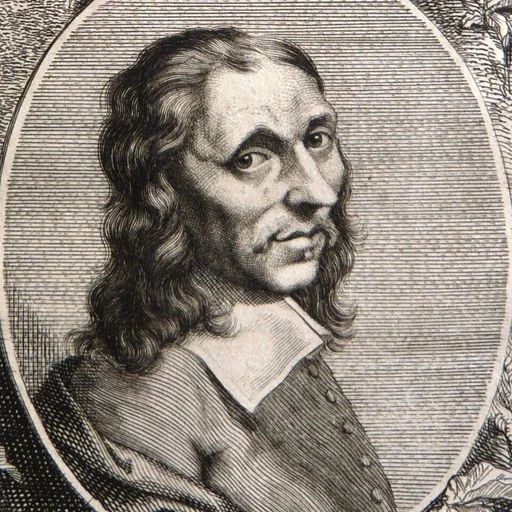
Allaert van Everdingen (Dutch pronunciation: ; bapt. 18 June 1621 – 8 November 1675 (buried)), was a Dutch Golden Age painter and printmaker in etching and mezzotint.


 Reynard the Fox: The Benediction Given to Reynard
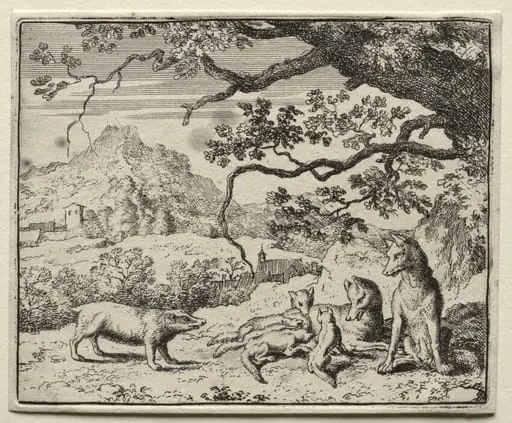 Reynard the Fox: The Badger Calls Reynard to Court
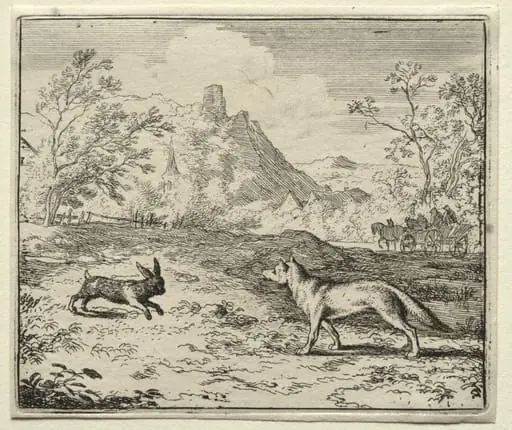 Reynard the Fox: Reynard and the Rabbit
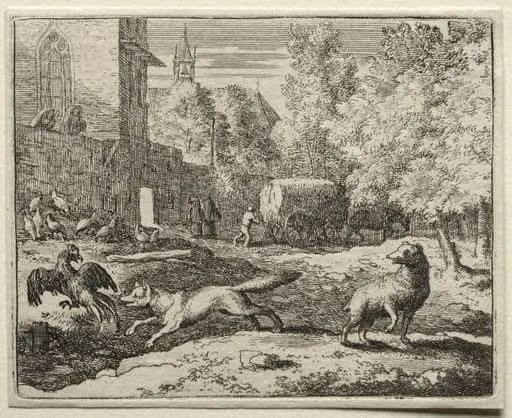 Reynard the Fox: Reynard Chasing Hens
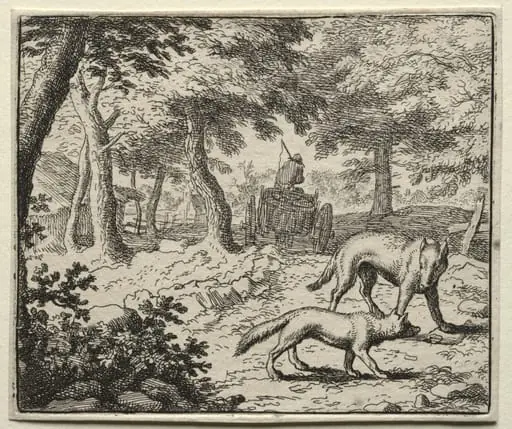 Reynard the Fox: The Badger's Defense of Reynard
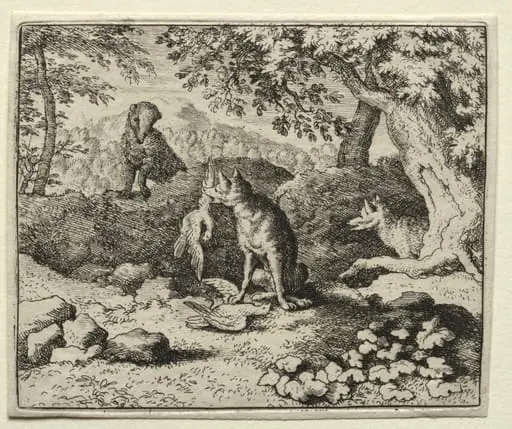 Reynard the Fox: Badger Comes to Warn Reynard
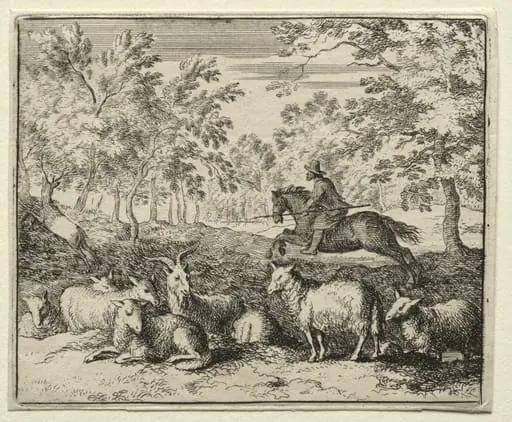 Reynard the Fox: The Chase of the Stag