Artwork
Reynard the Fox: The Chase of the Stag
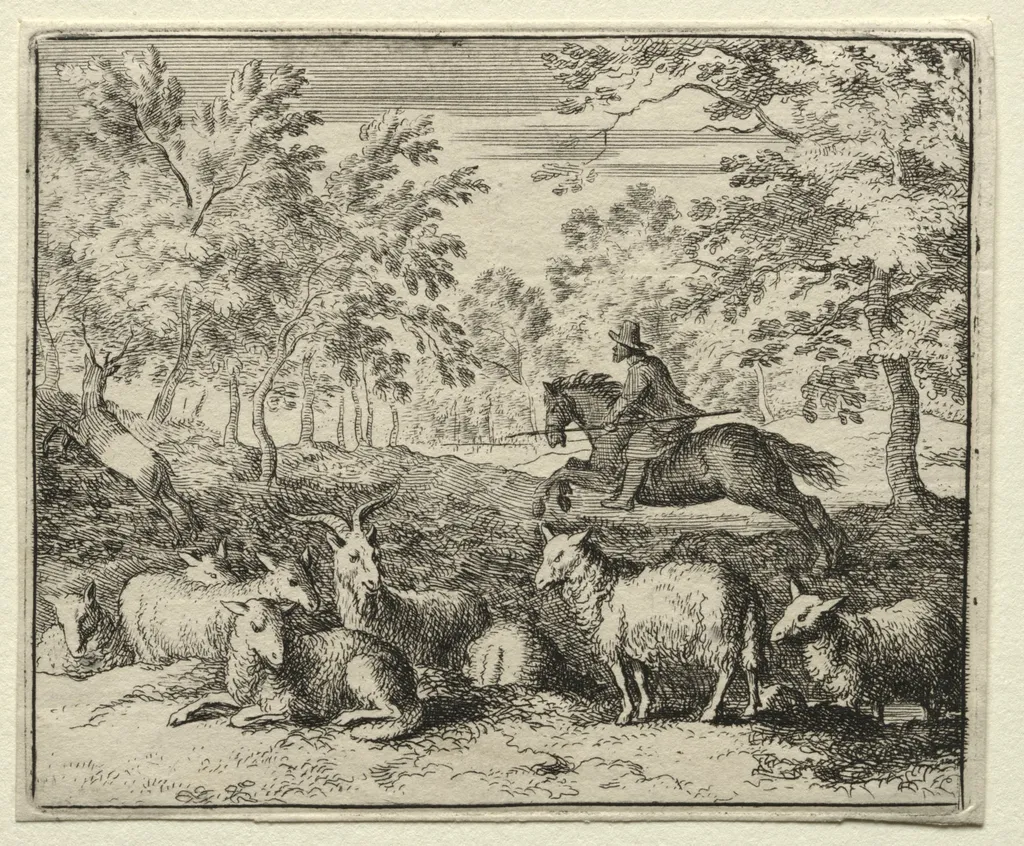
Reynard the Fox: The Chase of the Stag is a print by the Baroque artist Allart van Everdingen. It dates from 1662 and is held in the collection of the Cleveland Museum of Art.
About this work
Overview
Rendered in fine linear detail, the print captures a moment of pursuit: a fox, dressed and armed, chases a stag through a dense woodland.
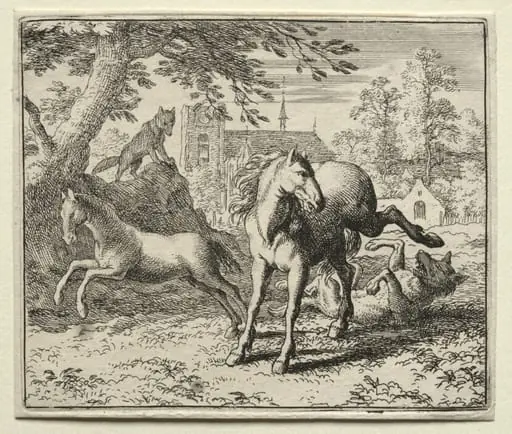
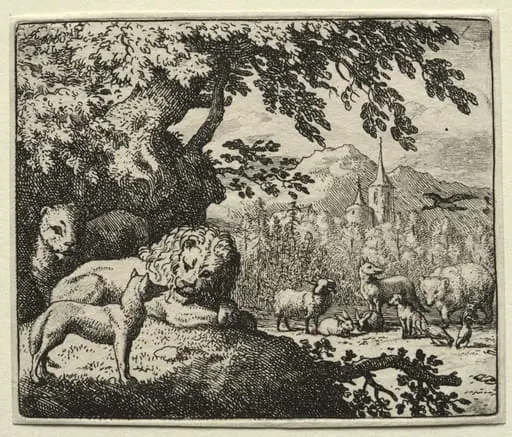
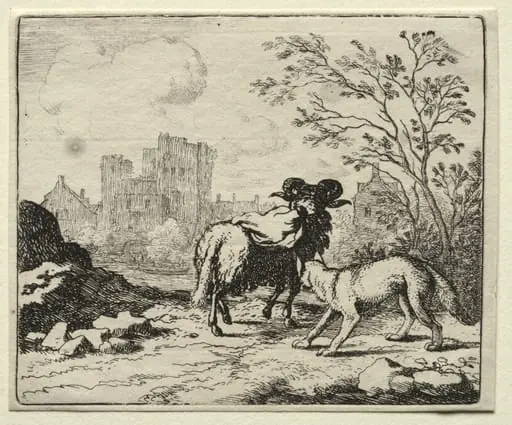
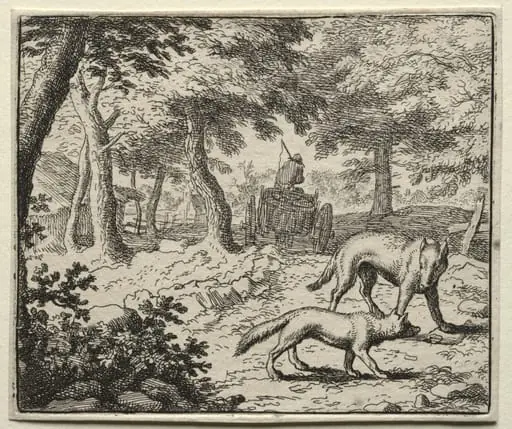
Created in 1662 by Dutch artist Allart van Everdingen, this black-and-white etching illustrates a scene from the medieval Reynard tales, a cycle of animal fables popular across Europe. Rendered in fine linear detail, the print captures a moment of pursuit: a fox, dressed and armed, chases a stag through a dense woodland. The work reflects van Everdingen’s skill in printmaking and his interest in narrative subjects drawn from folklore rather than religious or mythological tradition.
Subject & Meaning
The scene draws from the Reynard the Fox cycle, in which anthropomorphized animals embody human social behaviors—deceit, cunning, and hierarchy. Here, the fox, equipped with a hat and spear, symbolizes trickery and ambition, while the stag represents nobility or prey. The inclusion of grazing sheep in the background suggests a disrupted pastoral order, reinforcing the tale’s moral undertones about power and survival in a world governed by wit rather than virtue.
Technique & Style
Van Everdingen employed sharp, incised lines typical of etching to convey motion and texture. The fox’s fur, the stag’s muscular form, and the tangled underbrush are rendered with precise, rhythmic strokes that suggest both energy and decay. The contrast between the dark, dense foliage and the lighter, rocky ground enhances depth. The fox’s human attributes—clothing and weapon—are rendered with the same detail as the natural elements, blurring the line between animal and human realms.
History & Provenance
The print was produced during the height of the Dutch Golden Age, a period when printmaking flourished as a medium for both artistic expression and commercial distribution. Van Everdingen, known for landscapes and narrative prints, likely created this work for a private collector or as part of a series. It entered the collection of the Cleveland Museum of Art in the 20th century, where it remains as an example of Northern European print culture from the mid-17th century.
Context
While Baroque art in Southern Europe emphasized grandeur and emotional intensity, Dutch artists like van Everdingen often turned to intimate, secular narratives. The Reynard tales, though rooted in medieval literature, remained culturally resonant in the Netherlands, offering allegorical commentary on human behavior. This print reflects a broader trend in Dutch art: using folklore to explore social dynamics without overt religious or political messaging.
Legacy
Van Everdingen’s etching preserves a folkloric tradition that had been transmitted orally and in manuscript for centuries. Its survival in museum collections underscores the value placed on narrative prints in early modern Europe. Though less celebrated than his landscapes, this work exemplifies how Dutch artists integrated popular stories into their visual language, contributing to a broader European visual culture that blended satire, morality, and naturalism.
Artist & collection
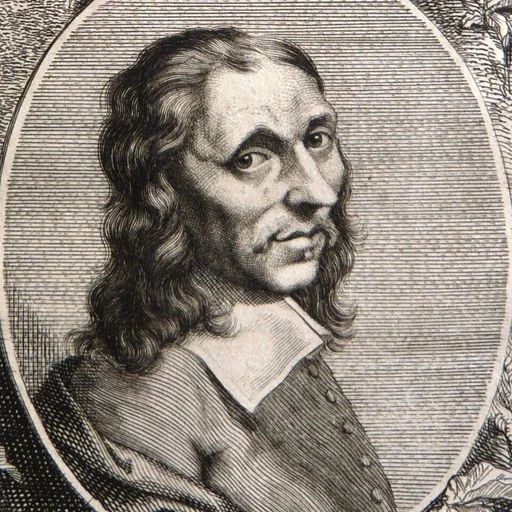
Artist
Allaert van Everdingen (Dutch pronunciation: ; bapt. 18 June 1621 – 8 November 1675 (buried)), was a Dutch Golden Age painter and printmaker in etching and mezzotint.