Artwork
Banks of the Marne (Bord de la Marne)
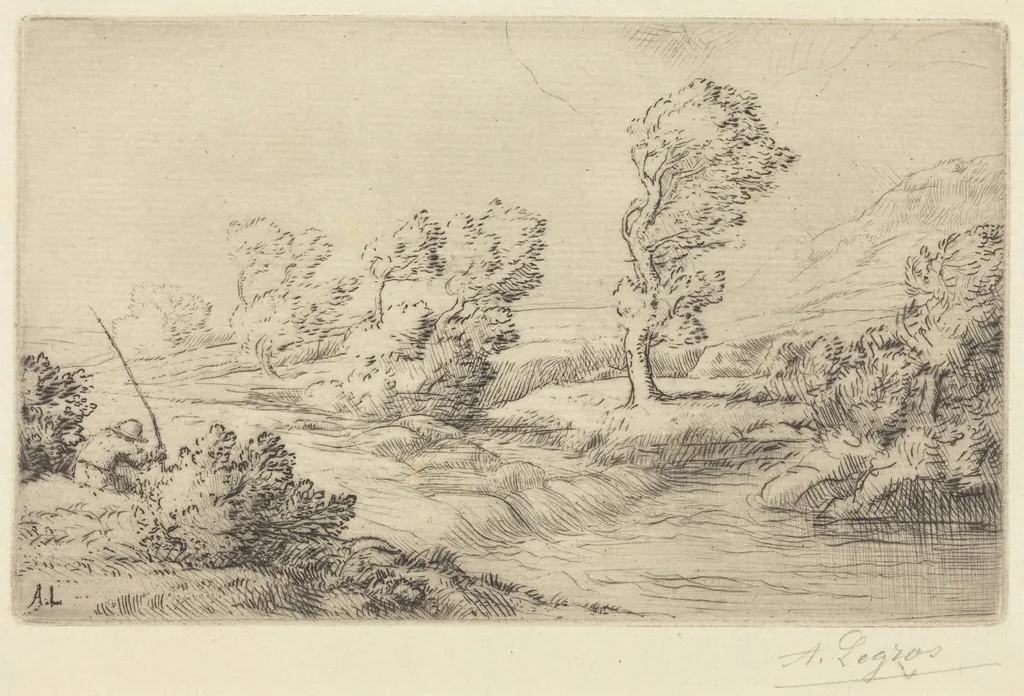
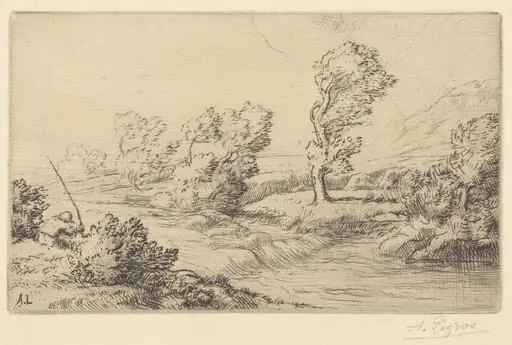
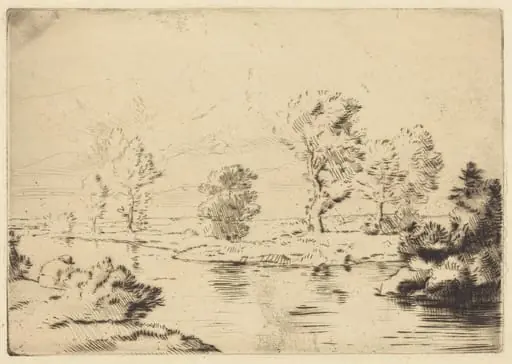
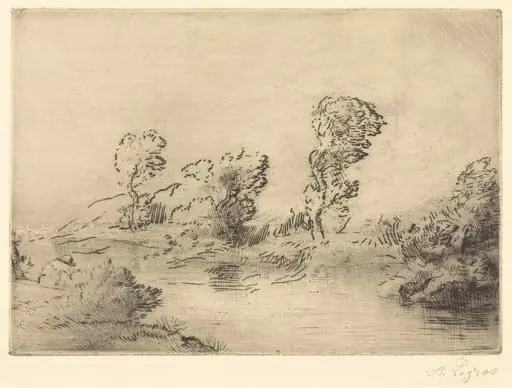
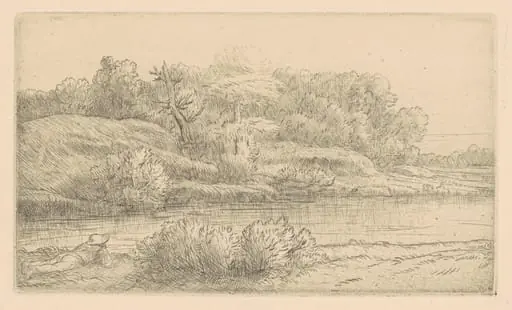
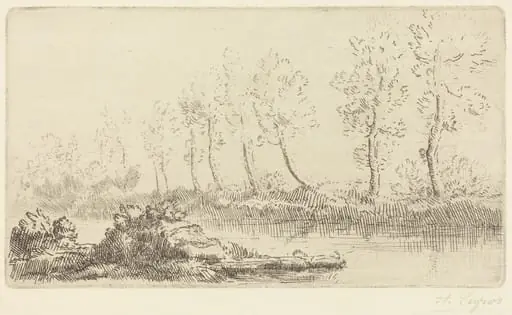
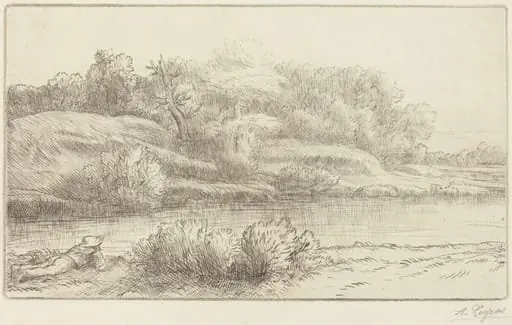
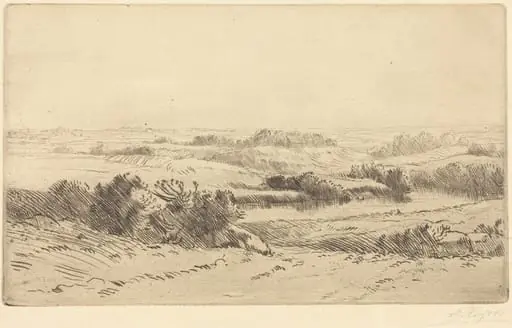
Banks of the Marne (Bord de la Marne) is an ink print by the Romanticist artist Alphonse Legros. It dates from 1874 and is held in the collection of the National Gallery of Art.
About this work
Overview
Banks of the Marne, executed in 1874, is a print by Alphonse Legros that combines drypoint with possible etching on light‑green paper. The work presents a tranquil riverside scene along the Marne, rendered with swift, sketch‑like lines that convey the immediacy of an outdoor observation.
Subject & Meaning
The image records a quiet stretch of riverbank populated by tall reeds, scattered trees, and the reflective surface of the water. The composition emphasizes the subtle interplay of light and shadow, suggesting a moment of calm observation rather than a narrative episode.
Technique & Style
Legros employed drypoint, incising directly into the paper to produce fine, burr‑laden lines that convey texture in grass and water. The occasional use of etching would allow deeper tonal areas, while the green support adds a muted tonal base that enhances the atmospheric quality of the sketch.
History & Provenance
Born in France and settled in London in 1863, Legros became a pivotal figure in the 19th‑century revival of British printmaking. His work on Banks of the Marne reflects the period’s interest in spontaneous, plein‑air drawing, and the print has remained in collections that document his contribution to etching and drypoint techniques.
Artist & collection

Artist
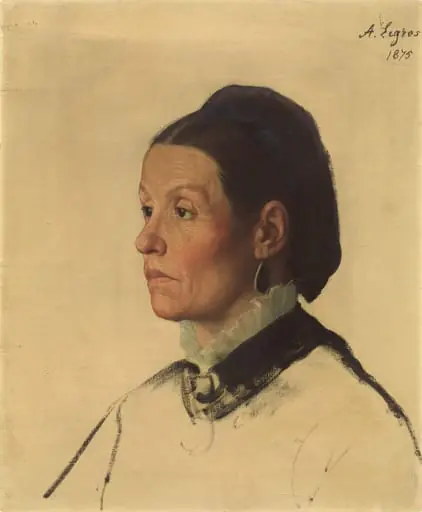
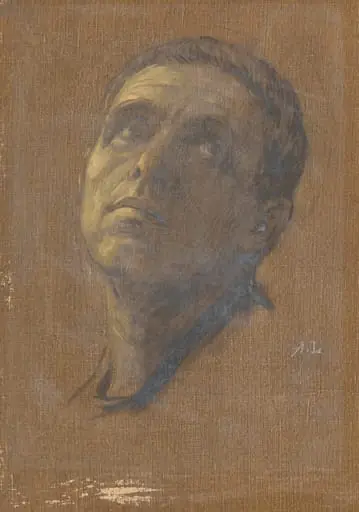
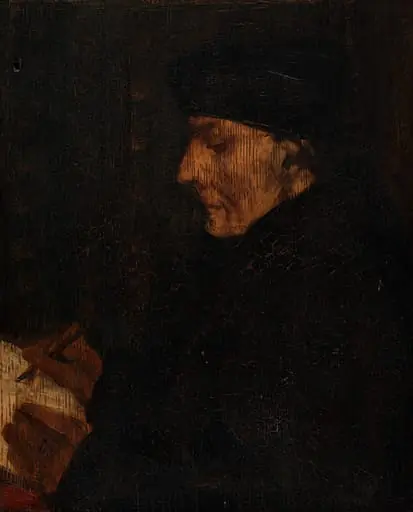
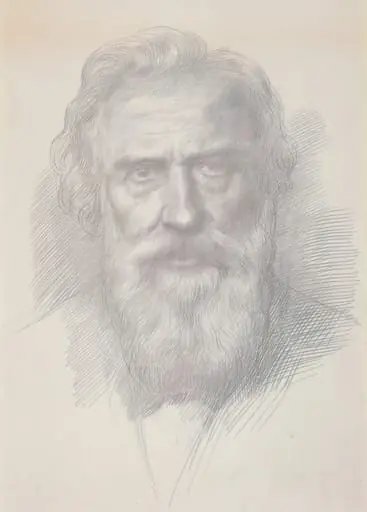
Alphonse Legros (French pronunciation: ; 8 May 1837 – 8 December 1911) was a French, later British, painter, etcher, sculptor, and medallist.